RankRizz

Hydrocarbons — JEE Main Previous Year Questions

Every Hydrocarbons question JEE Main has set from 2004–2026, grouped by the idea it tests rather than the order of the syllabus. 201 questions across 10 distinct ideas. Free to read, answer key on every one.

DATA UPDATED

Questions

201

Distinct ideas

10

Share of marks

4.8%

Difficulty

HARD

The ideas inside Hydrocarbons

A chapter is not one subject — it is a handful of procedures the examiner reuses. These are the ones Hydrocarbons questions actually test.

01Alkanes: preparation and propertiesset 7×
02Reactions of alkanesset 29×03Alkenes: preparation and stabilityset 16×04Electrophilic addition to alkenesset 68×
05Oxidation and reduction of alkenesset 7×
06Alkynes: preparation and acidityset 6×
07Reactions of alkynesset 27×
08Benzene and aromatic hydrocarbons: structure and preparationset 2×
09Electrophilic aromatic substitutionset 22×10Directive influence of substituentsset 17×

Every Hydrocarbons question

161–180 OF 201 · NEWEST FIRST

JEE MAIN 2018 · 16 APR ONLINEReactions of alkynes

The major product of the following reaction is:
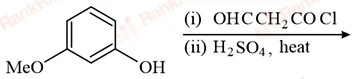
Figure for JEE Main 2018 Chemistry question on Reactions of alkynes
  1. A
    Figure for JEE Main 2018 Chemistry question on Reactions of alkynes
  2. B
    Figure for JEE Main 2018 Chemistry question on Reactions of alkynes
  3. C
    Figure for JEE Main 2018 Chemistry question on Reactions of alkynes
  4. D
    Figure for JEE Main 2018 Chemistry question on Reactions of alkynes
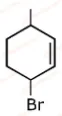
JEE MAIN 2018 · 15 APR S1Alkenes: preparation and stability

Which of the following will most readily give the dehydrohalogenation product?
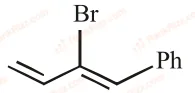
  1. A
    Figure for JEE Main 2018 Chemistry question on Alkenes: preparation and stability
  2. B
    Figure for JEE Main 2018 Chemistry question on Alkenes: preparation and stability
  3. C
    Figure for JEE Main 2018 Chemistry question on Alkenes: preparation and stability
  4. D
    Figure for JEE Main 2018 Chemistry question on Alkenes: preparation and stability
JEE MAIN 2018 · 15 APR S2Alkenes: preparation and stability

When 2-butyne is treated with H2_2/Lindlar's catalyst, compound X is produced as the major product and when treated with Na/liq. NH3_3 it produces Y as the major product. Which of the following statements is correct?

  1. A

    Y will have higher dipole moment and higher boiling point than X Y

  2. B

    Y will have higher dipole moment and lower boiling point than X

  3. C

    X will have lower dipole moment and lower boiling point than Y

  4. D

    X will have higher dipole moment and higher boiling point than Y

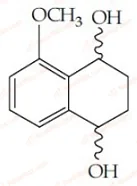
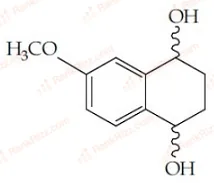
JEE MAIN 2018 · 15 APR S2Alkenes: preparation and stability

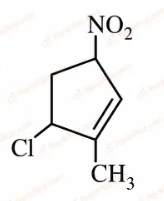
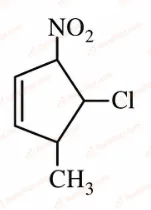
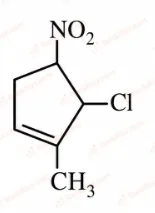
The major product formed in the following reaction is:
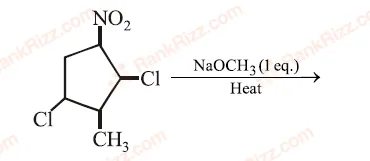
Figure for JEE Main 2018 Chemistry question on Alkenes: preparation and stability
  1. A
    Figure for JEE Main 2018 Chemistry question on Alkenes: preparation and stability
  2. B
    Figure for JEE Main 2018 Chemistry question on Alkenes: preparation and stability
  3. C
    Figure for JEE Main 2018 Chemistry question on Alkenes: preparation and stability
  4. D
    Figure for JEE Main 2018 Chemistry question on Alkenes: preparation and stability
JEE MAIN 2018 · 08 APR OFFLINEOxidation and reduction of alkenes

The trans-alkenes are formed by the reduction of alkynes with:

  1. A

    Sn - HCl

  2. B

    H2_2 - Pd/C, BaSO4_4

  3. C

    NaBH4_4

  4. D

    Na / liq. NH3_3

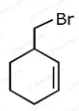
JEE MAIN 2017 · 09 APR ONLINEReactions of alkanes

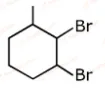
The major product of the following reaction is:
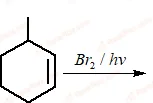
Figure for JEE Main 2017 Chemistry question on Reactions of alkanes

Methylcyclohexane reacts with Br2_2/hν\nu

  1. A
    page10_img7
  2. B
    page10_img8
  3. C
    page10_img9
  4. D
    page10_img10
JEE MAIN 2016 · 10 APR ONLINEElectrophilic aromatic substitution

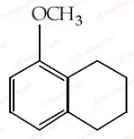
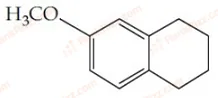
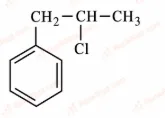
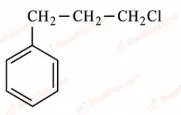
Consider the reaction sequence below:
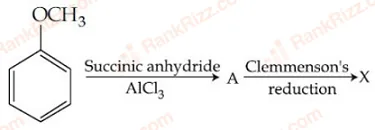
Figure for JEE Main 2016 Chemistry question on Electrophilic aromatic substitution


X is:

  1. A
    Figure for JEE Main 2016 Chemistry question on Electrophilic aromatic substitution
  2. B
    Figure for JEE Main 2016 Chemistry question on Electrophilic aromatic substitution
  3. C
    Figure for JEE Main 2016 Chemistry question on Electrophilic aromatic substitution
  4. D
    Figure for JEE Main 2016 Chemistry question on Electrophilic aromatic substitution
JEE MAIN 2016 · 09 APR ONLINEReactions of alkanes

5 L of an alkane requires 25 L of oxygen for its complete combustion. If all volumes are measured at constant temperature and pressure, the alkane is

  1. A

    Isobutane

  2. B

    Ethane

  3. C

    Butane

  4. D

    Propane

JEE MAIN 2016 · 03 APR OFFLINEElectrophilic addition to alkenes

The reaction of propene with HOCl (Cl2+H2OCl_2 + H_2O) proceeds through the intermediate:

  1. A

    CH3−CH(OH)−CH2+CH_3 - CH(OH) - CH_2^+

  2. B

    CH3−CHCl−CH2+CH_3 - CHCl - CH_2^+

  3. C

    CH3−CH+−CH2−OHCH_3 - CH^+ - CH_2 - OH

  4. D

    CH3−CH+−CH2−ClCH_3 - CH^+ - CH_2 - Cl

JEE MAIN 2015 · 11 APR ONLINEElectrophilic addition to alkenes

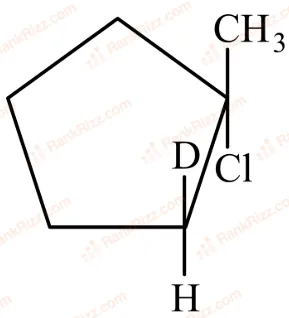
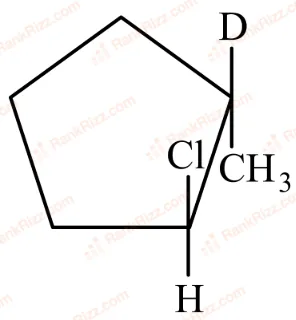
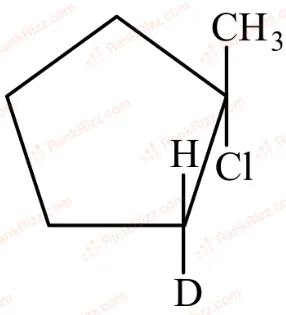
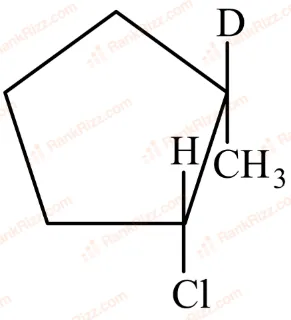
What is the major product expected from the following reaction?
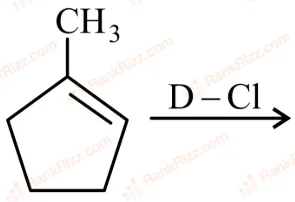
Figure for JEE Main 2015 Chemistry question on Electrophilic addition to alkenes

Where D is an isotope of hydrogen.
  1. A
    Figure for JEE Main 2015 Chemistry question on Electrophilic addition to alkenes
  2. B
    Figure for JEE Main 2015 Chemistry question on Electrophilic addition to alkenes
  3. C
    Figure for JEE Main 2015 Chemistry question on Electrophilic addition to alkenes
  4. D
    Figure for JEE Main 2015 Chemistry question on Electrophilic addition to alkenes
JEE MAIN 2014 · 12 APR ONLINEElectrophilic addition to alkenes

In the presence of peroxide, HCl and HI do not give anti-Markownikoff's addition of alkenes because:

  1. A

    One of the steps is endothermic in HCl and HI

  2. B

    Both HCl and HI are strong acids

  3. C

    HCl is oxidizing and the HI is reducing

  4. D

    All the steps are exothermic is HCl and HI

JEE MAIN 2014 · 12 APR ONLINEReactions of alkanes

The major product obtained in the photo catalysed bromination of 2-methylbutane is:

  1. A

    1-bromo-2-methylbutane

  2. B

    1-bromo-3-methylbutane

  3. C

    2-bromo-3-methylbutane

  4. D

    2-bromo-2-methylbutane

JEE MAIN 2014 · 11 APR ONLINEReactions of alkynes

The reagent needed for converting:

Figure for JEE Main 2014 Chemistry question on Reactions of alkynes
  1. A

    Cat. Hydrogenation

  2. B

    H2_2/Lindlar Cat.

  3. C

    Li/NH3_3

  4. D

    LiAlH4_4

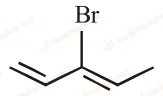
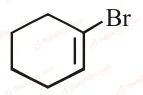
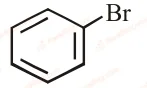
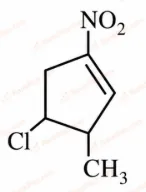
JEE MAIN 2013 · 25 APR ONLINEElectrophilic aromatic substitution

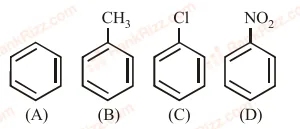
Given 

Figure for JEE Main 2013 Chemistry question on Electrophilic aromatic substitution

In the above compounds correct order of reactivity in electrophilic substitution reactions will be:

  1. A

    B > A > C > D

  2. B

    D > C > B > A

  3. C

    A > B > C > D

  4. D

    B > C > A > D

JEE MAIN 2013 · 22 APR ONLINEElectrophilic aromatic substitution

Which of the following would not give 2-phenylbutane as the major product in a Friedel-Crafts alkylation reaction?

  1. A

    1-butene + HF

  2. B

    2-butanol + H2_2SO4_4

  3. C

    Butanoyl chloride + AlCl3_3 then Zn, HCl

  4. D

    Butyl chloride + AlCl3_3

JEE MAIN 2013 · 09 APR ONLINEElectrophilic addition to alkenes

The addition of HI in the presence of peroxide catalyst does not follow anti-Markovnikov's rule because :

  1. A

    HI is a strong reducing agent.

  2. B

    H-I bond is too strong to be broken homolytically.

  3. C

    I atom combines with H atom to give back HI.

  4. D

    Iodine atom is not reactive enough to add across a double bond.
JEE MAIN 2012Reactions of alkynes

2−2-Hexyne gives trans−2−-2-Hexene on treatment with :

  1. A

    Pt/H2Pt/H_2

  2. B

    Li/NH3Li/NH_3

  3. C

    Pd/BaSO4Pd/BaSO_4

  4. D

    LiAlH4LiAlH_4

JEE MAIN 2012Reactions of alkanes

Which branched chain isomer of the hydrocarbon with molecular mass 72 u72\ u gives only one isomer of mono substituted alkyl halide?

  1. A

    Tertiary butyl chloride

  2. B

    Neopentane

  3. C

    Isohexane

  4. D

    Neohexane

JEE MAIN 2012Reactions of alkynes

The hydration of propyne results in formation of

  1. A

    Acetone

  2. B

    Propanol-1

  3. C

    Propene

  4. D

    Propanal