RankRizz

Hydrocarbons — JEE Main Previous Year Questions

Every Hydrocarbons question JEE Main has set from 2004–2026, grouped by the idea it tests rather than the order of the syllabus. 201 questions across 10 distinct ideas. Free to read, answer key on every one.

DATA UPDATED

Questions

201

Distinct ideas

10

Share of marks

4.8%

Difficulty

HARD

The ideas inside Hydrocarbons

A chapter is not one subject — it is a handful of procedures the examiner reuses. These are the ones Hydrocarbons questions actually test.

01Alkanes: preparation and propertiesset 7×
02Reactions of alkanesset 29×03Alkenes: preparation and stabilityset 16×04Electrophilic addition to alkenesset 68×
05Oxidation and reduction of alkenesset 7×
06Alkynes: preparation and acidityset 6×
07Reactions of alkynesset 27×
08Benzene and aromatic hydrocarbons: structure and preparationset 2×
09Electrophilic aromatic substitutionset 22×10Directive influence of substituentsset 17×

Every Hydrocarbons question

181–200 OF 201 · NEWEST FIRST

JEE MAIN 2012Reactions of alkanes

The major product obtained in the photobromination of 2-methyl butane is

  1. A

    2-bromo-2-methylbutane

  2. B

    1-bromo-2-methylbutane

  3. C

    1-bromo-3-methylbutane

  4. D

    2-bromo-3-methylbutane

JEE MAIN 2012Benzene and aromatic hydrocarbons: structure and preparation

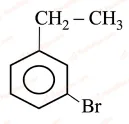
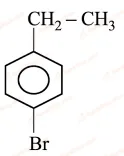
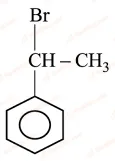
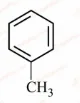
The product of the reaction between ethyl benzene and N-bromosuccinamide is
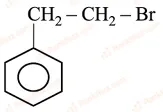
  1. A
    Figure for JEE Main 2012 Chemistry question on Benzene and aromatic hydrocarbons: structure and preparation
  2. B
    Figure for JEE Main 2012 Chemistry question on Benzene and aromatic hydrocarbons: structure and preparation
  3. C
    Figure for JEE Main 2012 Chemistry question on Benzene and aromatic hydrocarbons: structure and preparation
  4. D
    Figure for JEE Main 2012 Chemistry question on Benzene and aromatic hydrocarbons: structure and preparation
JEE MAIN 2012Directive influence of substituents

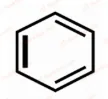
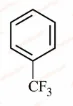
In the below mentioned compounds the decreasing order of reactivity towards electrophilic substitution is

(i)
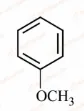
Figure for JEE Main 2012 Chemistry question on Directive influence of substituents

(ii)

Figure for JEE Main 2012 Chemistry question on Directive influence of substituents

(iii)

Figure for JEE Main 2012 Chemistry question on Directive influence of substituents

(iv)

Figure for JEE Main 2012 Chemistry question on Directive influence of substituents
  1. A

    (iv) > (i) > (ii) > (iii)

  2. B

    (ii) > (iii) > (i) > (iv)

  3. C

    (iii) > (i) > (iv) > (ii)

  4. D

    (i) > (ii) > (iii) > (iv)

JEE MAIN 2011Oxidation and reduction of alkenes

Ozonolysis of an organic compound gives formaldehyde as one of the products. This confirms the presence of:

  1. A

    a vinyl group

  2. B

    an isopropyl group

  3. C

    an acetylenic triple bond

  4. D

    two ethylenic double bonds

JEE MAIN 2010Oxidation and reduction of alkenes

One mole of a symmetrical alkene on ozonolysis gives two moles of an aldehyde having a molecular mass of 4444 u. The alkene is

  1. A

    propene

  2. B

    1-butene

  3. C

    2-butene

  4. D

    ethene

JEE MAIN 2008Oxidation and reduction of alkenes

In the following sequence of reactions, the alkene affords the compound 'BB' CH3CH=CHCH3→O3A→H2O, ZnB.CH_3 CH = CHCH_3 \xrightarrow{O_3} A \xrightarrow{H_2 O,\ Zn} B.$ The compound B is

  1. A

    CH3CH2CHOCH_3 CH_2 CHO

  2. B

    CH3COCH3CH_3 COCH_3

  3. C

    CH3CH2COCH3CH_3 CH_2 COCH_3

  4. D

    CH3CHOCH_3 CHO

JEE MAIN 2008Electrophilic aromatic substitution

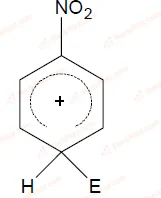
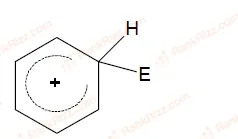
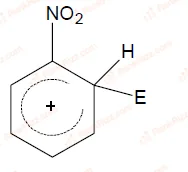
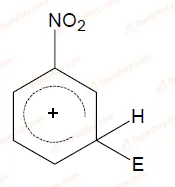
The electrophile, E⊕E^{\oplus} attacks the benzene ring to generate the intermediate σ\sigma-complex. Of the following, which σ\sigma-complex is of lowest energy?

  1. A
    Figure for JEE Main 2008 Chemistry question on Electrophilic aromatic substitution
  2. B
    Figure for JEE Main 2008 Chemistry question on Electrophilic aromatic substitution
  3. C
    Figure for JEE Main 2008 Chemistry question on Electrophilic aromatic substitution
  4. D
    Figure for JEE Main 2008 Chemistry question on Electrophilic aromatic substitution
JEE MAIN 2008Alkynes: preparation and acidity

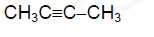
The treatment of CH3MgXCH_3 MgX with CH3C≡C−HCH_3 C \equiv C - H produces

  1. A

    CH3−CH=CH2CH_3 - CH = CH_2

  2. B
    Figure for JEE Main 2008 Chemistry question on Alkynes: preparation and acidity
  3. C
    Figure for JEE Main 2008 Chemistry question on Alkynes: preparation and acidity
  4. D
    Figure for JEE Main 2008 Chemistry question on Alkynes: preparation and acidity
JEE MAIN 2008Alkynes: preparation and acidity

The hydrocarbon which can react with sodium in liquid ammonia is

  1. A

    CH3CH2CH2C≡CCH2CH2CH3CH_3 CH_2 CH_2 C \equiv CCH_2 CH_2 CH_3

  2. B

    CH3CH2C≡CHCH_3 CH_2 C \equiv CH

  3. C

    CH3CH=CHCH3CH_3 CH = CHCH_3

  4. D

    CH3CH2C≡CCH3CH_3 CH_2 C \equiv CCH_3

JEE MAIN 2007Directive influence of substituents

The reaction of toluene with Cl2Cl_2 in presence of FeCl3FeCl_3 gives predominantly

  1. A

    benzoyl chloride

  2. B

    benzyl chloride

  3. C

    o−o- and p−p-chlorotoluene

  4. D

    m−m-chlorotoluene

JEE MAIN 2007Directive influence of substituents

Presence of a nitro group in a benzene ring

  1. A

    activates the ring towards electrophilic substitution

  2. B

    renders the ring basic

  3. C

    deactivates the ring towards nucleophilic substitution

  4. D

    deactivates the ring towards electrophilic substitution

JEE MAIN 2007Reactions of alkynes

Which of the following reactions will yield 2,2−2, 2-dibromopropane?

  1. A

    CH3−C≡CH+2HBr⟶CH_3 - C \equiv CH + 2HBr \longrightarrow

  2. B

    CH3CH=CHBr+HBr⟶CH_3 CH = CHBr + HBr \longrightarrow

  3. C

    CH≡CH+2HBr⟶CH \equiv CH + 2HBr \longrightarrow

  4. D

    CH3−CH=CH2+HBr⟶CH_3 - CH = CH_2 + HBr \longrightarrow

JEE MAIN 2007Benzene and aromatic hydrocarbons: structure and preparation

The compound formed as a result of oxidation of ethyl benzene by KMnO4KMnO_4 is

  1. A

    benzophenone

  2. B

    acetophenone

  3. C

    benzoic acid

  4. D

    benzyl alcohol

JEE MAIN 2006Alkenes: preparation and stability

The alkene formed as a major product in the above elimination reaction isFigure for JEE Main 2006 Chemistry question on Alkenes: preparation and stability
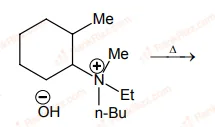
  1. A
    Figure for JEE Main 2006 Chemistry question on Alkenes: preparation and stability
  2. B

    CH2=CH2CH_2 = CH_2

  3. C
    Figure for JEE Main 2006 Chemistry question on Alkenes: preparation and stability
  4. D
    Figure for JEE Main 2006 Chemistry question on Alkenes: preparation and stability
JEE MAIN 2006Electrophilic addition to alkenes

HBr reacts with CH2=CH−OCH3CH_2 = CH - OCH_3 under anhydrous conditions at room temperature to give

  1. A

    CH3CHOCH_3CHO and CH3BrCH_3Br

  2. B

    BrCH2CHOBrCH_2CHO and CH3OHCH_3OH

  3. C

    BrCH2−CH2−OCH3BrCH_2 - CH_2 - OCH_3

  4. D

    H3C−CHBr−OCH3H_3C - CHBr - OCH_3

JEE MAIN 2005Reactions of alkanes

Of the five isomeric hexanes, the isomer which can give two monochlorinated compounds is

  1. A

    n-hexane

  2. B

    2,3-dimethylbutane

  3. C

    2,2-dimethylbutane

  4. D

    2-methylpentane

JEE MAIN 2005Reactions of alkanes

2-methylbutane on reacting with bromine in the presence of sunlight gives mainly

  1. A

    1-bromo-2-methylbutane

  2. B

    2-bromo-2-methylbutane

  3. C

    2-bromo-3-methylbutane

  4. D

    1-bromo-3-methylbutane

JEE MAIN 2005Electrophilic addition to alkenes

Reaction of one molecule of HBr with one molecule of 1,3-butadiene at 40∘40^\circC gives predominantly

  1. A

    3-bromobutene under kinetically controlled conditions

  2. B

    1-bromo-2-butene under thermodynamically controlled conditions

  3. C

    3-bromobutene under thermodynamically controlled conditions

  4. D

    1-bromo-2-butene under kinetically controlled conditions

JEE MAIN 2005Electrophilic addition to alkenes

Acid catalyzed hydration of alkenes except ethene leads to the formation of

  1. A

    primary alcohol

  2. B

    secondary or tertiary alcohol

  3. C

    mixture of primary and secondary alcohols

  4. D

    mixture of secondary and tertiary alcohols