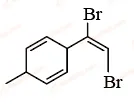
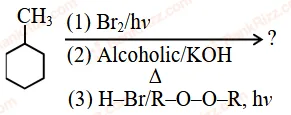
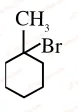
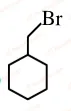
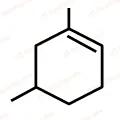
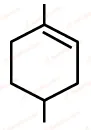
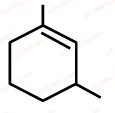
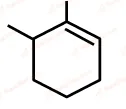
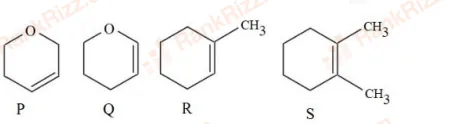
The cycloalkene on bromination consumes one mole of bromine per mole of and gives the product in which ratio is 3: 1. The percentage of bromine in the product is _____ %. (Nearest integer)
( Given: molar mass in g )
Every Hydrocarbons question JEE Main has set from 2004–2026, grouped by the idea it tests rather than the order of the syllabus. 201 questions across 10 distinct ideas. Free to read, answer key on every one.
DATA UPDATED
Questions
201
Distinct ideas
10
Share of marks
4.8%
Difficulty
HARD
A chapter is not one subject — it is a handful of procedures the examiner reuses. These are the ones Hydrocarbons questions actually test.
21–40 OF 201 · NEWEST FIRST
The cycloalkene on bromination consumes one mole of bromine per mole of and gives the product in which ratio is 3: 1. The percentage of bromine in the product is _____ %. (Nearest integer)
( Given: molar mass in g )
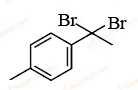
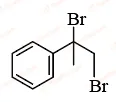
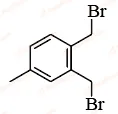
The dibromo compound [P] (molecular formula : ) when heated with excess sodamide followed by treatment with dilute HO gives [Q]. On wanning [Q] with mercuric sulphate and
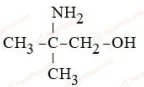
dilute sulphuric acid yield [R] which gives positive Iodofonn test but negative Tollen's test. The compound [P] is:


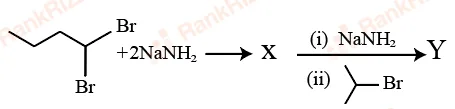
Consider the following reaction :
The product Y formed is :
2-methylhex-3-yne
Isopropylbut-1-yne
5-methylhex-2-yne
2-methylhex-2-yne
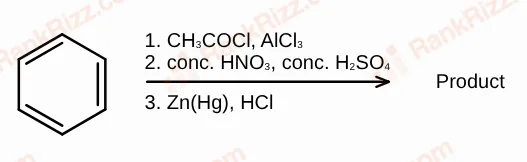
The final product is:


1,2-dibromocyclooctane is treated with
'P' is :


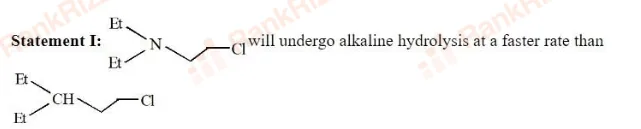
Given below are two statements :
Statement I : Ozonolysis followed by treatment with Zn, HO of cis-2-butene gives ethanal.
Statement II : The production obtained by ozonolysis followed by treatment with Zn, HO of 3, 6-dimethyloct-4-ene has no chiral carbon atom.
In the light of the above statements, choose the correct answer from the options given below
Both Statement I and Statement II are true
Statement I is false but Statement II are true
Statement I is true but Statement II is false
Both Statement I and Statement II are false
The reactions which cannot be applied to prepare an alkene by elimination, are

Choose the correct answer from the options given below :
B & E Only
B, C & D Only
A, C & D Only
B & D Only
Predict the major product of the following reaction sequence:


Which compound would give 3-methyl-6-oxoheptanal upon ozonolysis ?


Given below are two statements :
Statement (I) : Neopentane forms only one monosubstituted derivative.
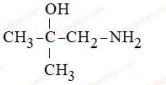
Statement (II) : Melting point of neopentane is higher than n-pentane.
In the light of the above statements, choose the most appropriate answer from the options given below :
Statement I is correct but Statement II is incorrect
Both Statement I and Statement II are correct
Both Statement I and Statement II are incorrect
Statement I is incorrect but Statement II is correct
Given below are two statements : Statement (I) : On nitration of m-xylene with , followed by oxidation, 4-nitrobenzene-1,3-dicarboxylic acid is obtained as the major product. Statement (II) : group is o/p-directing while group is m-directing group. In the light of the above statements, choose the correct answer from the options given below :
Both Statement I and Statement II are false
Statement I is false but Statement II is true
Statement I is true but Statement II is false
Both Statement I and Statement II are true
Isomeric hydrocarbons negative Baeyer's test (Molecular formula ) The total number of isomers from above with four different non-aliphatic substitution sites is -
Given below are two statements:


involving lone pair of electrons on nitrogen. In the light of the above statements, choose the most appropriate answer from the options given below
Statement I is incorrect but Statement II is correct
Statement I is correct but Statement II is incorrect
Both Statement I and Statement II are correct
Both Statement I and Statement II are incorrect
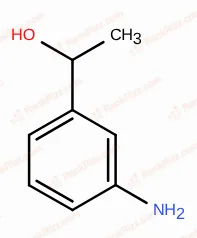
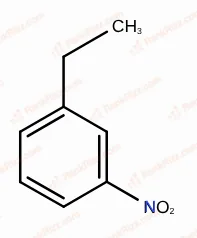
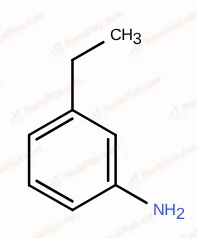
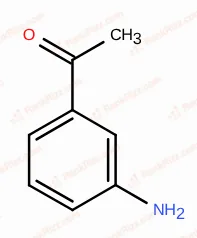
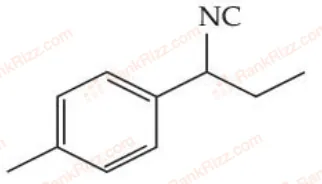
Identify product [A],[B] and [C] in the following reaction sequence.


The product formed in the following reaction sequence is :


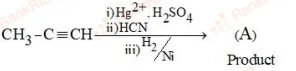
The product (A) formed in the following reaction sequence is


Following are the four molecules "P", "Q", "R" and "S". Which one among the four molecules will react with
at the fastest rate?
R
P
Q
S
are meta directing groups. Activating groups act as ortho- and para-directing groups. Halides are activating groups. Choose the correct answer from the options given below:
(A) only
(A), (B) and (E) only
(A) and (C) only
(A), (C) and (D) only
Propane molecule on chlorination under photochemical condition gives two di-chloro products, " x " and " y ". Amongst " x " and " y ", " x " is an optically active molecule. How many tri-chloro products (consider only structural isomers) will be obtained from " x " when it is further treated with chlorine under the photochemical condition?
2
5
4
3

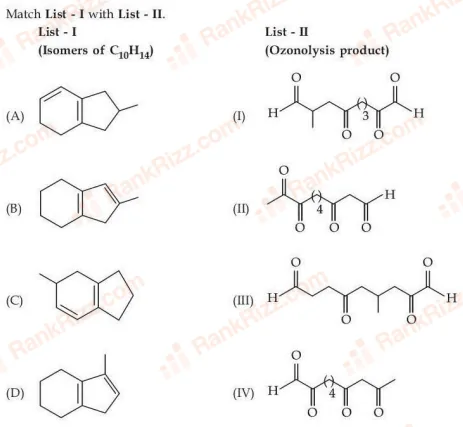
Choose the correct answer from the options given below :
(A)-(I), (B)-(IV), (C)-(III), (D)-(II)
(A)-(III), (B)-(II), (C)-(I), (D)-(IV)
(A)-(III), (B)-(IV), (C)-(I), (D)-(II)
(A)-(II), (B)-(III), (C)-(I), (D)-(IV)
JEE Advanced has set 28 Hydrocarbons questions too. Hydrocarbons JEE Advanced PYQs →
OTHER CHEMISTRY CHAPTERS