JEE MAIN 2026 · 08 APR S2Reactive intermediates and rearrangements
The major product of which of the following reaction is not obtained by rearrangement reaction?
- A
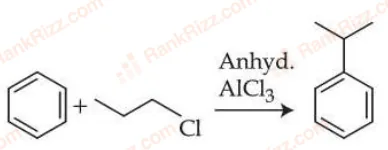
- B
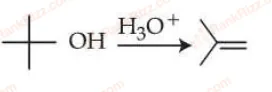
- C
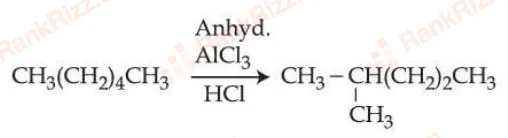
- D
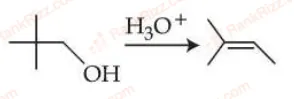
General Organic Chemistry has been asked in every one of the 23 JEE Main years from 2004 to 2026: 258 questions in all. In 2026 it averaged 1.4 questions per paper (27 across 19 papers), 5.6% of Chemistry questions, down from 6.3% in 2025. Across the last 20 papers it carried 5.7% of Chemistry marks. By type: 227 MCQs and 31 numerical-answer questions. Of the 220 with a difficulty tag, 45% are easy, 55% medium and 1% hard. Most asked: Structural isomerism (57, 22%), IUPAC nomenclature of organic compounds (47, 18%) and Reactive intermediates and rearrangements (36, 14%).
DATA UPDATED
Questions
258
Distinct ideas
12
Share of marks
5.7%
Difficulty
MEDIUM
The share of each year’s Chemistry questions that came from General Organic Chemistry, counted from the 168 papers we hold for the last 10 years, and session by session inside a year.
Rising: 7.3% of Chemistry questions in 2024–2026, up from 3.0% in 2017–2023. Its heaviest year was 2024, at 9.5%.
| YEAR | QS | PER PAPER | SHARE OF CHEMISTRY | CHANGE | |
|---|---|---|---|---|---|
| 2026 | 27 / 480 | 1.4 | 5.6% | −0.7 pts | JAN 4.8%APR 6.5% |
| 2025 | 30 / 475 | 1.6 | 6.3% | −3.2 pts | JAN 5.6%APR 7.1% |
| 2024 | 57 / 600 | 2.9 | 9.5% | +7.4 pts | JAN 9.7%APR 9.3% |
| 2023 | 16 / 750 | 0.6 | 2.1% | −1.4 pts | JAN 2.8%APR 1.4% |
| 2022 | 23 / 660 | 1.0 | 3.5% | +0.3 pts | JUN 3.3%JUL 3.7% |
| 2021 | 23 / 720 | 1.0 | 3.2% | +0.4 pts | FEB 1.3%MAR 2.0%JUL 5.7%AUG 2.9% |
| 2020 | 11 / 400 | 0.7 | 2.8% | −0.5 pts | JAN 2.7%SEP 2.8% |
| 2019 | 16 / 480 | 1.0 | 3.3% | +1.6 pts | JAN 3.3%APR 3.3% |
| 2018 | 2 / 120 | 0.5 | 1.7% | −5.0 pts | 4 PAPERS, ONE SESSION |
| 2017 | 6 / 90 | 2.0 | 6.7% | — | 3 PAPERS, ONE SESSION |
“QS” is General Organic Chemistry questions out of all Chemistry questions that year; “per paper” is that count over the year’s papers, and “change” is the share against the year before. A year with more sittings asks more questions, which is why the share, not the count, is the number to compare.
How General Organic Chemistry compares: every Chemistry chapter by weightage · most repeated JEE Main topics
A chapter is not one subject — it is a handful of procedures the examiner reuses. These are the ones General Organic Chemistry questions actually test.
Every JEE Main General Organic Chemistry question we hold, newest first inside each topic. Open one for its options, answer key and solution.
FREE PDF
All 258 questions on A4, by topic, with the answer key at the end. No sign-up, no email: your browser saves it as a PDF.
Download free PDFUNIQUE CONCEPTS
12 ideas, each with the latest past question that tested it, drawn from 323 JEE Main and Advanced questions.
General Organic Chemistry Unique Concepts sheet →JEE ADVANCED
JEE Advanced has set 66 General Organic Chemistry questions, 2007–2025.
General Organic Chemistry JEE Advanced PYQs →Yes. It has been asked in every one of the 23 JEE Main years from 2004 to 2026, 258 questions in all.
Structural isomerism: 57 of the 258 questions (22%). Next come IUPAC nomenclature of organic compounds (47) and Reactive intermediates and rearrangements (36).
About 5.7% across the last 20 papers. Every JEE Main question carries the same marks, so that is also its share of Chemistry questions. In 2026 it was 5.6% (27 of 480 Chemistry questions).
In JEE Main 08 Apr 2026, Shift 2, the latest sitting with a General Organic Chemistry question.
258 from 2004 to 2026, across 12 topics. Every one is listed on this page by topic and links to its own page, with the answer key and solution wherever we have them. Free, no sign-up.
1–20 OF 258 · NEWEST FIRST
The major product of which of the following reaction is not obtained by rearrangement reaction?
The total number of aromatic compounds/species from the following is
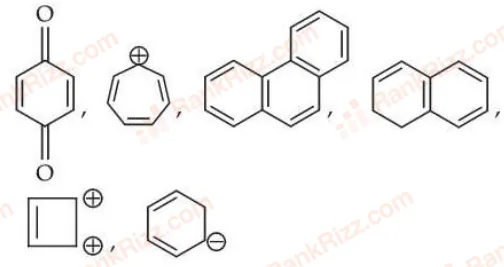
6
4
3
5
Given below are two statements:
Statement I: 2,6-diethylcyclohexanone and 6-methyl-2-n-propylcyclohexanone are metamers.
Statement II: 2,2,6,6-tetramethylcyclohexanone exhibits keto-enol tautomerism.
In the light of the above statements, choose the correct answer from the options given below:
Both Statement I and Statement II are true
Both Statement I and Statement II are false
Statement I is true but Statement II is false
Statement I is false but Statement II is true
Shown below is the structure of methyl acetate with three different , and carbon-oxygen bonds.
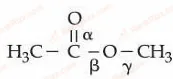
The correct order of bond lengths of these bonds is :
Given below are two statements:
Statement I: On the basis of inductive effect, the order of stability of alkyl carbanions is .
Statement II: Allyl and benzyl carbanions are more stabilised by inductive effect and not by resonance effect.
In the light of the above statements, choose the correct answer from the options given below
Both Statement I and Statement II are correct
Both Statement I and Statement II are incorrect
Statement I is correct but Statement II is incorrect
Statement I is incorrect but Statement II is correct
Increasing order of electron withdrawing power of following functional groups is:
a. , b. , c. , d.
Amongst the following, the total number of compounds soluble in aqueous NaOH at room temperature is:
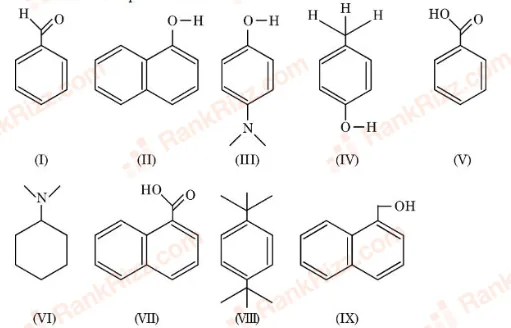
Match the List I with List II:
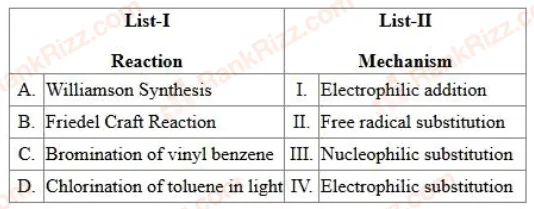
Choose the correct answer from the options given below
A-III, B-I, C-II, D-IV
A-III, B-IV, C-II, D-I
A-III, B-IV, C-I, D-II
A-I, B-III, C-IV, D-II
Consider the following molecules/species:
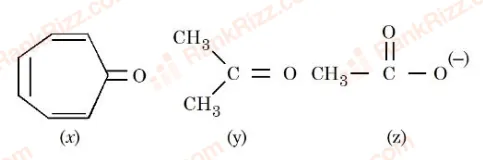
The correct order of carbon-oxygen double bond length is:
x > y > z
y > z > x
z > x > y
x > z > y
The following structures are
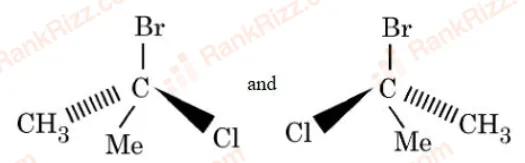
Enantiomers
Identical molecules
Diastereomers
Meso compounds
The descending order of acidity among the following compounds is:
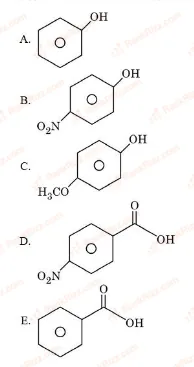
choose the correct answer from the options given below:
B > D > E > A > C
D > B > E > A > C
C > A > B > D > E
D > E > B > A > C
The strongest conjugate acid will result from:
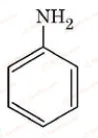
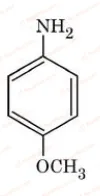
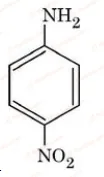
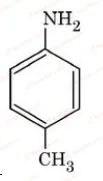
Match the List I with List II:
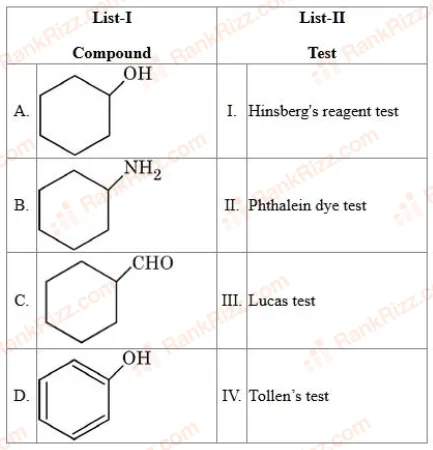
choose the correct answer from the options given below
A-III, B-I, C-IV, D-II
A-III, B-IV, C-I, D-II
A-I, B-III, C-II, D-IV
A-I, B-II, C-III, D-IV
In IUPAC nomenclature, the correct order of decreasing priority of functional group is :
Given below are two statements :
Statement I : In
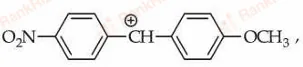
the carbocation is stabilised by +R effect of group.
Statement II : In
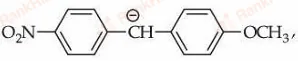
the carbanion is stabilised by effect of group.
Both Statement I and Statement II are true
Both Statement I and Statement II are false
Statement I is true but Statement II is false
Statement I is false but Statement II is true
CORRECT order of stability for the following is
The cyclic cations having the same number of hyperconjugalion are :
A.
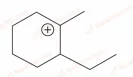
B.
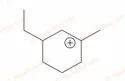
C.

D.
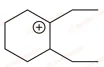
Choose the correct answer from the options given below :
A, C and D only
B and C Only
A and C Only
A and B Only
Arrange the following carbanions in the decreasing order of stability.
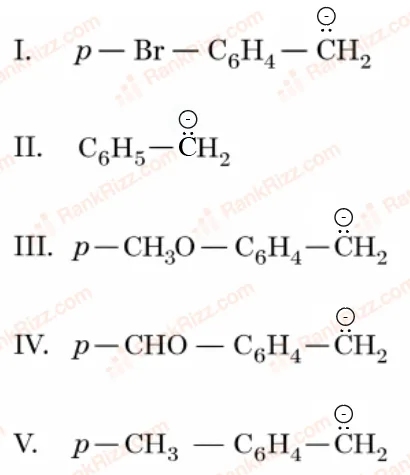
Choose the correct answer from the options given below:
I > II > IV > V > III
I > IV > II > V > III
IV > II > I > III > V
IV > I > II > V > III
Find out the statements which are not true.
A. Resonating structures with more number of covalent bonds and lesser charge separntion are more stable.
B. In electromeric effect, an unsaturated system shows +E effect with nucleophile and -E effect with electrophile.
C. Inductive effect is responsible for high melting point, boiling point and dipole moment of polar compotmds.
D. The greater the number of alkyl groups attached to the doubly bonded carbon atoms, higher is the heat of hydrogenation.
E. Stability of carbanion increases with the increase in s - character of the carbon carrying the negative charge.
Choose the correct answer from the options given below:
A, C & D only
B, D & E only
A, D & E only
B & D only
Given below are two statements:
Statement I: There are several conformers for n-butane. Out of those conformers,
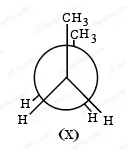
is the least stable and most stable conformer is
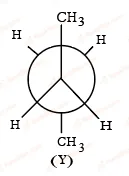
Statement II: As the dihedral angle increases, torsional strain decreases from (X) to (Y).
In the light of the above statements, choose the correct answer from the options given below
Statement I is false but Statement II is true
Both Statement I and Statement II are true
Statement I is true but Statement II is false
Both Statement I and Statement II are false
OTHER CHEMISTRY CHAPTERS