JEE MAIN 2026 · 06 APR S1Properties and reactions of alcohols
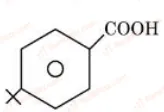
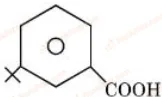
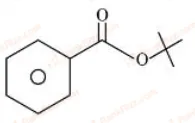
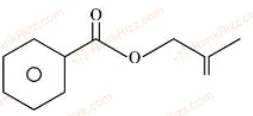
Consider the following sequence of reactions

The major product P is:
- A
- B
- C
- D
Alcohols, Phenols and Ethers has been asked in 21 of the 23 JEE Main years from 2004 to 2026: 182 questions in all. In 2026 it averaged 0.7 questions per paper (13 across 19 papers), 2.7% of Chemistry questions, up from 1.9% in 2025. Across the last 20 papers it carried 2.8% of Chemistry marks. By type: 170 MCQs and 12 numerical-answer questions. Of the 163 with a difficulty tag, 28% are easy, 71% medium and 1% hard. Most asked: Reactions of phenols (78, 43%), Properties and reactions of alcohols (62, 34%) and Ethers (27, 15%).
DATA UPDATED
Questions
182
Distinct ideas
5
Share of marks
2.8%
Difficulty
MEDIUM
The share of each year’s Chemistry questions that came from Alcohols, Phenols and Ethers, counted from the 168 papers we hold for the last 10 years, and session by session inside a year.
Steady: 3.0% of Chemistry questions in 2024–2026 against 3.1% in 2017–2023, and between 1.1% and 4.0% in every year shown.
| YEAR | QS | PER PAPER | SHARE OF CHEMISTRY | CHANGE | |
|---|---|---|---|---|---|
| 2026 | 13 / 480 | 0.7 | 2.7% | +0.8 pts | JAN 2.8%APR 2.6% |
| 2025 | 9 / 475 | 0.5 | 1.9% | −2.1 pts | JAN 2.0%APR 1.8% |
| 2024 | 24 / 600 | 1.2 | 4.0% | +0.9 pts | JAN 4.0%APR 4.0% |
| 2023 | 23 / 750 | 0.9 | 3.1% | −0.5 pts | JAN 2.6%APR 3.6% |
| 2022 | 24 / 660 | 1.1 | 3.6% | +0.7 pts | JUN 3.1%JUL 4.3% |
| 2021 | 21 / 720 | 0.9 | 2.9% | −0.1 pts | FEB 2.7%MAR 1.3%JUL 3.8%AUG 3.3% |
| 2020 | 12 / 400 | 0.8 | 3.0% | −0.1 pts | JAN 2.0%SEP 3.6% |
| 2019 | 15 / 480 | 0.9 | 3.1% | +0.6 pts | JAN 3.8%APR 2.5% |
| 2018 | 3 / 120 | 0.8 | 2.5% | +1.4 pts | 4 PAPERS, ONE SESSION |
| 2017 | 1 / 90 | 0.3 | 1.1% | — | 3 PAPERS, ONE SESSION |
“QS” is Alcohols, Phenols and Ethers questions out of all Chemistry questions that year; “per paper” is that count over the year’s papers, and “change” is the share against the year before. A year with more sittings asks more questions, which is why the share, not the count, is the number to compare.
How Alcohols, Phenols and Ethers compares: every Chemistry chapter by weightage · most repeated JEE Main topics
A chapter is not one subject — it is a handful of procedures the examiner reuses. These are the ones Alcohols, Phenols and Ethers questions actually test.
Every JEE Main Alcohols, Phenols and Ethers question we hold, newest first inside each topic. Open one for its options, answer key and solution.
FREE PDF
All 182 questions on A4, by topic, with the answer key at the end. No sign-up, no email: your browser saves it as a PDF.
Download free PDFUNIQUE CONCEPTS
5 ideas, each with the latest past question that tested it, drawn from 202 JEE Main and Advanced questions.
Alcohols, Phenols and Ethers Unique Concepts sheet →JEE ADVANCED
JEE Advanced has set 21 Alcohols, Phenols and Ethers questions, 2007–2025.
Alcohols, Phenols and Ethers JEE Advanced PYQs →Not every year. It has been asked in 21 of the 23 JEE Main years from 2004 to 2026; the years without a Alcohols, Phenols and Ethers question were 2007 and 2015.
Reactions of phenols: 78 of the 182 questions (43%). Next come Properties and reactions of alcohols (62) and Ethers (27).
About 2.8% across the last 20 papers. Every JEE Main question carries the same marks, so that is also its share of Chemistry questions. In 2026 it was 2.7% (13 of 480 Chemistry questions).
In JEE Main 06 Apr 2026, Shift 2, the latest sitting with a Alcohols, Phenols and Ethers question.
182 from 2004 to 2026, across 5 topics. Every one is listed on this page by topic and links to its own page, with the answer key and solution wherever we have them. Free, no sign-up.
1–20 OF 182 · NEWEST FIRST
Consider the following sequence of reactions
The major product P is:
4.7 g of phenol is heated with Zn to give product X. If this reaction goes to 60% completion then the number of moles of compound X formed will be _______ . (Nearest Integer)
(Given molar mass in g mol: H:1, C:12, O:16)
Consider the following reaction.
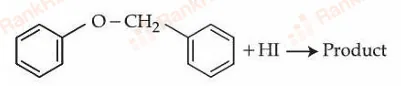
Statement I : In the above reaction, product formed will be a mixture of benzyl alcohol and iodobenzene.
Statement II : In the above reaction, the bond is cleaved to give the product.
In the light of the above statements, choose the correct answer from the options given below :
Both Statement I and Statement II are true
Both Statement I and Statement II are false
Statement I is true but Statement II is false
Statement I is false but Statement II is true
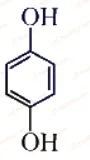
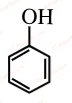
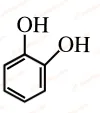
Consider compounds A, B and C with following structural formulae
A =
B =
C =
For the conversion of B from A, reagent (D) required is _______ and structural formula of product (E) obtained when C undergoes same reaction using excess reagent (D) is _______.




One mole of phenol is treated with dilute HNO at 298 K to give a mixture of products. The mixture is separated by steam distillation. The steam volatile compound (X) is separated. The increase in percentage of oxygen in (X) with respect to phenol is _______ %. (Given molar mass in g mol H:1, C:12, N:14, O:16)
Identify the colour of compound 'X' in the sequence of the reaction:
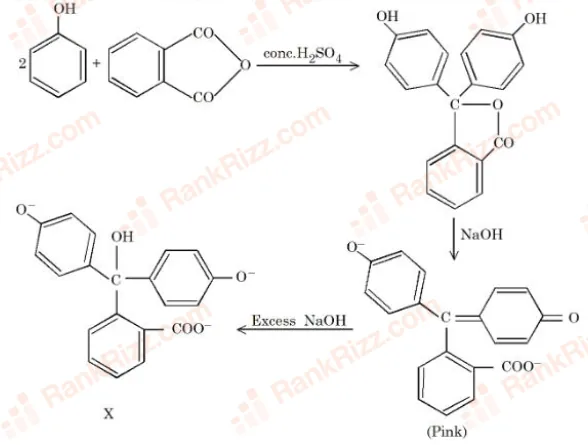
Violet
Green
Red
Colourless
Consider the following reaction sequence

Compound (y) develops characterstic colour with neutral solution.
Identify the INCORRECT statement from the following for the above sequence.
Compound y win dissolve in and evolve a gas.
Compotmd x is more acidic than compmmd y.
Both compounds x and y will burn with sooty flame.
Both compounds x and y will dissolve in NaOH.
The reactions which produce alcohol as the product are:
Choose the correct answer from the options given below :
C and D Only
A, C and E Only
A and D Only
B, D and E Only
A hydroxy compound (X) with molar mass 122 g is acetylated with acetic anhydride, using a large excess of the reagent ensuring complete acetylation of all hydroxyl groups. The product obtained has a molar mass of 290 g . The number of hydroxyl groups present in compound (X) is:
3
4
2
5
From the following, how many compounds contain at least one secondary alcohol?
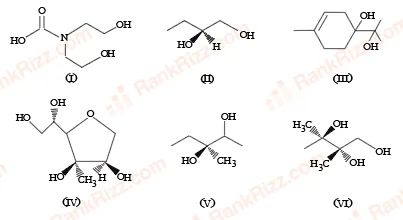
Choose the correct answer from the options given below:
Five
Three
Four
Two
A mixed ether (P), when heated with excess of hot concentrated hydrogen iodide produces two different alkyl iodides which when treated with aq. NaOH give compounds (Q) and (R). Both (Q) and (R) give yellow precipitate with NaOI. Identify the mixed ether (P):
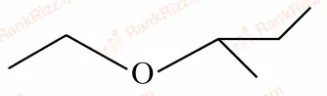
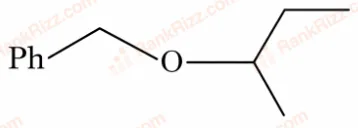
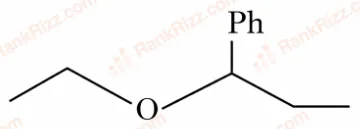
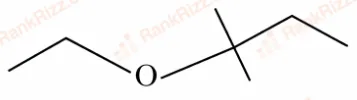
Given below are two statements:
Statement I: Phenol on treatment with . /aq. under refluxing condition, followed by acidification produces -hydroxy benzaldehyde as the major product and -hydroxy benzaldehyde as the minor product.
Statement II: The mixture of -hydroxybenzaldehyde and -
hydroxybenzaldehyde can be easily separated through steam distillation.
In the light of the above statements, choose the correct answer from the options given below
Statement I is false but Statement II is true
Statement I is true but Statement II is false
Both Statement I and Statement II are true
Both Statement I and Statement II are false
3, 3-Dimethyl-2-butanol cannot be prepared by:
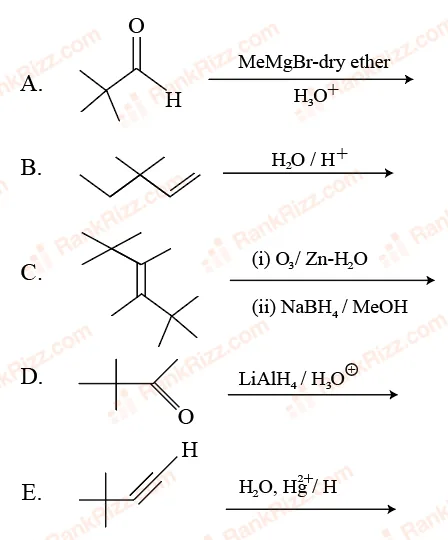
Choose the correct answer from the options given below:
B only
B and C only
B and E only
B, C and E only
Benzene diazonium salt reacts with ethanol to form compound B, which on treatment with oleum gives compound C. Compound C, when treated with NaOH at 350∘C, followed by hydrolysis, forms compound D. Compound D is then treated with sodium dichromate in the presence of sulphuric acid. The final product is:
1,4- benzoquinone
Hydroquinone
Phenol
1,2- benzoquinone
Which one of the following reactions will not lead to the desired ether formation in major proportion? (iso-Bu isobutyl, sec-Bu sec-butyl, nPr n-propyl, Bu tert-butyl, Et ethyl)



Given below are two statements :
Statement I : Dimethyl ether is completely soluble in water. However, diethyl ether is soluble in water to a very small extent.
Statement II : Sodium metal can be used to dry diethyl ether and not ethyl alcohol.
In the light of given statements, choose the correct answer from the options given below
Statement I is false but Statement II are true
Both Statement I and Statement II are false
Statement I is true but Statement II is false
Both Statement I and Statement II are true
Benzene is treated with oleum to produce compound (X) which when further heated with molten sodium hydroxide followed by acidification produces compound (Y). The compound Y is treated with zinc metal to produce compound (Z). Identify the structure of compound (Z) from the following option.

A toxic compound "A" when reacted with NaCN in aqueous acidic medium yields an edible cooking component and food preservative 'B'. "B" is converted to "C" by diborane and can be used as an additive to petrol to reduce emission. "C" upon reaction with oleum at C yields an inhalable anesthetic "D". Identify "A", "B", "C" and "D", respectively.
Methanol; formaldehyde; methyl chloride; chloroform
Ethanol; acetonitrile; ethylamine; ethylene
Methanol; acetic acid; ethanol; diethyl ether
Acetaldehyde; 2-hydroxypropanoic acid; propanoic acid; dipropyl ether
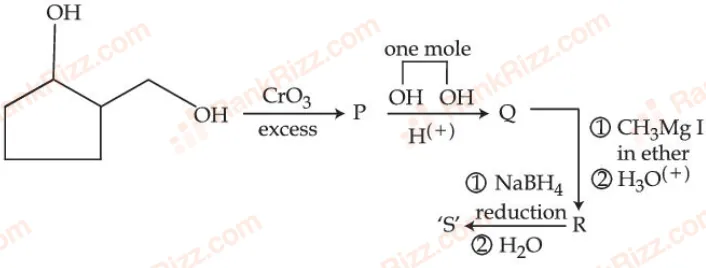
0.1 mole of compound ' S ' will weigh _______ g. (Given molar mass in C : 12, H : 1, O : 16)
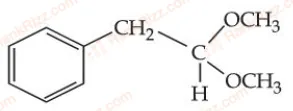
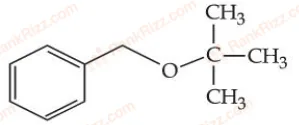
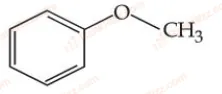
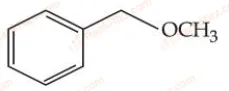
Which one of the following, with HBr will give a phenol?
OTHER CHEMISTRY CHAPTERS