JEE MAIN 2020 · 03 SEP S2Nucleophilic substitution (SN1 and SN2)
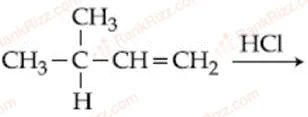
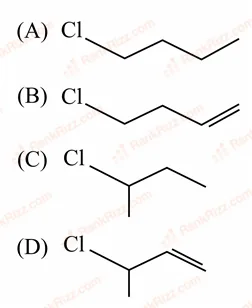
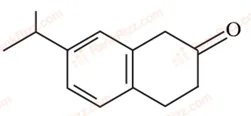
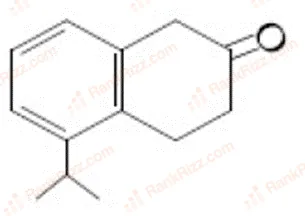
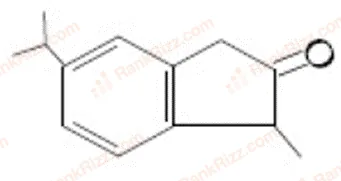
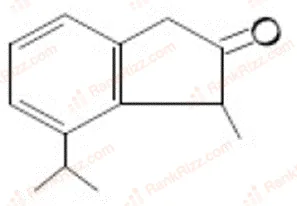
The major product in the following reaction is:
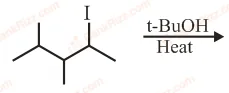
- A

- B
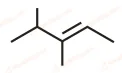
- C

- D
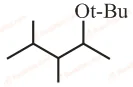
Every Haloalkanes and Haloarenes question JEE Main has set from 2004–2026, grouped by the idea it tests rather than the order of the syllabus. 188 questions across 6 distinct ideas. Free to read, answer key on every one.
DATA UPDATED
Questions
188
Distinct ideas
6
Share of marks
3.4%
Difficulty
MEDIUM
A chapter is not one subject — it is a handful of procedures the examiner reuses. These are the ones Haloalkanes and Haloarenes questions actually test.
121–140 OF 188 · NEWEST FIRST
The major product in the following reaction is:
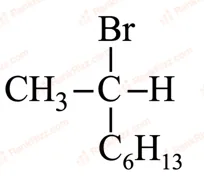
Which of the following compounds will show retention in configuration on nucleophilic substitution by ion?
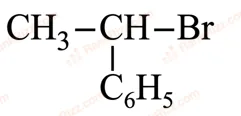
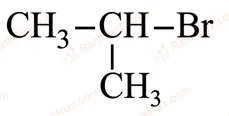
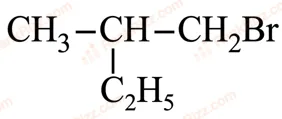
The major product obtained from -elimination of 3-bromo-2-fluoropentane is:
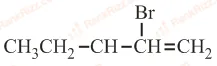
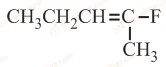
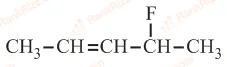
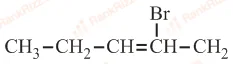
Consider the reaction sequence given below:
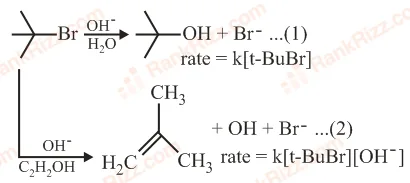
Which of the following statements is true:
Changing the base from to will have no effect on reaction (2)
Changing the concentration of base will have no effect on reaction (1)
Doubling the concentration of base will double the rate of both the reactions
Changing the concentration of base will have no effect on reaction (2)
Which of these will produce the highest yield Friedel Crafts reaction?

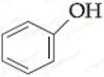

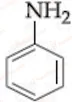
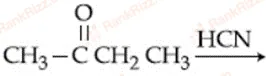
Which of the following reactions will not produce a racemic product?
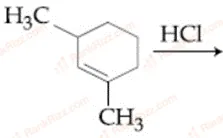
The decreasing order of reactivity towards dehydrohalogenation (E) reaction of the following compounds is:
D > B > C > A
B > D > A > C
B > D > C > A
B > A > D > C
1-methyl ethylene oxide when treated with an excess of HBr produces
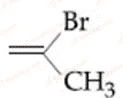
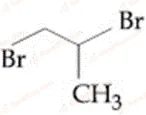
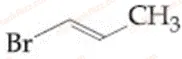
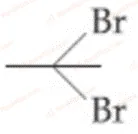
For the following reactions
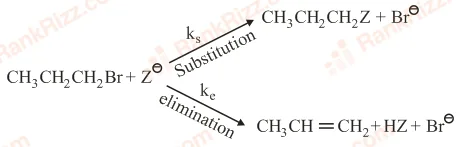
where:
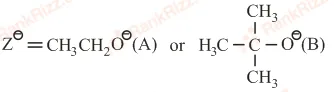
k and k are respectively the rate constants for substitution and elimination, and , the correct option is
and
and
and
and
Consider the following reactions:
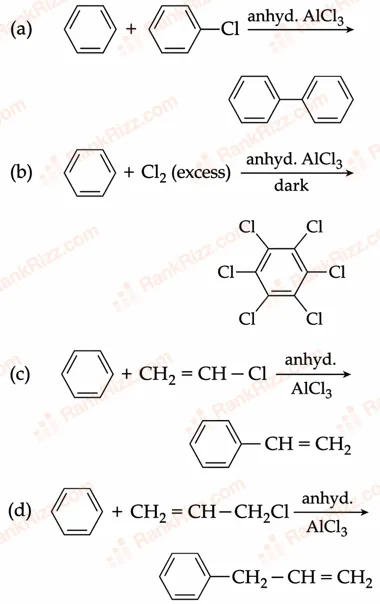
Which of these reactions are possible?
(a) and (b)
(a) and (d)
(b), (c) and (d)
(b) and (d)
Which one of the following is likely to give a precipitate with AgNO solution?
CH = CH - Cl
(CH)CCl
CCl
CHCl
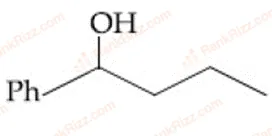
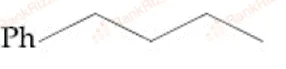
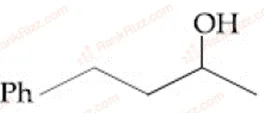
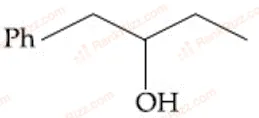
Heating of 2-chloro-1-phenylbutane with EtOK/EtOH gives X as the major product. Reaction X with Hg(OAc)/HO followed by NaBH gives Y as the major product. Y is:
An 'Assertion' and a 'Reason' is given below. Choose the correct answer from the following options:
Assertion (A): Vinyl halides do not undergo nucleophilic substitution easily.
Reason (R): Even though the intermediate carbocation is stabilized by loosely held -electrons, the cleavage is difficult because of the strong bonding.
Both (A) and (R) are correct statements but (R) is not the correct explanation of (A).
Both (A) and (R) are wrong statements.
Both (A) and (R) are wrong statements and (R) is the correct explanation of (A).
(A) is a correct statement but (R) is a wrong statement.
Increasing rate of S1 reaction in the following compounds is:
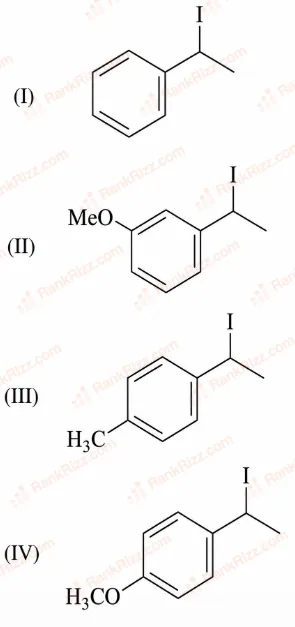
(I) < (II) < (III) < (IV)
(II) < (I) < (III) < (IV)
(II) < (I) < (IV) < (III)
(I) < (II) < (IV) < (III)
The major product obtained in the given reaction is:

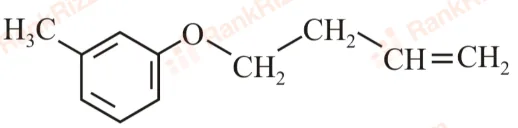
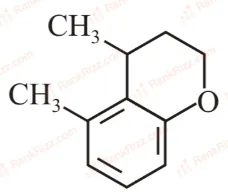
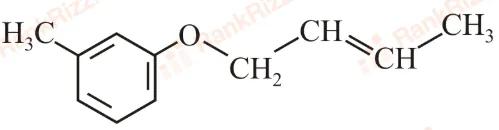
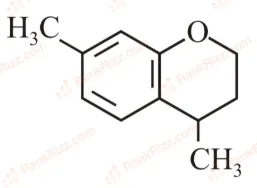
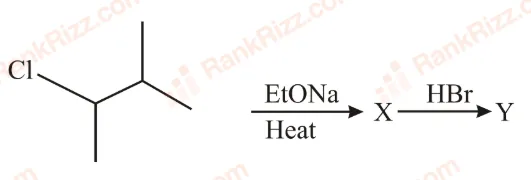
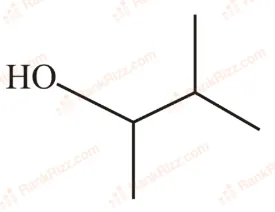
The major product 'Y' in the following reaction is:
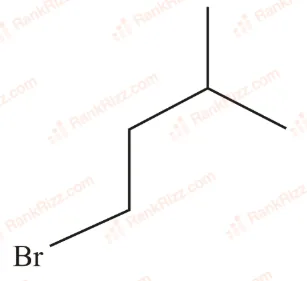
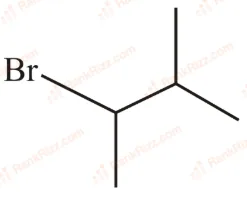
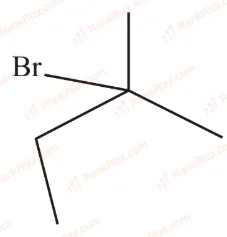
Increasing order of reactivity of the following compounds for S1 substitution is:

B < C < D < A
B < A < D < C
A < B < D < C
B < C < A < D
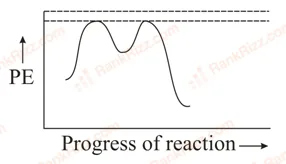
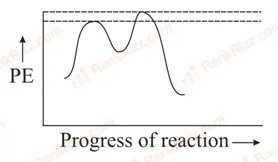
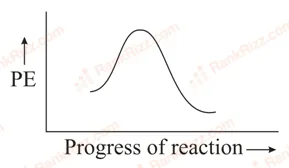
Which of the following potential energy (P.E.) diagrams represents the S1 reaction?
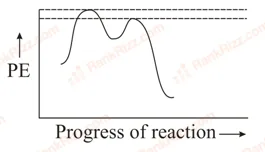
Which one of the following alkenes when treated with HCl yields majorly an anti Markovnikov product?
CHO - CH = CH
Cl - CH = CH
HN - CH = CH
FC - CH = CH
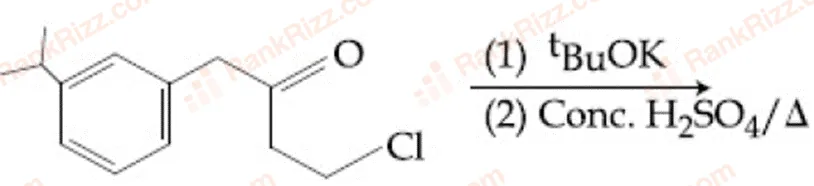
The major product of the following reaction is:
JEE Advanced has set 8 Haloalkanes and Haloarenes questions too. Haloalkanes and Haloarenes JEE Advanced PYQs →
OTHER CHEMISTRY CHAPTERS