RankRizz

Nucleophilic substitution (SN1 and SN2) — JEE Main Previous Year Questions

Nucleophilic substitution (SN1 and SN2) has been asked 128 times in JEE Main, in 20 different years between 2005 and 2026, and in all of the last five exam years (2022–2026), 64 questions in all. That is 68% of Haloalkanes and Haloarenes, its most-asked topic. Last asked in JEE Main 08 Apr 2026, Shift 2. 122 are multiple choice and 6 numerical-value; 22 easy, 91 medium and 4 hard by our difficulty labels. All of them are below, newest first, free to read.

Questions

128

Years asked

20

Since

2005

Of the chapter

68%

When JEE Main asked it

Questions on Nucleophilic substitution (SN1 and SN2) in every year it was asked, newest first.

JEE Main questions on Nucleophilic substitution (SN1 and SN2) by year, 2005–2026
YearRelative frequencyQuestions
202613
202513
202418
202311
20229
202110
202015
201911
20182
20177
20162
20152
20144
20134
20101
20091
20081
20071
20062
20051
Total128

Every Nucleophilic substitution (SN1 and SN2) question

1–20 OF 128 · NEWEST FIRST

JEE MAIN 2026 · 08 APR S2Nucleophilic substitution (SN1 and SN2)

Given below are two statements :
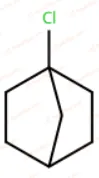
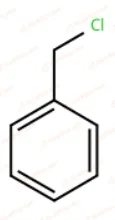
Statement I : Due to increase in van der Waals forces, the order of boiling points is CH3_3CH2_2CH2_2I > CH3_3CH2_2I > CH3_3I.
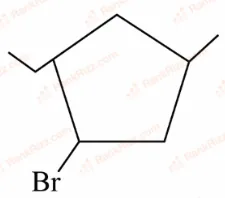
Statement II : As

Figure for JEE Main 2026 Chemistry question on Nucleophilic substitution (SN1 and SN2)

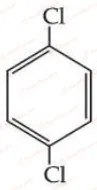
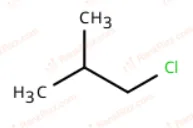
 is more symmetric, its melting point is higher than 
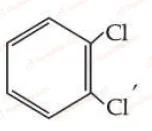
Figure for JEE Main 2026 Chemistry question on Nucleophilic substitution (SN1 and SN2)

, however its boiling point is lower than
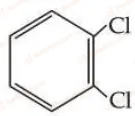
Figure for JEE Main 2026 Chemistry question on Nucleophilic substitution (SN1 and SN2)

.
In the light of the above statements, choose the correct answer from the options given below :

  1. A

    Both Statement I and Statement II are true

  2. B

    Both Statement I and Statement II are false

  3. C

    Statement I is true but Statement II is false

  4. D

    Statement I is false but Statement II is true
JEE MAIN 2026 · 05 APR S2Nucleophilic substitution (SN1 and SN2)

RMgI\text{RMgI} when treated with ice cold water liberated a gas which occupied 1.4 dm3/g1.4\,\text{dm}^3/\text{g} at STP. The gas produced is further reacted with iodine in presence of HIO3\text{HIO}_3 to give compound (X). Compound (X) in presence of Na and dry ether produced compound (Y). Molar mass of compound (Y) is ‾\underline{\hspace{2cm}} g mol−1\text{g mol}^{-1}. (Nearest integer)

JEE MAIN 2026 · 02 APR S1Nucleophilic substitution (SN1 and SN2)

Given below are two statements :
**Statement (I) :** Benzyl chloride reacts faster in SN_N1 mechanism than ethyl chloride.
**Statement (II) :** Ethyl carbocation intermediate is less stabilized by hyperconjugation than benzyl carbocation by resonance.
In the light of the above statements, choose the correct answer from the options given below :

  1. A

    Both Statement I and Statement II are true

  2. B

    Both Statement I and Statement II are false

  3. C

    Statement I is true but Statement II is false

  4. D

    Statement I is false but Statement II is true
JEE MAIN 2026 · 02 APR S2Nucleophilic substitution (SN1 and SN2)

Correct statements regarding alkyl halides (R−X)(R-X) among the following are :
A. Alcohol being less polar solvent favours elimination with alcoholic KOH favours elimination reaction with R−X.R - X. 
B. Order of reactivity towards SN1S_N1 is C6H5−CH2−Cl>C6H5−CHCl−C6H5C_6H_5-CH_2-Cl > C_6H_5-CHCl-C_6H_5.
C. Non substituted aryl halides exhibit properties similar to alkyl halides.
D. Vinyl chloride is example of haloalkene and allyl chloride is example of haloalkyne.
E. R−ClR-Cl can be prepared by reacting R−OHR-OH with SOCl2SOCl_2 but Ar−ClAr-Cl cannot be prepared by reacting Ar−OHAr-OH with SOCl2SOCl_2.
Choose the correct answer from the options given below :

  1. A

    A, B and C Only

  2. B

    B and D Only

  3. C

    A and E Only

  4. D

    D and E Only

JEE MAIN 2026 · 28 JAN S2Nucleophilic substitution (SN1 and SN2)

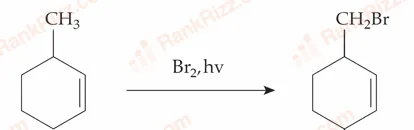
which of the following reaction is NOT correctly represented?

  1. A
    Figure for JEE Main 2026 Chemistry question on Nucleophilic substitution (SN1 and SN2)
  2. B
    Figure for JEE Main 2026 Chemistry question on Nucleophilic substitution (SN1 and SN2)
  3. C
    Figure for JEE Main 2026 Chemistry question on Nucleophilic substitution (SN1 and SN2)
  4. D
    Figure for JEE Main 2026 Chemistry question on Nucleophilic substitution (SN1 and SN2)
JEE MAIN 2026 · 24 JAN S1Nucleophilic substitution (SN1 and SN2)

Given below are two statements:
Statement I: 'C - Cl' bond is stronger in CH2=CH−Cl and CH3−CH2−ClCH_{2}=CH-Cl\text{ and }CH_{3}-CH_{2}-Cl
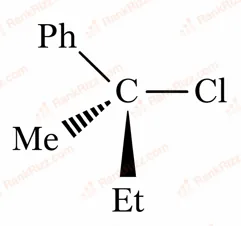
Statement II: The given optically active molecule, 

Figure for JEE Main 2026 Chemistry question on Nucleophilic substitution (SN1 and SN2)

on hydrolysis gives a solution that can rotate the plane polarized light.
In the light of the above statements, choose the correct answer from the options given below

  1. A

    Statement I is true but Statement II is false

  2. B

    Both Statement I and Statement II are false

  3. C

    Statement I is false but Statement II is true
  4. D

    Both Statement I and Statement II are true

JEE MAIN 2026 · 24 JAN S1Nucleophilic substitution (SN1 and SN2)

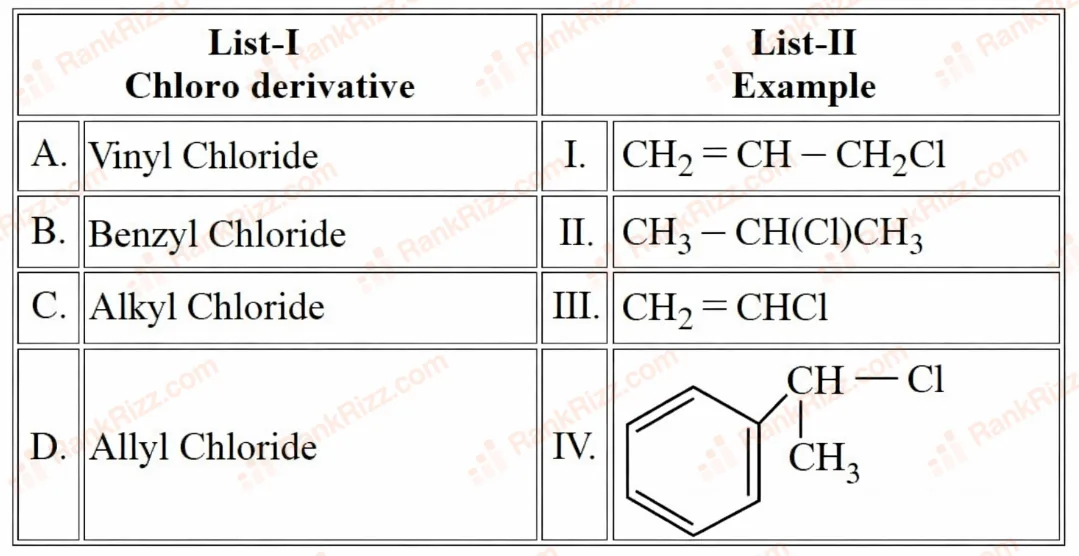
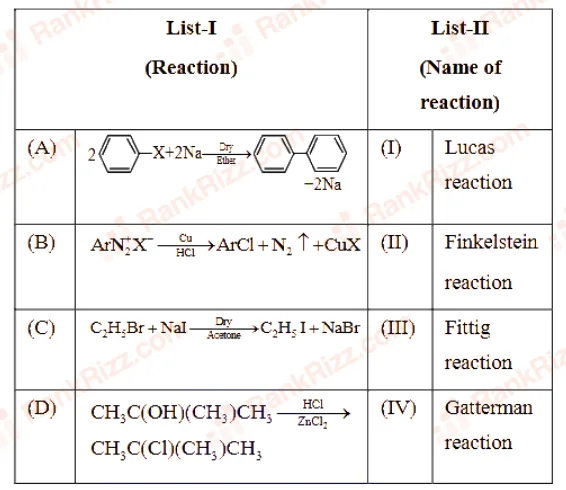
Match the LIST-I with LIST-II

24th shift 1 70

Choose the correct answer from the options given below:

  1. A

    A-IV, B-I, C-III, D-II

  2. B

    A-III, B-IV, C-II, D-I

  3. C

    A-III, B-IV, C-I, D-II

  4. D

    A-I, B-II, C-IV, D-III

JEE MAIN 2026 · 23 JAN S1Nucleophilic substitution (SN1 and SN2)

Consider all the structural isomers with molecular formula C5H11BrC_{5}H_{11}Br are separately treated with KOH(aq) to give respective substitution products, without any rearrangement. The number of products which can exhibit optical isomerism from these is ______.

JEE MAIN 2026 · 22 JAN S1Nucleophilic substitution (SN1 and SN2)

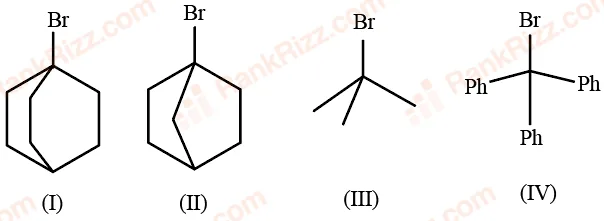
The correct order of the rate of reaction of the following reactants with nucleophile by SN1S_{N}1 mechanism is :
(Given: Structures I and II are rigid)

Screenshot_52
  1. A

    III < I < II < IV

  2. B

    IV < III < II < I

  3. C

    II < I < III < IV

  4. D

    I < II < III < IV

JEE MAIN 2026 · 22 JAN S1Nucleophilic substitution (SN1 and SN2)

The correct order of reactivity of CH3BrCH_{3} Br in methanol with the following
nucleophiles is

F−,I−,C2H5O−F^{-}, I^{-}, C_{2}H_{5}O^{-} and C6H5O−C_{6}H_{5}O^{-}

  1. A

    I−>C2H5O−>C6H5O−>F−I^{-} > C_{2}H_{5}O^{-} > C_{6}H_{5}O^{-} > F^{-}

  2. B

    I−>C6H5O−>F−>C2H5O−I^{-} > C_{6}H_{5}O^{-} > F^{-} > C_{2}H_{5}O^{-}

  3. C

    I−>C2H5O−>F−>C6H5O−I^{-} > C_{2}H_{5}O^{-} > F^{-} > C_{6}H_{5}O^{-}

  4. D

    I−>F−>C6H5O−>C2H5O−I^{-} > F^{-} > C_{6}H_{5}O^{-} > C_{2}H_{5}O^{-}

JEE MAIN 2026 · 21 JAN S2Nucleophilic substitution (SN1 and SN2)

The correct order of the rate of the reaction for the following reaction with respect to nucleophiles is:
CH3Br+Nu⊖→CH3Nu+Br⊖CH_{3}Br + Nu^{\ominus} \rightarrow CH_{3}Nu+Br^{\ominus}

  1. A

    ClO4−> CH3COO−>−OH>PhO−{ClO_{4}}^{-} >  {CH_{3}COO}^{-} > ^{-}OH > PhO^{-}

  2. B

    −OH>PhO−>CH3COO−>ClO4−^{-}OH > PhO^{-} > CH_{3}COO^{-} > {ClO_{4}}^{-}

  3. C

    PhO−>−OH>CH3COO−> ClO4−PhO^{-} > ^{-} OH > CH_{3}COO^{-} > {ClO_{4}}^{-}

  4. D

    CH3COO−> PhO−> −OH> ClO4−CH_{3}COO^{-} >  PhO^{-} > ^{-}OH > {ClO_{4}}^{-}

JEE MAIN 2026Nucleophilic substitution (SN1 and SN2)

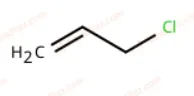
Which of the following will NOT undergo SN1 or SN2 reactions?\text{Which of the following will NOT undergo } S_\mathrm{N}1 \text{ or } S_\mathrm{N}2 \text{ reactions?}

  1. A
    Screenshot 2026-09-08 4
  2. B
    Screenshot 2026-09-08 5
  3. C
    Screenshot 2026-09-08 5
  4. D
    Screenshot 2026-09-08 5
JEE MAIN 2025 · 04 APR S2Nucleophilic substitution (SN1 and SN2)

Given below are two statements :
Statement (I) : Alcohols are formed when alkyl chlorides are treated with aqueous potassium hydroxide by elimination reaction.
Statement (II) : In alcoholic potassium hydroxide, alkyl chlorides form alkenes by abstracting the hydrogen from the β\beta-carbon.
In the light of the above statements, choose the most appropriate answer  from the option given  below : 

  1. A

    Both Statement I and Statement II are incorrect

  2. B

    Statement I is incorrect but Statement II is correct

  3. C

    Statement I is correct but Statement II is incorrect

  4. D

    Both Statement I and Statement II are correct

JEE MAIN 2025 · 04 APR S2Nucleophilic substitution (SN1 and SN2)

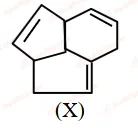
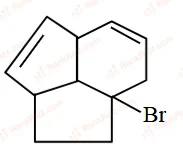
Consider the following molecule (X). The structure of X is

Figure for JEE Main 2025 Chemistry question on Nucleophilic substitution (SN1 and SN2)

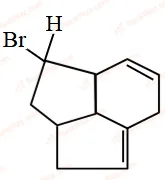
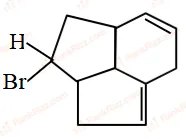
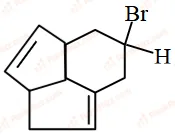
The major product formed when the given molecule (X) is treated with HBr (1 eq) is:

  1. A
    Figure for JEE Main 2025 Chemistry question on Nucleophilic substitution (SN1 and SN2)
  2. B
    Figure for JEE Main 2025 Chemistry question on Nucleophilic substitution (SN1 and SN2)
  3. C
    Figure for JEE Main 2025 Chemistry question on Nucleophilic substitution (SN1 and SN2)
  4. D
    Figure for JEE Main 2025 Chemistry question on Nucleophilic substitution (SN1 and SN2)
JEE MAIN 2025 · 02 APR S2Nucleophilic substitution (SN1 and SN2)

Match List-I with List-II.

Figure for JEE Main 2025 Chemistry question on Nucleophilic substitution (SN1 and SN2)

Choose the correct answer from the options given below :

  1. A

    (A)-(III), (B)-(II), (C)-(IV), (D)-(I)

  2. B

    (A)-(III), (B)-(IV), (C)-(II), (D)-(I)

  3. C

    (A)-(IV), (B)-(III), (C)-(I), (D)-(II)

  4. D

    (A)-(IV), (B)-(I), (C)-(II), (D)-(III)

JEE MAIN 2025 · 02 APR S2Nucleophilic substitution (SN1 and SN2)
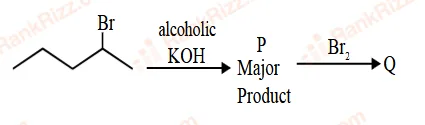
Figure for JEE Main 2025 Chemistry question on Nucleophilic substitution (SN1 and SN2)

Consider the above sequence of reactions. 151 g of 2-bromopentane is made to react. Yield of major product P is 80% whereas Q is 100%.

Mass of product Q obtained is _________ g.
(Given molar mass in g mol−1^{-1} H: 1, C: 12, O: 16, Br: 80)

JEE MAIN 2025 · 29 JAN S2Nucleophilic substitution (SN1 and SN2)

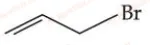
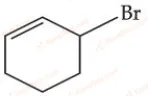
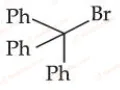
Which among the following halides will generate the most stable carbocation in the nucleophilic substitution reaction?

  1. A
    page12_img1
  2. B
    page12_img2
  3. C
    page12_img3
  4. D
    page12_img4
JEE MAIN 2025 · 28 JAN S1Nucleophilic substitution (SN1 and SN2)

The products A and B in the following reactions, respectively are

Figure for JEE Main 2025 Chemistry question on Nucleophilic substitution (SN1 and SN2)
  1. A

    CH3−CH2−CH2−NO2,CH3−CH2−CH2−CNCH_{3}-CH_{2}-CH_{2}-NO_{2},CH_{3}-CH_{2}-CH_{2}-CN

  2. B

    CH3−CH2−CH2−ONO,CH3−CH2−CH2−NCCH_{3}-CH_{2}-CH_{2}-ONO,CH_{3}-CH_{2}-CH_{2}-NC

  3. C

    CH3−CH2−CH2−ONO,CH3−CH2−CH2−CNCH_{3}-CH_{2}-CH_{2}-ONO,CH_{3}-CH_{2}-CH_{2}-CN

  4. D

    CH3−CH2−CH2−NO2,CH3−CH2−CH2−NCCH_{3}-CH_{2}-CH_{2}-NO_{2},CH_{3}-CH_{2}-CH_{2}-NC

JEE MAIN 2025 · 28 JAN S2Nucleophilic substitution (SN1 and SN2)

The major product of the following reaction is :

page11_img3
  1. A

    2-Phenylhepta-2,5-diene

  2. B

    6-Phenylhepta-2,4-diene

  3. C

    6-Phenylhepta-3,5-diene

  4. D

    2-Phenylhepta-2,4-diene

Nucleophilic substitution (SN1 and SN2): common questions

How many Nucleophilic substitution (SN1 and SN2) questions have come in JEE Main?
Nucleophilic substitution (SN1 and SN2) has been asked 128 times in JEE Main, in 20 different years between 2005 and 2026. It came up in all of the last five exam years (2022–2026), 64 questions in all.
Is Nucleophilic substitution (SN1 and SN2) important for JEE Main?
It is the most-asked topic in Haloalkanes and Haloarenes: 128 of the chapter's 188 JEE Main questions (68%). It came up in all of the last five exam years (2022–2026), 64 questions in all.
When was Nucleophilic substitution (SN1 and SN2) last asked in JEE Main?
Most recently in JEE Main 08 Apr 2026, Shift 2. Questions on this page are newest first, so the latest ones are at the top.
What kind of Nucleophilic substitution (SN1 and SN2) questions does JEE Main ask?
122 are multiple choice and 6 numerical-value; 22 easy, 91 medium and 4 hard by our difficulty labels. Each question shows its answer key and worked solution where we have them.

RELATED HALOALKANES AND HALOARENES TOPICS