RankRizz

Coordination Compounds — JEE Main Previous Year Questions

Every Coordination Compounds question JEE Main has set from 2004–2026, grouped by the idea it tests rather than the order of the syllabus. 373 questions across 10 distinct ideas. Free to read, answer key on every one.

DATA UPDATED

Questions

373

Distinct ideas

10

Share of marks

7.7%

Difficulty

MEDIUM

The ideas inside Coordination Compounds

A chapter is not one subject — it is a handful of procedures the examiner reuses. These are the ones Coordination Compounds questions actually test.

Every Coordination Compounds question

281–300 OF 373 · NEWEST FIRST

JEE MAIN 2019 · 10 APR S1Colour and magnetic behaviour of complexes from CFT

Three complexes,
[CoCl(NH3_3)5_5]2+^{2+}(I), [Co(NH3_3)5_5H2_2O]3+^{3+}(II) and [Co(NH3_3)6_6]3+^{3+}(III)
absorb light in the visible region. The correct order of the wavelength of light absorbed by them is:

  1. A

    (II) > (I) > (III)

  2. B

    (III) > (II) > (I)

  3. C

    (I) > (II) > (III)

  4. D

    (III) > (I) > (II)

JEE MAIN 2019 · 10 APR S2Colour and magnetic behaviour of complexes from CFT

The incorrect statement is.

  1. A

    The spin-only magnetic moments of [FeH2_2O6_6]2+^{2+} and [CrH2_2O6_6]2+^{2+} are nearly similar.

  2. B

    The spin-only magnetic moment of [NiNH34_{3_{4}}H2_2O2]2+_{2}]^{2+} is 2.83 BM.

  3. C

    The gemstone, ruby, has Cr3+^{3+} ions occupying the octahedral sites of beryl.

  4. D

    The color of [CoClNH35_{3_{5}}]2+^{2+} is violet as it absorbs the yellow light.

JEE MAIN 2019 · 10 APR S2Colour and magnetic behaviour of complexes from CFT

The crystal field stabilization energy (CFSE) of [FeH2_2O6_6]Cl2_2 and K2_2[NiCl4_4], respectively, are:

  1. A

    −0.4Δ0-0.4\Delta_0 and −1.2Δt-1.2\Delta_t

  2. B

    −2.4Δ0-2.4\Delta_0 and −1.2Δt-1.2\Delta_t

  3. C

    −0.4Δ0-0.4\Delta_0 and −0.8Δt-0.8\Delta_t

  4. D

    −0.6Δ0-0.6\Delta_0 and −0.8Δt-0.8\Delta_t

JEE MAIN 2019 · 09 APR S1Colour and magnetic behaviour of complexes from CFT

The degenerate orbitals of [Cr(H2_2O)6_6]3+^{3+} are:

  1. A

    dx2−y2d_{x^2-y^2} and dxyd_{xy}

  2. B

    dz2d_{z^2} and dxzd_{xz}

  3. C

    dyzd_{yz} and dz2d_{z^2}

  4. D

    dxzd_{xz} and dyzd_{yz}

JEE MAIN 2019 · 09 APR S1Structural isomerism in complexes

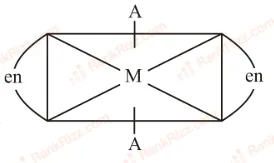
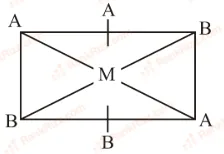
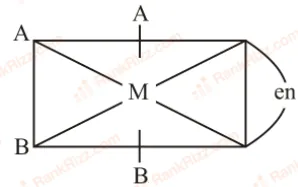
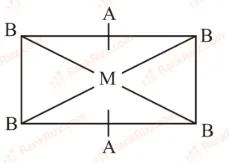
The one that will show optical activity is (en = ethane-1, 2-diamine):

  1. A
    Figure for JEE Main 2019 Chemistry question on Structural isomerism in complexes
  2. B
    Figure for JEE Main 2019 Chemistry question on Structural isomerism in complexes
  3. C
    Figure for JEE Main 2019 Chemistry question on Structural isomerism in complexes
  4. D
    Figure for JEE Main 2019 Chemistry question on Structural isomerism in complexes

    Option (4)

JEE MAIN 2019 · 09 APR S2Ligands, denticity and chelation

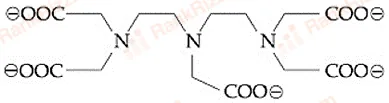
The maximum possible denticities of a ligand given below towards a common transition and inner-transition metal ion, respectively, are:

Figure for JEE Main 2019 Chemistry question on Ligands, denticity and chelation
  1. A

    8 and 6

  2. B

    6 and 6

  3. C

    8 and 8

  4. D

    6 and 8

JEE MAIN 2019 · 09 APR S2Valence bond theory of complexes

The correct statements among I to III are:
(I) Valence bond theory cannot explain the color exhibited by transition metal complexes.
(II) Valence bond theory can predict quantitatively the magnetic properties of transition metal complexes.
(III) Valence bond theory cannot distinguish ligands as weak and strong field ones.

  1. A

    (I) and (II) only

  2. B

    (II) and (III) only

  3. C

    (I) and (III) only

  4. D

    (I), (II) and (III)

JEE MAIN 2019 · 08 APR S1Colour and magnetic behaviour of complexes from CFT

The correct order of the spin-only magnetic moment of metal ions in the following low-spin complexes, [V(CN)6_6]4−^{4-}, [Fe(CN)6_6]4−^{4-}, [Ru(NH3_3)6_6]3+^{3+} and [Cr(NH3_3)6_6]2+^{2+}, is:

  1. A

    V2+>Cr2+>Ru3+>Fe2+V^{2+} > Cr^{2+} > Ru^{3+} > Fe^{2+}

  2. B

    Cr2+>V2+>Ru3+>Fe2+Cr^{2+} > V^{2+} > Ru^{3+} > Fe^{2+}

  3. C

    Cr2+>Ru3+>Fe2+>V2+Cr^{2+} > Ru^{3+} > Fe^{2+} > V^{2+}

  4. D

    V2+>Ru3+>Cr2+>Fe2+V^{2+} > Ru^{3+} > Cr^{2+} > Fe^{2+}

JEE MAIN 2019 · 08 APR S1Werner's theory and coordination terminology

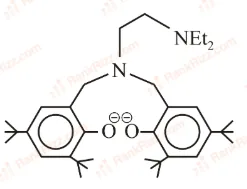
The following ligand is:

Figure for JEE Main 2019 Chemistry question on Werner's theory and coordination terminology
  1. A

    tridentate

  2. B

    hex dentate

  3. C

    bidentate

  4. D

    tetradentate

JEE MAIN 2019 · 08 APR S2Stability and applications of coordination compounds

The compound that inhibits the growth of tumors is:

  1. A

    trans-[PtCl2_2(NH3_3)2_2]

  2. B

    cis-[PtCl2_2(NH3_3)2_2]

  3. C

    cis-[PdCl2_2(NH3_3)2_2]

  4. D

    trans-[PdCl2_2(NH3_3)2_2]

JEE MAIN 2019 · 08 APR S2Valence bond theory of complexes

The calculated spin-only magnetic moments BM of the anionic and cationic species of FeH2_2O6+2_6^{+2} and Fe(CN)64−_6^{4-} respectively, are:

  1. A

    0 and 4.9

  2. B

    2.84 and 5.92

  3. C

    4.9 and 0

  4. D

    0 and 5.92

JEE MAIN 2019 · 12 JAN S1Colour and magnetic behaviour of complexes from CFT

The pair of metal ions that can give a spin only magnetic moment of 3.9 BM for the complex [M(H2O)6]Cl2[M(H_2O)_6]Cl_2, is:

  1. A

    Co2+Co^{2+} and Fe2+Fe^{2+}

  2. B

    V2+V^{2+} and Fe2+Fe^{2+}

  3. C

    Cr2+Cr^{2+} and Mn2+Mn^{2+}

  4. D

    V2+V^{2+} and Co2+Co^{2+}

JEE MAIN 2019 · 12 JAN S1Valence bond theory of complexes

The metal's d-orbitals that are directly facing the ligands in K3[Co(CN)6]K_3[Co(CN)_6] are:

  1. A

    dxy,dxzd_{xy}, d_{xz} and dyzd_{yz}

  2. B

    dx2−y2d_{x^2-y^2} and dz2d_{z^2}

  3. C

    dxyd_{xy} and dx2−y2d_{x^2-y^2}

  4. D

    dz2,dyzd_{z^2}, d_{yz} and dxzd_{xz}

JEE MAIN 2019 · 12 JAN S1Stability and applications of coordination compounds

Mn2(CO)10Mn_2(CO)_{10} is an organometallic compound due to the presence of:

  1. A

    Mn - O bond

  2. B

    Mn - Mn bond

  3. C

    C - O bond

  4. D

    Mn - C bond

JEE MAIN 2019 · 12 JAN S2Valence bond theory of complexes

The magnetic moment of an octahedral homoleptic Mn(II) complex is 5.9 B.M. The suitable ligand for this complex is:

  1. A

    CN−CN^-

  2. B

    CO

  3. C

    Ethylenediamine

  4. D

    NCS−NCS^-

JEE MAIN 2019 · 11 JAN S1Stability and applications of coordination compounds

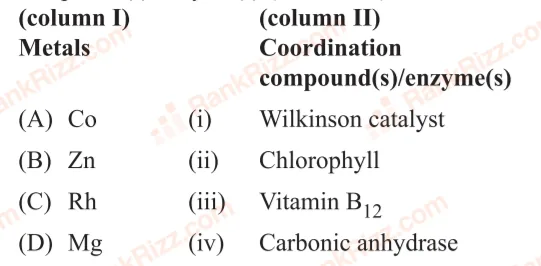
Match the metals (column I) with the coordination compound(s)/enzyme(s) (column II):

Figure for JEE Main 2019 Chemistry question on Stability and applications of coordination compounds
  1. A

    (A)-(iii); (B)-(iv); (C)-(i); (D)-(ii)

  2. B

    (A)-(i); (B)-(ii); (C)-(iii); (D)-(iv)

  3. C

    (A)-(ii); (B)-(i); (C)-(iv); (D)-(iii)

  4. D

    (A)-(iv); (B)-(iii); (C)-(i); (D)-(ii)

JEE MAIN 2019 · 11 JAN S2Werner's theory and coordination terminology

The coordination number of Th in K4[Th(C2O4)4(H2O)2]K_4[Th(C_2O_4)_4(H_2O)_2] is: (C2O42−C_2O_4^{2-} = oxalato)

  1. A

    14

  2. B

    6

  3. C

    8

  4. D

    10

JEE MAIN 2019 · 11 JAN S2Stability and applications of coordination compounds

The number of bridging CO ligand(s) and Co-Co bond(s) in Co2(CO)8Co_2(CO)_8, respectively are:

  1. A

    2 and 1

  2. B

    2 and 0

  3. C

    0 and 2

  4. D

    4 and 0

JEE MAIN 2019 · 10 JAN S1Structural isomerism in complexes

The total number of isomers for a square planar complex: [MCl(F)(NO2)(SCN)][MCl(F)(NO_2)(SCN)] is:

  1. A

    12

  2. B

    16

  3. C

    4

  4. D

    8

JEE MAIN 2019 · 10 JAN S1Stability and applications of coordination compounds

Wilkinson catalyst is:

  1. A

    [(Et3P)3IrCl][(Et_3P)_3IrCl] (Et=C2H5Et = C_2H_5)

  2. B

    [(Ph3P)3RhCl][(Ph_3P)_3RhCl]

  3. C

    [(Ph3P)3IrCl][(Ph_3P)_3IrCl]

  4. D

    [(Et3P)3RhCl][(Et_3P)_3RhCl]