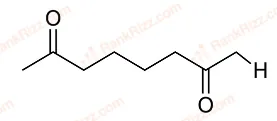
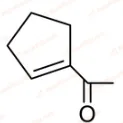
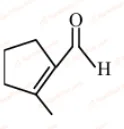
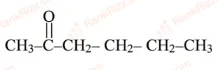
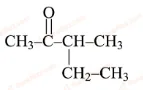
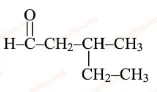
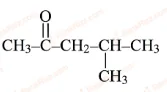
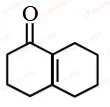
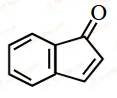
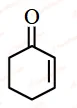
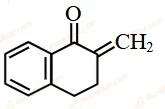
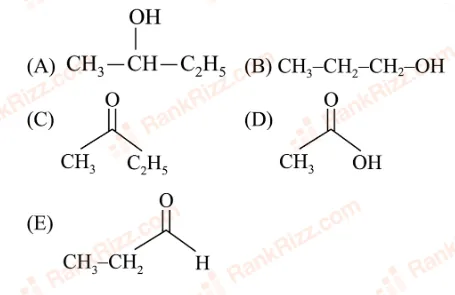
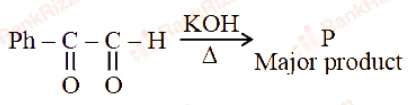
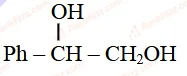
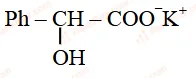
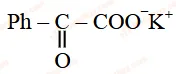
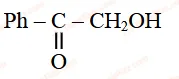
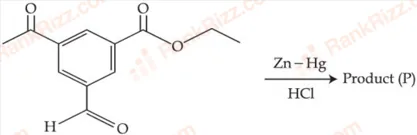
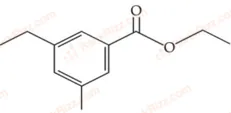
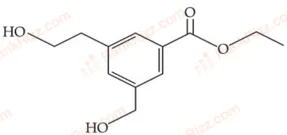
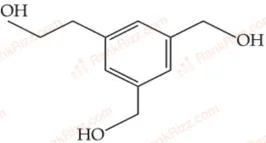
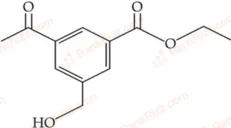
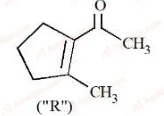
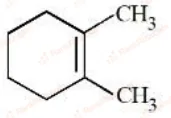
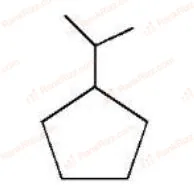
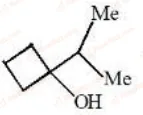
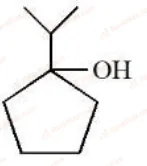
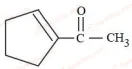
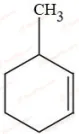
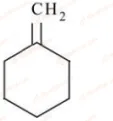
An organic compound "P" of molecular formula gives positive Iodoform test but negative Tollen's test. When "P" is treated with dilute acid, it produces "Q". "Q" gives positive Tollen's test and also iodoform test. The structure of "P" is :
- A
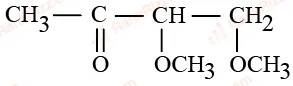
- B
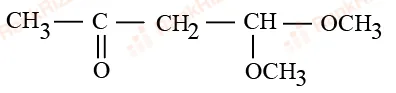
- C
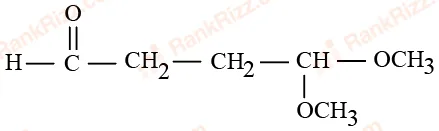
- D
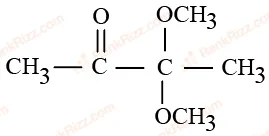
Every Aldehydes and Ketones question JEE Main has set from 2004–2026, grouped by the idea it tests rather than the order of the syllabus. 214 questions across 5 distinct ideas. Free to read, answer key on every one.
DATA UPDATED
Questions
214
Distinct ideas
5
Share of marks
4.6%
Difficulty
HARD
A chapter is not one subject — it is a handful of procedures the examiner reuses. These are the ones Aldehydes and Ketones questions actually test.
21–40 OF 214 · NEWEST FIRST
An organic compound "P" of molecular formula gives positive Iodoform test but negative Tollen's test. When "P" is treated with dilute acid, it produces "Q". "Q" gives positive Tollen's test and also iodoform test. The structure of "P" is :


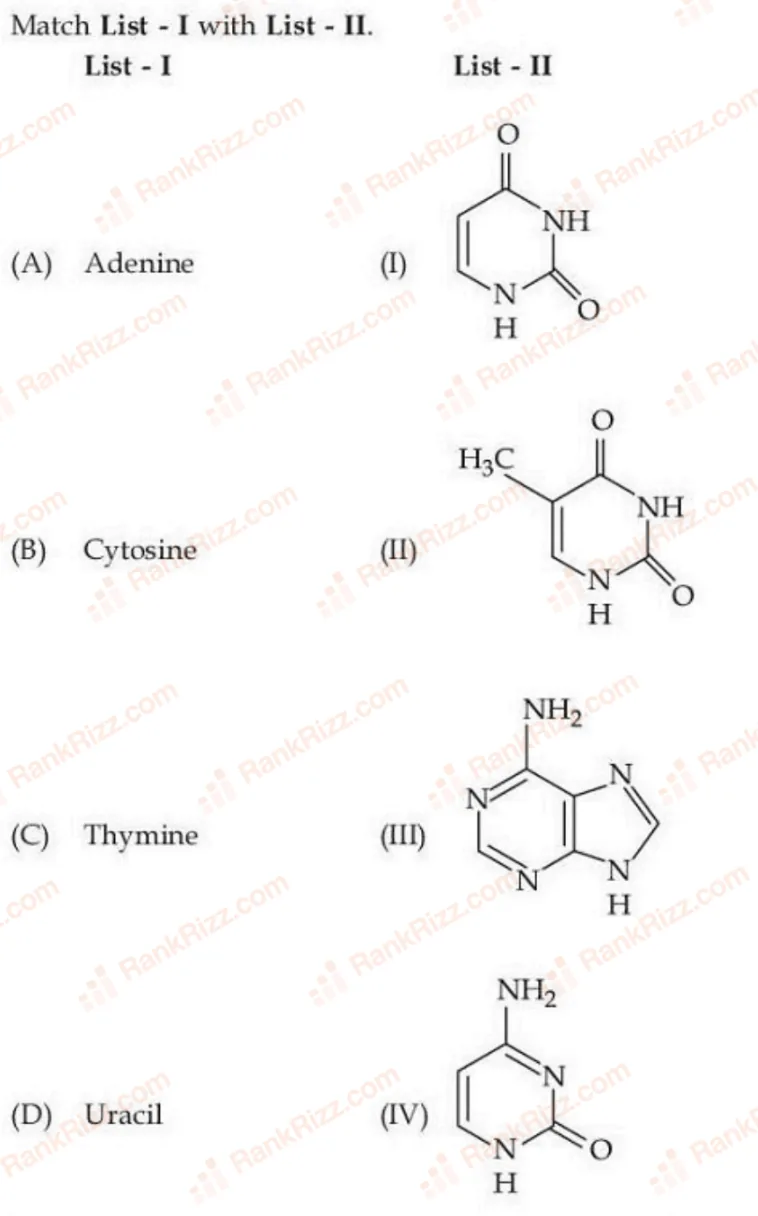
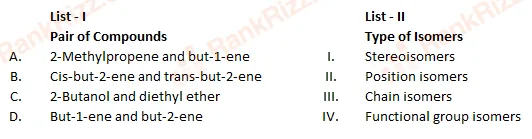
Match List - I with List - II.
Choose the correct answer from the options given below :
A-III, B-I, C-IV, D-II
A-III, B-I, C-II, D-IV
A-II, B-I, C-IV, D-III
A-I, B-IV, C-III, D-II
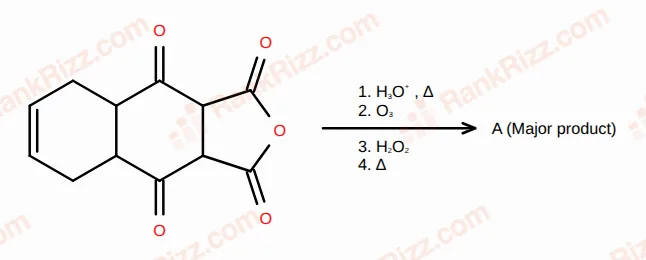
The ratio of number of keto groups to the number of carbons in the major product is:
3 : 1
3 : 8
1 : 3
2 : 3
When
undergoes intramolecular aldol condensation, the major product formed is :


"P" is an optically active compound with molecular formula . When "P" is treated with 2,4-dinitrophenylhydrazine, it gives a positive test. However, in presence of Tollens reagent, "P" gives a negative test. Predict the structure of "P".


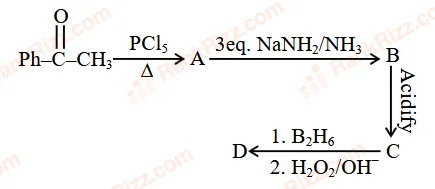
Identify the structure of the final product (D) in the following sequence of reactions:

Total number of hybridised carbon atoms in product D is _____.
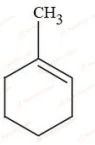
Aldol condensation is a popular and classical method to prepare -unsaturated carbonyl compounds. This reaction can be both intermolecular and intramolecular. Predict which one of the following is not a product of intramolecular aldol condensation?


An organic compound (X) with molecular formula is not readily oxidised. On reduction it gives which reacts with HBr to give a bromide (Z) which is converted to Grignard reagent. This Grignard reagent on reaction with (X) followed by hydrolysis gives 2,3-dimethylbutan-2-ol. Compounds (X), (Y) and (Z) respectively are:
, ,
, ,
, ,
, ,
Which among the following compounds give yellow solid when reacted with NaOI/NaOH?
Choose the correct answer from the options given below :
(B), (C) and (E) Only
(A) and (C) Only
(C) and (D) Only
(A), (C) and (D) Only
Number of molecules from below which cannot give iodoform reaction is :
Ethanol, Isopropyl alcohol, Bromoacetone, 2-Butanol, 2-Butanone, Butanal, 2-Pentanone, 3-Pentanone, Pentanal and 3-Pentanol
The major product (P) in the following reaction is:


An optically active alkyl halide [A] reacts with hot KOH dissolved in ethanol and forms alkene [B] as major product which reacts with bromine to give dibromide [C]. The compound [C] is converted into a gas [D] upon reacting with alcoholic NaNH. During hydration 18 gram of water is added to 1 mole of gas [D] on warming with mercuric sulphate and dilute acid at 333 K to form compound [E]. The IUPAC name of compound [E] is:
But-2-yne
Butan-2-ol
Butan-2-one
Butan-1-al
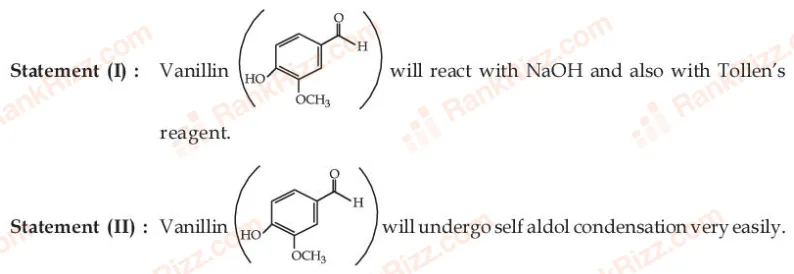
Given below are two statements:
In the light of the above statements, choose the most appropriate answer from the options given below:
Statement I is incorrect but Statement II is correct
Statement I is correct but Statement II is incorrect
Both Statement I and Statement II are incorrect
Both Statement I and Statement II are correct
The product (P) formed in the following reaction is :


In the Claisen-Schmidt reaction to prepare, dibenzalacetone from 5.3 g of benzaldehyde, a total of 3.51 g of product was obtained. The percentage yield in this reaction was ______ %.
Both acetaldehyde and acetone (individually) undergo which of the following reactions? A. Iodoform Reaction B. Cannizaro Reaction C. Aldol Condensation D. Tollen's Test E. Clemmensen Reduction Choose the correct answer from the options given below:
A, B and D Only
C, and E Only
A, C and E Only
B, C and D Only
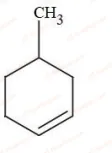
A molecule (" P ") on treatment with acid undergoes rearrangement and gives ("Q"). ("Q") on ozonolysis followed by reflux under alkaline condition gives (" R "). The structure of (" R ") is given below.

The structure of("P")is


Aman has been asked to synthesise the molecule
(x).He thought of preparing the molecule using an aldol condensation reaction. He found a few cyclic alkenes in his laboratory. He thought of performing ozonolysis reaction on alkene to produce a dicarbonyl compound followed by aldol reaction to prepare " x ". Predict the suitable alkene that can lead to the formation of " x ".


Which of the following arrangements with respect to their reactivity in nucleophilic addition reaction is correct?
acetophenone < benzaldehyde < p-tolualdehyde < p- nitrobenzaldehyde
benzaldehyde < acetophenone < p-nitrobenzaldehyde < p-tolualdehyde
p- nitrobenzaldehyde < benzaldehyde < p-tolualdehyde < acetophenone
acetophenone < p-tolualdehyde < benzaldehyde < p- nitrobenzaldehyde
Choose the correct answer from the options given below :
(A)-(IV), (B)-(III), (C)-(II), (D)-(I)
(A)-(III), (B)-(IV), (C)-(II), (D)-(I)
(A)-(III), (B)-(IV), (C)-(I), (D)-(II)
(A)-(III), (B)-(I), (C)-(IV), (D)-(II)
JEE Advanced has set 47 Aldehydes and Ketones questions too. Aldehydes and Ketones JEE Advanced PYQs →
OTHER CHEMISTRY CHAPTERS