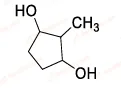
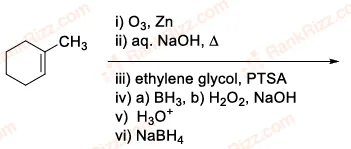
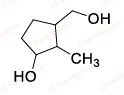
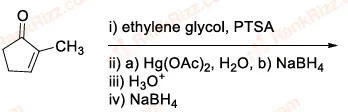
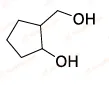
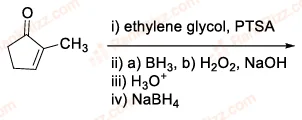
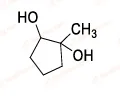
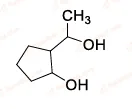
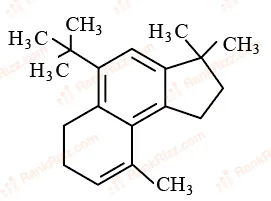
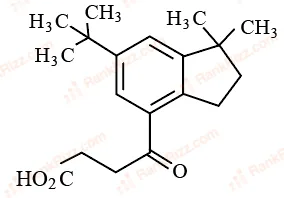
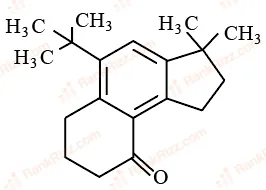
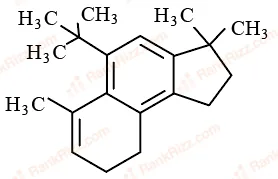
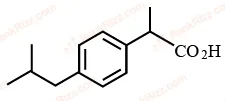
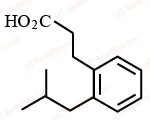
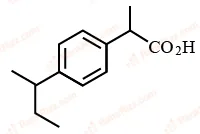
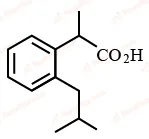
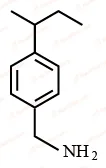
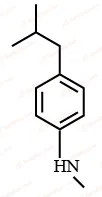
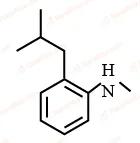
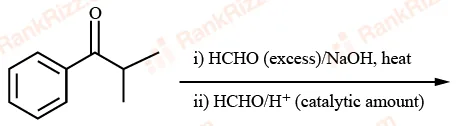
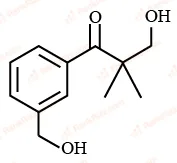
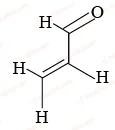
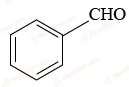
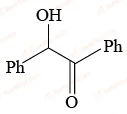
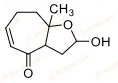
Natural rubber on complete ozonolysis (/Zn-) gives compound X as the major product. X gives positive iodoform and Tollen's tests. X on heating with aqueous NaOH gives Y as the major product. Y is
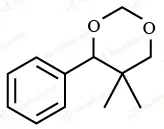
- A

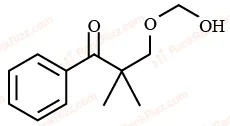
- B

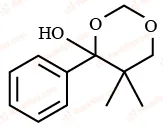
- C
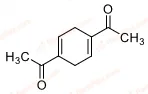
- D
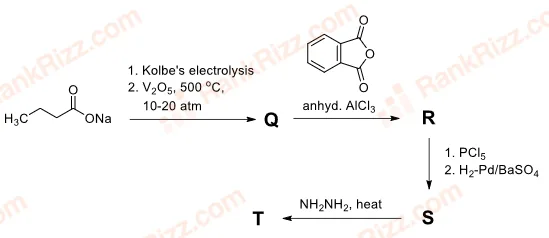
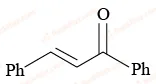
Aldehydes and Ketones has been asked in 19 of the 20 JEE Advanced years from 2007 to 2026: 47 questions in all. In 2026 it averaged 2.0 questions per paper (4 across 2 papers), 11.8% of Chemistry questions, up from 3.1% in 2025. Across the last 20 papers it carried 5.4% of Chemistry questions. By type: 27 single-correct, 10 multiple-correct, 8 numerical and 2 match-the-list. Of the 47 with a difficulty tag, 9% are easy, 45% medium and 47% hard. Most asked: Aldol condensation, Cannizzaro and related reactions (31, 66%), Nucleophilic addition reactions of carbonyl compounds (9, 19%) and Preparation of aldehydes and ketones (4, 9%).
DATA UPDATED
Questions
47
Distinct ideas
4
Share of marks
5.4%
Difficulty
HARD
The share of each year’s Chemistry questions that came from Aldehydes and Ketones, counted from the 19 papers we hold for the last 10 years, and paper by paper inside a year.
Rising: 9.0% of Chemistry questions in 2024–2026, up from 3.8% in 2017–2023. Its heaviest year was 2018, at 16.7%. Not asked at all in 2022.
| YEAR | QS | PER PAPER | SHARE OF CHEMISTRY | CHANGE | |
|---|---|---|---|---|---|
| 2026 | 4 / 34 | 2.0 | 11.8% | +8.7 pts | PAPER 1 18.8%PAPER 2 5.6% |
| 2025 | 1 / 32 | 0.5 | 3.1% | −8.7 pts | PAPER 1 0.0%PAPER 2 6.3% |
| 2024 | 4 / 34 | 2.0 | 11.8% | +8.9 pts | PAPER 1 11.8%PAPER 2 11.8% |
| 2023 | 1 / 34 | 0.5 | 2.9% | +2.9 pts | PAPER 1 5.9%PAPER 2 0.0% |
| 2022 | 0 / 36 | 0.0 | 0.0% | −2.6 pts | PAPER 1 0.0%PAPER 2 0.0% |
| 2021 | 1 / 38 | 0.5 | 2.6% | −3.0 pts | PAPER 1 5.3%PAPER 2 0.0% |
| 2020 | 2 / 36 | 1.0 | 5.6% | +2.8 pts | PAPER 1 11.1%PAPER 2 0.0% |
| 2019 | 1 / 36 | 0.5 | 2.8% | −13.9 pts | PAPER 1 0.0%PAPER 2 5.6% |
| 2018 | 3 / 18 | 3.0 | 16.7% | +13.9 pts | 1 PAPER |
| 2017 | 1 / 36 | 0.5 | 2.8% | — | PAPER 1 0.0%PAPER 2 5.6% |
“QS” is Aldehydes and Ketones questions out of all Chemistry questions that year; “per paper” is that count over the year’s papers, and “change” is the share against the year before. A year with more sittings asks more questions, which is why the share, not the count, is the number to compare.
A chapter is not one subject — it is a handful of procedures the examiner reuses. These are the ones Aldehydes and Ketones questions actually test.
Every JEE Advanced Aldehydes and Ketones question we hold, newest first inside each topic. Open one for its options, answer key and solution.
FREE PDF
All 47 questions on A4, by topic, with the answer key at the end. No sign-up, no email: your browser saves it as a PDF.
Download free PDFUNIQUE CONCEPTS
5 ideas, each with the latest past question that tested it, drawn from 260 JEE Main and Advanced questions.
Aldehydes and Ketones Unique Concepts sheet →JEE MAIN
JEE Main has set 214 Aldehydes and Ketones questions, 2004–2026.
Aldehydes and Ketones JEE Main PYQs →Not every year. It has been asked in 19 of the 20 JEE Advanced years from 2007 to 2026; the year without a Aldehydes and Ketones question was 2022.
Aldol condensation, Cannizzaro and related reactions: 31 of the 47 questions (66%). Next come Nucleophilic addition reactions of carbonyl compounds (9) and Preparation of aldehydes and ketones (4).
About 5.4% of Chemistry questions across the last 20 papers. In 2026 it was 11.8% (4 of 34 Chemistry questions).
In JEE Advanced 2026 Paper 2, the latest sitting with a Aldehydes and Ketones question.
47 from 2007 to 2026, across 4 topics. Every one is listed on this page by topic and links to its own page, with the answer key and solution wherever we have them. Free, no sign-up.
1–20 OF 47 · NEWEST FIRST
Natural rubber on complete ozonolysis (/Zn-) gives compound X as the major product. X gives positive iodoform and Tollen's tests. X on heating with aqueous NaOH gives Y as the major product. Y is


In the following reaction sequence, , , and are the major products.
The correct statement(s) about , , and is(are)
on warming with ammoniacal results in the formation of silver mirror.
on treatment with (excess)/UV gives gammaxane.
is a heterocyclic compound.
on acid catalyzed intramolecular cyclization followed by treatment with gives -dihydroxyanthracene.
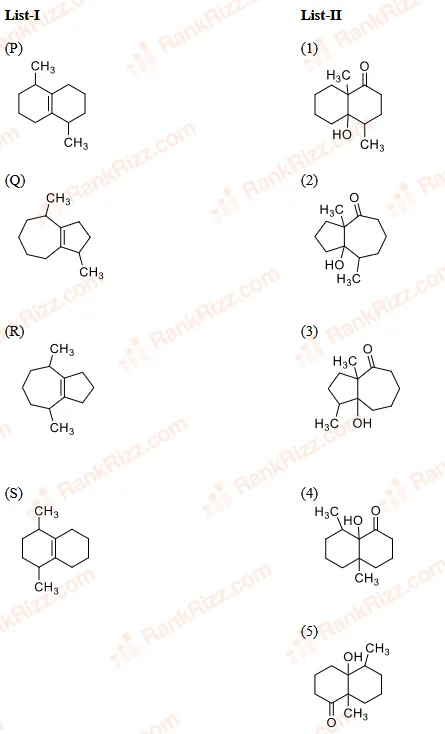
The List-II contains products obtained from the reaction of compounds in List-I with /- followed by cyclization (via more stable enolate) in the presence of aqueous . Match each entry in List-I with appropriate entry in List-II and choose the correct option.

(P)(2), (Q)(4), (R)(1), (S)(3)
(P)(3), (Q)(4), (R)(5), (S)(2)
(P)(2), (Q)(1), (R)(5), (S)(3)
(P)(3), (Q)(5), (R)(4), (S)(2)
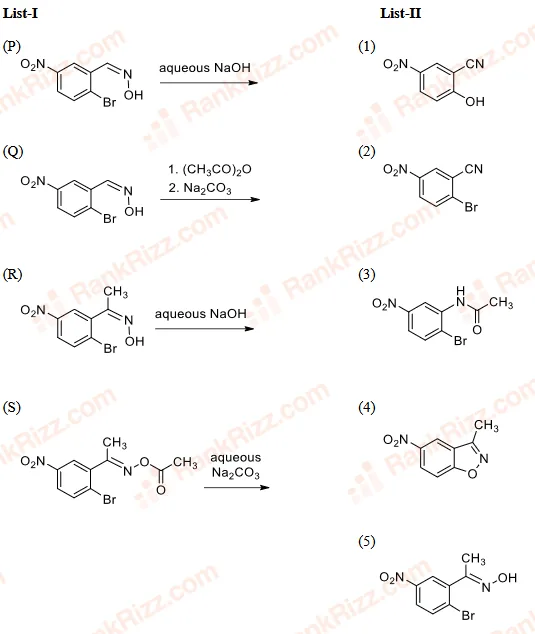
Match the major products obtained in the reactions given in List-I with the corresponding structures in List-II and choose the correct option.

(P)(2), (Q)(1), (R)(5), (S)(4)
(P)(1), (Q)(2), (R)(4), (S)(5)
(P)(1), (Q)(2), (R)(3), (S)(4)
(P)(2), (Q)(1), (R)(3), (S)(5)
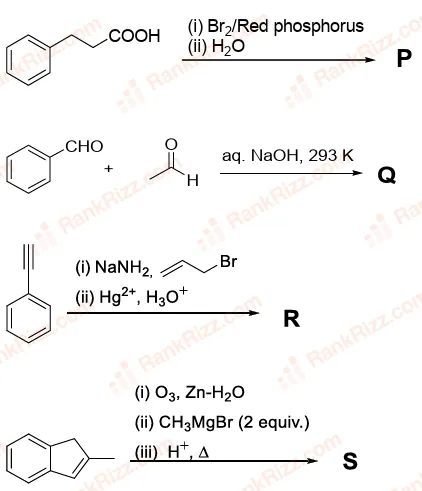
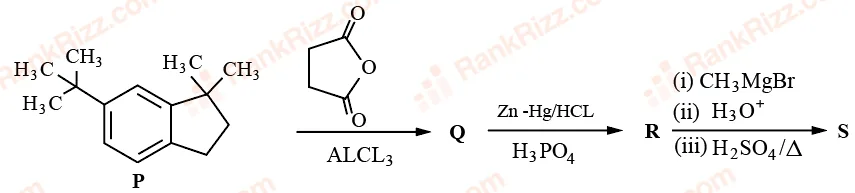
Monocyclic compounds P, Q, R and S are the major products formed in the reaction sequences given below.

The product having the highest number of unsaturated carbon atom(s) is
P
Q
R
S
Complete reaction of acetaldehyde with excess formaldehyde, upon heating with conc. NaOH solution, gives P and Q. Compound P does not give Tollens' test, whereas Q on acidification gives positive Tollens' test. Treatment of P with excess cyclohexanone in the presence of catalytic amount of p-toluenesulfonic acid (PTSA) gives product R.
Sum of the number of methylene groups () and oxygen atoms in R is ______.
An organic compound P having molecular formula gives ferric chloride test and does not have intramolecular hydrogen bond. The compound P reacts with 3 equivalents of to produce oxime Q. Treatment of P with excess methyl iodide in the presence of KOH produces compound R as the major product. Reaction of R with excess iso-butylmagnesium bromide followed by treatment with gives compound S as the major product.
The total number of methyl () group(s) in compound S is ______.
Sum of number of oxygen atoms in S and T is ______.
List-I contains various reaction sequences and List-II contains the possible products. Match each entry in List-I with the appropriate entry in List-II and choose the correct option.
| List-I | List-II | ||
|---|---|---|---|
| (P) | ![]() | (1) | ![]() |
| (Q) | ![]() | (2) | ![]() |
| (R) | ![]() | (3) | ![]() |
| (S) | ![]() | (4) | ![]() |
| (5) | ![]() | ||
P-3, Q-5, R-4, S-1
P-3, Q-2, R-4, S-1
P-3, Q-5, R-1, S-4
P-5, Q-2, R-4, S-1
The major products obtained from the reactions in List-II are the reactants for the named reactions mentioned in List-I. Match List-I with List-II and choose the correct option.
| List-I | List-II | ||
|---|---|---|---|
| (P) | Etard reaction | (1) | Acetophenone |
| (Q) | Gattermann reaction | (2) | Toluene |
| (R) | Gattermann-Koch reaction | (3) | ![]() |
| (S) | Rosenmund reduction | (4) | ![]() |
| (5) | Phenol | ||
P 2; Q 4; R 1; S 3
P 1; Q 3; R 5; S 2
P 3; Q 2; R 1; S 4
P 3; Q 4; R 5; S 2
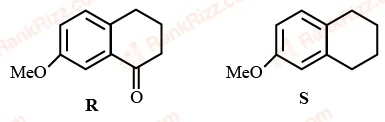
In the reaction given below, the total number of atoms having hybridization in the major product P is ___.

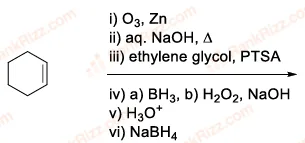
In the reaction scheme shown below, Q, R, and S are the major products.
The correct structure of


In the following reaction, compound Q is obtained from compound P via an ionic intermediate.
What is the degree of unsaturation of Q?
Choose the correct option(s) for the following reaction sequence
Consider Q, R and S as major products


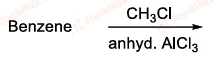
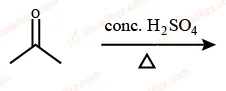
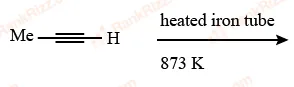
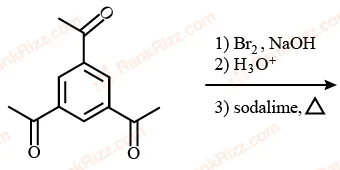
The reaction(s) leading to the formation of 1, 3, 5-trimethylbenzene is (are)


The compound R is


The compound S


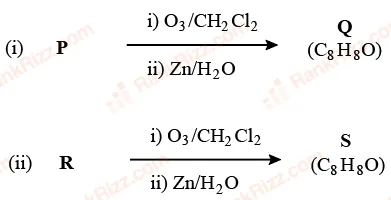
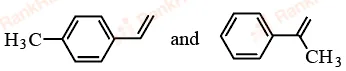
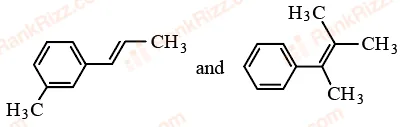
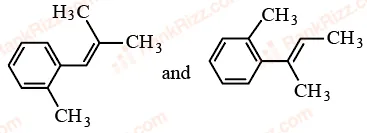
Compounds P and R upon ozonolysis produce Q and S, respectively. The molecular formula of Q and S is . Q undergoes Cannizzaro reaction but not haloform reaction, whereas S undergoes haloform reaction but not Cannizzaro reaction.
The option(s) with suitable combination of P and R, respectively, is(are)


The major product of the following reaction sequence is


Positive Tollen’s test is observed for


OTHER CHEMISTRY CHAPTERS