RankRizz

Purification and Characterisation of Organic Compounds — JEE Main Previous Year Questions

Every Purification and Characterisation of Organic Compounds question JEE Main has set from 2004–2026, grouped by the idea it tests rather than the order of the syllabus. 151 questions across 4 distinct ideas. Free to read, answer key on every one.

DATA UPDATED

Questions

151

Distinct ideas

4

Share of marks

3.8%

Difficulty

EASY

The ideas inside Purification and Characterisation of Organic Compounds

A chapter is not one subject — it is a handful of procedures the examiner reuses. These are the ones Purification and Characterisation of Organic Compounds questions actually test.

Every Purification and Characterisation of Organic Compounds question

101–120 OF 151 · NEWEST FIRST

JEE MAIN 2021 · 27 JUL S2Quantitative estimation of elements

Which one of the following set of elements can be detected using sodium fusion extract?

  1. A

    Sulfur, Nitrogen, Phosphorus, Halogens

  2. B

    Phosphorus, Oxygen, Nitrogen, Halogens

  3. C

    Nitrogen, Phosphorus, Carbon, Sulfur

  4. D

    Halogens, Nitrogen, Oxygen, Sulfur
JEE MAIN 2021 · 25 JUL S2Quantitative estimation of elements

0.8 g of an organic compound was analysed by Kjeldahl's method for the estimation of nitrogen. If the percentage of nitrogen in the compound was found to be 42%, then _________ mL of 1M H2_2SO4_4 would have been neutralized by the ammonia evolved during the analysis.

JEE MAIN 2021 · 22 JUL S1Methods of purification of organic compounds

Which purification technique is used for high boiling organic liquid compound (decomposes near its boiling point)?

  1. A

    Simple distillation

  2. B

    Steam distillation

  3. C

    Fractional distillation

  4. D

    Reduced pressure distillation

JEE MAIN 2021 · 20 JUL S2Quantitative estimation of elements

In Carius method, halogen containing organic compound is heated with fuming nitric acid in the presence of:

  1. A

    HNO3_3

  2. B

    AgNO3_3

  3. C

    CuSO4_4

  4. D

    BaSO4_4

JEE MAIN 2021 · 20 JUL S2Methods of purification of organic compounds

When 0.15 g of an organic compound was analyzed using Carius method for estimation of bromine, 0.2397 g of AgBr was obtained. The percentage of bromine in the organic compound is ___. (Nearest integer)
[Atomic mass : Silver = 108, Bromine = 80]

JEE MAIN 2021 · 17 MAR S1Methods of purification of organic compounds

Given below are two statements:
Statement-I: Retardation factor (RfR_f) can be measured in meter/centimetre.
Statement-II: RfR_f value of a compound remains constant in all solvents.
Choose the most appropriate answer from the options given below:

  1. A

    Statement-I is true but statement-II is false

  2. B

    Both statement-I and statement-II are true

  3. C

    Both statement-I and statement-II are false

  4. D

    Statement-I is false but statement-II is true

JEE MAIN 2021 · 17 MAR S1Quantitative estimation of elements
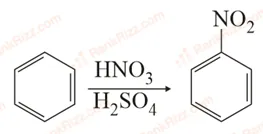
Figure for JEE Main 2021 Chemistry question on Quantitative estimation of elements

In the above reaction, 3.9 g of benzene on nitration gives 4.92 g of nitrobenzene. The percentage yield of nitrobenzene in the above reaction is ________ %. (Round off to the Nearest Integer).
(Given atomic mass: C: 12.0 u, H: 1.0 u, O: 16.0 u, N: 14.0 u)

JEE MAIN 2021 · 17 MAR S2Quantitative estimation of elements

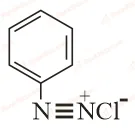
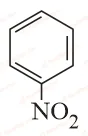
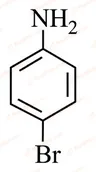
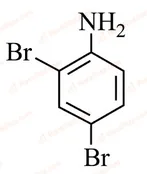
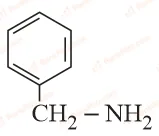
Nitrogen can be estimated by Kjeldahl's method for which of the following compound?

  1. A
    Figure for JEE Main 2021 Chemistry question on Quantitative estimation of elements
  2. B
    Figure for JEE Main 2021 Chemistry question on Quantitative estimation of elements
  3. C
    Figure for JEE Main 2021 Chemistry question on Quantitative estimation of elements
  4. D
    Figure for JEE Main 2021 Chemistry question on Quantitative estimation of elements
JEE MAIN 2021 · 16 MAR S1Methods of purification of organic compounds

In chromatography technique, the purification of a compound is independent of:

  1. A

    Mobility or flow of solvent system

  2. B

    Solubility of the compound

  3. C

    Length of the column or TLC Plate

  4. D

    Physical state of the pure compound

JEE MAIN 2021 · 16 MAR S2Methods of purification of organic compounds

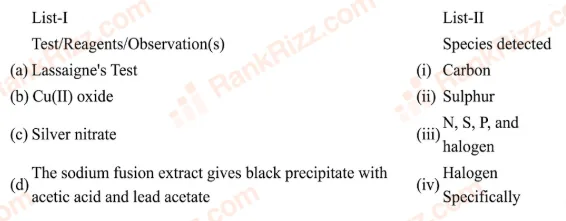
Match List-I with List-II:

Figure for JEE Main 2021 Chemistry question on Methods of purification of organic compounds

The correct match is:

  1. A

    (a)-(iii), (b)-(i), (c)-(ii), (d)-(iv)

  2. B

    (a)-(i), (b)-(iv), (c)-(iii), (d)-(ii)

  3. C

    (a)-(iii), (b)-(i), (c)-(iv), (d)-(ii)

  4. D

    (a)-(i), (b)-(ii), (c)-(iv), (d)-(iii)

JEE MAIN 2021 · 16 MAR S2Quantitative estimation of elements

In Duma's method of estimation of nitrogen, 0.1840 g of an organic compound gave 30 mL of nitrogen collected at 287 K and 758 mm of Hg pressure. The percentage composition of nitrogen in the compound is ________. (Round off to the Nearest Integer).
[Given: Aqueous tension at 287 K = 14 mm of Hg]

JEE MAIN 2021 · 25 FEB S1Methods of purification of organic compounds

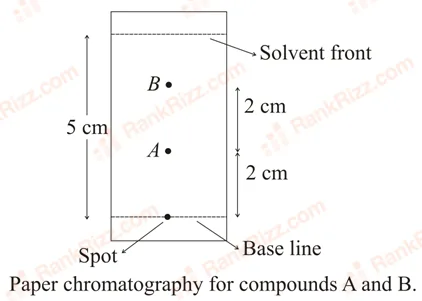
Using the provided information in the following paper chromatogram:

Figure for JEE Main 2021 Chemistry question on Methods of purification of organic compounds


The calculated RfR_f value of A is ______ ×10−1\times 10^{-1}.

JEE MAIN 2021 · 25 FEB S2Methods of purification of organic compounds

Which of the following compound is added to the sodium extract before addition of silver nitrate for testing of halogens?

  1. A

    Nitric acid

  2. B

    Sodium hydroxide

  3. C

    Ammonia

  4. D

    Hydrochloric acid

JEE MAIN 2020 · 06 SEP S1Quantitative estimation of elements

In an estimation of bromine by Carius method, 1.6 g1.6\,\text{g} of an organic compound gave 1.88 g1.88\,\text{g} of AgBr. The mass percentage of bromine in the compound is........ (Atomic mass, Ag = 108, Br = 80 g mol−1\text{g mol}^{-1})

JEE MAIN 2020 · 06 SEP S2Quantitative estimation of elements

Match the following:
Test/Method                    Reagent
(i) Lucas Test                   (a) C6H5SO2Cl\text{C}_6\text{H}_5\text{SO}_2\text{Cl} / aq. KOH
(ii) Dumas method            (b) HNO3\text{HNO}_3 / AgNO3\text{AgNO}_3
(iii) Kjeldahl's method       (c) CuO / CO3\text{CO}_3
(iv) Hinsberg Test             (d) Conc. HCl and ZnCl2\text{ZnCl}_2
                                             (e) H2SO4\text{H}_2\text{SO}_4

  1. A

    (i)-(d), (ii)-(c), (iii)-(b), (iv)-(e)

  2. B

    (i)-(b), (ii)-(d), (iii)-(e), (iv)-(a)

  3. C

    (i)-(d), (ii)-(c), (iii)-(e), (iv)-(a)

  4. D

    (i)-(b), (ii)-(a), (iii)-(c), (iv)-(d)

JEE MAIN 2020 · 04 SEP S1Methods of purification of organic compounds

The number of chiral centres present in [B] is __________

Figure for JEE Main 2020 Chemistry question on Methods of purification of organic compounds
JEE MAIN 2020 · 03 SEP S1Methods of purification of organic compounds

Glycerol is separated in soap industries by:

  1. A

    Fractional distillation

  2. B

    Differential distillation

  3. C

    Steam distillation

  4. D

    Distillation under reduced pressure

JEE MAIN 2020 · 03 SEP S1Quantitative estimation of elements

The Kjeldahl method of Nitrogen estimation fails for which of the following reaction products?

Figure for JEE Main 2020 Chemistry question on Quantitative estimation of elements
  1. A

    (c) and (d)

  2. B

    (a) and (d)

  3. C

    (a), (c) and (d)

  4. D

    (b) and (c)

JEE MAIN 2020 · 02 SEP S1Quantitative estimation of elements

In Carius method of estimation of halogen, 0.172 g of an organic compound showed presence of 0.08 g of bromine. Which of these is the correct structure of the compound?

  1. A

    CH3CHBr2CH_3CHBr_2

  2. B
    Figure for JEE Main 2020 Chemistry question on Quantitative estimation of elements
  3. C
    Figure for JEE Main 2020 Chemistry question on Quantitative estimation of elements
  4. D

    H3C−CH2−BrH_3C - CH_2 - Br

JEE MAIN 2020 · 08 JAN S1Methods of purification of organic compounds

A flask contains a mixture of isohexane and 3-methylpentane. One of the liquids boils at 63∘^\circC while the other boils at 60∘^\circC. What is the best way to separate the two liquids and which one will be distilled out first?

  1. A

    fractional distillation, isohexane

  2. B

    simple distillation, 3-methylpentane

  3. C

    simple distillation, isohexane

  4. D

    fractional distillation, 3-methylpentane