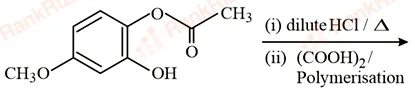
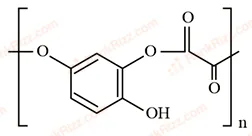
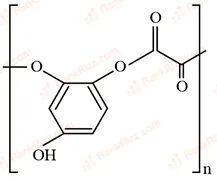
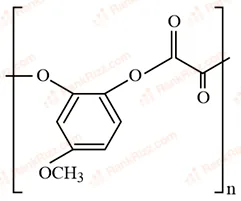
Which statement is correct?
- A
Synthesis of Buna-S needs nascent oxygen.
- B
Buna-S is a synthetic and linear thermosetting polymer.
- C
Buna-N is a natural polymer.
- D
Neoprene is an addition copolymer used in plastic bucket manufacturing.
Every Polymers question JEE Main has set from 2005–2023, grouped by the idea it tests rather than the order of the syllabus. 88 questions across 3 distinct ideas. Free to read, answer key on every one.
DATA UPDATED
Questions
88
Distinct ideas
3
Share of marks
0%
Difficulty
EASY
A chapter is not one subject — it is a handful of procedures the examiner reuses. These are the ones Polymers questions actually test.
41–60 OF 88 · NEWEST FIRST
Which statement is correct?
Synthesis of Buna-S needs nascent oxygen.
Buna-S is a synthetic and linear thermosetting polymer.
Buna-N is a natural polymer.
Neoprene is an addition copolymer used in plastic bucket manufacturing.
Match List I with List II.
| List I (Monomer Unit) | List II (Polymer) |
|---|---|
| (a) Caprolactum | (i) Natural rubber |
| (b) 2-Chloro-1,3-butadiene | (ii) Buna-N |
| (c) Isoprene | (iii) Nylon 6 |
| (d) Acrylonitrile | (iv) Neoprene |
aiii, biv, ci, dii
ai, bii, ciii, div
aii, bi, civ, diii
aiv, biii, cii, di
In polymer Buna-S, 'S' stands for:
Strength
Sulphur
Sulphonation
Styrene
Consider the Assertion and Reason given below.
Assertion (A): Ethene polymerized in the presence of Ziegler Natta Catalyst at high temperature and pressure is used to make buckets and dustbins.
Reason (R): High density polymers are closely packed and are chemically inert. Choose the correct answer from the following:
(A) is correct but (R) is wrong
Both (A) and (R) are correct but (R) is not the correct explanation of (A)
Both (A) and (R) are correct and (R) is the correct explanation of (A)
(A) and (R) both are wrong
The correct match between item-I and item-II is:
Item-I Item-II
(a) Natural rubber (I) 1,3-butadiene + styrene
(b) Neoprene (II) 1,3-butadiene
(c) Buna-N (III) chloroprene
(d) Buna-S (IV) Isoprene
(a)-(III), (b)-(IV), (c)-(I), (d)-(II)
(a)-(III), (b)-(IV), (c)-(II), (d)-(I)
(a)-(IV), (b)-(III), (c)-(II), (d)-(I)
(a)-(IV), (b)-(III), (c)-(I), (d)-(II)
Which one of the following polymers is not obtained by condensation polymerisation?
Nylon 6, 6
Buna - N
Bakelite
Nylon 6
Which polymer has 'chiral' monomer(s)?
Neoprene
Buna-N
Nylon 6,6
PHBV
Preparation of Bakelite proceeds via reactions:
Electrophilic addition and dehydration
Condensation and elimination
Electrophilic substitution and dehydration
Nucleophilic addition and dehydration
Which of the following is a thermosetting polymer?
Bakelite
PVC
Nylon 6
Buna-N
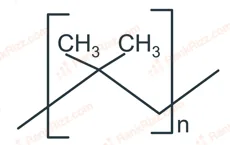
The correct name of the following polymer is:

Polyisobutylene
Polytert-butylene
Polyisobutane
Polyisoprene
Which of the following is a condensation polymer?
Nylon 6, 6
Neoprene
Buna-S
Teflon
The correct match between Item - I and Item - II is:
Item - I Item - II
(a) High density polythene (I) Peroxide catalyst
(b) Polyacrylonitrile (II) Condensation at high temperature & pressure
(c) Novolac (III) Ziegler-Natta catalyst
(d) Nylon 6 (IV) Acid or base catalyst
a IV, b (II), (c) (I), (d) (III)
(a) III, (b) (I), (c) (IV), (d) (II)
(a) III, (b) (I), (c) (II), (d) (IV)
(a) II, b IV, c I, d III
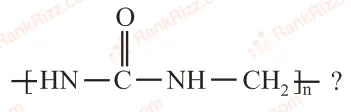
Which of the following compounds is a constituent of the polymer
?
Methylamine
Ammonia
Formaldehyde
N-Methyl urea
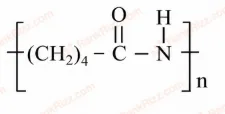
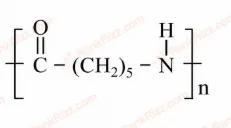
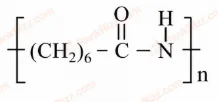
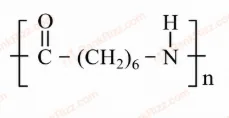
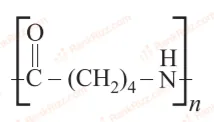
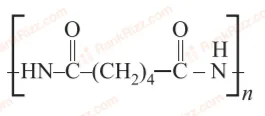
The structure of Nylon-6 is:


Poly--hydroxybutyrate-co--hydroxyvalerate (PHBV) is a copolymer of ____.
3-hydroxybutanoic acid and 4-hydroxypentanoic acid
3-hydroxybutanoic acid and 2-hydroxypentanoic acid
3-hydroxybutanoic acid and 3-hydroxypentanoic acid
2-hydroxybutanoic acid and 3-hydroxypentanoic acid
The two monomers for the synthesis of nylon 6,6 are
HOOH(CH)COOH, HN(CH)NH
HOOC(CH)COOH, HN(CH)NH
The polymer obtained from the following reactions is:


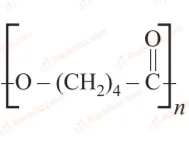
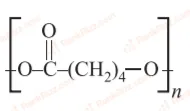
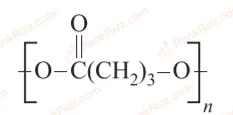
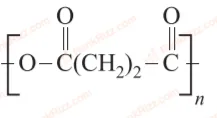
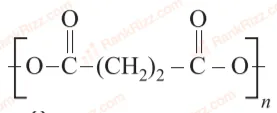
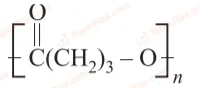
The homopolymer formed from 4-hydroxy-butanoic acids is:


The major product of the following reaction is:


Major product of the given reaction is:
Options:


JEE Advanced has set 10 Polymers questions too. Polymers JEE Advanced PYQs →
OTHER CHEMISTRY CHAPTERS