Polymers JEE Main PYQs with answer key
CHEMISTRY · 88 PAST QUESTIONS · 3 TOPICS · 2005–2023
HOW TO USE THIS SHEET
Every JEE Main Polymers question we hold, grouped by topic, most-asked topic first and newest first inside each. The answer key is at the end (88 of 88 questions have a checked key); the worked solution is on each question’s page, printed beside it.
Important polymers and their monomers 80
Match List I with List II:
List I (Monomer) List II (Polymer) A Tetrafluoroethene I Orlon B Acrylonitrile II Natural rubber C Caprolactam III Teflon D Isoprene IV Nylon-6
Choose the correct answer from the options given below:- (A)
(A)-(III), (B)-(I), (C)-(IV), (D)-(II)
- (B)
(A)-(IV), (B)-(I), (C)-(II), (D)-(III)
- (C)
(A)-(III), (B)-(IV), (C)-(II), (D)-(I)
- (D)
(A)-(II), (B)-(III), (C)-(IV), (D)-(I)
rr2.rankrizz.com/jee-main/chemistry/polymers/q/15-apr-2023-s1-q49
- (A)
Match the following
Column-A Column-B a Nylon 6 I Natural Rubber b Vulcanized Rubber II Cross Linked c cis-1, 4-polyisoprene III Caprolactam d Polychloroprene IV Neoprene
Choose the correct answer from options given below:- (A)
a III, b II, c I, d IV
- (B)
a III, b IV, c I, d II
- (C)
a IV, b III, c II, d I
- (D)
a II, b III, c IV, d I
rr2.rankrizz.com/jee-main/chemistry/polymers/q/13-apr-2023-s1-q50
- (A)
Match List-I with List-II.
List-I List-II A Weak intermolecular forces of attraction I Hexamethylenediamine + adipic acid B Hydrogen bonding II AlEt + TiCl C Heavily branched polymer III 2-chloro-1, 3-butadiene D High density polymer IV Phenol + formaldehyde
Choose the correct answer from the options given below- (A)
A-IV, B-II, C-III, D-I
- (B)
A-IV, B-I, C-III, D-II
- (C)
A-II, B-IV, C-I, D-III
- (D)
A-III, B-I, C-IV, D-II
rr2.rankrizz.com/jee-main/chemistry/polymers/q/13-apr-2023-s2-q32
- (A)
Match List I with List II
List I
(Example)List II
(Type)A 2-chloro-1, 3-butadiene I Biodegradable polymer B Nylon 2-nylon 6 II Synthetic Rubber C Polyacrylonitrile III Polyester D Dacron IV Addition Polymer
Choose the correct answer from the options given below:- (A)
A(II), B(IV), C(I), D(III)
- (B)
A(II), B(I), C(IV), D(III)
- (C)
A(IV), B(I), C(III), D(II)
- (D)
A(IV), B(III), C(I), D(II)
rr2.rankrizz.com/jee-main/chemistry/polymers/q/12-apr-2023-s1-q50
- (A)
The polymer X-consists of linear molecules and is closely packed. It is prepared in the presence of trimethylaluminiumpropyl and titanium tetrachloride under low pressure. The polymer X is
- (A)
High density polythene
- (B)
Polyacrylonitrile
- (C)
Low density polythene
- (D)
Polytetrafluoroethane
rr2.rankrizz.com/jee-main/chemistry/polymers/q/11-apr-2023-s1-q50
- (A)
Given below are two statements:
Statement I: Ethane at 333 to 343 K and 6-7 atm pressure in the presence of AlEt and TiCl undergoes addition polymerization to give LDP.
Statement II: Caprolactam at 533-543 K in HO through step growth polymerizes to give Nylon 6.
In the light of the above statements, choose the correct answer from the options given below:- (A)
Statement I is false but Statement II is true
- (B)
Statement I is true but Statement II is false
- (C)
Both Statement I and Statement II are true
- (D)
Both Statement I and Statement II are false
rr2.rankrizz.com/jee-main/chemistry/polymers/q/11-apr-2023-s2-q50
- (A)
Match List-I with List-II.
List-I Polymer List-II Type/Class A. Nylon-2-Nylon-6 I. Thermosetting polymer B. Buna-N II. Biodegradable polymer C. Ureaformaldehyde resin III. Synthetic rubber D. Dacron IV. Polyester
Choose the correct answer from the options given below:- (A)
A IV; B I; C II; D II
- (B)
A II; B III; C I; D IV
- (C)
A IV; B III; C I; D II
- (D)
A II; B I; C IV; D III
rr2.rankrizz.com/jee-main/chemistry/polymers/q/10-apr-2023-s1-q49
- (A)
Buna-S can be represented as:
- (A)
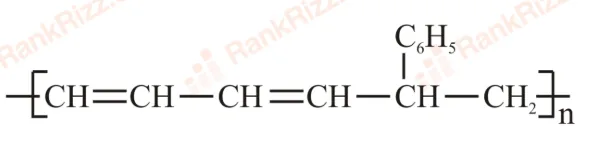
- (B)
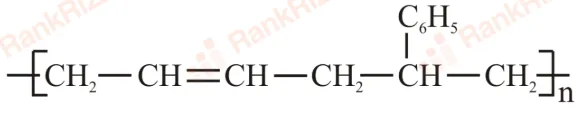
- (C)
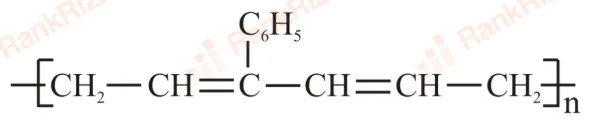
- (D)
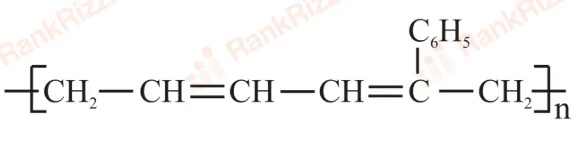
rr2.rankrizz.com/jee-main/chemistry/polymers/q/10-apr-2023-s2-q49
- (A)
Polymer used in orlon is:
- (A)
Polyethene
- (B)
Polycarbonate
- (C)
Polyamide
- (D)
Polyacrylonitrile
rr2.rankrizz.com/jee-main/chemistry/polymers/q/6-apr-2023-s1-q49
- (A)
Caprolactam when heated at high temperature in presence of water, gives
- (A)
Teflon
- (B)
Dacron
- (C)
Nylon 6, 6
- (D)
Nylon 6
rr2.rankrizz.com/jee-main/chemistry/polymers/q/30-jan-2023-s1-q47
- (A)
Match List-I and List-II.
List-I List-II A. Elastomeric polymer I. Urea formaldehyde resin B. Fibre polymer II. Polystyrene C. Thermosetting polymer III. Polyester D. Thermoplastic polymer IV. Neoprene
Choose the correct answer from the options given below:- (A)
A-II, B-III, C-I, D-IV
- (B)
A-II, B-I, C-IV, D-III
- (C)
A-IV, B-III, C-I, D-II
- (D)
A-IV, B-I, C-III, D-II
rr2.rankrizz.com/jee-main/chemistry/polymers/q/29-jan-2023-s2-q48
- (A)
Match List I with List II
List I (Name of polymer) List II (Uses)
A. Glyptal I. Flexible pipes
B. Neoprene II. Synthetic wool
C. Acrilan III. Paints and Lacquers
D. LDP IV. Gaskets
Choose the correct answer from the options given below :-- (A)
A-III, B-II, C-IV, D-I
- (B)
A-III, B-IV, C-II, D-I
- (C)
A-III, B-IV, C-I, D-II
- (D)
A-III, B-I, C-IV, D-II
rr2.rankrizz.com/jee-main/chemistry/polymers/q/25-jan-2023-s2-q49
- (A)
Which of the following is NOT a natural polymer?
- (A)
Protein
- (B)
Starch
- (C)
Rubber
- (D)
Rayon
rr2.rankrizz.com/jee-main/chemistry/polymers/q/29-jul-2022-s2-q49
- (A)
Terylene polymer is obtained by condensation of
- (A)
Ethane-1,2-diol and Benzene-1,3 dicarboxylic acid
- (B)
Propane-1,2-diol and Benzene-1,4 dicarboxylic acid
- (C)
Ethane-1,2-diol and Benzene-1,4 dicarboxylic acid
- (D)
Ethane-1,2-diol and Benzene-1,2 dicarboxylic acid
rr2.rankrizz.com/jee-main/chemistry/polymers/q/28-jul-2022-s1-q48
- (A)
Match List I with List II
List-I (Polymer) List-II (Nature) A 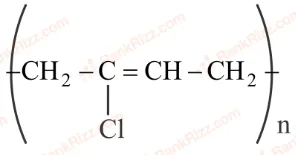
I. Thermosetting polymer B 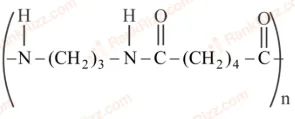
II. Fibers C 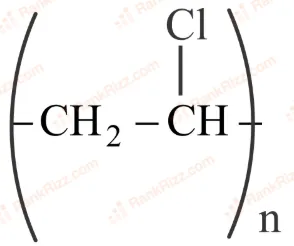
III. Elastomer D 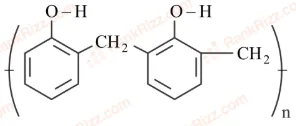
IV. Thermoplastic polymer - (A)
A-II, B-III, C-IV, D-I
- (B)
A-III, B-II, C-IV, D-I
- (C)
A-III, B-I, C-IV, D-II
- (D)
A-I, B-III, C-IV, D-II
rr2.rankrizz.com/jee-main/chemistry/polymers/q/28-jul-2022-s2-q48
- (A)
Match List-I with List-II.
List-I (Polymer) List-II (Monomer) A. Neoprene I. Acrylonitrile B. Teflon II. Chloroprene C. Acrilan III. Tetrafluoroethene D. Natural rubber IV. Isoprene Choose the correct answer from the option given below:
- (A)
A-II, B-III, C-I, D-IV
- (B)
A-II, B-I, C-III, D-IV
- (C)
A-II, B-I, C-IV, D-III
- (D)
A-I, B-II, C-III, D-IV
rr2.rankrizz.com/jee-main/chemistry/polymers/q/27-jul-2022-s2-q48
- (A)
Vulcanization of rubber is carried out by heating a mixture of
- (A)
isoprene and styrene
- (B)
neoprene and sulphur
- (C)
isoprene and sulphur
- (D)
neoprene and styrene
rr2.rankrizz.com/jee-main/chemistry/polymers/q/26-jul-2022-s2-q49
- (A)
Melamine polymer is formed by the condensation of
- (A)
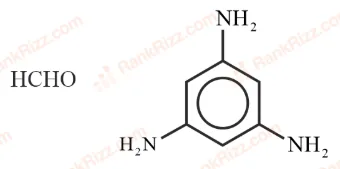
- (B)
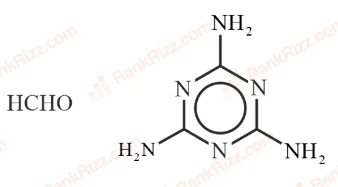
- (C)
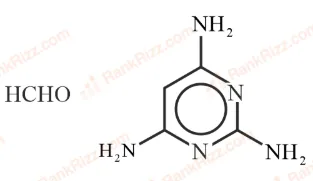
- (D)
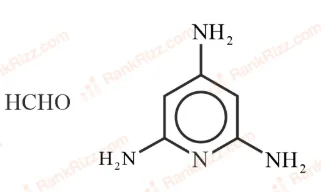
rr2.rankrizz.com/jee-main/chemistry/polymers/q/25-jul-2022-s1-q48
- (A)
Match List I with List II.
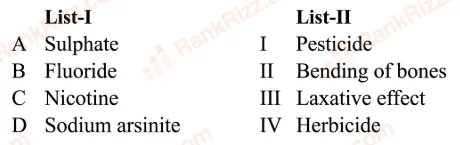
Choose the correct answer from the options given below
- (A)
A - II, B - III, C - IV, D - I
- (B)
A - III, B - II, C - I, D - IV
- (C)
A - IV, B - III, C - II, D - I
- (D)
A - III, B - II, C - IV, D - I
rr2.rankrizz.com/jee-main/chemistry/polymers/q/25-jul-2022-s2-q39
- (A)
The polymer, which can be stretched and retains its original status on releasing the force is
- (A)
Nylon-6, 6
- (B)
Buna-N
- (C)
Terylene
- (D)
Bakelite
rr2.rankrizz.com/jee-main/chemistry/polymers/q/29-jun-2022-s1-q48
- (A)
Given below are two statements: one is labelled as Assertion A and the other is labelled as Reason R.
Assertion A: Dacron is an example of polyester polymer.
Reason R: Dacron is made up of ethylene glycol and terephthalic acid monomers.
In the light of the above statements, choose the most appropriate answer from the options given below.- (A)
Both A and R are correct and R is the correct explanation of A
- (B)
Both A and R are correct but R is NOT the correct explanation of A.
- (C)
A is correct but R is not correct.
- (D)
A is not correct but R is correct.
rr2.rankrizz.com/jee-main/chemistry/polymers/q/29-jun-2022-s2-q47
- (A)
Which one of the following is NOT a copolymer?
- (A)
Neoprene
- (B)
PHBV
- (C)
Buna-S
- (D)
Butadiene-styrene
rr2.rankrizz.com/jee-main/chemistry/polymers/q/28-jun-2022-s1-q49
- (A)
Given below are two statements, one is Assertion and other is Reason.
Assertion: Natural rubber is a linear polymer of isoprene called cis-polyisoprene with elastic properties.
Reason: The cis-polyisoprene molecules consist of various chains held together by strong polar interactions with coiled structure.
In the light of the above statements, choose the correct one from the options given below- (A)
Both Assertion and Reason are true and Reason is the correct explanation of Assertion
- (B)
Both Assertion and Reason are true but Reason is not the correct explanation of Assertion.
- (C)
Assertion is true but Reason is false.
- (D)
Assertion is false but Reason is true.
rr2.rankrizz.com/jee-main/chemistry/polymers/q/28-jun-2022-s2-q48
- (A)
Match List - I with List - II.
List-I (Polymer) List-II (Used in) A Bakelite I Radio and television cabinets B Glyptal II Electrical switches C PVC III Paints and Lacquers D Polystyrene IV Water pipes - (A)
A-(II), B-(III), C-(I), D-(IV)
- (B)
A-(II), B-(III), C-(IV), D-(I)
- (C)
A-(I), B-(II), C-(III), D-(IV)
- (D)
A-(IV), B-(III), C-(II), D-(I)
rr2.rankrizz.com/jee-main/chemistry/polymers/q/27-jun-2022-s1-q48
- (A)
Which is true about Buna-N?
- (A)
It is a linear polymer of 1,3-butadiene.
- (B)
It is obtained by copolymerization of 1,3-butadiene and styrene.
- (C)
It is obtained by copolymerization of 1,3-butadiene and acrylonitrile.
- (D)
The suffix N in Buna-N stands for its natural occurrence.
rr2.rankrizz.com/jee-main/chemistry/polymers/q/27-jun-2022-s2-q47
- (A)
Which of the following sets are correct regarding polymer:
(A) Copolymer : Buna-S
(B) Condensation polymer : Nylon-6, 6
(C) Fibres : Nylon-6, 6
(D) Thermosetting polymer : Terylene
(E) Homopolymers : Buna-N
Choose the correct answer from given options below- (A)
(A), (B) and (C) are correct
- (B)
(B), (C) and (D) are correct
- (C)
(A), (C) and (E) are correct
- (D)
(A), (B) and (D) are correct
rr2.rankrizz.com/jee-main/chemistry/polymers/q/26-jun-2022-s1-q48
- (A)
The Novolac polymer has mass of g. The number of monomer units present in it are ______
Answer: ____________
rr2.rankrizz.com/jee-main/chemistry/polymers/q/25-jun-2022-s2-q59
Which of the following is an example of polyester?
- (A)
Butadiene-styrene copolymer
- (B)
Melamine polymer
- (C)
Neoprene
- (D)
Poly--hydroxybutyrate-co--hydroxyvalerate
rr2.rankrizz.com/jee-main/chemistry/polymers/q/24-jun-2022-s1-q47
- (A)
Which of the following is not a condensation polymer?
- (A)
Nylon-6,6
- (B)
Nylon-6
- (C)
Dacron
- (D)
Buna-S
rr2.rankrizz.com/jee-main/chemistry/polymers/q/24-jun-2022-s2-q48
- (A)
Monomer units of Dacron polymer are:
- (A)
glycerol and phthalic acid
- (B)
ethylene glycol and phthalic acid
- (C)
ethylene glycol and terephthalic acid
- (D)
glycerol and terephthalic acid
rr2.rankrizz.com/jee-main/chemistry/polymers/q/1-sep-2021-s2-q50
- (A)
Monomer of Novolac is:
- (A)
3-Hydroxybutanoic acid.
- (B)
1, 3 -Butadiene and styrene.
- (C)
phenol and melamine.
- (D)
o-Hydroxymethylphenol.
rr2.rankrizz.com/jee-main/chemistry/polymers/q/31-aug-2021-s1-q33
- (A)
Which among the following is not a polyester?
- (A)
Glyptal
- (B)
PHBV
- (C)
Novolac
- (D)
Dacron
rr2.rankrizz.com/jee-main/chemistry/polymers/q/31-aug-2021-s2-q49
- (A)
The polymer formed on heating Novolac with formaldehyde is:
- (A)
Polyester
- (B)
Bakelite
- (C)
Nylon-6,6
- (D)
Melamine
rr2.rankrizz.com/jee-main/chemistry/polymers/q/26-aug-2021-s1-q50
- (A)
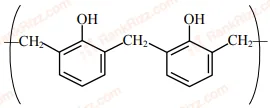
is a repeating unit for:- (A)
Novolac
- (B)
Buna-N
- (C)
Acrilan
- (D)
Neoprene
rr2.rankrizz.com/jee-main/chemistry/polymers/q/25-jul-2021-s1-q48
- (A)
A biodegradable polyamide can be made from:
- (A)
Glycine and isoprene
- (B)
Hexamethylene diamine and adipic acid
- (C)
Glycine and aminocaproic acid
- (D)
Styrene and caproic acid
rr2.rankrizz.com/jee-main/chemistry/polymers/q/25-jul-2021-s2-q49
- (A)
Match List-I with List-II :
(a) Chloroprene (i) 
(b) Neoprene (ii) 
(c) Acrylonitrile (iii) 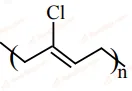
(d) Isoprene (iv) CH=CH-CN Choose the correct answer from the options given
- (A)
(a)-(iii), (b)-(iv), (c)-(ii), (d)-(i)
- (B)
(a)-(ii), (b)-(iii), (c)-(iv), (d)-(i)
- (C)
(a)-(ii), (b)-(i), (c)-(iv), (d)-(iii)
- (D)
(a)-(iii), (b)-(i), (c)-(iv), (d)-(ii)
rr2.rankrizz.com/jee-main/chemistry/polymers/q/22-jul-2021-s1-q49
- (A)
Orlon fibres are made up of:
- (A)
Polyacrylonitrile
- (B)
Polyesters
- (C)
Polyamide
- (D)
Cellulose
rr2.rankrizz.com/jee-main/chemistry/polymers/q/20-jul-2021-s1-q48
- (A)
Bakelite is a cross-linked polymer of formaldehyde and:
- (A)
PHBV
- (B)
Buna-S
- (C)
Novolac
- (D)
Dacron
rr2.rankrizz.com/jee-main/chemistry/polymers/q/20-jul-2021-s2-q49
- (A)
Which of the following polymer is used in the manufacture of wood laminates?
- (A)
cis-poly isoprene
- (B)
Melamine formaldehyde resin
- (C)
Urea formaldehyde resin
- (D)
Phenol and formaldehyde resin
rr2.rankrizz.com/jee-main/chemistry/polymers/q/16-mar-2021-s2-q48
- (A)
Which statement is correct?
- (A)
Synthesis of Buna-S needs nascent oxygen.
- (B)
Buna-S is a synthetic and linear thermosetting polymer.
- (C)
Buna-N is a natural polymer.
- (D)
Neoprene is an addition copolymer used in plastic bucket manufacturing.
rr2.rankrizz.com/jee-main/chemistry/polymers/q/25-feb-2021-s1-q49
- (A)
Match List I with List II.
List I (Monomer Unit) List II (Polymer) (a) Caprolactum (i) Natural rubber (b) 2-Chloro-1,3-butadiene (ii) Buna-N (c) Isoprene (iii) Nylon 6 (d) Acrylonitrile (iv) Neoprene
Choose the correct answer from the options given below:- (A)
aiii, biv, ci, dii
- (B)
ai, bii, ciii, div
- (C)
aii, bi, civ, diii
- (D)
aiv, biii, cii, di
rr2.rankrizz.com/jee-main/chemistry/polymers/q/24-feb-2021-s1-q48
- (A)
In polymer Buna-S, 'S' stands for:
- (A)
Strength
- (B)
Sulphur
- (C)
Sulphonation
- (D)
Styrene
rr2.rankrizz.com/jee-main/chemistry/polymers/q/24-feb-2021-s2-q49
- (A)
Consider the Assertion and Reason given below.
Assertion (A): Ethene polymerized in the presence of Ziegler Natta Catalyst at high temperature and pressure is used to make buckets and dustbins.
Reason (R): High density polymers are closely packed and are chemically inert. Choose the correct answer from the following:- (A)
(A) is correct but (R) is wrong
- (B)
Both (A) and (R) are correct but (R) is not the correct explanation of (A)
- (C)
Both (A) and (R) are correct and (R) is the correct explanation of (A)
- (D)
(A) and (R) both are wrong
rr2.rankrizz.com/jee-main/chemistry/polymers/q/6-sep-2020-s1-q45
- (A)
The correct match between item-I and item-II is:
Item-I Item-II
(a) Natural rubber (I) 1,3-butadiene + styrene
(b) Neoprene (II) 1,3-butadiene
(c) Buna-N (III) chloroprene
(d) Buna-S (IV) Isoprene- (A)
(a)-(III), (b)-(IV), (c)-(I), (d)-(II)
- (B)
(a)-(III), (b)-(IV), (c)-(II), (d)-(I)
- (C)
(a)-(IV), (b)-(III), (c)-(II), (d)-(I)
- (D)
(a)-(IV), (b)-(III), (c)-(I), (d)-(II)
rr2.rankrizz.com/jee-main/chemistry/polymers/q/6-sep-2020-s2-q44
- (A)
Which one of the following polymers is not obtained by condensation polymerisation?
- (A)
Nylon 6, 6
- (B)
Buna - N
- (C)
Bakelite
- (D)
Nylon 6
rr2.rankrizz.com/jee-main/chemistry/polymers/q/5-sep-2020-s2-q44
- (A)
Which polymer has 'chiral' monomer(s)?
- (A)
Neoprene
- (B)
Buna-N
- (C)
Nylon 6,6
- (D)
PHBV
rr2.rankrizz.com/jee-main/chemistry/polymers/q/9-jan-2020-s2-q44
- (A)
Preparation of Bakelite proceeds via reactions:
- (A)
Electrophilic addition and dehydration
- (B)
Condensation and elimination
- (C)
Electrophilic substitution and dehydration
- (D)
Nucleophilic addition and dehydration
rr2.rankrizz.com/jee-main/chemistry/polymers/q/8-jan-2020-s2-q26
- (A)
Which of the following is a thermosetting polymer?
- (A)
Bakelite
- (B)
PVC
- (C)
Nylon 6
- (D)
Buna-N
rr2.rankrizz.com/jee-main/chemistry/polymers/q/12-apr-2019-s1-q57
- (A)
The correct name of the following polymer is:
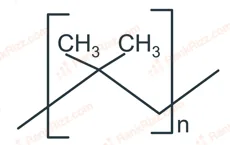
- (A)
Polyisobutylene
- (B)
Polytert-butylene
- (C)
Polyisobutane
- (D)
Polyisoprene
rr2.rankrizz.com/jee-main/chemistry/polymers/q/12-apr-2019-s2-q59
- (A)
Which of the following is a condensation polymer?
- (A)
Nylon 6, 6
- (B)
Neoprene
- (C)
Buna-S
- (D)
Teflon
rr2.rankrizz.com/jee-main/chemistry/polymers/q/10-apr-2019-s1-q59
- (A)
The correct match between Item - I and Item - II is:
Item - I Item - II
(a) High density polythene (I) Peroxide catalyst
(b) Polyacrylonitrile (II) Condensation at high temperature & pressure
(c) Novolac (III) Ziegler-Natta catalyst
(d) Nylon 6 (IV) Acid or base catalyst- (A)
a IV, b (II), (c) (I), (d) (III)
- (B)
(a) III, (b) (I), (c) (IV), (d) (II)
- (C)
(a) III, (b) (I), (c) (II), (d) (IV)
- (D)
(a) II, b IV, c I, d III
rr2.rankrizz.com/jee-main/chemistry/polymers/q/10-apr-2019-s2-q59
- (A)
Which of the following compounds is a constituent of the polymer
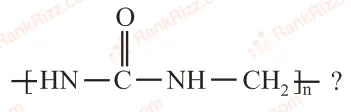
?
- (A)
Methylamine
- (B)
Ammonia
- (C)
Formaldehyde
- (D)
N-Methyl urea
rr2.rankrizz.com/jee-main/chemistry/polymers/q/9-apr-2019-s2-q58
- (A)
The structure of Nylon-6 is:
- (A)
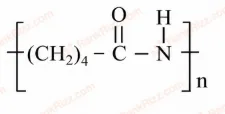
- (B)
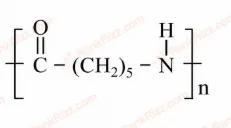
- (C)
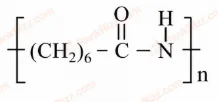
- (D)
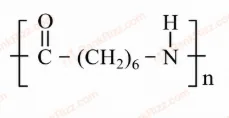
rr2.rankrizz.com/jee-main/chemistry/polymers/q/8-apr-2019-s2-q59
- (A)
Poly--hydroxybutyrate-co--hydroxyvalerate (PHBV) is a copolymer of ____.
- (A)
3-hydroxybutanoic acid and 4-hydroxypentanoic acid
- (B)
3-hydroxybutanoic acid and 2-hydroxypentanoic acid
- (C)
3-hydroxybutanoic acid and 3-hydroxypentanoic acid
- (D)
2-hydroxybutanoic acid and 3-hydroxypentanoic acid
rr2.rankrizz.com/jee-main/chemistry/polymers/q/12-jan-2019-s1-q59
- (A)
The two monomers for the synthesis of nylon 6,6 are
- (A)
HOOH(CH)COOH, HN(CH)NH
- (B)
HOOC(CH)COOH, HN(CH)NH
- (C)
HOOC(CH)COOH, HN(CH)NH
- (D)
HOOC(CH)COOH, HN(CH)NH
rr2.rankrizz.com/jee-main/chemistry/polymers/q/12-jan-2019-s2-q58
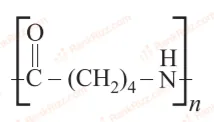
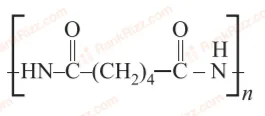
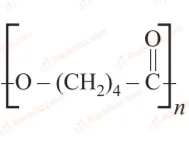
- (A)
The polymer obtained from the following reactions is:

- (A)
- (B)
- (C)
- (D)
rr2.rankrizz.com/jee-main/chemistry/polymers/q/11-jan-2019-s1-q57
- (A)
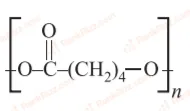
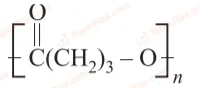
The homopolymer formed from 4-hydroxy-butanoic acids is:
- (A)
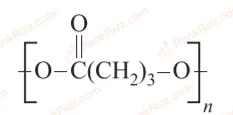
- (B)
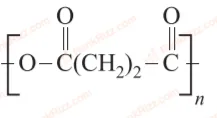
- (C)
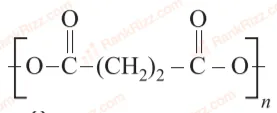
- (D)
rr2.rankrizz.com/jee-main/chemistry/polymers/q/11-jan-2019-s2-q58
- (A)
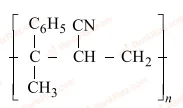
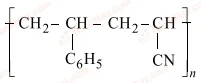
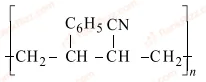
The copolymer formed by addition polymerization of styrene and acrylonitrile in the presence of peroxide is:
- (A)
- (B)
- (C)
- (D)
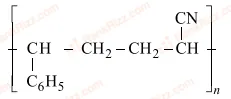
rr2.rankrizz.com/jee-main/chemistry/polymers/q/15-apr-2018-s1-q58
- (A)
Which of the following statements is not true?
- (A)
Chain growth polymerisation involves homopolymerisation only
- (B)
Chain growth polymerisation includes both homo-polymerisation and copolymerisation
- (C)
Nylon 6 is an example of step-growth polymerisation
- (D)
Step growth polymerisation requires a bifunctional monomer
rr2.rankrizz.com/jee-main/chemistry/polymers/q/15-apr-2018-s2-q59
- (A)
Which of the following is a biodegradable polymer?
- (A)
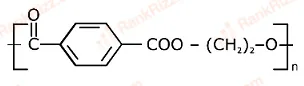
- (B)
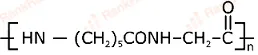
- (C)
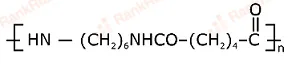
- (D)
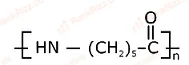
rr2.rankrizz.com/jee-main/chemistry/polymers/q/9-apr-2017-online-q59
- (A)
The formation of which of the following polymers involves hydrolysis reaction?
- (A)
Bakelite
- (B)
Nylon-6,6
- (C)
Terylene
- (D)
Nylon-6
rr2.rankrizz.com/jee-main/chemistry/polymers/q/2-apr-2017-offline-q59
- (A)
Which of the following polymers is synthesized using a free radical polymerization technique?
- (A)
Terylene
- (B)
Melamine polymer
- (C)
Nylon 6, 6
- (D)
Teflon
rr2.rankrizz.com/jee-main/chemistry/polymers/q/10-apr-2016-online-q58
- (A)
Assertion: Rayon is a semisynthetic polymer whose properties are better than natural cotton.
Reason: Mechanical and aesthetic properties of cellulose can be improved by acetylation.- (A)
Both assertion and reason are correct, but the reason is not the correct explanation for the assertion.
- (B)
Both assertion and reason are correct, and the reason is the correct explanation for the assertion.
- (C)
Assertion is incorrect statement, but the reason is correct.
- (D)
Both assertion and reason are incorrect.
rr2.rankrizz.com/jee-main/chemistry/polymers/q/9-apr-2016-online-q58
- (A)
Which of the following statements about low density polythene is FALSE?
- (A)
Its synthesis required dioxygen or a peroxide initiator as a catalyst
- (B)
It is used in the manufacture of buckets, dust-bins etc.
- (C)
Its synthesis requires high pressure
- (D)
It is a poor conductor of electricity
rr2.rankrizz.com/jee-main/chemistry/polymers/q/3-apr-2016-offline-q58
- (A)
Which one of the following structures represents the neoprene polymer?
- (A)
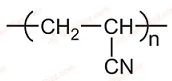
- (B)
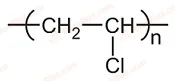
- (C)
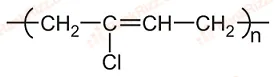
- (D)
rr2.rankrizz.com/jee-main/chemistry/polymers/q/11-apr-2015-online-q58
- (A)
Match the polymers in column-A with their main uses in column-B and choose the correct answer:
Column - A Column - B
A. Polystyrene i. Paints and lacquers
B. Glyptal ii. Rain coats
C. Polyvinyl chloride iii. Manufacture of toys
D. Bakelite iv. Computer discs- (A)
A - iii, B - i, C - ii, D - iv
- (B)
A - ii, B - i, C - iii, D - iv
- (C)
A - ii, B - iv, C - iii, D - i
- (D)
A - iii, B - iv, C - ii, D - i
rr2.rankrizz.com/jee-main/chemistry/polymers/q/10-apr-2015-online-q58
- (A)
Which polymer is used in the manufacture of paints and lacquers?
- (A)
Poly vinyl chloride
- (B)
Bakelite
- (C)
Glyptal
- (D)
Polypropene
rr2.rankrizz.com/jee-main/chemistry/polymers/q/4-apr-2015-offline-q58
- (A)
Which one of the following is an example of thermosetting polymer?
- (A)
Nylon-6,6
- (B)
Bakelite
- (C)
Buna-N
- (D)
Teflon
rr2.rankrizz.com/jee-main/chemistry/polymers/q/19-apr-2014-online-q58
- (A)
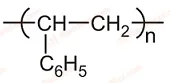
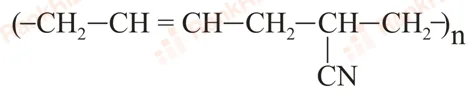
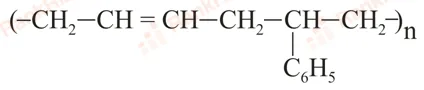
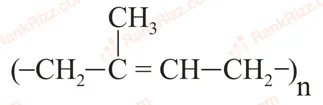
Structure of some important polymers are given. Which one represents Buna-S?
- (A)
- (B)
- (C)
- (D)
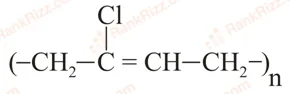
rr2.rankrizz.com/jee-main/chemistry/polymers/q/9-apr-2014-online-q59
- (A)
Which among the following is classified as a condensation polymer?
- (A)
Dacron
- (B)
Neoprene
- (C)
Teflon
- (D)
Acrylonitrile
rr2.rankrizz.com/jee-main/chemistry/polymers/q/6-apr-2014-offline-q59
- (A)
Bakelite is obtained from phenol by reacting with:
- (A)
Acetal
- (B)
CHCHO
- (C)
HCHO
- (D)
Chlorobenzene
rr2.rankrizz.com/jee-main/chemistry/polymers/q/25-apr-2013-online-q59
- (A)
Which of the following polymer is a polyamide?
- (A)
Terylene
- (B)
Nylon
- (C)
Rubber
- (D)
Vulcanised rubber
rr2.rankrizz.com/jee-main/chemistry/polymers/q/23-apr-2013-online-q57
- (A)
The polymer used for optical lenses is :
- (A)
polypropylene
- (B)
polyvinyl chloride
- (C)
polythene
- (D)
polymethyl methacrylate
rr2.rankrizz.com/jee-main/chemistry/polymers/q/22-apr-2013-online-q58
- (A)
If a polythene sample contains two monodisperse fractions in the ratio 2 : 3 with degree of polymerization 100 and 200, respectively, then its weight average molecular weight will be :
- (A)
4900
- (B)
4600
- (C)
4300
- (D)
5200
rr2.rankrizz.com/jee-main/chemistry/polymers/q/9-apr-2013-online-q59
- (A)
Bakelite is obtained from phenol by reacting it with
- (A)
Acetaldehyde
- (B)
Chlorobenzene
- (C)
Formaldehyde
- (D)
Acetamide
rr2.rankrizz.com/jee-main/chemistry/polymers/q/2012-chemistry-499259
- (A)
Which of the following is a polyamide?
- (A)
Teflon
- (B)
Orlon
- (C)
Nylon
- (D)
Terylene
rr2.rankrizz.com/jee-main/chemistry/polymers/q/2012-chemistry-499346
- (A)
Synthetic polymer bakelite can be prepared from following compounds
- (A)
Styrene and vinyl chloride
- (B)
Acrylonitrile and vinyl chloride
- (C)
Adipic acid and ethylene glycol
- (D)
Phenol and formaldehyde
rr2.rankrizz.com/jee-main/chemistry/polymers/q/2012-chemistry-499436
- (A)
Bakelite is obtained from phenol by reacting with
- (A)
- (B)
- (C)
- (D)
rr2.rankrizz.com/jee-main/chemistry/polymers/q/2008-chemistry-499931
- (A)
Which of the following is a polyamide?
- (A)
Teflon
- (B)
Nylon-66
- (C)
Terylene
- (D)
Bakelite
rr2.rankrizz.com/jee-main/chemistry/polymers/q/2005-chemistry-500396
- (A)
Which of the following is fully fluorinated polymer?
- (A)
Neoprene
- (B)
Teflon
- (C)
Thiokol
- (D)
PFC
rr2.rankrizz.com/jee-main/chemistry/polymers/q/2005-chemistry-500398
- (A)
Classification of polymers and types of polymerisation 7
Match List I with List II
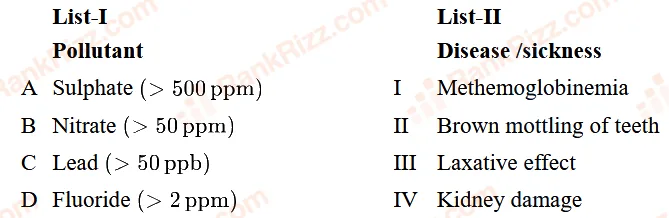
Choose the correct answer from the options given below
- (A)
A-IV, B-I, C-II, D-III
- (B)
A-III, B-I, C-IV, D-II
- (C)
A-II, B-IV, C-I, D-III
- (D)
A-II, B-IV, C-III, D-I
rr2.rankrizz.com/jee-main/chemistry/polymers/q/27-jul-2022-s1-q40
- (A)
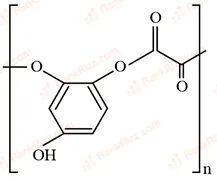
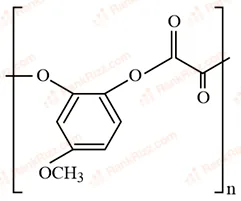
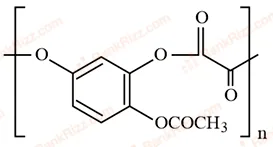
The major product of the following reaction is:
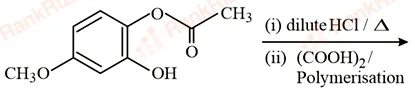
- (A)
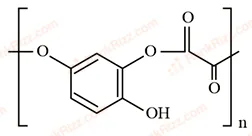
- (B)
- (C)
- (D)
rr2.rankrizz.com/jee-main/chemistry/polymers/q/10-jan-2019-s2-q58
- (A)
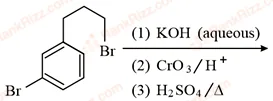
Major product of the given reaction is:
Options:- (A)
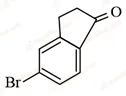
- (B)

- (C)
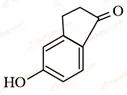
- (D)

rr2.rankrizz.com/jee-main/chemistry/polymers/q/9-jan-2019-s1-q55
- (A)
Which one of the following class of compounds is obtained by polymerization of acetylene?
- (A)
Poly-ene
- (B)
Poly-amide
- (C)
Poly-yne
- (D)
Poly-ester
rr2.rankrizz.com/jee-main/chemistry/polymers/q/9-apr-2014-online-q60
- (A)
The species which can best serve as an initiator for the cationic polymerization is :
- (A)
- (B)
- (C)
- (D)
rr2.rankrizz.com/jee-main/chemistry/polymers/q/2012-chemistry-499076
- (A)
Which one of the following is a chain growth polymerisation?
- (A)
Nucleic acid
- (B)
Polystyrene
- (C)
Protein
- (D)
Starch
rr2.rankrizz.com/jee-main/chemistry/polymers/q/2012-chemistry-499181
- (A)
The polymer containing strong intermolecular forces e.g. hydrogen bonding, is
- (A)
teflon
- (B)
nylon 6,6
- (C)
polystyrene
- (D)
natural rubber
rr2.rankrizz.com/jee-main/chemistry/polymers/q/2010-chemistry-499708
- (A)
Rubber and biodegradable polymers 1
Buna-N synthetic rubber is a copolymer of :
- (A)

- (B)

- (C)

- (D)

rr2.rankrizz.com/jee-main/chemistry/polymers/q/2009-chemistry-499630
- (A)
Answer key
- 01 A
- 02 A
- 03 D
- 04 B
- 05 A
- 06 A
- 07 B
- 08 B
- 09 D
- 10 D
- 11 C
- 12 B
- 13 D
- 14 C
- 15 B
- 16 A
- 17 C
- 18 B
- 19 B
- 20 B
- 21 A
- 22 A
- 23 C
- 24 B
- 25 C
- 26 A
- 27 9
- 28 D
- 29 D
- 30 C
- 31 D
- 32 C
- 33 B
- 34 A
- 35 C
- 36 B
- 37 A
- 38 C
- 39 C
- 40 A
- 41 A
- 42 D
- 43 C
- 44 C
- 45 B
- 46 D
- 47 C
- 48 A
- 49 A
- 50 A
- 51 B
- 52 C
- 53 B
- 54 C
- 55 B
- 56 C
- 57 D
- 58 B
- 59 B
- 60 B
- 61 D
- 62 D
- 63 B
- 64 B
- 65 C
- 66 A
- 67 C
- 68 B
- 69 B
- 70 A
- 71 C
- 72 B
- 73 D
- 74 A
- 75 C
- 76 C
- 77 D
- 78 D
- 79 B
- 80 B
- 81 B
- 82 B
- 83 A
- 84 A
- 85 C
- 86 B
- 87 B
- 88 B
Past questions are reproduced with their sitting. Not affiliated with NTA or the IITs. Every question, online and free: rr2.rankrizz.com/jee-main/chemistry/polymers