RankRizz

Chemical and Ionic Equilibrium — JEE Advanced Previous Year Questions

Chemical and Ionic Equilibrium has been asked in 13 of the 20 JEE Advanced years from 2007 to 2026: 24 questions in all. It was not set in any of the 2 2026 papers, after 6.3% of Chemistry questions in 2025. Across the last 20 papers it carried 3.4% of Chemistry questions. By type: 13 numerical, 6 multiple-correct and 5 single-correct. Of the 24 with a difficulty tag, 13% are easy, 71% medium and 17% hard. Most asked: Solubility product and common ion effect (8, 33%), Law of mass action and equilibrium constants Kc and Kp (4, 17%) and Le Chatelier's principle and factors affecting equilibrium (3, 13%).

DATA UPDATED

Questions

24

Distinct ideas

8

Share of marks

3.4%

Difficulty

MEDIUM

Chemical and Ionic Equilibrium weightage, year by year

The share of each year’s Chemistry questions that came from Chemical and Ionic Equilibrium, counted from the 19 papers we hold for the last 10 years, and paper by paper inside a year.

Falling: 2.0% of Chemistry questions in 2024–2026, down from 3.8% in 2017–2023. Its heaviest year was 2020, at 8.3%. Not asked at all in 2017, 2021, 2024, 2026.

Chemical and Ionic Equilibrium questions per year, per paper, and as a share of Chemistry questions
YEARQSPER PAPERSHARE OF CHEMISTRYCHANGE
20260 / 340.00.0%−6.3 pts
20252 / 321.06.3%+6.3 pts
20240 / 340.00.0%−5.9 pts
20232 / 341.05.9%+0.3 pts
20222 / 361.05.6%+5.6 pts
20210 / 380.00.0%−8.3 pts
20203 / 361.58.3%+5.5 pts
20191 / 360.52.8%−2.8 pts
20181 / 181.05.6%+5.6 pts
20170 / 360.00.0%—

“QS” is Chemical and Ionic Equilibrium questions out of all Chemistry questions that year; “per paper” is that count over the year’s papers, and “change” is the share against the year before. A year with more sittings asks more questions, which is why the share, not the count, is the number to compare.

The ideas inside Chemical and Ionic Equilibrium

A chapter is not one subject — it is a handful of procedures the examiner reuses. These are the ones Chemical and Ionic Equilibrium questions actually test.

01Law of mass action and equilibrium constants Kc and Kpset 4×
02Reaction quotient, degree of dissociation and equilibrium calculationsset 1×
03Le Chatelier's principle and factors affecting equilibriumset 3×
04Arrhenius, Bronsted-Lowry and Lewis acid-base conceptsNot set in Advanced
05Ionisation of weak electrolytes and Ostwald's dilution lawset 1×
06pH of acids, bases and their mixturesset 2×
07Buffer solutionsNot set in Advanced
08Hydrolysis of saltsset 3×
09Acid-base indicators and titration curvesset 2×
10Solubility product and common ion effectset 8×

All 24 Chemical and Ionic Equilibrium questions, by topic

Every JEE Advanced Chemical and Ionic Equilibrium question we hold, newest first inside each topic. Open one for its options, answer key and solution.

Reaction quotient, degree of dissociation and equilibrium calculations1 QUESTION

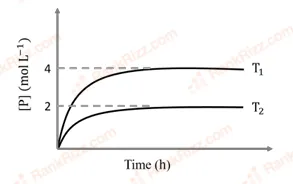
  1. In a one-litre flask, 6 moles of A undergoes the reaction A(g) ⇌ P(g). The progress of product formation at two temperatures (in Kelvin)…2023 · PAPER 1

FREE PDF

Chemical and Ionic Equilibrium JEE Advanced PYQs with answer key

All 24 questions on A4, by topic, with the answer key at the end. No sign-up, no email: your browser saves it as a PDF.

Download free PDF

UNIQUE CONCEPTS

Chemical and Ionic Equilibrium: one question per idea

10 ideas, each with the latest past question that tested it, drawn from 297 JEE Main and Advanced questions.

Chemical and Ionic Equilibrium Unique Concepts sheet →

JEE MAIN

Chemical and Ionic Equilibrium in JEE Main

JEE Main has set 274 Chemical and Ionic Equilibrium questions, 2004–2026.

Chemical and Ionic Equilibrium JEE Main PYQs →

Chemical and Ionic Equilibrium: quick answers

Is Chemical and Ionic Equilibrium asked every year in JEE Advanced?

Not every year. It has been asked in 13 of the 20 JEE Advanced years from 2007 to 2026; the years without a Chemical and Ionic Equilibrium question were 2007, 2012, 2014, 2017, 2021, 2024 and 2026.

Which Chemical and Ionic Equilibrium topic is asked most in JEE Advanced?

Solubility product and common ion effect: 8 of the 24 questions (33%). Next come Law of mass action and equilibrium constants Kc and Kp (4) and Le Chatelier's principle and factors affecting equilibrium (3).

What share of Chemistry questions does Chemical and Ionic Equilibrium carry in JEE Advanced?

About 3.4% of Chemistry questions across the last 20 papers. In 2026 it was 0.0% (0 of 34 Chemistry questions).

When was Chemical and Ionic Equilibrium last asked in JEE Advanced?

In JEE Advanced 2025 Paper 2, the latest sitting with a Chemical and Ionic Equilibrium question. It has not been set since 2025, though the bank holds JEE Advanced papers up to 2026.

How many Chemical and Ionic Equilibrium questions has JEE Advanced asked?

24 from 2008 to 2025, across 8 topics. Every one is listed on this page by topic and links to its own page, with the answer key and solution wherever we have them. Free, no sign-up.

Every Chemical and Ionic Equilibrium question

1–20 OF 24 · NEWEST FIRST

JEE ADVANCED 2025 · PAPER 1pH of acids, bases and their mixtures

At 25 ∘^\circC, the concentration of H+^+ ions in 1.00×10−31.00 \times 10^{-3} M aqueous solution of a weak monobasic acid having acid dissociation constant (KaK_a) of 4.00×10−114.00 \times 10^{-11} is X×10−7X \times 10^{-7} M. The value of XX is ________.

Use: Ionic product of water (KwK_w) = 1.00×10−141.00 \times 10^{-14} at 25 ∘^\circC

JEE ADVANCED 2025 · PAPER 2Solubility product and common ion effect

The solubility of barium iodate in an aqueous solution prepared by mixing 200 mL of 0.010 M barium nitrate with 100 mL of 0.10 M sodium iodate is X×10−6X \times 10^{-6} mol dm−3^{-3}. The value of XX is ______.

Use: Solubility product constant (KspK_{sp}) of barium iodate = 1.58×10−91.58 \times 10^{-9}

JEE ADVANCED 2023 · PAPER 1Solubility product and common ion effect

On decreasing the pH from 7 to 2, the solubility of a sparingly soluble salt (MX) of a weak acid (HX) increased from 10−410^{-4} mol L−1^{-1} to 10−310^{-3} mol L−1^{-1}. The pKa_a of HX is:

  1. A

    3

  2. B

    4

  3. C

    5

  4. D

    2

JEE ADVANCED 2023 · PAPER 1Reaction quotient, degree of dissociation and equilibrium calculations

In a one-litre flask, 6 moles of A undergoes the reaction A(g) ⇌\rightleftharpoons P(g). The progress of product formation at two temperatures (in Kelvin), T1T_1 and T2T_2, is shown in the figure:

Figure for JEE Advanced 2023 Chemistry question on Reaction quotient, degree of dissociation and equilibrium calculations


If T1=2T2T_1 = 2T_2 and (ΔG2∘−ΔG1∘)=RT2ln⁡x(\Delta G_2^\circ - \Delta G_1^\circ) = RT_2 \ln x, then the value of x is ______.

[ΔG1∘\Delta G_1^\circ and ΔG2∘\Delta G_2^\circ are standard Gibb's free energy change for the reaction at temperatures T1T_1 and T2T_2, respectively.]

JEE ADVANCED 2022 · PAPER 2Solubility product and common ion effect

Concentration of H2_2SO4_4 and Na2_2SO4_4 in a solution is 1 M and 1.8 ×\times 10−2^{-2} M, respectively. Molar solubility of PbSO4_4 in the same solution is X ×\times 10−Y^{-Y} M (expressed in scientific notation). The value of Y is _______.

[Given: Solubility product of PbSO4_4 (KspK_{sp}) = 1.6 ×\times 10−8^{-8}. For H2_2SO4_4, Ka1K_{a1} is very large and Ka2K_{a2} = 1.2 ×\times 10−2^{-2}]

JEE ADVANCED 2022 · PAPER 1pH of acids, bases and their mixtures

A solution is prepared by mixing 0.01 mol each of H2CO3H_2CO_3, NaHCO3_3, Na2_2CO3_3, and NaOH in 100 mL of water. pH of the resulting solution is ______.

[Given : pKa1pK_{a1} and pKa2pK_{a2} of H2CO3H_2CO_3 are 6.37 and 10.32, respectively ; log 2 = 0.30]

JEE ADVANCED 2020 · PAPER 2Acid-base indicators and titration curves

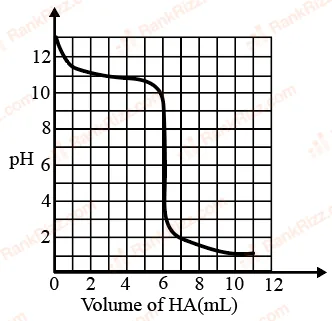
A solution of 0.1 M weak base (B) is titrated with 0.1 M of a strong acid (HA). The variation of pH of the solution with the volume of HA added is shown in the figure below. What is the p𝐾bp𝐾_b of the base? The neutralization reaction is given by B+HA→BH++A−B + HA \rightarrow BH^+ + A^-.

Figure for JEE Advanced 2020 Chemistry question on Acid-base indicators and titration curves
JEE ADVANCED 2020 · PAPER 1Le Chatelier's principle and factors affecting equilibrium

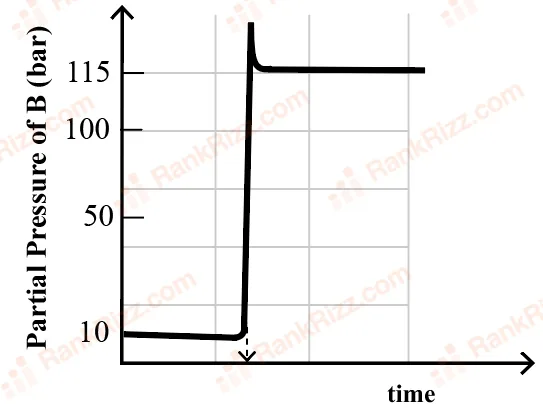
Consider the reaction A ⇌\rightleftharpoons B at 1000 K. At time t’, the temperature of the system was increased to 2000 K and the system was allowed to reach equilibrium. Throughout this experiment the partial pressure of A was maintained at 1 bar. Given below is the plot of the partial pressure of B with time.
What is the ratio of the standard Gibbs energy of the reaction at 1000 K to that at 2000 K?

Screenshot_501
JEE ADVANCED 2020 · PAPER 2Solubility product and common ion effect

An acidified solution of 0.05 M Zn2+Zn^{2+} is saturated with 0.1 M H2SH_2S. What is the minimum molar concentration (M) of H+H^+ required to prevent the precipitation of ZnS?
Use Ksp(ZnS)=1.25×10⁻²²K_{sp}(ZnS) = 1.25 \times 10^{-22} and overall dissociation constant of H2S,KNET=K1K2=1×10⁻²¹H_2S, K_{NET} = K_1K_2 = 1 \times 10^{-21}.

JEE ADVANCED 2019 · PAPER 1Law of mass action and equilibrium constants Kc and Kp

For the following reaction, the equilibrium constant K_ at 298 K is 1.6×10171.6 \times 10^{17}
Fe2+(aq)+S2−(aq)⇌FeS(s)Fe^{2+} (aq) + S^{2-} (aq) \rightleftharpoons FeS (s)
When equal volumes of 0.06 M Fe2+Fe^{2+} (aq) and 0.2MS2−(aq)0.2 M S^{2-}(aq) solutions are mixed, the equilibrium concentration of Fe2+Fe^{2+} (aq) is found to be Y×10−17MY \times 10^{-17} M. The value of Y is _________ .

JEE ADVANCED 2018 · PAPER 1Solubility product and common ion effect

The solubility of a salt of weak acid (AB) at pHp^{H} is Y×10−3molL−1Y \times 10^{-3} mol L^{-1} The value of Y is ____.(Given that the value of solubility product of AB(Ksp)=2×10⁻¹⁰AB (K_{sp}) = 2 \times 10^{-10} and the value of ionization constant of HB(Ka)=1×10⁻⁸HB (K_{a}) = 1 \times 10^{-8}

JEE ADVANCED 2016 · PAPER 2Law of mass action and equilibrium constants Kc and Kp

The INCORRECT statement amongthe following, for this reaction, is

  1. A

    Decreasein the total pressure will result in formation of more moles of gaseous X

  2. B

    At the start of the reaction, dissociation of gaseous X2X_2 takes place spontaneously

  3. C

    βequilibrium=0.7\beta_{equilibrium} = 0.7

  4. D

    Kc<1K_c < 1

JEE ADVANCED 2015 · PAPER 1Le Chatelier's principle and factors affecting equilibrium

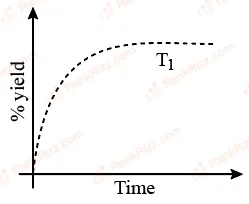
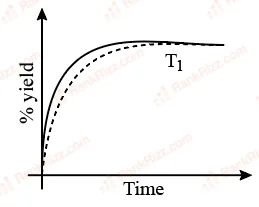
The % yield of ammonia as a function of time in the reaction
N2(g)+3H2(g)⇌2NH3(g),△H<0N_2(g) + 3H_2(g) \rightleftharpoons 2NH_3(g), \triangle H < 0 at (P,T1)(P, T_1) is given below.

Figure for JEE Advanced 2015 Chemistry question on Le Chatelier's principle and factors affecting equilibrium


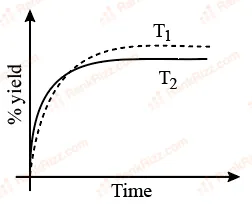
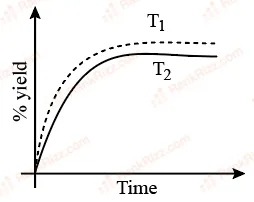
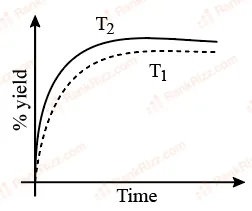
If this reaction is conducted at (P,T2)(P, T_2), with T2>T1T_2 > T_1, the %yield of ammonia as a function of time is represented by

  1. A
    Figure for JEE Advanced 2015 Chemistry question on Le Chatelier's principle and factors affecting equilibrium
  2. B
    Figure for JEE Advanced 2015 Chemistry question on Le Chatelier's principle and factors affecting equilibrium
  3. C
    Figure for JEE Advanced 2015 Chemistry question on Le Chatelier's principle and factors affecting equilibrium
  4. D
    Figure for JEE Advanced 2015 Chemistry question on Le Chatelier's principle and factors affecting equilibrium
JEE ADVANCED 2013 · PAPER 2Law of mass action and equilibrium constants Kc and Kp

The thermal dissociation equilibrium CaCO3(s)CaCO_{3}(s) is studied under different conditions.
CaCO3(s)⇌CaO(s)+CO2(g)CaCO_{3}(s)\rightleftharpoons CaO(s)+CO_{2}(g)

  1. A

    △H\triangle H is dependent on T

  2. B

    K is independent of the initial amount of CaCO3CaCO_{3}

  3. C

    Kis dependenton the pressure of CO2CO_{2} at a given T

  4. D

    △H\triangle H is independentof the catalyst, if any

JEE ADVANCED 2013 · PAPER 2Solubility product and common ion effect

The KspK_{sp} of Ag2CrO4Ag_{2}CrO_{4} is 1.1×10−121.1\times10^{-12} at 298 K. The solubility (in molL\frac{mol}{L}) of Ag2CrO4Ag_{2}CrO_{4} in a 0.1M AgNO30.1M \ AgNO_{3} solution is

  1. A

    1.1×10−111.1\times10^{-11}

  2. B

    1.1×10−101.1\times10^{-10}

  3. C

    1.1×10−121.1\times10^{-12}

  4. D

    1.1×10−91.1\times10^{-9}

JEE ADVANCED 2013 · PAPER 1Ionisation of weak electrolytes and Ostwald's dilution law

The initial rate of hydrolysis of methyl acetate (1M) by a weak acid (HA, 1M) is 1/100th1/100^{th} of that of a strong acid (HX, 1M), at 25∘C25^\circ C. The KaK_a of HA is

  1. A

    1×10−41 \times 10^{-4}

  2. B

    1×10−51 \times 10^{-5}

  3. C

    1×10−61 \times 10^{-6}

  4. D

    1×10⁻³¹ \times 10^{-3}

JEE ADVANCED 2011 · PAPER 2Le Chatelier's principle and factors affecting equilibrium

The equilibrium
2Cu∣⇌CuO+Cu∥2Cu^\mid \rightleftharpoons Cu^O + Cu^\parallel
in aqueous medium at 25∘C25 ^\circ C shifts towards the left in the presence of

  1. A

    NO3−NO_{3}^{-}

  2. B

    Cl−Cl^-

  3. C

    SCN−SCN^-

  4. D

    CN−CN^-

JEE ADVANCED 2011 · PAPER 2Solubility product and common ion effect

In 1 L saturated solution of AgCl[Ksp(AgCl)=1.6×10⁻¹⁰]AgCl[K_{sp}(AgCl) = 1.6 \times 10^{-10}], 0.1 mol of CuCl[Ksp(CuCl)=1.0×10⁻⁶]CuCl[K_{sp}(CuCl) = 1.0 \times 10^{-6}] is added. The resultant concentration of Ag+Ag^+ in the solution is 1.6×10−x1.6 \times 10^{-x}. The value of "x" is

JEE ADVANCED 2010 · PAPER 1Acid-base indicators and titration curves

Aqueous solutions of HNO3,KOH,CH3COOHHNO_{3}, KOH, CH_{3}COOH and CH3COONaCH_{3}COONa of identical concentrations are provided. The pair(s) of solutions which form a buffer upon mixing is(are)

  1. A

    HNO3HNO_{3} and CH3COOHCH_{3}COOH

  2. B

    KOHKOH and CH3COONaCH_{3}COONa

  3. C

    HNO3HNO_{3} and CH3COONaCH_{3}COONa

  4. D

    CH3COOHCH_{3}COOH and CH3COONaCH_{3}COONa

JEE ADVANCED 2010 · PAPER 1Hydrolysis of salts

Amongst the following, the total number of compounds whose aqueous solution turns red litmus paper blue is

Figure for JEE Advanced 2010 Chemistry question on Hydrolysis of salts