RankRizz

Kinetic Theory of Gases — JEE Main Previous Year Questions

Every Kinetic Theory of Gases question JEE Main has set from 2004–2026, grouped by the idea it tests rather than the order of the syllabus. 191 questions across 6 distinct ideas. Free to read, answer key on every one.

DATA UPDATED

Questions

191

Distinct ideas

6

Share of marks

3%

Difficulty

EASY

The ideas inside Kinetic Theory of Gases

A chapter is not one subject — it is a handful of procedures the examiner reuses. These are the ones Kinetic Theory of Gases questions actually test.

Every Kinetic Theory of Gases question

141–160 OF 191 · NEWEST FIRST

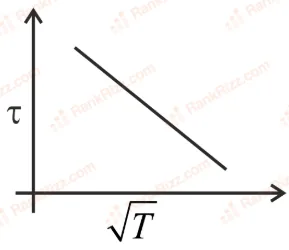
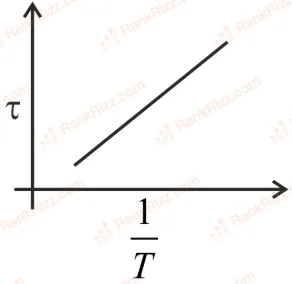
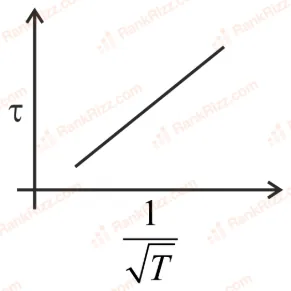
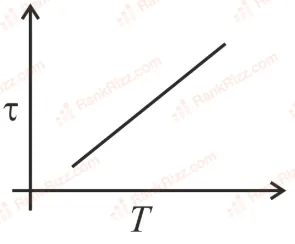
JEE MAIN 2020 · 08 JAN S1Mean free path

The plot that depicts the behavior of the mean free time τ\tau (time between two successive collisions) for the molecules of an ideal gas, as a function of temperature (T), qualitatively, is: (Graphs are schematic and not drawn to scale)

  1. A
    Figure for JEE Main 2020 Physics question on Mean free path
  2. B
    Figure for JEE Main 2020 Physics question on Mean free path
  3. C
    Figure for JEE Main 2020 Physics question on Mean free path
  4. D
    Figure for JEE Main 2020 Physics question on Mean free path
JEE MAIN 2020 · 08 JAN S2Molar specific heats of gases, Mayer's relation and gas mixtures

Consider a mixture of nn moles of helium gas and 2n2n moles of oxygen gas (molecules taken to be rigid) as an ideal gas. Its CPCV\frac{C_P}{C_V} value will be:

  1. A

    1913\frac{19}{13}

  2. B

    6745\frac{67}{45}

  3. C

    4027\frac{40}{27}

  4. D

    2315\frac{23}{15}

JEE MAIN 2020 · 07 JAN S1Molar specific heats of gases, Mayer's relation and gas mixtures

Two moles of an ideal gas, with CpCv=53\frac{C_p}{C_v} = \frac{5}{3}, are mixed with three moles of another ideal gas CpCv=43\frac{C_p}{C_v} = \frac{4}{3}. The value of CpCv\frac{C_p}{C_v} for the mixture is

  1. A

    1.45

  2. B

    1.50

  3. C

    1.47

  4. D

    1.42

JEE MAIN 2020 · 07 JAN S2Mean free path

Under an adiabatic process, the volume of an ideal gas gets doubled. Consequently, the mean collision time between the gas molecules changes from τ1\tau_1 to τ2\tau_2. If CpCv=γ\frac{C_p}{C_v} = \gamma for this gas then a good estimate for τ2τ1\frac{\tau_2}{\tau_1} is given by

  1. A

    2

  2. B

    12\frac{1}{2}

  3. C

    (12)γ\left(\frac{1}{2}\right)^\gamma

  4. D

    (12)−γ+12\left(\frac{1}{2}\right)^{-\frac{\gamma+1}{2}}

JEE MAIN 2019 · 12 APR S1Molar specific heats of gases, Mayer's relation and gas mixtures

Two moles of helium gas is mixed with three moles of hydrogen molecules (taken to be rigid). What is the molar specific heat of mixture at constant volume? R = 8.3 J/mol K

  1. A

    17.4 J/mol K

  2. B

    19.7 J/mol K

  3. C

    15.7 J/mol K

  4. D

    21.6 J/mol K

JEE MAIN 2019 · 12 APR S2Molar specific heats of gases, Mayer's relation and gas mixtures

A diatomic gas with rigid molecules does 10 J of work when expanded at constant pressure. What would be the heat energy absorbed by the gas, in this process?

  1. A

    40 J

  2. B

    35 J

  3. C

    25 J

  4. D

    30 J

JEE MAIN 2019 · 12 APR S2Ideal gas equation and gas laws

The number density of molecules of a gas depends on their distance r from the origin as, n(r)=n0e−αr4n(r) = n_0 e^{-\alpha r^4}. Then the numer of molecules is proportional to:

  1. A

    n0α−3n_0 \alpha^{-3}

  2. B

    n0α12\sqrt{n_0} \alpha^{\frac{1}{2}}

  3. C

    n0α−34n_0 \alpha^{\frac{-3}{4}}

  4. D

    n0α14n_0 \alpha^{\frac{1}{4}}

JEE MAIN 2019 · 10 APR S1Molar specific heats of gases, Mayer's relation and gas mixtures

n moles of an ideal gas with constant volume heat capacity CVC_V undergo an isobaric expansion by certain volume. The ratio of the work done in the process, to the heat supplied is:

  1. A

    4nRCV+nR\dfrac{4nR}{C_V + nR}

  2. B

    4nRCV−nR\dfrac{4nR}{C_V - nR}

  3. C

    nRCV+nR\dfrac{nR}{C_V + nR}

  4. D

    nRCV−nR\dfrac{nR}{C_V - nR}

JEE MAIN 2019 · 10 APR S1Molar specific heats of gases, Mayer's relation and gas mixtures

A cylinder with fixed capacity of 67.2 litre contains helium gas at STP. The amount of heat needed to raise the temperature of the gas by 20°C is:
[Given that R = 8.31 J mol−1^{-1} K−1^{-1}]

  1. A

    748 J

  2. B

    700 J

  3. C

    350 J

  4. D

    374 J

JEE MAIN 2019 · 10 APR S1Mean free path

A 25×10−325 \times 10^{-3} m3^3 volume cylinder is filled with 1 mol of O2_2 gas at room temperature (300 K). The molecular diameter of O2_2, and its root mean square speed, are found to be 0.3 nm and 200 m/s, respectively. What is the average collision rate (per second) for an O2_2 molecule?

  1. A

    ~1011^{11}

  2. B

    ~1012^{12}

  3. C

    ~1010^{10}

  4. D

    ~1013^{13}

JEE MAIN 2019 · 10 APR S2Molar specific heats of gases, Mayer's relation and gas mixtures

When heat Q is supplied to a diatomic gas of rigid molecules, at constant volume its temperature increases by ΔT\Delta T. The heat required to produce the same change in temperature, at a constant pressure is:

  1. A

    32Q\frac{3}{2}Q

  2. B

    75Q\frac{7}{5}Q

  3. C

    53Q\frac{5}{3}Q

  4. D

    23Q\frac{2}{3}Q

JEE MAIN 2019 · 09 APR S1RMS, average and most probable speeds of gas molecules

For given gas at 1 atm pressure, rms speed of the molecules is 200 m/s at 127°C. At 2 atm pressure and at 227°C, the rms speed of the molecules will be:

  1. A

    100 m/s

  2. B

    80 m/s

  3. C

    80580\sqrt{5} m/s

  4. D

    1005100\sqrt{5} m/s

JEE MAIN 2019 · 09 APR S1Degrees of freedom, equipartition of energy and internal energy

An HCl molecule has rotational, translational and vibrational motions. If the rms velocity of HCl molecules in its gaseous phase is vˉ\bar{v}, m is its mass and kB_B is Boltzmann's constant, then its temperature will be:

  1. A

    mvˉ25kB\frac{m\bar{v}^2}{5k_B}

  2. B

    mvˉ26kB\frac{m\bar{v}^2}{6k_B}

  3. C

    mvˉ23kB\frac{m\bar{v}^2}{3k_B}

  4. D

    mvˉ27kB\frac{m\bar{v}^2}{7k_B}

JEE MAIN 2019 · 09 APR S2Molar specific heats of gases, Mayer's relation and gas mixtures

The specific heats, Cp_p and Cv_v of a gas of diatomic molecules, A, are given (in units of J mol−1^{-1} K−1^{-1}) by 29 and 22, respectively. Another gas of diatomic molecules, B, has the corresponding values 30 and 21. If they are treated as ideal gases, then:

  1. A

    A has one vibrational mode and B has two

  2. B

    A has a vibrational mode but B has none.

  3. C

    Both A and B have a vibrational mode each.

  4. D

    A is rigid but B has a vibrational mode.

JEE MAIN 2019 · 08 APR S1Kinetic interpretation of pressure and temperature

If 102210^{22} gas molecules each of mass 10−2610^{-26} kg collides with a surface (perpendicular to it) elastically per second over an area 1 m2^{2} with a speed 10410^{4} m/s, the pressure exerted by the gas molecules will be of the order of:

  1. A

    2 Pa

  2. B

    4 Pa

  3. C

    6 Pa

  4. D

    8 Pa

JEE MAIN 2019 · 08 APR S2RMS, average and most probable speeds of gas molecules

The temperature, at which the root mean square velocity of hydrogen molecules equals their escape velocity from the earth, is closest to:
[Boltzmann Constant kB=1.38×10⁻²³k_B = 1.38 \times 10^{-23} J/K, Avogadro number NA=6.02×1026N_A = 6.02 \times 10^{26}/kg, Radius of Earth: 6.4×1066.4 \times 10^{6} m, Gravitational acceleration on Earth = 10 ms−2^{-2}]

  1. A

    3×1053 \times 10^{5} K

  2. B

    650 K

  3. C

    800 K

  4. D

    10410^{4} K

JEE MAIN 2019 · 12 JAN S1Degrees of freedom, equipartition of energy and internal energy

An ideal gas occupies a volume of 2m32 m^3 at a pressure of 3×10⁶Pa3 \times 10^6 Pa. The energy of the gas is:

  1. A

    108J10^8 J

  2. B

    9×10⁶J9 \times 10^6 J

  3. C

    3×10²J3 \times 10^2 J

  4. D

    6×10⁴J6 \times 10^4 J

JEE MAIN 2019 · 12 JAN S2Ideal gas equation and gas laws

A vertical closed cylinder is separated into two parts by a frictionless piston of mass m and of negligible thickness. The piston is free to move along the length of the cylinder. The length of the cylinder above piston is l1l_1, and that below the piston is l2l_2, such that l1>l2l_1 > l_2. Each part of the cylinder contains n moles of an ideal gas at equal temperature T. If the piston is stationary, its mass m will be given by: (R is universal gas constant and g is the acceleration due to gravity)

  1. A

    RTng[l1−3l2l1l2]\frac{RT}{ng}\left[\frac{l_1 - 3l_2}{l_1 l_2}\right]

  2. B

    nRTg[l1−l2l1l2]\frac{nRT}{g}\left[\frac{l_1 - l_2}{l_1 l_2}\right]

  3. C

    RTg[2l1+l2l1l2]\frac{RT}{g}\left[\frac{2l_1 + l_2}{l_1 l_2}\right]

  4. D

    RTgl[2l1+l2l1l2]\frac{RT}{gl}\left[\frac{2l_1 + l_2}{l_1 l_2}\right]

JEE MAIN 2019 · 12 JAN S2Mean free path

An ideal gas is enclosed in a cylinder at pressure of 2 atm and temperature, 300 K. The mean time between two successive collisions is 6×10−86 \times 10^{-8} s. If the pressure is doubled and temperature is increased to 500 K, the mean time between two successive collisions will be close to:

  1. A

    2×10−72 \times 10^{-7} s

  2. B

    3×10−63 \times 10^{-6} s

  3. C

    0.5×10−80.5 \times 10^{-8} s

  4. D

    4×10−84 \times 10^{-8} s

JEE MAIN 2019 · 11 JAN S1Degrees of freedom, equipartition of energy and internal energy

A gas mixture consists of 3 moles of oxygen and 5 moles of argon at temperature T. Considering only translational and rotational modes, the total internal energy of the system is

  1. A

    15RT

  2. B

    12RT

  3. C

    4RT

  4. D

    20RT