RankRizz

Atoms & Nuclei — JEE Main Previous Year Questions

Every Atoms & Nuclei question JEE Main has set from 2004–2026, grouped by the idea it tests rather than the order of the syllabus. 304 questions across 7 distinct ideas. Free to read, answer key on every one.

DATA UPDATED

Questions

304

Distinct ideas

7

Share of marks

4.8%

Difficulty

EASY

The ideas inside Atoms & Nuclei

A chapter is not one subject — it is a handful of procedures the examiner reuses. These are the ones Atoms & Nuclei questions actually test.

Every Atoms & Nuclei question

201–220 OF 304 · NEWEST FIRST

JEE MAIN 2020 · 05 SEP S1Hydrogen spectrum and spectral series

A particle of mass 200 MeV c−2200\,\text{MeV c}^{-2} collides with a hydrogen atom at rest. Soon after the collision, the particle comes to rest, and the atom recoils and goes to its first excited state. The initial kinetic energy of the particle (in eV) is N4\frac{N}{4}. The value of NN is: (Given the mass of the hydrogen atom to be 1 GeV c−21\,\text{GeV c}^{-2})........

JEE MAIN 2020 · 05 SEP S2Radioactivity: decay law, half-life and decay modes

A radioactive nucleus decays by two different processes. The half-life for the first process is 10 s10\,\text{s} and that for the second is 100 s100\,\text{s}. The effective half-life of the nucleus is close to:

  1. A

    9 s

  2. B

    6 s

  3. C

    55 s

  4. D

    12 s

JEE MAIN 2020 · 04 SEP S1Hydrogen spectrum and spectral series

In the line spectra of hydrogen atom, difference between the largest and the shortest wavelengths of the Lyman series is 305 A˚\mathring{A}. The corresponding difference for the Paschan series in A˚\mathring{A} is __________ (nearest integer)

JEE MAIN 2020 · 04 SEP S2Nuclear size, mass defect and binding energy

Find the Binding energy per nucleon for 50120Sn^{120}_{50}Sn. Mass of proton mp=1.00783m_p = 1.00783 U, mass of neutron mn=1.00867m_n = 1.00867 U and mass of tin nucleus msn=119.902199m_{sn} = 119.902199 U. (take 1U = 931 MeV)

  1. A

    7.5 MeV

  2. B

    9.0 MeV

  3. C

    8.0 MeV

  4. D

    8.5 MeV

JEE MAIN 2020 · 03 SEP S1Radioactivity: decay law, half-life and decay modes

In a radioactive material, a fraction of active material remaining after the time tt is 916\frac{9}{16}. The fraction that was remaining after the time t2\frac{t}{2} is:

  1. A

    45\frac{4}{5}

  2. B

    35\frac{3}{5}

  3. C

    34\frac{3}{4}

  4. D

    78\frac{7}{8}

JEE MAIN 2020 · 03 SEP S2Radioactivity: decay law, half-life and decay modes

The radius R of a nucleus of mass number A can be estimated by the formula R=(1.3×10⁻¹⁵)A1/3R = (1.3 \times 10^{-15})A^{1/3} m. It follows that the mass density of n nucleus is of the order of: (Mprot≅Mneut≃1.67×10⁻²⁷(M_{prot} \cong M_{neut} \simeq 1.67 \times 10^{-27} kg)

  1. A

    10310^3 kg m−3^{-3}

  2. B

    101010^{10} kg m−3^{-3}

  3. C

    102410^{24} kg m−3^{-3}

  4. D

    101710^{17} kg m−3^{-3}

JEE MAIN 2020 · 02 SEP S1Nuclear size, mass defect and binding energy

In a reactor, 2 kg of 92U235_{92}U^{235} fuel is fully used up in 30 days. The energy released fission is 200 MeV. Given that the Avogadro number, N=6.023×1026N = 6.023 \times 10^{26} per kilo mole and 1  eV=1.6×10−191 \; eV = 1.6 \times 10^{-19} J. The power output of the reactor is close to:

  1. A

    35 MW

  2. B

    60 MW

  3. C

    125 MW

  4. D

    54 MW

JEE MAIN 2020 · 02 SEP S2Hydrogen spectrum and spectral series

In a hydrogen atom the electron makes a transition from (n+1)th(n + 1)^{th} level to the nthn^{th} level. If n>>1n >> 1, the frequency of radiation emitted is proportional to:

  1. A

    1n\frac{1}{n}

  2. B

    1n2\frac{1}{n^2}

  3. C

    1n3\frac{1}{n^3}

  4. D

    1n4\frac{1}{n^4}

JEE MAIN 2020 · 09 JAN S2Hydrogen spectrum and spectral series

The energy required to ionise a hydrogen like ion in its ground state is 9 Rydbergs. What is the wavelength of the radiation emitted when the electron in this ion jumps from the second excited state to the ground state?

  1. A

    24.2 nm

  2. B

    11.4 nm

  3. C

    35.8 nm

  4. D

    8.6 nm

JEE MAIN 2020 · 08 JAN S1Alpha-particle scattering and Rutherford model

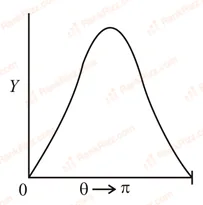
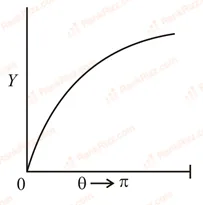
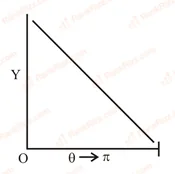
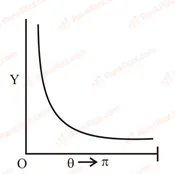
The graph which depicts the results of Rutherford gold foil experiment with α\alpha-particles is:
θ\theta: Scattering angle
Y: Number of scattered α\alpha-particles detected
(Plots are schematic and not to scale)

  1. A
    Figure for JEE Main 2020 Physics question on Alpha-particle scattering and Rutherford model
  2. B
    Figure for JEE Main 2020 Physics question on Alpha-particle scattering and Rutherford model
  3. C
    Figure for JEE Main 2020 Physics question on Alpha-particle scattering and Rutherford model
  4. D
    Figure for JEE Main 2020 Physics question on Alpha-particle scattering and Rutherford model
JEE MAIN 2020 · 08 JAN S2Hydrogen spectrum and spectral series

The first member of the Balmer series of hydrogen atom has a wavelength of 6561 A˚\mathring{A}. The wavelength of the second member of the Balmer series (in nm) is

JEE MAIN 2020 · 07 JAN S1Hydrogen spectrum and spectral series

The time period of revolution of electron in its ground state orbit in a hydrogen atom is 1.6×10−161.6 \times 10^{-16} s. The frequency of revolution of the electron in its first excited state (in s−1^{-1}) is:

  1. A

    1.6×10141.6 \times 10^{14}

  2. B

    7.8×10147.8 \times 10^{14}

  3. C

    6.2×10156.2 \times 10^{15}

  4. D

    5.6×10125.6 \times 10^{12}

JEE MAIN 2020 · 07 JAN S2Radioactivity: decay law, half-life and decay modes

The activity of a radioactive sample falls from 700 s−1^{-1} to 500 s−1^{-1} in 30 minutes. Its half life is close to:

  1. A

    72 min

  2. B

    62 min

  3. C

    66 min

  4. D

    52 min

JEE MAIN 2019 · 12 APR S1Hydrogen spectrum and spectral series

An excited He+^+ ion emits two photons in succession, with wavelengths 108.5 nm and 30.4 nm in making a transition to the ground state. The quantum number n, corresponding to its initial excited state is
(for a photon of wavelength λ\lambda, energy E = 1240 eVλ(in nm)\frac{1240 \text{ eV}}{\lambda(\text{in nm})})

  1. A

    n = 6

  2. B

    n = 5

  3. C

    n = 7

  4. D

    n = 4

JEE MAIN 2019 · 12 APR S2Hydrogen spectrum and spectral series

Consider an electron in a hydrogen atom, revolving in its second excited state (having radius 4.65 Å). The de-Broglie wavelength of this electron is:

  1. A

    12.9 Å

  2. B

    6.6 Å

  3. C

    9.7 Å

  4. D

    3.5 Å

JEE MAIN 2019 · 12 APR S2Hydrogen spectrum and spectral series

The electron in a hydrogen atom first jumps from the third excited state to the second excited state and subsequently to the first excited state. The ratio of the respective wavelengths, λ1λ2\frac{\lambda_1}{\lambda_2}, of the photons emitted in this process is:

  1. A

    75\frac{7}{5}

  2. B

    207\frac{20}{7}

  3. C

    97\frac{9}{7}

  4. D

    275\frac{27}{5}

JEE MAIN 2019 · 12 APR S2Radioactivity: decay law, half-life and decay modes

Half lives of two radioactive nuclei A and B are 10 minutes and 20 minutes, respectively. If, initially a sample has equal number of nuclei, then after 60 minutes, the ratio of decayed numbers of nuclei A and B will be:

  1. A

    3 : 8

  2. B

    8 : 1

  3. C

    1 : 8

  4. D

    9 : 8

JEE MAIN 2019 · 10 APR S1Radioactivity: decay law, half-life and decay modes

Two radioactive materials A and B have decay constants 10λ10\lambda and λ\lambda, respectively. If initially they have the same number of nuclei, then the ratio of the number of nuclei of A to that of B will be 1/e after a time:

  1. A

    110λ\frac{1}{10\lambda}

  2. B

    19λ\frac{1}{9\lambda}

  3. C

    111λ\frac{1}{11\lambda}

  4. D

    1110λ\frac{11}{10\lambda}

JEE MAIN 2019 · 10 APR S2Hydrogen spectrum and spectral series

In Li++^{++}, electron in first Bohr orbit is excited to a level by a radiation of wavelength λ\lambda. When the ion gets de-excited to the ground state in all possible ways (including intermediate emissions), a total of six spectral lines are observed. What is the value of λ\lambda?
(Given: h = 6.63×10−346.63 \times 10^{-34} J s; c = 3×1083 \times 10^8 m s−1^{-1})

  1. A

    10.8 nm

  2. B

    9.4 nm

  3. C

    11.4 nm

  4. D

    12.3 nm

JEE MAIN 2019 · 10 APR S2Radioactivity: decay law, half-life and decay modes

Two radioactive substances A and B have decay constants 5λ5\lambda and λ\lambda respectively. At t = 0, a sample has the same number of the two nuclei. The time taken for the ratio of the number of nuclei to become 1e2\frac{1}{e^2} will be

  1. A

    1λ\frac{1}{\lambda}

  2. B

    12λ\frac{1}{2\lambda}

  3. C

    2λ\frac{2}{\lambda}

  4. D

    14λ\frac{1}{4\lambda}