RankRizz

Principles Related to Practical Chemistry — JEE Main Previous Year Questions

Every Principles Related to Practical Chemistry question JEE Main has set from 2011–2026, grouped by the idea it tests rather than the order of the syllabus. 40 questions across 4 distinct ideas. Free to read, answer key on every one.

DATA UPDATED

Questions

40

Distinct ideas

4

Share of marks

1.2%

Difficulty

EASY

The ideas inside Principles Related to Practical Chemistry

A chapter is not one subject — it is a handful of procedures the examiner reuses. These are the ones Principles Related to Practical Chemistry questions actually test.

01Detection of functional groupsset 18×02Titrimetric exercisesset 16×
03Laboratory preparation of compoundsset 4×
04Physical chemistry experimentsset 2×

Every Principles Related to Practical Chemistry question

21–40 OF 40 · NEWEST FIRST

JEE MAIN 2023 · 29 JAN S2Physical chemistry experiments

An indicator 'X' is used for studying the effect of variation in concentration of iodide on the rate of reaction of iodide ion with H2_2O2_2 at room temp. The indicator 'X' forms blue colored complex with compound 'A' present in the solution. The indicator 'X' and compound 'A' respectively are

  1. A

    Starch and iodine

  2. B

    Methyl orange and H2_2O2_2

  3. C

    Starch and H2_2O2_2

  4. D

    Methyl orange and iodine
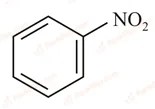
JEE MAIN 2023 · 25 JAN S2Detection of functional groups

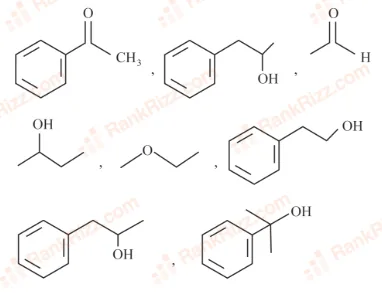
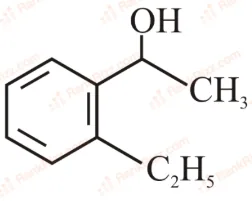
Number of compounds giving (i) red colouration with ceric ammonium nitrate and also (ii) positive iodoform test from the following is _____

Figure for JEE Main 2023 Chemistry question on Detection of functional groups
JEE MAIN 2022 · 28 JUL S1Physical chemistry experiments

For kinetic study of the reaction of iodide ion with H2O2H_2O_2 at room temperature:
(A) Always use freshly prepared starch solution.
(B) Always keep the concentration of sodium thiosulphate solution less than that of KI solution.
(C) Record the time immediately after the appearance of blue colour.
(D) Record the time immediately before the appearance of blue colour.
(E) Always keep the concentration of sodium thiosulphate solution more than that of KI solution.
Choose the correct answer from the options given below

  1. A

    A, B, C only

  2. B

    A, D, E only

  3. C

    D, E only

  4. D

    A, B, E only

JEE MAIN 2022 · 28 JUL S2Detection of functional groups

A sample of 0.125 g of an organic compound when analysed by Duma's method yields 22.78 mL of nitrogen gas collected over KOH solution at 280 K and 759 mmHg. The percentage of nitrogen in the given organic compound is _____
(a) The vapour pressure of water at 280 K is 14.2 mmHg
(b) R=0.082R = 0.082 L atm K−1^{-1} mol−1^{-1}

JEE MAIN 2022 · 25 JUL S2Titrimetric exercises

In base vs. Acid titration, at the end point methyl orange is present as

  1. A

    quinonoid form

  2. B

    heterocyclic form

  3. C

    phenolic form

  4. D

    benzenoid form

JEE MAIN 2022 · 28 JUN S1Titrimetric exercises

A 2.02.0 g sample containing MnO2MnO_2 is treated with HCl liberating Cl2Cl_2. The Cl2Cl_2 gas is passed into a solution of KI and 60.060.0 mL of 0.10.1 M Na2S2O3Na_2S_2O_3 is required to titrate the liberated iodine. The percentage of MnO2MnO_2 in the sample is ______ Nearest integer
[Atomic masses (in u) Mn = 55; Cl = 35.5; O = 16, I = 127, Na = 23, K = 39, S = 32]

JEE MAIN 2021 · 27 AUG S1Titrimetric exercises

When 10 mL of an aqueous solution of KMnO4_4 was titrated in acidic medium, equal volume of 0.1M of an aqueous solution of ferrous sulphate was required for complete discharge of colour. The strength of KMnO4_4 in grams per litre is _________ ×10−2\times 10^{-2}. (Nearest integer) [Atomic mass of K = 39, Mn = 55, O = 16]

JEE MAIN 2021 · 26 AUG S1Detection of functional groups

Which one of the following complexes is violet in colour?

  1. A

    Fe4_4[Fe(CN)6_6]3_3 ⋅\cdot H2_2O

  2. B

    [Fe(CN)5_5NOS]4−^{4-}

  3. C

    [Fe(SCN)6_6]4−^{4-}

  4. D

    [Fe(CN)6_6]4−^{4-}

JEE MAIN 2021 · 26 AUG S1Laboratory preparation of compounds

The ratio of number of water molecules in Mohr's salt and potash alum is _________ ×10−1\times 10^{-1}. (Integer answer)

JEE MAIN 2021 · 26 FEB S2Detection of functional groups

Ceric ammonium nitrate and CHCl3CHCl_3 / alc. KOH are used for the identification of functional groups present in ______ and ______ respectively.

  1. A

    amine, phenol

  2. B

    alcohol, amine

  3. C

    amine, alcohol

  4. D

    alcohol, phenol

JEE MAIN 2021 · 26 FEB S2Detection of functional groups

Seliwanoff test and Xanthoproteic test are used for the identification of ______ and ______ respectively.

  1. A

    aldoses, ketoses

  2. B

    ketoses, proteins

  3. C

    proteins, ketoses

  4. D

    ketoses, aldoses

JEE MAIN 2021 · 25 FEB S1Titrimetric exercises

0.4 g mixture of NaOH, Na2CO3Na_2CO_3 and some inert impurities was first titrated with N10\frac{N}{10} HCl using phenolphthalein as an indicator, 17.5 mL of HCl was required at the end point. After this methyl orange was added and titrated. 1.5 mL of same HCl was required for the next end point. The weight percentage of Na2CO3Na_2CO_3 in the mixture is ______ (Rounded-off to the nearest integer)

JEE MAIN 2021 · 25 FEB S2Titrimetric exercises

Consider titration of NaOH solution versus 1.25 M oxalic acid solution. At the end point following burette readings were obtained.
(i) 4.5 mL (ii) 4.5 mL (iii) 4.4 mL (iv) 4.4 mL (v) 4.4 mL
If the volume of oxalic acid taken was 10.0 mL then the molarity of the NaOH solution is ______ M. (Rounded-off to the nearest integer)

JEE MAIN 2020 · 02 SEP S2Laboratory preparation of compounds

If you spill a chemical toilet cleaning liquid on your hand, your first aid would be:

  1. A

    vinegar

  2. B

    aqueous NaOH

  3. C

    aqueous NaHCO3_3

  4. D

    aqueous NH3_3

JEE MAIN 2020 · 09 JAN S2Detection of functional groups

A, B and C are three biomolecules. The results of the tests performed on them are given below:

Molisch's testBarfoed TestBiuret Test
APositiveNegativeNegative
BPositivePositiveNegative
CNegativeNegativePositive

A, B and C are respectively:
  1. A

    A = Glucose, B = Fructose, C = Albumin

  2. B

    A = Lactose, B = Glucose, C = Albumin

  3. C

    A = Lactose, B = Glucose, C = Alanine

  4. D

    A = Lactose, B = Fructose, C = Alanine

JEE MAIN 2019 · 08 APR S1Detection of functional groups

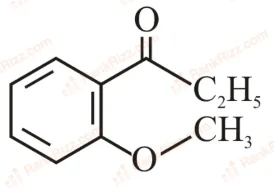
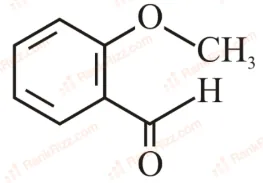
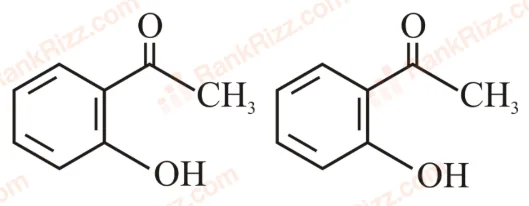
An organic compound neither reacts with neutral ferric chloride solution nor with Fehling solution. It however, reacts with Grignard reagent and gives positive iodoform test. The compound is:

  1. A
    Figure for JEE Main 2019 Chemistry question on Detection of functional groups
  2. B
    Figure for JEE Main 2019 Chemistry question on Detection of functional groups
  3. C
    Figure for JEE Main 2019 Chemistry question on Detection of functional groups
  4. D
    Figure for JEE Main 2019 Chemistry question on Detection of functional groups
JEE MAIN 2018 · 16 APR ONLINETitrimetric exercises

For standardizing NaOH solution, which of the following is used as a primary standard?

  1. A

    Sodium tetra borate

  2. B

    Ferrous Ammonium sulphate

  3. C

    Oxalic acid

  4. D

    Dil. HCl

JEE MAIN 2018 · 16 APR ONLINETitrimetric exercises

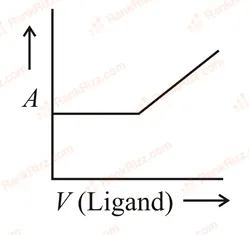
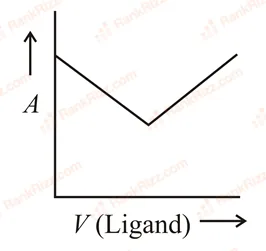
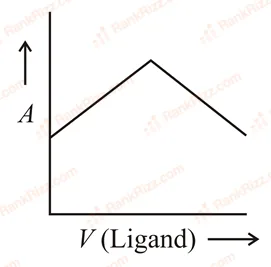
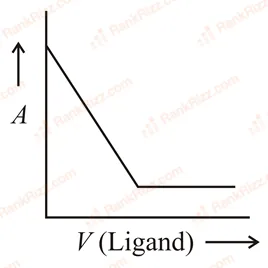
In a complexometric titration of metal ion with ligand M (Metal ion) + L(Ligand) →\rightarrow C (Complex). End point is estimated spectrophotometrically (through light absorption). If 'M' and 'C' do not absorb light and only 'L' absorbs then the titration plot between absorbed light (A) versus volume of ligand 'L' (V) would look like:

  1. A
    Figure for JEE Main 2018 Chemistry question on Titrimetric exercises
  2. B
    Figure for JEE Main 2018 Chemistry question on Titrimetric exercises
  3. C
    Figure for JEE Main 2018 Chemistry question on Titrimetric exercises
  4. D
    Figure for JEE Main 2018 Chemistry question on Titrimetric exercises
JEE MAIN 2018 · 08 APR OFFLINEDetection of functional groups

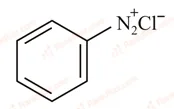
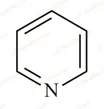
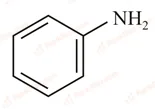
Which of the following compounds will be suitable for Kjeldahl's method for nitrogen estimation?

  1. A
    Figure for JEE Main 2018 Chemistry question on Detection of functional groups
  2. B
    Figure for JEE Main 2018 Chemistry question on Detection of functional groups
  3. C
    Figure for JEE Main 2018 Chemistry question on Detection of functional groups
  4. D
    Figure for JEE Main 2018 Chemistry question on Detection of functional groups
JEE MAIN 2011Detection of functional groups

Which of the following reagents may be used to distinguish between phenol and benzoic acid?

  1. A

    Tollen's reagent

  2. B

    Molisch reagent

  3. C

    Neutral FeCl3\text{FeCl}_3

  4. D

    Aqueous NaOH\text{NaOH}