JEE MAIN 2021 · 25 JUL S1Reactions and tests of amines
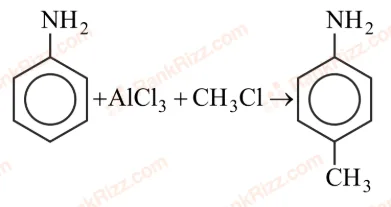
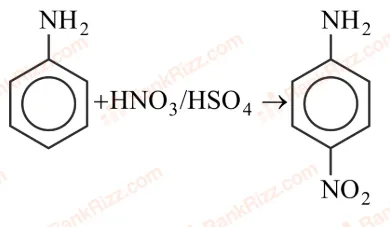
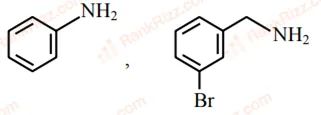
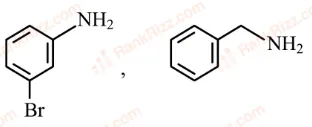
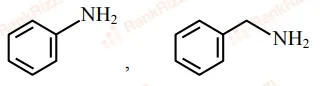
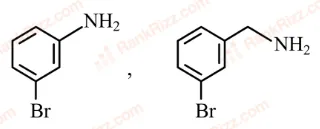
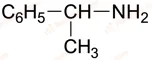
Which one of the products of the following reactions does not react with Hinsberg reagent to form sulphonamide?
- A
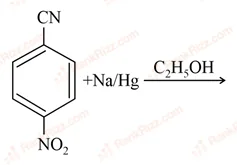
- B
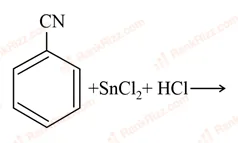
- C
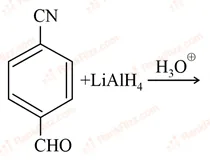
- D
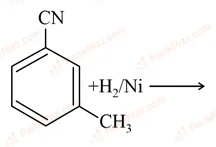
Every Amines and Nitrogen-Containing Compounds question JEE Main has set from 2004–2026, grouped by the idea it tests rather than the order of the syllabus. 243 questions across 6 distinct ideas. Free to read, answer key on every one.
DATA UPDATED
Questions
243
Distinct ideas
6
Share of marks
5.1%
Difficulty
HARD
A chapter is not one subject — it is a handful of procedures the examiner reuses. These are the ones Amines and Nitrogen-Containing Compounds questions actually test.
141–160 OF 243 · NEWEST FIRST
Which one of the products of the following reactions does not react with Hinsberg reagent to form sulphonamide?
What is the major product "P" of the following reaction?

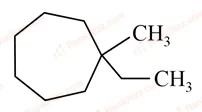
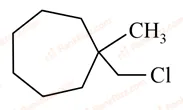
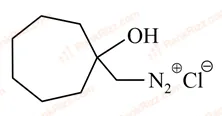
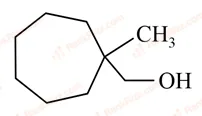
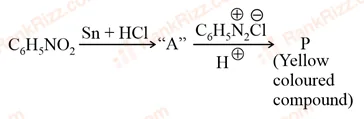
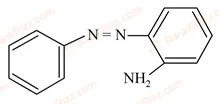
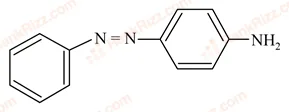
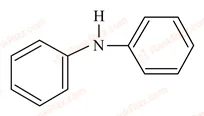
Consider the above reaction, the Product "P" is:
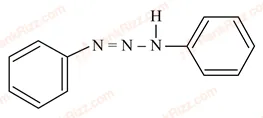
A reaction of benzonitrile with one equivalent CHMgBr followed by hydrolysis produces a yellow liquid "P". The compound "P" will give positive _________ test.
Iodoform test
Schiff's test
Ninhydrin's test
Tollen's test
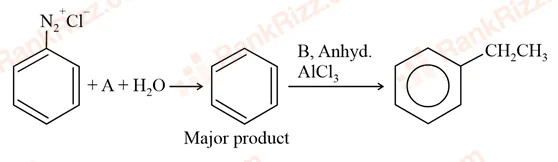
In the chemical reactions given above A and B respectively are:
HPO and CHCHCl
CHCHOH and HPO
HPO and CHCHOH
CHCHCl and HPO
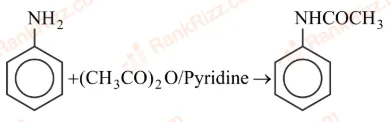
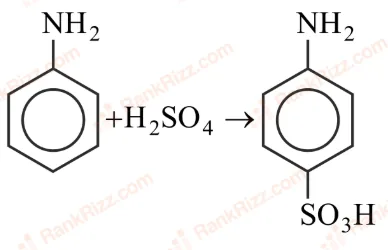
Which one of the following reactions does not occur?
Compound A is converted to B on reaction with CHCl and KOH. The compound B is toxic and can be decomposed by C. A, B and C respectively are:
primary amine, nitrile compound, conc. HCl
secondary amine, isonitrile compound, conc. NaOH
primary amine, isonitrile compound, conc. HCl
secondary amine, nitrile compound, conc. NaOH
The number of nitrogen atoms in a semicarbazone molecule of acetone is ___.

In the above reactions, product A and product B respectively are:
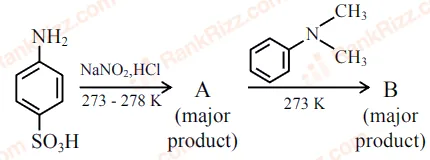
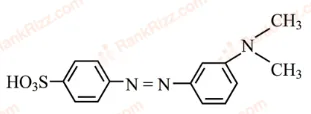
Consider the above reaction, compound B is:
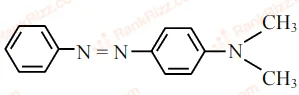
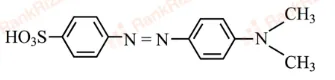
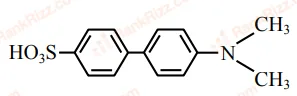
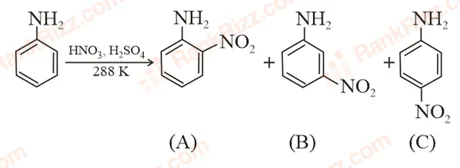
Consider the given reaction, percentage yield of :
C > A > B
B > C > A
A > C > B
C > B > A
In the reaction of hypobromite with amide, the carbonyl carbon is lost as:
CO
HCO
CO
CO
An organic compound A on treatment with benzene sulfonyl chloride gives compound B. B is soluble in dil. NaOH solution. Compound A is :
CH - N(CH)
CH - NHCHCH
CH - CHNHCH
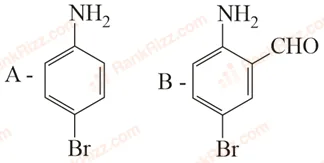
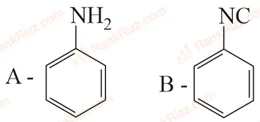
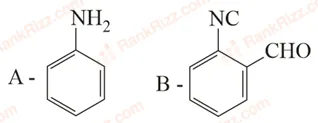
Hoffmann bromamide degradation of benzamide gives product A, which upon heating with CHCl and NaOH gives product B. The structures of A and B are:
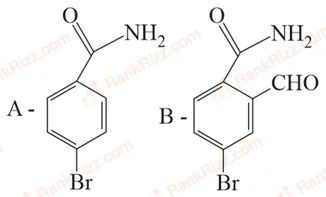
Which of the following reaction is an example of ammonolysis?
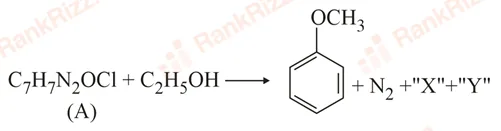
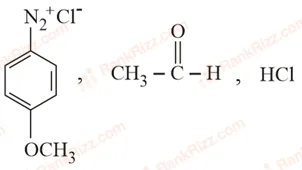
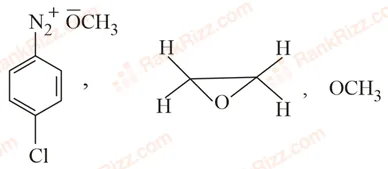
In the above reaction, the structural formula of (A), "X" and "Y" respectively are:
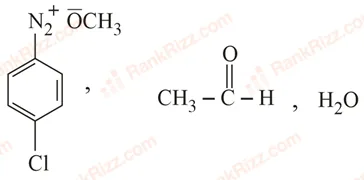
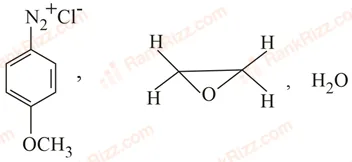
Primary, secondary and tertiary amines can be separated using:
Para-Toluene sulphonyl chloride
Chloroform and KOH
Benzene sulphonic acid
Acetyl amide
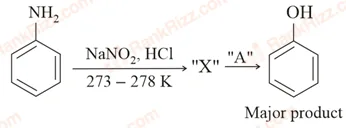
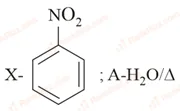
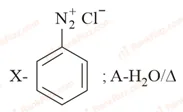
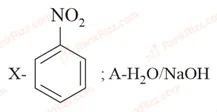
In the above chemical reaction, intermediate "X" and reagent/condition "A" are:
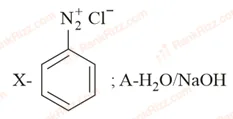
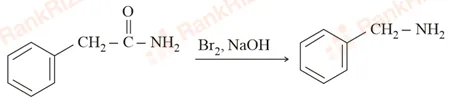
Which of the following reaction DOES NOT involve Hoffmann Bromamide degradation?
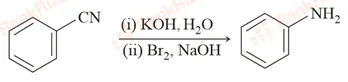
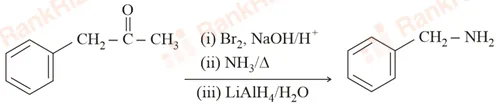
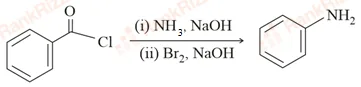
Ammonolysis of Alkyl halides followed by the treatment with NaOH solution can be used to prepare primary, secondary and tertiary amines. The purpose of NaOH in the reaction is.
to remove basic impurities
to activate NH used in the reaction
to remove acidic impurities
to increase the reactivity of alkyl halide.
JEE Advanced has set 29 Amines and Nitrogen-Containing Compounds questions too. Amines and Nitrogen-Containing Compounds JEE Advanced PYQs →
OTHER CHEMISTRY CHAPTERS