The resistances of the platinum wire of a platinum resistance thermometer at the ice point and steam point are 8Ω and 10Ω respectively. After inserting in a hot bath of temperature 400°C, the resistance of platinum wire is:
- A
- B
- C
- D
Every Thermal Properties of Matter question JEE Main has set from 2004–2026, grouped by the idea it tests rather than the order of the syllabus. 116 questions across 6 distinct ideas. Free to read, answer key on every one.
DATA UPDATED
Questions
116
Distinct ideas
6
Share of marks
1.6%
Difficulty
MEDIUM
A chapter is not one subject — it is a handful of procedures the examiner reuses. These are the ones Thermal Properties of Matter questions actually test.
21–40 OF 116 · NEWEST FIRST
The resistances of the platinum wire of a platinum resistance thermometer at the ice point and steam point are 8Ω and 10Ω respectively. After inserting in a hot bath of temperature 400°C, the resistance of platinum wire is:
On Celsius scale the temperature of body increases by 40°C. The increase in temperature on Fahrenheit scale is:
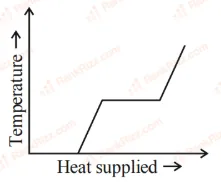
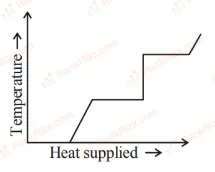
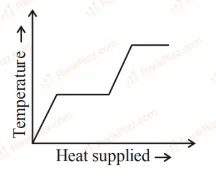
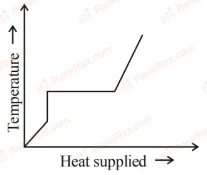
A block of ice at is slowly heated and converted to steam at . Which of the following curves represent the phenomenon qualitatively:


Two plates A and B have thermal conductivities W m K and W m K respectively. They have same surface area and same thickness. They are placed in contact along their surfaces. If the temperatures of the outer surfaces of A and B are kept at C and C respectively, then the temperature of the surface of contact in steady state is _____ °C.
A body cools from C to in minutes. The temperature for the surrounding is C. The time it takes to cool from C to C is
s
s
s
s
On a temperature scale 'X', the boiling point of water is 65X and the freezing point is X. Assuming that the X scale is linear. The equivalent temperature corresponding to X on the Fahrenheit scale would be
F
F
F
F
A body cools in 7 minutes from 60°C to 40°C. The temperature of the surrounding is 10°C. The temperature of the body after the next 7 minutes will be
30°C
32°C
34°C
28°C
A water heater of power 2000 W is used to heat water. The specific heat capacity of water is 4200 J kg K. The efficiency of heater is 70%. Time required to heat 2 kg of water from 10°C to 60°C is ______ s. (Assume that the specific heat capacity of water remains constant over the temperature range of the water).
A faulty thermometer reads C in melting ice and C in steam. The correct temperature on absolute scale will be ______ K when the faulty thermometer reads C.
A body cools from C to C in minutes. If, temperature of surroundings is C. Then, after the next 6 minutes, its temperature will be ______ °C.
Heat energy of kJ is given to ice of mass g at C, Specific heat of ice is J kg °C and latent heat of ice is kJ kg.
(A) Final temperature of system will be C
(B) Final temperature of the system will be greater than C
(C) The final system will have a mixture of ice and water in the ratio of
(D) The final system will have a mixture of ice and water in the ratio of
(E) The final system will have water only
Choose the correct answer from the options given below:
A and D only
B and D only
A and E only
A and C only
A bowl filled with very hot soup cools from 98°C to 86°C in 2 minutes when the room temperature is 22°C. How long it will take to cool from 75°C to 69°C?
2 minute
1.4 minute
0.5 minute
1 minute
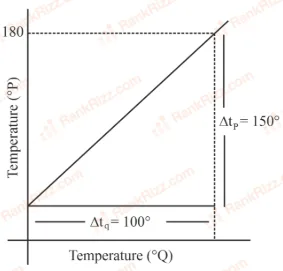
The graph between two temperature scales P and Q is shown in the figure. Between upper fixed point and lower fixed point there are 150 equal divisions of scale P and 100 divisions on scale Q. The relationship for conversion between the two scales is given by:

A hole is drilled in a metal sheet. At 27 °C, the diameter of hole is 5 cm. When the sheet is heated to 177 °C, the change in the diameter of hole is cm. The value of will be _____, if coefficient of linear expansion of the metal is
A hole is drilled in a metal sheet. At 27 °C, the diameter of hole is 5 cm. When the sheet is heated to 177 °C, the change in the diameter of hole is cm. The value of will be _____, if coefficient of linear expansion of the metal is / °C
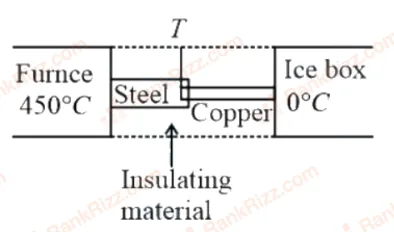
If and are the thermal conductivities, and are the lengths and and are the cross sectional areas of steel and copper rods respectively such that , , . Then, for the arrangement as shown in the figure, the value of temperature of the steel-copper junction in the steady state will be

Read the following statements:
A. When small temperature difference between a liquid and its surrounding is doubled the rate of loss of heat of the liquid becomes twice.
B. Two bodies P and Q having equal surface areas are maintained at temperature and . The thermal radiation emitted in a given time by P and Q are in the ratio .
C. A Carnot Engine working between and has an efficiency of .
D. When small temperature difference between a liquid and its surrounding is quadrupled, the rate of loss of heat of the liquid becomes twice.
Choose the correct answer from the options given below:
A, B, C only
A, B only
A, C only
B, C, D only
An ice cube of dimensions is placed in an insulation box of wall thickness . The box keeping the ice cube at of temperature is brought to a room of temperature . The rate of melting of ice is approximately: (Latent heat of fusion of ice is and thermal conductivity of insulation wall is )
A unit scale is to be prepared whose length does not change with temperature and remains , using a bimetallic strip made of brass and iron each of different length. The length of both components would change in such a way that difference between their lengths remains constant. If length of brass is and length of iron will be ______ cm.
and .
A block of ice of mass at temperature is put in of water at . The g of ice melts as the temperature of the water reaches . The value of is ______.
[Use: Specific heat capacity of water , Latent heat of ice ]
JEE Advanced has set 23 Thermal Properties of Matter questions too. Thermal Properties of Matter JEE Advanced PYQs →
OTHER PHYSICS CHAPTERS