RankRizz

Nucleophilic substitution (SN1 and SN2) — JEE Main Previous Year Questions

Nucleophilic substitution (SN1 and SN2) has been asked 128 times in JEE Main, in 20 different years between 2005 and 2026, and in all of the last five exam years (2022–2026), 64 questions in all. That is 68% of Haloalkanes and Haloarenes, its most-asked topic. Last asked in JEE Main 08 Apr 2026, Shift 2. 122 are multiple choice and 6 numerical-value; 22 easy, 91 medium and 4 hard by our difficulty labels. All of them are below, newest first, free to read.

Questions

128

Years asked

20

Since

2005

Of the chapter

68%

Every Nucleophilic substitution (SN1 and SN2) question

21–40 OF 128 · NEWEST FIRST

JEE MAIN 2025 · 24 JAN S1Nucleophilic substitution (SN1 and SN2)

Given below are two statements: Statement I: The conversion proceeds well in the less polar medium.
CH3−CH2−CH2−CH2−Cl  →    HO−    CH3−CH2−CH2−CH2−OH+Cl(−)\mathrm{CH_3-CH_2-CH_2-CH_2-Cl} \;\xrightarrow{\;\;HO^-\;\;} \mathrm{CH_3-CH_2-CH_2-CH_2-OH} + \mathrm{Cl^{(-)}}
Statement II: The conversion proceeds well in the more polar medium.

page7_img1

In the light of the above statements, choose the correct answer from the options given below

  1. A

    Both Statement I and Statement II are true

  2. B

    Statement I is true but Statement II is false

  3. C

    Statement I is false but Statement II is true

  4. D

    Both Statement I and Statement II are false
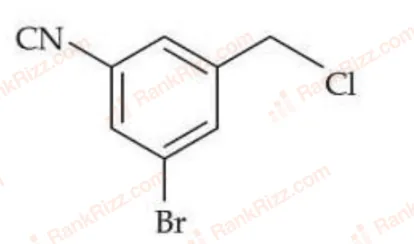
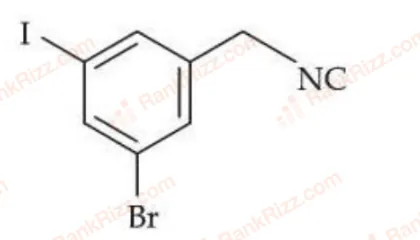
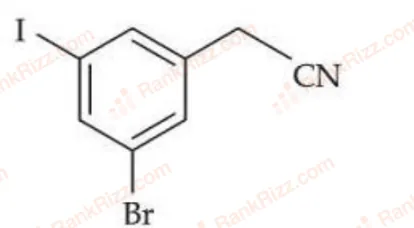
JEE MAIN 2025 · 24 JAN S2Nucleophilic substitution (SN1 and SN2)

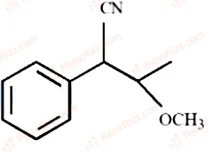
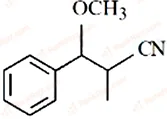
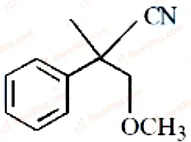
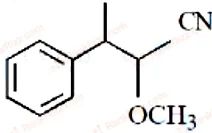
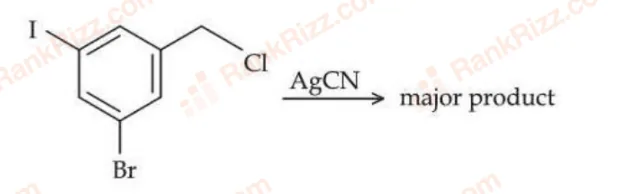
The structure of the major product formed in the following reaction is :

page12_img3
  1. A
    page13_img1
  2. B
    page13_img2
  3. C
    page13_img3
  4. D
    page13_img4
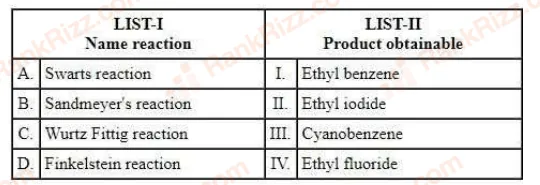
JEE MAIN 2025 · 23 JAN S1Nucleophilic substitution (SN1 and SN2)

Match the LIST-I with LIST-II

page11_img5

Choose the correct answer from the options given below:

  1. A

    A-II, B-I, C-III, D-IV

  2. B

    A-II, B-III, C-I, D-IV

  3. C

    A-IV, B-I, C-III, D-II

  4. D

    A-IV, B-III, C-I, D-II

JEE MAIN 2025 · 23 JAN S2Nucleophilic substitution (SN1 and SN2)

The ascending order of relative rate of solvolysis of following compounds is :

page11_img1
  1. A

    (C) < (B) < (A) < (D)

  2. B

    (D) < (A) < (B) < (C)

  3. C

    (D) < (B) < (A) < (C)

  4. D

    (C) < (D) < (B) < (A)

JEE MAIN 2025 · 22 JAN S1Nucleophilic substitution (SN1 and SN2)

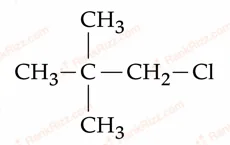
Given below are two statements : Statement I : CH3−O−CH2−ClCH_3 - O - CH_2 - Cl will undergo SN1S_N 1 reaction though it is a

Figure for JEE Main 2025 Chemistry question on Nucleophilic substitution (SN1 and SN2)

primary halide. Statement II :
will not undergo SN2S_N 2 reaction very easily though it is a primary halide. In the light of the above statements,
choose the most appropriate answer from the options given below :

  1. A

    Both Statement I and Statement II are incorrect

  2. B

    Both Statement I and Statement II are correct

  3. C

    Statement I is incorrect but Statement II is correct

  4. D

    Statement I is correct but Statement II is incorrect

JEE MAIN 2025 · 22 JAN S2Nucleophilic substitution (SN1 and SN2)
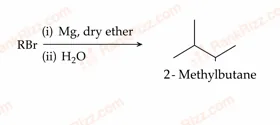
Figure for JEE Main 2025 Chemistry question on Nucleophilic substitution (SN1 and SN2)


The maximum number of RBr producing 2-methylbutane by above sequence of reactions is ________ -
(Consider the structural isomers only)

  1. A

    5

  2. B

    4

  3. C

    3

  4. D

    1

JEE MAIN 2024 · 09 APR S1Nucleophilic substitution (SN1 and SN2)

Given below are two statements : one is labelled as Assertion (A) and the other is labelled as Reason (R). Assertion (A) : SN2S_N2 reaction of C6H5CH2BrC_6H_5CH_2Br occurs more readily than the SN2S_N2 reaction of CH3CH2BrCH_3CH_2Br. Reason (R) : The partially bonded unhybridized p-orbital that develops in the trigonal bipyramidal transition state is stabilized by conjugation with the phenyl ring. In the light of the above statements, choose the most appropriate answer from the options given below :

  1. A

    (A) is correct but (R) is not correct

  2. B

    (A) is not correct but (R) is correct

  3. C

    Both (A) and (R) are correct but (R) is not the correct explanation of (A)

  4. D

    Both (A) and (R) are correct and (R) is the correct explanation of (A)

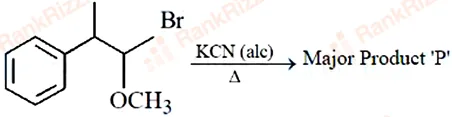
JEE MAIN 2024 · 09 APR S2Nucleophilic substitution (SN1 and SN2)
page7_img1


In the above reaction product 'PP' is :

  1. A
    page8_img1
  2. B
    page8_img2
  3. C
    page8_img3
  4. D
    page8_img4
JEE MAIN 2024 · 08 APR S1Nucleophilic substitution (SN1 and SN2)


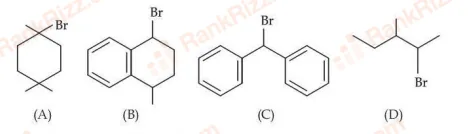
Which among the following compounds will undergo fastest SN2S_N2 reaction.

  1. A
    Figure for JEE Main 2024 Chemistry question on Nucleophilic substitution (SN1 and SN2)
  2. B
    Figure for JEE Main 2024 Chemistry question on Nucleophilic substitution (SN1 and SN2)
  3. C
    Figure for JEE Main 2024 Chemistry question on Nucleophilic substitution (SN1 and SN2)
  4. D
    Figure for JEE Main 2024 Chemistry question on Nucleophilic substitution (SN1 and SN2)
JEE MAIN 2024 · 08 APR S2Nucleophilic substitution (SN1 and SN2)

Given below are two statements : Statement (I) : SN2S_N2 reactions are 'stereospecific', indicating that they result in the formation of only one stereo-isomer as the product. Statement (II) : SN1S_N1 reactions generally result in formation of product as racemic mixtures. In the light of the above statements, choose the correct answer from the options given below :

  1. A

    Both Statement I and Statement II are false
  2. B

    Statement I is false but Statement II is true
  3. C

    Statement I is true but Statement II is false
  4. D

    Both Statement I and Statement II are true

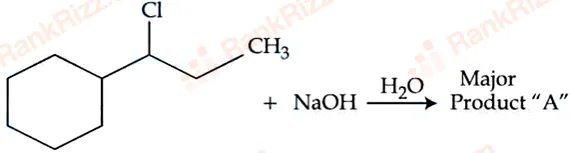
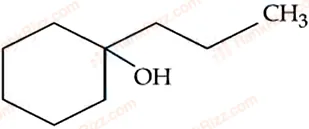
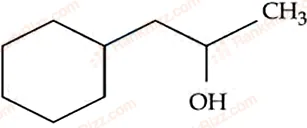
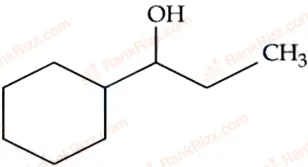
JEE MAIN 2024 · 06 APR S2Nucleophilic substitution (SN1 and SN2)
Figure for JEE Main 2024 Chemistry question on Nucleophilic substitution (SN1 and SN2)

Consider the above chemical reaction. Product "A " is :

  1. A
    Figure for JEE Main 2024 Chemistry question on Nucleophilic substitution (SN1 and SN2)
  2. B
    Figure for JEE Main 2024 Chemistry question on Nucleophilic substitution (SN1 and SN2)
  3. C
    Figure for JEE Main 2024 Chemistry question on Nucleophilic substitution (SN1 and SN2)
  4. D
    Figure for JEE Main 2024 Chemistry question on Nucleophilic substitution (SN1 and SN2)
JEE MAIN 2024 · 05 APR S2Nucleophilic substitution (SN1 and SN2)

Identify the major product in the following reaction.

Figure for JEE Main 2024 Chemistry question on Nucleophilic substitution (SN1 and SN2)
  1. A
    page8_img2
  2. B
    page8_img3
  3. C
    page8_img4
  4. D
    page8_img5
JEE MAIN 2024 · 04 APR S1Nucleophilic substitution (SN1 and SN2)

Identify the correct set of reagents or reaction conditions 'X' and 'Y' in the following set of transformation: 

Figure for JEE Main 2024 Chemistry question on Nucleophilic substitution (SN1 and SN2)
  1. A

    X = dil.aq. NaOH, 20°C; Y = Br₂/CHCl₃

  2. B

    X = conc.alc. NaOH, 80°C; Y = Br₂/CHCl₃

  3. C

    X = dil.aq. NaOH, 20°C; Y = HBr/acetic acid

  4. D

    X = conc.alc. NaOH, 80°C; Y = HBr/acetic acid

JEE MAIN 2024 · 04 APR S2Nucleophilic substitution (SN1 and SN2)

CH3−CH2−CH2−Br+NaOH→C2H5OHCH_3-CH_2-CH_2-Br + NaOH \xrightarrow{C_2H_5OH} Product 'A'.

page8_img1


 Consider the above reactions, identify product BB and product CC.

  1. A

    BB = 1-Propanol, CC = 2-Propanol

  2. B

    BB = CC = 2-Propanol

  3. C

    BB = 2-Propanol, CC = 1-Propanol

  4. D

    BB = CC = 1-Propanol

JEE MAIN 2024 · 04 APR S2Nucleophilic substitution (SN1 and SN2)

Find out the major product formed from the following reaction. [Me: −CH3-CH_3]

page8_img2
  1. A
    page8_img3
  2. B
    page8_img4
  3. C
    page8_img5
  4. D
    page8_img6
JEE MAIN 2024 · 01 FEB S1Nucleophilic substitution (SN1 and SN2)

Given below are two statements: one is labelled as Assertion A and the other is labelled as Reason R. Assertion A: Haloalkanes react with KCN to form alkyl cyanides as a main product while with AgCN form isocyanide as the main product. Reason R: KCN and AgCN both are highly ionic compounds. In the light of the above statement, choose the most appropriate answer from the options given below:

  1. A

    A is correct but R is not correct

  2. B

    Both A and R are correct but R is not the correct explanation of A

  3. C

    A is not correct but R is correct

  4. D

    Both A and R are correct and R is the correct explanation of A

JEE MAIN 2024 · 31 JAN S1Nucleophilic substitution (SN1 and SN2)

The product (C) in the below mentioned reaction is: CH3−CH2−CH2−Br→ΔKOHalcA→HBrB→ΔKOHaqCCH_3-CH_2-CH_2-Br \xrightarrow[\Delta]{KOH_{alc}} A \xrightarrow{HBr} B \xrightarrow[\Delta]{KOH_{aq}} C

  1. A

    Propan-1-ol

  2. B

    Propene

  3. C

    Propyne

  4. D

    Propan-2-ol

JEE MAIN 2024 · 31 JAN S1Nucleophilic substitution (SN1 and SN2)
Figure for JEE Main 2024 Chemistry question on Nucleophilic substitution (SN1 and SN2)

The total number of hydrogen atoms in product A and product B is __________.

JEE MAIN 2024 · 30 JAN S1Nucleophilic substitution (SN1 and SN2)

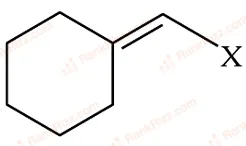
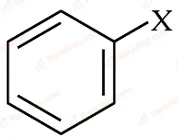
Example of vinylic halide is

  1. A
    page6_img5
  2. B
    page6_img6
  3. C
    page6_img7
  4. D
    page6_img8
JEE MAIN 2024 · 30 JAN S1Nucleophilic substitution (SN1 and SN2)

Given below are two statements one is labeled as Assertion (A) and the other is labeled as Reason (R).
Assertion (A): CH2=CH−CH2−ClCH_2=CH-CH_2-Cl is an example of allyl halide
Reason (R): Allyl halides are the compounds in which the halogen atom is attached to sp2sp^2 hybridised carbon atom.
In the light of the two above statements, choose the most appropriate answer from the options given below:

  1. A

    (A) is true but (R) is false

  2. B

    Both (A) and (R) are true but (R) is not the correct explanation of A

  3. C

    (A) is false but (R) is true
  4. D

    Both (A) and (R) are true and (R) is the correct explanation of (A)

RELATED HALOALKANES AND HALOARENES TOPICS