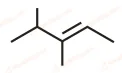
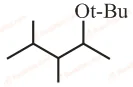
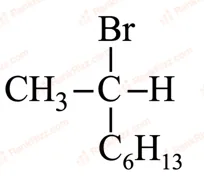
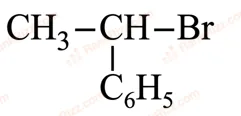
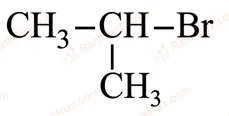
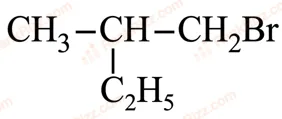
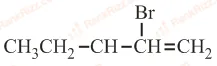
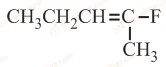
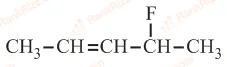
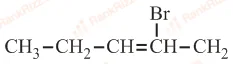
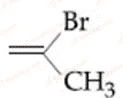
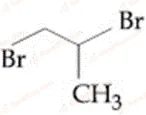
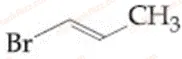
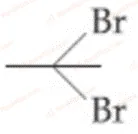
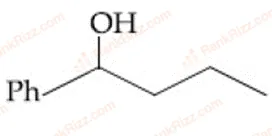
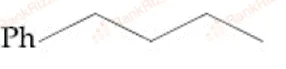
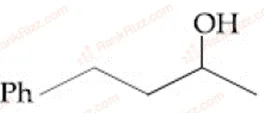
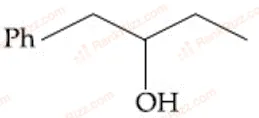
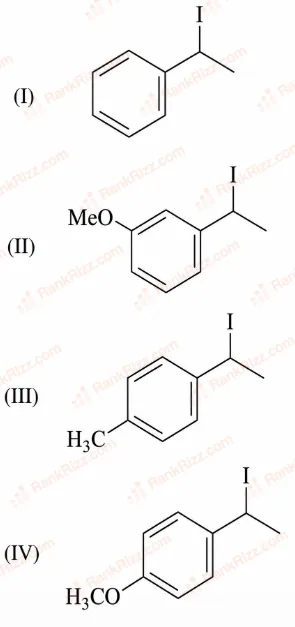
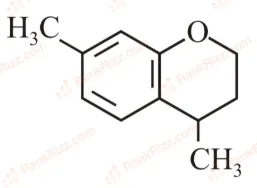
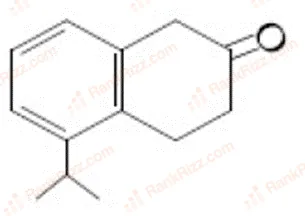
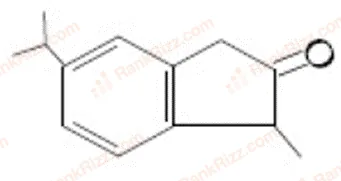
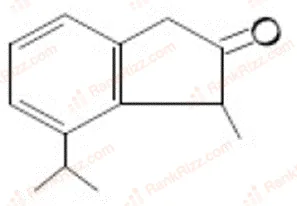
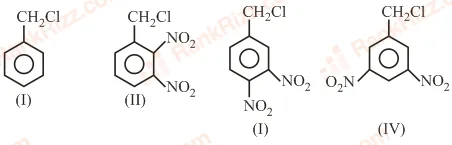
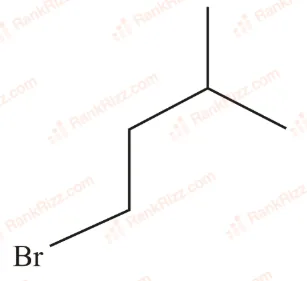
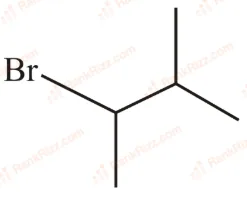
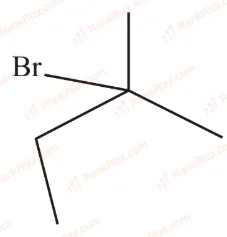
The decreasing order of reactivity of the following compounds towards nucleophilic substitution () is:
- A
(II) > (III) > (I) > (IV)
- B
(II) > (III) > (IV) > (I)
- C
(III) > (II) > (IV) > (I)
- D
(IV) > (II) > (III) > (I)
Nucleophilic substitution (SN1 and SN2) has been asked 128 times in JEE Main, in 20 different years between 2005 and 2026, and in all of the last five exam years (2022–2026), 64 questions in all. That is 68% of Haloalkanes and Haloarenes, its most-asked topic. Last asked in JEE Main 08 Apr 2026, Shift 2. 122 are multiple choice and 6 numerical-value; 22 easy, 91 medium and 4 hard by our difficulty labels. All of them are below, newest first, free to read.
Questions
128
Years asked
20
Since
2005
Of the chapter
68%
81–100 OF 128 · NEWEST FIRST
The decreasing order of reactivity of the following compounds towards nucleophilic substitution () is:

(II) > (III) > (I) > (IV)
(II) > (III) > (IV) > (I)
(III) > (II) > (IV) > (I)
(IV) > (II) > (III) > (I)
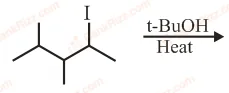
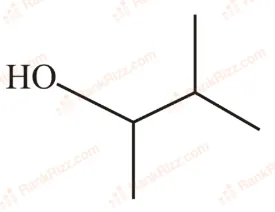
The major product in the following reaction is:


Which of the following compounds will show retention in configuration on nucleophilic substitution by ion?


The major product obtained from -elimination of 3-bromo-2-fluoropentane is:


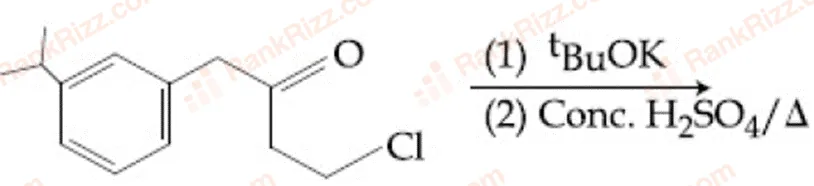
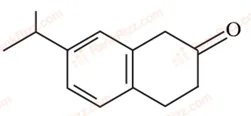
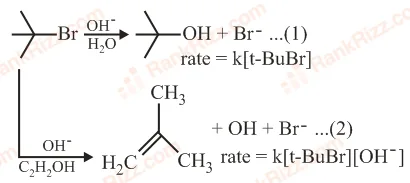
Consider the reaction sequence given below:
Which of the following statements is true:
Changing the base from to will have no effect on reaction (2)
Changing the concentration of base will have no effect on reaction (1)
Doubling the concentration of base will double the rate of both the reactions
Changing the concentration of base will have no effect on reaction (2)
Which of the following reactions will not produce a racemic product?


The decreasing order of reactivity towards dehydrohalogenation (E) reaction of the following compounds is:

D > B > C > A
B > D > A > C
B > D > C > A
B > A > D > C
1-methyl ethylene oxide when treated with an excess of HBr produces


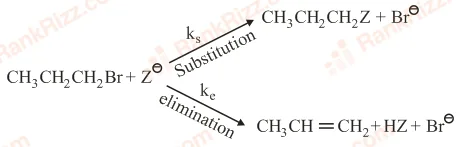
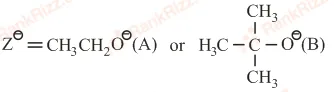
For the following reactions
where:
k and k are respectively the rate constants for substitution and elimination, and , the correct option is
and
and
and
and
Which one of the following is likely to give a precipitate with AgNO solution?
CH = CH - Cl
(CH)CCl
CCl
CHCl
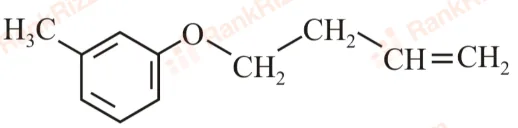
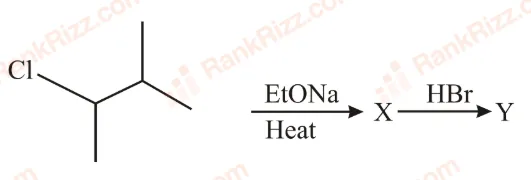
Heating of 2-chloro-1-phenylbutane with EtOK/EtOH gives X as the major product. Reaction X with Hg(OAc)/HO followed by NaBH gives Y as the major product. Y is:


An 'Assertion' and a 'Reason' is given below. Choose the correct answer from the following options:
Assertion (A): Vinyl halides do not undergo nucleophilic substitution easily.
Reason (R): Even though the intermediate carbocation is stabilized by loosely held -electrons, the cleavage is difficult because of the strong bonding.
Both (A) and (R) are correct statements but (R) is not the correct explanation of (A).
Both (A) and (R) are wrong statements.
Both (A) and (R) are wrong statements and (R) is the correct explanation of (A).
(A) is a correct statement but (R) is a wrong statement.
Increasing rate of S1 reaction in the following compounds is:

(I) < (II) < (III) < (IV)
(II) < (I) < (III) < (IV)
(II) < (I) < (IV) < (III)
(I) < (II) < (IV) < (III)
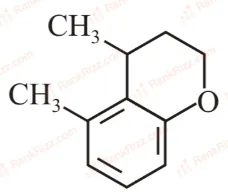
The major product obtained in the given reaction is:


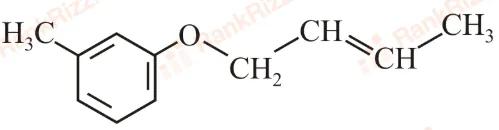
The major product 'Y' in the following reaction is:


Increasing order of reactivity of the following compounds for S1 substitution is:

B < C < D < A
B < A < D < C
A < B < D < C
B < C < A < D
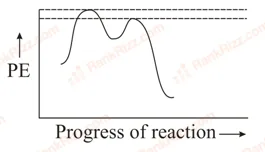
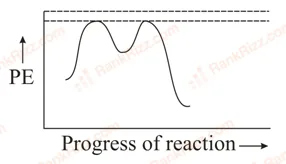
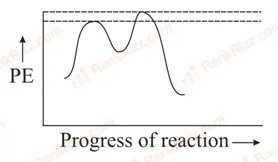
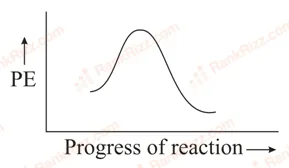
Which of the following potential energy (P.E.) diagrams represents the S1 reaction?


Which one of the following alkenes when treated with HCl yields majorly an anti Markovnikov product?
CHO - CH = CH
Cl - CH = CH
HN - CH = CH
FC - CH = CH
The major product of the following reaction is:


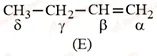
Which hydrogen in compound (E) is easily replaceable during bromination reaction in presence of light?

-hydrogen
-hydrogen
-hydrogen
-hydrogen
RELATED HALOALKANES AND HALOARENES TOPICS