JEE MAIN 2026 · 05 APR S2Reactions of carboxylic acids
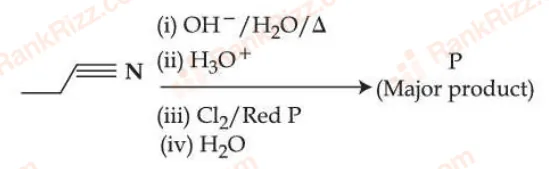
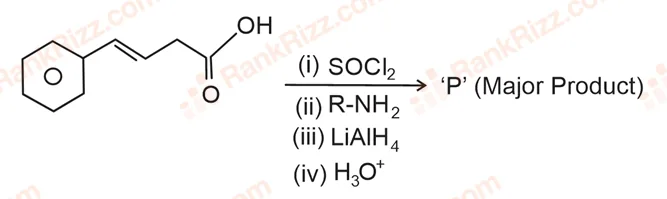
Complete the following reaction sequence and give the name of major product 'P'.
- A
2-Chloropropanoic acid
- B
3-Chloropropanoic acid
- C
1-Chloropropane
- D
2-Chloropropane
Reactions of carboxylic acids has been asked 49 times in JEE Main, in 11 different years between 2014 and 2026, and in all of the last five exam years (2022–2026), 24 questions in all. That is 64% of Carboxylic Acids and Derivatives, its most-asked topic. Last asked in JEE Main 05 Apr 2026, Shift 2. 44 are multiple choice and 5 numerical-value; 9 easy, 35 medium and 2 hard by our difficulty labels. All of them are below, newest first, free to read.
Questions
49
Years asked
11
Since
2014
Of the chapter
64%
Questions on Reactions of carboxylic acids in every year it was asked, newest first.
| Year | Relative frequency | Questions |
|---|---|---|
| 2026 | 6 | |
| 2025 | 3 | |
| 2024 | 4 | |
| 2023 | 7 | |
| 2022 | 4 | |
| 2021 | 9 | |
| 2020 | 6 | |
| 2019 | 3 | |
| 2018 | 2 | |
| 2015 | 2 | |
| 2014 | 3 | |
| Total | 49 |
1–20 OF 49 · NEWEST FIRST
Complete the following reaction sequence and give the name of major product 'P'.
2-Chloropropanoic acid
3-Chloropropanoic acid
1-Chloropropane
2-Chloropropane
Consider the following sequence of reactions to give the major product :
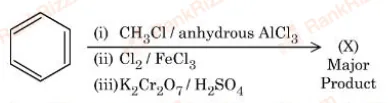
g of the major product formed is reacted with solution to liberate a gas which occupied 11.2 dm³ at STP. = _____ g.
( Given molar mass in g )
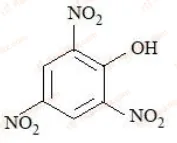
The correct order of acidic strength of the major products formed in the given reactions, is:
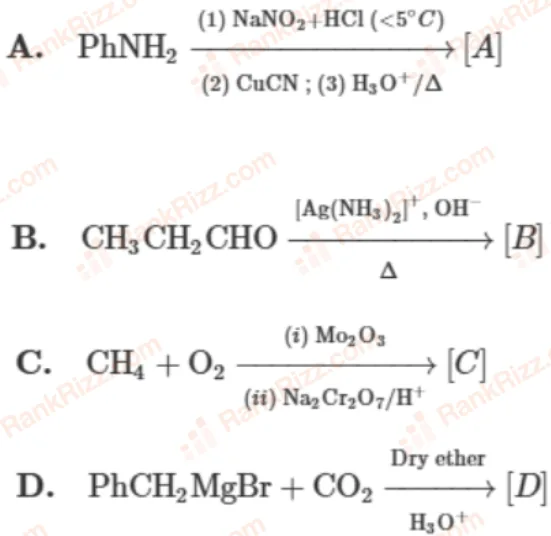
Choose the correct answer from the options given below :
A > D > C > B
C > B > A > D
A > D > B > C
C > A > D > B
Grignard reagent RMgBr (P) reacts with water and forms a gas (Q). One gram of Q occupies at STP.(P) on reaction with dry ice in dry ether followed by fonns a compound (Z). 0.1 mole of(Z) will weigh ____ g. (Nearest integer)
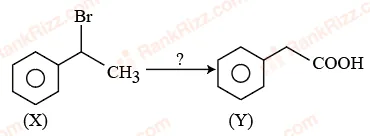
The correct sequence of reagents for the above conversion of X to Y is:
(i) (ii)NaOEt (iii)Jones reagent
(i)NaOEt (i) (iii)Jones reagent
(i)NaOH (aq) (ii)Jones reagent (iii)
(i)Jones reagent (ii)NaOEt (iii)Hot /KOH
Compound 'P' undergoes the following sequence of reactions:

'P' is:
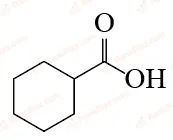
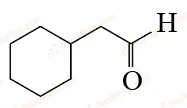
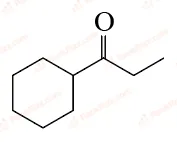
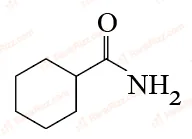
Consider the following molecules:
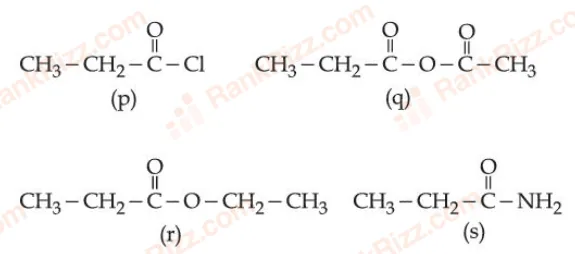
The correct order of rate of hydrolysis is:
Consider the following reactions. From these reactions which reaction will give carboxylic acid as a major product ?
(A)
(B)
(C)
(D)
(E)
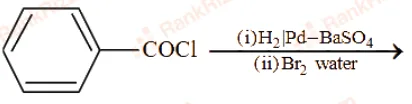
Choose the correct answer from the options given below :
A and D only
A, B and E only
B, C and E only
B and E only
The compounds that produce with aqueous solution are:
A.
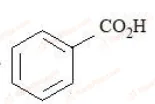
B.
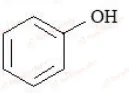
C.
D.
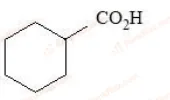
E.
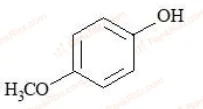
Choose the correct answer from the options given below:
A, C and D Only
A, B and E Only
A and C Only
A and B Only
Identify the product (P) in the following reaction:
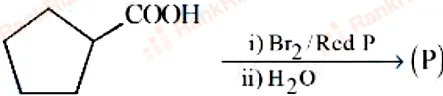
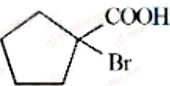
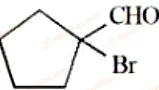
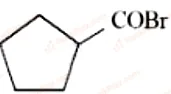
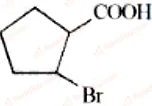
Identify and in the given chemical reaction sequence
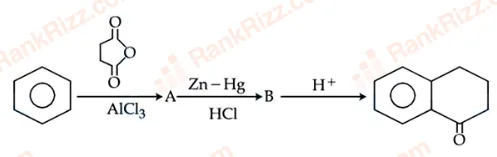
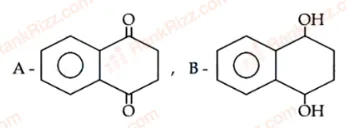
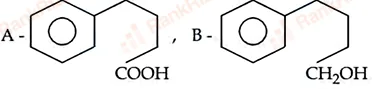
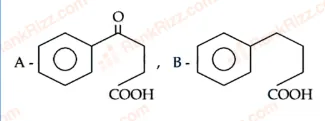
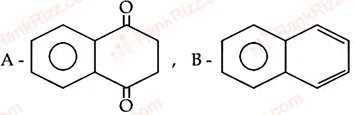
Consider the given chemical reaction :
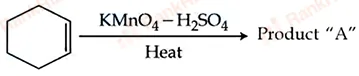
picric acid
acetic acid
adipic acid
oxalic acid
The molecular formula of second homologue in the homologous series of mono carboxylic acids is :
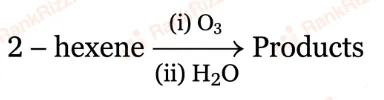
The two products formed in above reaction are
Butanal and acetaldehyde
Butanoic acid and acetaldehyde
Butanal and acetic acid
Butanoic acid and acetic acid
The major product 'P' formed in the following sequence of reactions is
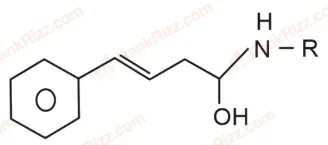
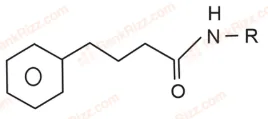
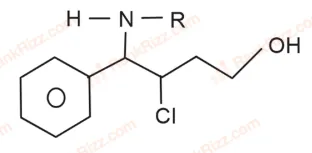
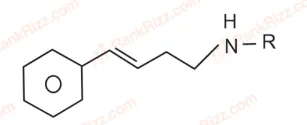
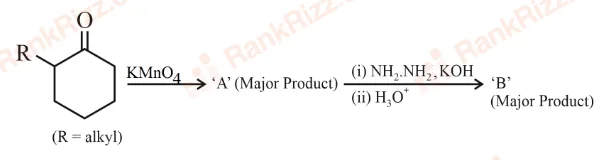
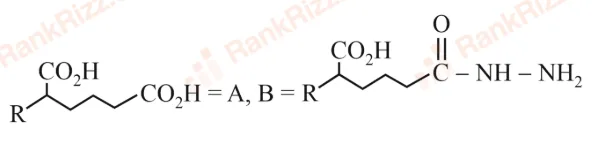
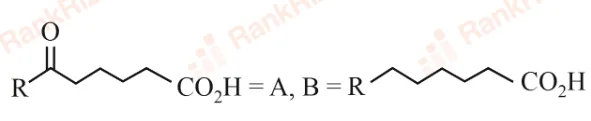
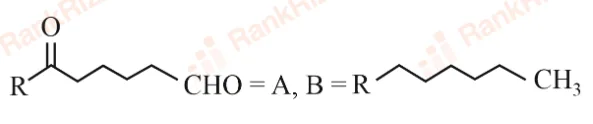
'A' and 'B' in the above reaction are :
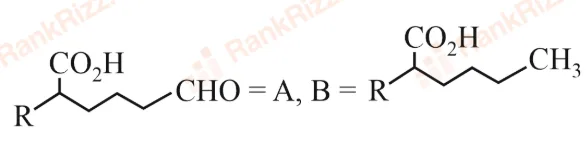
Given below are two statements, one is labelled as Assertion A and the other is labelled as Reason R.
Assertion A: A solution of the product obtained by heating a mole of glycine with a mole of chlorine in presence of red phosphorous generates chiral carbon atom.
Reason R: A molecule with 2 chiral carbons is always optically active.
A is true but R is false
Both A and R are true but R is the correct explanation of A
A is false but R is true
Both A and R are true but R is NOT the correct explanation of A
The major product formed in the following reaction is
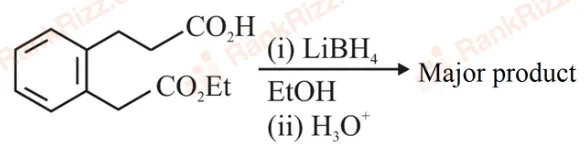
COH + COEt compound treated with (i) LiBH/EtOH (ii) HO
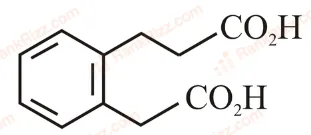
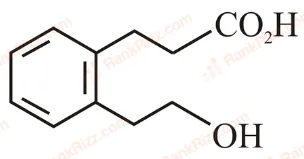
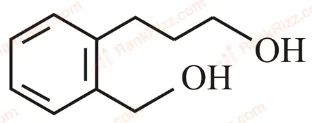
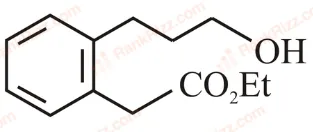
In a reaction
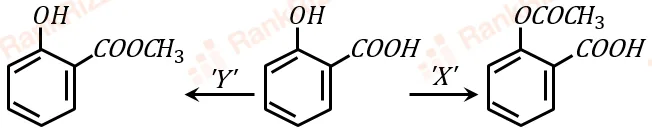
reagents 'X' and 'Y' respectively are:
and
and
and
and
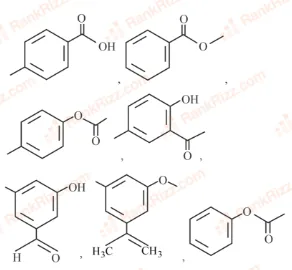
Number of compounds from the following which will not dissolve in cold NaHCO and NaOH solutions but will dissolve in hot NaOH solution is ______.
RELATED CARBOXYLIC ACIDS AND DERIVATIVES TOPICS