JEE MAIN 2022 · 28 JUL S2Reactions of carboxylic acids
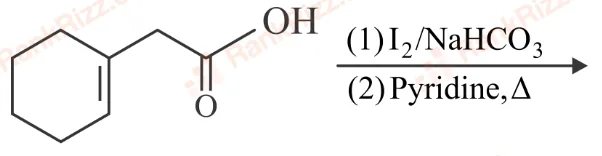
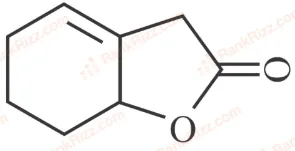
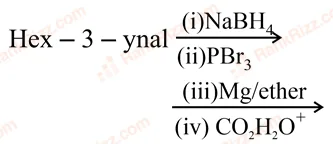
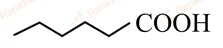
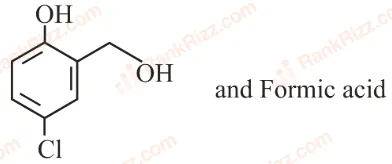
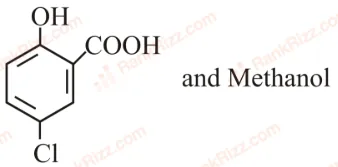
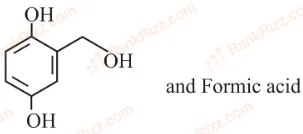
Find out the major product for the above reaction.
- A
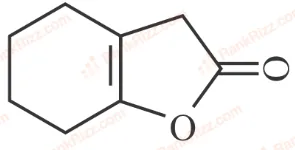
- B
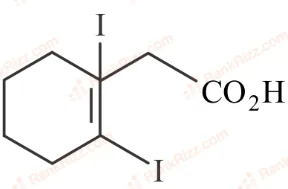
- C
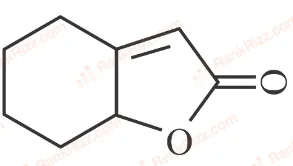
- D
Reactions of carboxylic acids has been asked 49 times in JEE Main, in 11 different years between 2014 and 2026, and in all of the last five exam years (2022–2026), 24 questions in all. That is 64% of Carboxylic Acids and Derivatives, its most-asked topic. Last asked in JEE Main 05 Apr 2026, Shift 2. 44 are multiple choice and 5 numerical-value; 9 easy, 35 medium and 2 hard by our difficulty labels. All of them are below, newest first, free to read.
Questions
49
Years asked
11
Since
2014
Of the chapter
64%
21–40 OF 49 · NEWEST FIRST
Find out the major product for the above reaction.
Given below are two statements:
Statement I: The esterification of carboxylic acid with an alcohol is a nucleophilic acyl substitution.
Statement II: Electron withdrawing groups in the carboxylic acid will increase the rate of esterification reaction.
Choose the most appropriate option
Statement I is correct but Statement II is incorrect.
Both Statement I and Statement II are incorrect.
Both Statement I and Statement II are correct.
Statement I is incorrect but Statement II is correct.
The reagent, from the following, which converts benzoic acid to benzaldehyde in one step is
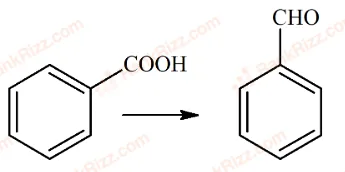
MnO
Two statements are given below :
Statement I : The melting point of monocarboxylic acid with even number of carbon atoms is higher than that of with odd number of carbon atoms acid immediately below and above it in the series.
Statement II : The solubility of monocarboxylic acids in water decreases with increase in molar mass.
Choose the most appropriate option :
Both Statement I and Statement II are correct.
Both Statement I and Statement II are incorrect.
Statement I is correct but Statement II is incorrect.
Statement I is incorrect but Statement II is correct.
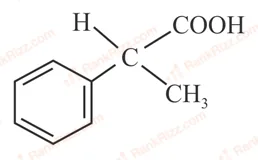
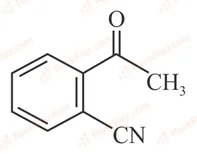
The structure of product C, formed by the following sequence of reactions is:
CHCOOH + SOCl A B C
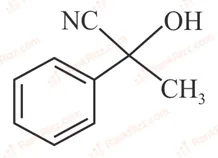
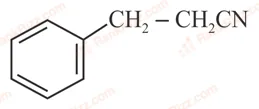
Given below are two statements:
Statement I : Ethyl pent-4-yn-oate on reaction with CHMgBr gives a 3°-alcohol.
Statement II : In this reaction one mole of ethyl pent-4-yn-oate utilizes two moles of CHMgBr.
In the light of the above statements, choose the most appropriate answer from the options given below:
Both Statement I and Statement II are false
Statement I is true but Statement II is false
Statement I is false but Statement II is true
Both Statement I and Statement II are true
Which one of the following reactions will not yield propanoic acid?
CHCHCHBr + Mg, CO dry ether /HO
CHCHCH + KMnO(Heat), OH /HO
CHCHCCl + OH /HO
CHCHCOCH + OI /HO
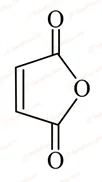
Maleic anhydride
Maleic anhydride can be prepared by:
Heating trans-but-2-enedioic acid
Heating cis-but-2-enedioic acid
Treating cis-but-2-enedioic acid with alcohol and acid
Treating trans-but-2-enedioic acid with alcohol and acid
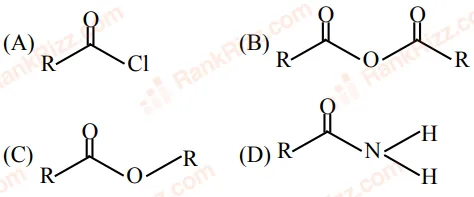
The correct order of their reactivity towards hydrolysis at room temperature is:
(A) > (B) > (C) > (D)
(D) > (A) > (B) > (C)
(D) > (B) > (A) > (C)
(A) > (C) > (B) > (D)
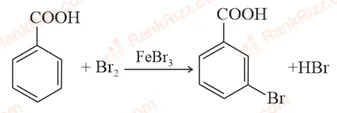
Consider the above reaction where 6.1 g of benzoic acid is used to get 7.8 g of m-bromo benzoic acid. The percentage yield of the product is ___.
(Round off to the Nearest integer)
[Given : Atomic masses : C = 12.0 u, H : 1.0 u, O : 16.0 u, Br = 80.0 u]
In the above reaction, the reagent "A" is:
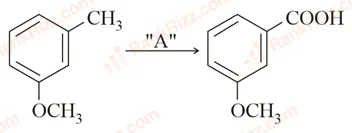
NaBH, HO
LiAlH
Alkaline KMnO, H
HCl, Zn-Hg
Compound(s) which will liberate carbon dioxide with sodium bicarbonate solution is/are:
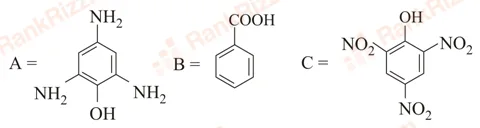
A and B only
B and C only
C only
B only
The number of compound/s given below which contain/s group is ______. (Integer answer)
(A) Sulphanilic acid (B) Picric acid (C) Aspirin (D) Ascorbic acid
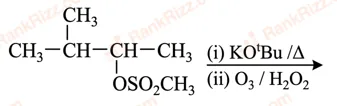
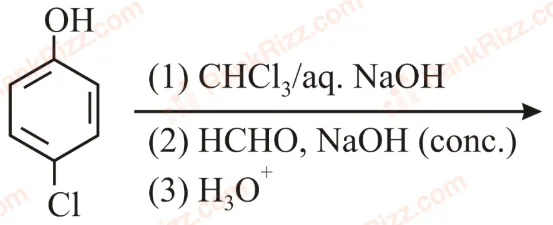
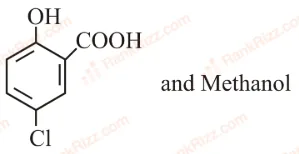
The major products of the following reaction are:
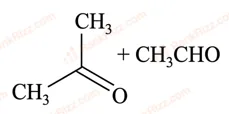
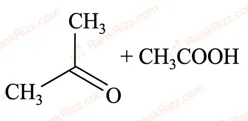
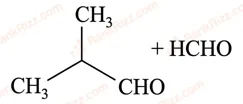
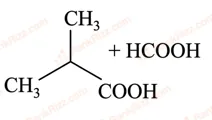
[P] on treatment with in produced a single isomer while heating [P] with sodalime gives toluene. The compound [P] is:
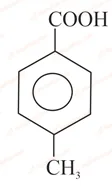
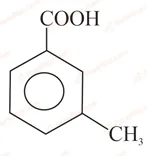
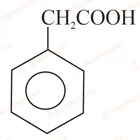
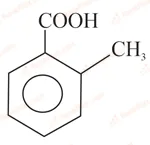
An organic compound [A], molecular formula was hydrolyzed with dilute sulphuric acid to give a carboxylic acid [B] and an alcohol [C]. Oxidation of [C] with produced [B]. Which of the following structures are not possible for [A]?
P)
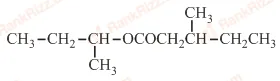
Q)
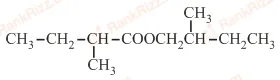
R)
S)
P and Q
Q and R
P and R
Q and S
The most suitable reagent for the given conversion is:
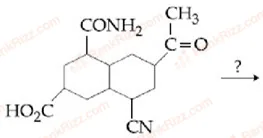
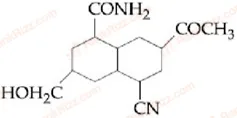
BH
NaBH
LiAlH
H/Pd
An unsaturated hydrocarbon X absorbs two hydrogen molecules on catalytic hydrogenation, and also gives following reaction:
X A B (3-oxo-hexanedicarboxylic acid). X will be:
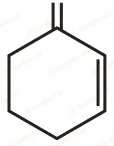
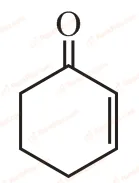
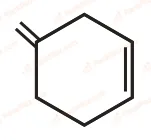
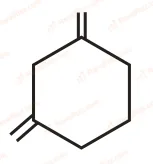
What is the product of the following reaction?



The major products of the following reaction are:
RELATED CARBOXYLIC ACIDS AND DERIVATIVES TOPICS