JEE MAIN 2019 · 10 JAN S1Reactions of carboxylic acids
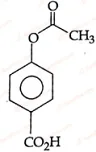
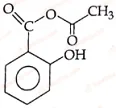
The decreasing order of ease of alkaline hydrolysis for the following esters is:
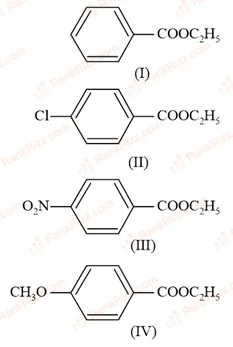
- A
III > II > IV > I
- B
III > II > I > IV
- C
IV > II > III > I
- D
II > III > I > IV
Reactions of carboxylic acids has been asked 49 times in JEE Main, in 11 different years between 2014 and 2026, and in all of the last five exam years (2022–2026), 24 questions in all. That is 64% of Carboxylic Acids and Derivatives, its most-asked topic. Last asked in JEE Main 05 Apr 2026, Shift 2. 44 are multiple choice and 5 numerical-value; 9 easy, 35 medium and 2 hard by our difficulty labels. All of them are below, newest first, free to read.
Questions
49
Years asked
11
Since
2014
Of the chapter
64%
41–49 OF 49 · NEWEST FIRST
The decreasing order of ease of alkaline hydrolysis for the following esters is:
III > II > IV > I
III > II > I > IV
IV > II > III > I
II > III > I > IV
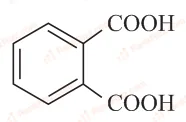
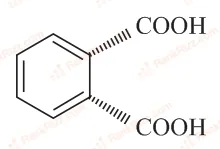
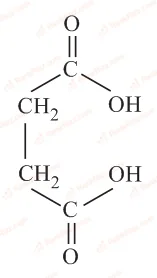
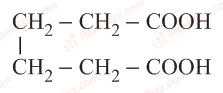
With dehydrating agent present which dicarboxylic acid is least reactive towards forming an anhydride?
The increasing order of the acidity of the following carboxylic acids is:
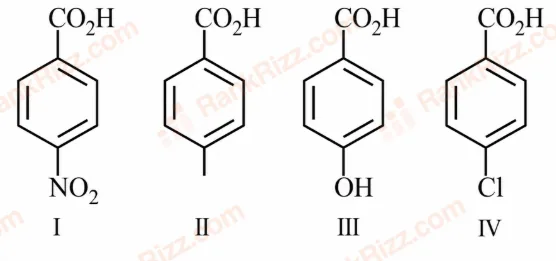
III < II < IV < I
I < III < II < IV
IV < II < III < I
II < IV < III < I
Phenol on treatment with in the presence of NaOH followed by acidification produces compound X as the major product. X on treatment with in the presence of catalytic amount of produces:
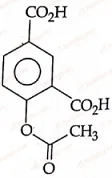
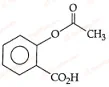
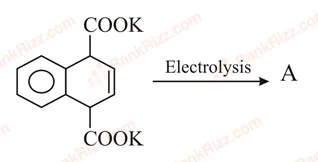
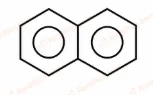
A is:
In the presence of a small amount of phosphorous, aliphatic carboxylic acid reacts with chlorine or bromine to yield a reaction in which, -hydrogen is been replaced by halogen. This reaction is known as
Etard reaction
Wolff-Kischner reaction
Rosenmund reaction
Hell-volhard-zelinsky reaction
Among the following organic acids, the acid present in rancid butter is:
Pyruvic acid
Acetic acid
Butyric acid
Lactic acid
The gas liberated by the electrolysis of Dipotassium succinate solution is:
Ethane
Ethyne
Ethene
Propene
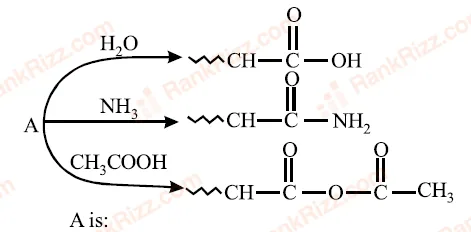
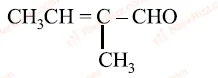
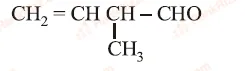
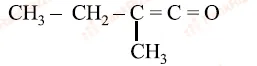
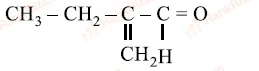
An organic compound A, CHO; reacts with HO, NH and CHCOOH as described below:
RELATED CARBOXYLIC ACIDS AND DERIVATIVES TOPICS