JEE MAIN 2021 · 25 FEB S1Molecular orbital theory of diatomic species
According to molecular orbital theory, the species among the following that does not exist is:
- A
- B
- C
- D
Molecular orbital theory of diatomic species has been asked 79 times in JEE Main, in 20 different years between 2004 and 2026, and in all of the last five exam years (2022–2026), 31 questions in all. That is 25% of Chemical Bonding and Molecular Structure, one of its three most-asked topics. Last asked in JEE Main 04 Apr 2026, Shift 2. 62 are multiple choice and 17 numerical-value; 23 easy and 41 medium by our difficulty labels. All of them are below, newest first, free to read.
Questions
79
Years asked
20
Since
2004
Of the chapter
25%
41–60 OF 79 · NEWEST FIRST
According to molecular orbital theory, the species among the following that does not exist is:
Of the species, NO, NO, NO and NO, the one with minimum bond strength is:
NO
NO
NO
NO
If the magnetic moment of a di-oxygen species is 1.73 B.M., it may be:
or
or
or
or
The bond order and the magnetic characteristic of CN are
, diamagnetic
3, diamagnetic
3, paramagnetic
, paramagnetic
During the change of O to O, the incoming electron goes to the orbital:
2p
2p
2p
2p
Among the following, the molecule expected to be stabilized by anion formation is: C, O, NO, F
F
C
O
NO
Among the following species, the diamagnetic molecule is:
CO
B
O
NO
Among the following molecules/ions, , , , , which one is diamagnetic and has the shortest bond length?
Two pi and half sigma bonds are present in:
According to molecular orbital theory, which of the following is true with respect to and ?
is stable and is unstable
Both are unstable
Both are stable
is unstable and is stable
In which of the following processes, the bond order has increased and paramagnetic character has changed to diamagnetic?
In the molecular orbital diagram for the molecular ion, N, the number of electrons in the molecular orbital is:
0
2
3
1
Which of the following best describes the diagram of molecular orbital?
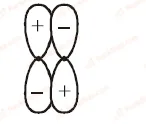
A bonding orbital
A non-bonding orbital
An antibonding orbital
An antibonding orbital
According to molecular orbital theory, which of the following molecule will not be available?
Which of the following compounds contain(s) no covalent bond(s)?
KCl, PH, O, BH, HSO
KCl, BH
KCl, BH, PH
KCl, HSO
KCl
Total number of lone pair of electrons in I ion is:
12
3
6
9
Which of the following are Lewis acids?
BCl and AlCl
PH and BCl
AlCl and CCl
PH and CCl
Which type of 'defect' has the presence of cations in the interstitial sites?
Metal deficiency defect
Schottky defect
Vacancy defect
Frenkel defect
Which of the following is paramagnetic?
CO
NO
Which of the following species is not paramagnetic?
CO
O
B
NO
RELATED CHEMICAL BONDING AND MOLECULAR STRUCTURE TOPICS