Arrange the following compounds according to increasing order of boiling points.
n-CHOH (A), n-CHNH (B), n-CH (C) and CHNHCH (D).
- A
C < B < A < D
- B
D < C < B < A
- C
C < D < B < A
- D
D < B < A < C

Hydrogen bonding and intermolecular forces has been asked 31 times in JEE Main, in 17 different years between 2006 and 2026, and in all of the last five exam years (2022–2026), 12 questions in all. That is 10% of Chemical Bonding and Molecular Structure, one of its three most-asked topics. Last asked in JEE Main 06 Apr 2026, Shift 1. 28 are multiple choice and 3 numerical-value; 19 easy and 9 medium by our difficulty labels. All of them are below, newest first, free to read.
Questions
31
Years asked
17
Since
2006
Of the chapter
10%
Questions on Hydrogen bonding and intermolecular forces in every year it was asked, newest first.
| Year | Relative frequency | Questions |
|---|---|---|
| 2026 | 1 | |
| 2025 | 1 | |
| 2024 | 5 | |
| 2023 | 3 | |
| 2022 | 2 | |
| 2021 | 2 | |
| 2020 | 6 | |
| 2019 | 2 | |
| 2018 | 1 | |
| 2017 | 1 | |
| 2016 | 1 | |
| 2015 | 1 | |
| 2014 | 1 | |
| 2013 | 1 | |
| 2012 | 1 | |
| 2007 | 1 | |
| 2006 | 1 | |
| Total | 31 |
1–20 OF 31 · NEWEST FIRST
Arrange the following compounds according to increasing order of boiling points.
n-CHOH (A), n-CHNH (B), n-CH (C) and CHNHCH (D).
C < B < A < D
D < C < B < A
C < D < B < A
D < B < A < C
Given below are two statements:
Statement I: Wet cotton clothes made of cellulose based carbohydrate takes comparatively longer time to get dried than wet nylon polymer based clothes.
Statement II: Intermolecular hydrogen bonding with water molecule is more in nylon-based clothes than in the case of cotton clothes.
In the light of above statements, choose the answer from the options given below
Statement I is false but Statement II is true
Statement I is true but Statement II is false
Both Statement I and Statement II are true
Both Statement I and Statement II are false
Number of molecules from the following which can exhibit hydrogen bonding is _______ (nearest integer):

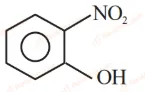
The correct statement/s about Hydrogen bonding is/are: A. Hydrogen bonding exists when H is covalently bonded to the highly electronegative atom. B. Intermolecular H bonding is present in o-nitrophenol. C. Intramolecular H bonding is present in HF. D. The magnitude of H bonding depends on the physical state of the compound. E. H-bonding has powerful effect on the structure and properties of compounds. Choose the correct answer from the options given below:
A, B, D only
A, D, E only
A only
A, B, C only
Given below are two statements: one is labelled as Assertion A and the other is labelled as Reason R. Assertion A: has lower boiling point than . Reason R: In liquid state molecules are associated through Vander Waal's forces, but molecules are associated through hydrogen bonding. In the light of the above statements, choose the most appropriate answer from the options given below:
Both A and R are correct and R is not the correct explanation of A
A is not correct but R is correct
Both A and R are correct but R is the correct explanation of A
A is correct but R is not correct
Select the compound from the following that will show intramolecular hydrogen bonding.

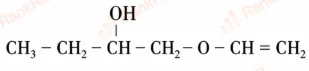
Which among the following has highest boiling point?
In an ice crystal, each water molecule is hydrogen bonded to ______ neighbouring molecules.
Decreasing order of the hydrogen bonding in following forms of water is correctly represented by
A. Liquid water
B. Ice
C. Impure water
A = B > C
B > A > C
C > B > A
A > B > C
Decreasing order of the hydrogen bonding in following forms of water is correctly represented by
A. Liquid water
B. Ice
C. Impure water
A = B > C
B > A > C
C > B > A
A > B > C
The number of hybridised carbons in an acyclic neutral compound with molecular formula is ______.
The correct order of increasing intermolecular hydrogen bond strength is
In the following sequence of reactions a compound A, (molecular formula CHO) with a straight chain structure gives a C carboxylic acid. A is:

The interaction energy of London forces between two particles is proportional to , where r is the distance between the particles. The value of x is:
6
3
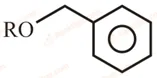
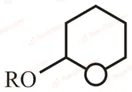
Which of the following derivatives of alcohols is unstable in an aqueous base?


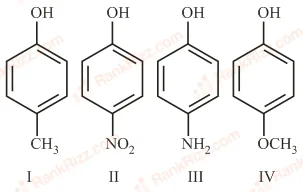
The increasing order of boiling points of the following compounds is:

I < III < IV < II
I < IV < II < III
IV < I < II < III
III < I < II < IV
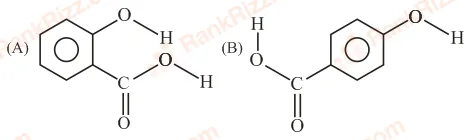
Consider the following molecules and statements related to them:
(a) (B) is more likely to be crystalline than (A)
(b) (B) has higher boiling point than (A)
(c) (B) dissolves more readily than (A) in water
Identify the correct option from below:
(a) and (b) are true
(a) and (c) are true
only (a) is true
(b) and (c) are true
Match the type of interaction in column A with the distance dependence of their interaction energy in column B:
A B
(i) ion - ion (a)
(ii) Dipole - dipole (b)
(iii) London dispersion (c)
(iv)
(i)-(b); (ii)-(d); (iii)-(c)
(i)-(a); (ii)-(b); (iii)-(d)
(i)-(a); (ii)-(b); (iii)-(c)
(i)-(a); (ii)-(c); (iii)-(d)
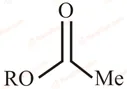
The predominant intermolecular forces present in ethyl acetate, a liquid, are:
London dispersion and dipole-dipole
hydrogen bonding and London dispersion
Dipole-dipole and hydrogen bonding
London dispersion, dipole-dipole and hydrogen bonding
The relative strength of the interionic/ intermolecular forces in a decreasing order is:
dipole-dipole > ion-dipole > ion-ion
ion-dipole > ion-ion > dipole-dipole
ion-dipole > dipole-dipole > ion-ion
ion-ion > ion-dipole > dipole-dipole
RELATED CHEMICAL BONDING AND MOLECULAR STRUCTURE TOPICS