RankRizz

de Broglie wavelength of matter waves — JEE Main Previous Year Questions

de Broglie wavelength of matter waves has been asked 82 times in JEE Main, in 14 different years between 2005 and 2026, and in all of the last five exam years (2022–2026), 40 questions in all. That is 38% of Dual Nature of Radiation & Matter, one of its three most-asked topics. Last asked in JEE Main 06 Apr 2026, Shift 2. 77 are multiple choice and 5 numerical-value; 38 easy, 41 medium and 2 hard by our difficulty labels. All of them are below, newest first, free to read.

Questions

82

Years asked

14

Since

2005

Of the chapter

38%

When JEE Main asked it

Questions on de Broglie wavelength of matter waves in every year it was asked, newest first.

JEE Main questions on de Broglie wavelength of matter waves by year, 2005–2026
YearRelative frequencyQuestions
20267
20258
20245
202311
20229
202116
20208
20196
20183
20172
20152
20142
20132
20051
Total82

Every de Broglie wavelength of matter waves question

1–20 OF 82 · NEWEST FIRST

JEE MAIN 2026 · 06 APR S2de Broglie wavelength of matter waves

The de Broglie wavelength for an electron accelerated through the potential difference of V1V_1 volt is λ1\lambda_1. When the potential difference is changed to V2V_2 volt, the associated de Broglie wavelength is increased by 50%. If (V1/V2)=(9/α)(V_1 / V_2) = (9 / \alpha), then the value of α\alpha is __________.

JEE MAIN 2026 · 05 APR S1de Broglie wavelength of matter waves

An electron of mass mm is moving in an electric field E⃗=−2Eoi^\vec{E} = -2E_o \hat{i} (EoE_o = constant > 0), with an initial velocity V⃗=voi^\vec{V} = v_o \hat{i} (vov_o = constant > 0). If λo=h4mvo\lambda_o = \frac{h}{4mv_o}, its de Broglie wavelength at time tt is _______. (ee = charge of electron)

  1. A

    4λo[1−Eoe⋅t2m⋅vo]\frac{4\lambda_o}{\left[1 - \frac{E_o e \cdot t}{2m \cdot v_o}\right]}

  2. B

    4λo[1+Eoe⋅t2m⋅vo]\frac{4\lambda_o}{\left[1 + \frac{E_o e \cdot t}{2m \cdot v_o}\right]}

  3. C

    4λo[1+2Eoe⋅tm⋅vo]\frac{4\lambda_o}{\left[1 + \frac{2E_o e \cdot t}{m \cdot v_o}\right]}

  4. D

    4λo[1−2Eoe⋅tm⋅vo]\frac{4\lambda_o}{\left[1 - \frac{2E_o e \cdot t}{m \cdot v_o}\right]}

JEE MAIN 2026 · 05 APR S2de Broglie wavelength of matter waves

An electron is travelling with a velocity vv in free space and when it enters a medium, its velocity is reduced by 20%. The de Broglie wavelength of electron in the medium is αλ0\alpha \lambda_0.where λ0\lambda_0 is its de Broglie wavelength in free space. The value of α\alpha is :

  1. A

    1.201.20

  2. B

    1.01.0

  3. C

    1.251.25

  4. D

    0.750.75

JEE MAIN 2026 · 04 APR S2de Broglie wavelength of matter waves

The de Broglie wavelength associated with an electron accelerated through a potential difference V is λe\lambda_e and the de Broglie wavelength associated with a proton accelerated through the same potential difference is λp\lambda_p. If their corresponding masses are mem_e and mpm_p, respectively, then the ratio of their de Broglie wavelengths (λeλp)\left(\frac{\lambda_e}{\lambda_p}\right) is ______.

  1. A

    mpme\sqrt{\frac{m_p}{m_e}}

  2. B

    memp\sqrt{\frac{m_e}{m_p}}

  3. C

    mpme\frac{m_p}{m_e}

  4. D

    (mpme)2\left(\frac{m_p}{m_e}\right)^2

JEE MAIN 2026 · 28 JAN S1de Broglie wavelength of matter waves

The ratio of de Broglie wavelength of a deutron with kinetic energy E to that of an alpha particle with kinetic energy 2E, is n : 1. The value of n is __.
(Assume mass of proton= mass of neutron) :

JEE MAIN 2026 · 23 JAN S1de Broglie wavelength of matter waves

The de Broglie wavelength of an oxygen molecule at 27∘C is x×10−12m27^{\circ}C\text{ is }x\times10^{-12}m. The value of x is (take Planck's constant =6.63×10⁻³⁴J.s=6.63\times10^{-34}J.s, Boltzmann constant =1.38×10⁻²³J/K=1.38\times10^{-23}J/K, mass of oxygen molecule =5.31×10⁻²⁶kg=5.31\times10^{-26}kg)

  1. A

    20

  2. B

    24

  3. C

    30

  4. D

    26

JEE MAIN 2026 · 21 JAN S2de Broglie wavelength of matter waves

A particle having electric charge 3×10−193\times 10^{-19} C and mass 6×10−276 \times 10^{-27} kg is accelerated by applying an electric Potential of 1.21 V. Wavelength of the matter wave
associated with the particle is α×10−12m\alpha \times 10^{-12}m. The value of α\alpha is __________. (Take Planck's constant = 6.6×10−346.6 \times 10^{-34} J.s. )

JEE MAIN 2025 · 08 APR S2de Broglie wavelength of matter waves

An electron is released from rest near an infinite non-conducting sheet of uniform charge density '−σ-\sigma'. The rate of change of de-Broglie wave length associated with the electron varies inversely as nthn^{th} power of time. The numerical value of n is _____.

JEE MAIN 2025 · 07 APR S2de Broglie wavelength of matter waves

A photo-emissive substance is illuminated with a radiation of wavelength λi\lambda_i so that it releases electrons with de-Broglie wavelength λe\lambda_e. The longest wavelength of radiation that can emit photoelectron is λ0\lambda_0. Expression for de-Broglie wavelength is given by : (m : mass of the electron, h : Planck's constant and c : speed of light)

  1. A

    λe=h2hmc(1λi−1λ0)\lambda_e = \frac{h}{\sqrt{2hmc\left(\frac{1}{\lambda_i} - \frac{1}{\lambda_0}\right)}}

  2. B

    λe=hλ02mc\lambda_e = \sqrt{\frac{h\lambda_0}{2mc}}

  3. C

    λe=h2hmc(1λi−1λ0)\lambda_e = \frac{h}{\sqrt{2hmc}\left(\frac{1}{\lambda_i} - \frac{1}{\lambda_0}\right)}

  4. D

    λe=hλi2mc\lambda_e = \sqrt{\frac{h\lambda_i}{2mc}}

JEE MAIN 2025 · 02 APR S2de Broglie wavelength of matter waves

An electron with mass 'm' with an initial velocity (t=0)(t = 0) v⃗=v0i^\vec{v} = v_0\hat{i} (v0>0)(v_0 \gt 0) enters a magnetic field B⃗=B0j^\vec{B} = B_0\hat{j}. If the initial de-Broglie wavelength at t=0t = 0 is λ0\lambda_0 then its value after time 't' would be :

  1. A

    λ01−e2B02t2m2\frac{\lambda_0}{\sqrt{1 - \frac{e^2 B_0^2 t^2}{m^2}}}

  2. B

    λ01+e2B02t2m2\frac{\lambda_0}{\sqrt{1 + \frac{e^2 B_0^2 t^2}{m^2}}}

  3. C

    λ01+e2B02t2m2\lambda_0\sqrt{1 + \frac{e^2 B_0^2 t^2}{m^2}}

  4. D

    λ0\lambda_0

JEE MAIN 2025 · 29 JAN S1de Broglie wavelength of matter waves

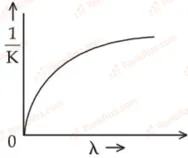
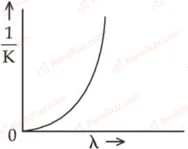
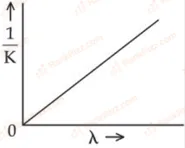
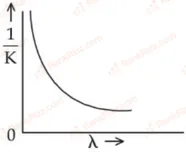
If λ\lambda and KK are de Broglie wavelength and kinetic energy, respectively, of a particle with constant mass. The correct graphical representation for the particle will be

  1. A
    Figure for JEE Main 2025 Physics question on de Broglie wavelength of matter waves
  2. B
    Figure for JEE Main 2025 Physics question on de Broglie wavelength of matter waves
  3. C
    Figure for JEE Main 2025 Physics question on de Broglie wavelength of matter waves
  4. D
    Figure for JEE Main 2025 Physics question on de Broglie wavelength of matter waves
JEE MAIN 2025 · 28 JAN S1de Broglie wavelength of matter waves

A proton of mass ′mp′'m_{p}'has same energy as that of a photon of wavelength ′λ′'\lambda'. If the proton is moving at non- relativistic speed, then ratio of its deBroglie wavelength to the wavelength of photon is.

  1. A

    1cEmp\frac{1}{c}\sqrt{\frac{E}{m_{p}}}

  2. B

    1c2Emp\frac{1}{c}\sqrt{\frac{2E}{m_{p}}}

  3. C

    12cEmp\frac{1}{2c}\sqrt{\frac{E}{m_{p}}}

  4. D

    1cE2mp\frac{1}{c}\sqrt{\frac{E}{2m_{p}}}

JEE MAIN 2025 · 24 JAN S1de Broglie wavelength of matter waves

An electron of mass mm with an initial velocity  v⃗=v0i^  (v0>0)\vec v=v_0\hat{i}\;(v_0>0) enters an electric field E⃗=−E0k^.\vec E=-E_0\hat{k}. If the initial de Broglie wavelength is  λ0,\lambda_0, the value after time tt would be:

  1. A

    λ01+e2E02t2m2v02\frac{\lambda_0}{\sqrt{1+\dfrac{e^2E_0^2t^2} {m^2v_0^2}}}

  2. B

    λ01+e2E02t2m2v02\lambda_0\sqrt{1+\dfrac{e^2E_0^2t^2}{m^2v_0^2}}

  3. C

    λ01+e2E02t2m2v02\frac{\lambda_0}{\sqrt{1+\dfrac{e^2E_0^2t^2}{m^2v_0^2}}}

  4. D

    λ0\lambda_0

JEE MAIN 2025 · 23 JAN S1de Broglie wavelength of matter waves

A sub-atomic particle of mass 10−3010^{-30}kg is moving with a velocity 2.21×1062.21\times10^{6} m/s . Under the matter wave consideration, the particle will behave closely like
(h=6.63×10⁻³⁴J.s)\left(h=6.63\times10^{-34}J.s\right)

  1. A

    Visible radiation

  2. B

    Gamma rays

  3. C

    Infra-red radiation

  4. D

    X-rays

JEE MAIN 2025 · 22 JAN S1de Broglie wavelength of matter waves

An electron in the ground state of the hydrogen atom has the orbital radius of 5.3×10⁻¹¹m5.3\times 10^{-11} m while that for the electron in third excited state is 8.48×10⁻¹⁰m.8.48\times 10^{-10}m. The ratio of the de Broglie wavelengths of electron in the excited state to that in the ground state is

  1. A

    3

  2. B

    16

  3. C

    9

  4. D

    4

JEE MAIN 2024 · 09 APR S1de Broglie wavelength of matter waves

A proton, an electron and an alpha particle have the same energies. Their de-Broglie wavelengths will be compared as :

  1. A

    λα<λp<λe\lambda_\alpha < \lambda_p < \lambda_e

  2. B

    λe>λα>λp\lambda_e > \lambda_\alpha > \lambda_p

  3. C

    λp>λe>λα\lambda_p > \lambda_e > \lambda_\alpha

  4. D

    λp<λe<λα\lambda_p < \lambda_e < \lambda_\alpha

JEE MAIN 2024 · 08 APR S1de Broglie wavelength of matter waves

A proton and an electron are associated with same de-Broglie wavelength. The ratio of their kinetic energies is: (Assume h=6.63×10⁻³⁴ J sh = 6.63 \times 10^{-34} \text{ J s}, me=9.0×10⁻³¹ kgm_e = 9.0 \times 10^{-31} \text{ kg} and mp=1836  mem_p = 1836 \; m_e)

  1. A

    1:18361 : \sqrt{1836}

  2. B

    1:118361 : \frac{1}{1836}

  3. C

    1:118361 : \frac{1}{\sqrt{1836}}

  4. D

    1:18361 : 1836

JEE MAIN 2024 · 08 APR S2de Broglie wavelength of matter waves

A proton and an electron have the same de Broglie wavelength. If KpK_p and KeK_e be the kinetic energies of proton and electron respectively, then choose the correct relation :

  1. A

    Kp>KeK_p > K_e

  2. B

    Kp<KeK_p < K_e

  3. C

    Kp=KeK_p = K_e

  4. D

    Kp=Ke2K_p = K_e^2

JEE MAIN 2024 · 01 FEB S1de Broglie wavelength of matter waves

The de Broglie wavelengths of a proton and an α\alpha particle are λ\lambda and 2λ2\lambda respectively. The ratio of the velocities of proton and α\alpha particle will be :

  1. A

    1:81 : 8

  2. B

    1:21 : 2

  3. C

    4:14 : 1

  4. D

    8:18 : 1

JEE MAIN 2024 · 29 JAN S1de Broglie wavelength of matter waves

The de-Broglie wavelength of an electron is the same as that of a photon. If velocity of electron is 25%25\% of the velocity of light, then the ratio of K.E. of electron and K.E. of photon will be:

  1. A

    11\frac{1}{1}

  2. B

    18\frac{1}{8}

  3. C

    81\frac{8}{1}

  4. D

    14\frac{1}{4}

de Broglie wavelength of matter waves: common questions

How many de Broglie wavelength of matter waves questions have come in JEE Main?
de Broglie wavelength of matter waves has been asked 82 times in JEE Main, in 14 different years between 2005 and 2026. It came up in all of the last five exam years (2022–2026), 40 questions in all.
Is de Broglie wavelength of matter waves important for JEE Main?
It is one of the three most-asked topics in Dual Nature of Radiation & Matter: 82 of the chapter's 216 JEE Main questions (38%). It came up in all of the last five exam years (2022–2026), 40 questions in all.
When was de Broglie wavelength of matter waves last asked in JEE Main?
Most recently in JEE Main 06 Apr 2026, Shift 2. Questions on this page are newest first, so the latest ones are at the top.
What kind of de Broglie wavelength of matter waves questions does JEE Main ask?
77 are multiple choice and 5 numerical-value; 38 easy, 41 medium and 2 hard by our difficulty labels. Each question shows its answer key and worked solution where we have them.