RankRizz

Laws of Motion & Friction — JEE Advanced Previous Year Questions

Laws of Motion & Friction has been asked in 11 of the 20 JEE Advanced years from 2007 to 2026: 18 questions in all. It was not set in any of the 2 2026 papers, after 3.1% of Physics questions in 2025. Across the last 20 papers it carried 1.1% of Physics questions. By type: 13 single-correct, 3 numerical and 2 multiple-correct. Of the 18 with a difficulty tag, 17% are easy, 72% medium and 11% hard. Most asked: Newton's laws, free-body diagrams and equilibrium of a particle (7, 39%), Motion on inclined planes and wedges (4, 22%) and Static and kinetic friction (4, 22%).

DATA UPDATED

Questions

18

Distinct ideas

6

Share of marks

1.1%

Difficulty

MEDIUM

Laws of Motion & Friction weightage, year by year

The share of each year’s Physics questions that came from Laws of Motion & Friction, counted from the 19 papers we hold for the last 10 years, and paper by paper inside a year.

Steady: 1.0% of Physics questions in 2024–2026 against 1.3% in 2017–2023, and between 0.0% and 3.1% in every year shown. Not asked at all in 2017, 2018, 2021, 2022, 2024, 2026.

Laws of Motion & Friction questions per year, per paper, and as a share of Physics questions
YEARQSPER PAPERSHARE OF PHYSICSCHANGE
20260 / 340.00.0%−3.1 pts
20251 / 320.53.1%+3.1 pts
20240 / 340.00.0%−2.9 pts
20231 / 340.52.9%+2.9 pts
20220 / 360.00.0%level
20210 / 380.00.0%−2.8 pts
20201 / 360.52.8%level
20191 / 360.52.8%+2.8 pts
20180 / 180.00.0%level
20170 / 360.00.0%—

“QS” is Laws of Motion & Friction questions out of all Physics questions that year; “per paper” is that count over the year’s papers, and “change” is the share against the year before. A year with more sittings asks more questions, which is why the share, not the count, is the number to compare.

The ideas inside Laws of Motion & Friction

A chapter is not one subject — it is a handful of procedures the examiner reuses. These are the ones Laws of Motion & Friction questions actually test.

01Newton's laws, free-body diagrams and equilibrium of a particleset 7×
02Connected bodies, pulleys and constraint relationsset 1×
03Spring force and spring combinations in dynamicsset 1×
04Pseudo force: lifts and accelerating framesNot set in Advanced
05Motion on inclined planes and wedgesset 4×
06Static and kinetic frictionset 4×
07Friction in multi-block systemsset 1×

All 18 Laws of Motion & Friction questions, by topic

Every JEE Advanced Laws of Motion & Friction question we hold, newest first inside each topic. Open one for its options, answer key and solution.

FREE PDF

Laws of Motion & Friction JEE Advanced PYQs with answer key

All 18 questions on A4, by topic, with the answer key at the end. No sign-up, no email: your browser saves it as a PDF.

Download free PDF

UNIQUE CONCEPTS

Laws of Motion & Friction: one question per idea

7 ideas, each with the latest past question that tested it, drawn from 167 JEE Main and Advanced questions.

Laws of Motion & Friction Unique Concepts sheet →

JEE MAIN

Laws of Motion & Friction in JEE Main

JEE Main has set 151 Laws of Motion & Friction questions, 2004–2026.

Laws of Motion & Friction JEE Main PYQs →

Laws of Motion & Friction: quick answers

Is Laws of Motion & Friction asked every year in JEE Advanced?

Not every year. It has been asked in 11 of the 20 JEE Advanced years from 2007 to 2026; it was missing in 9 of them, most recently 2026.

Which Laws of Motion & Friction topic is asked most in JEE Advanced?

Newton's laws, free-body diagrams and equilibrium of a particle: 7 of the 18 questions (39%). Next come Motion on inclined planes and wedges (4) and Static and kinetic friction (4).

What share of Physics questions does Laws of Motion & Friction carry in JEE Advanced?

About 1.1% of Physics questions across the last 20 papers. In 2026 it was 0.0% (0 of 34 Physics questions).

When was Laws of Motion & Friction last asked in JEE Advanced?

In JEE Advanced 2025 Paper 2, the latest sitting with a Laws of Motion & Friction question. It has not been set since 2025, though the bank holds JEE Advanced papers up to 2026.

How many Laws of Motion & Friction questions has JEE Advanced asked?

18 from 2007 to 2025, across 6 topics. Every one is listed on this page by topic and links to its own page, with the answer key and solution wherever we have them. Free, no sign-up.

Every Laws of Motion & Friction question

1–18 OF 18 · NEWEST FIRST

JEE ADVANCED 2025 · PAPER 2Newton's laws, free-body diagrams and equilibrium of a particle

A projectile of mass 200 g is launched in a viscous medium at an angle 60° with the horizontal, with an initial velocity of 270 m/s. It experiences a viscous drag force F⃗=−cv⃗\vec{F} = -c\vec{v} where the drag coefficient c=0.1c = 0.1 kg/s and v⃗\vec{v} is the instantaneous velocity of the projectile. The projectile hits a vertical wall after 2 s. Taking e=2.7e = 2.7, the horizontal distance of the wall from the point of projection (in m) is ______.
JEE ADVANCED 2023 · PAPER 2Newton's laws, free-body diagrams and equilibrium of a particle

A particle of mass m is moving in the xyxy-plane such that its velocity at a point (x,y)(x, y) is given as v⃗=α(yx^+2xy^)\vec{v} = \alpha(y\hat{x} + 2x\hat{y}), where α\alpha is a non-zero constant. What is the force F⃗\vec{F} acting on the particle?

  1. A

    F⃗=2mα2(xx^+yy^)\vec{F} = 2m\alpha^2(x\hat{x} + y\hat{y})

  2. B

    F⃗=mα2(yx^+2xy^)\vec{F} = m\alpha^2(y\hat{x} + 2x\hat{y})

  3. C

    F⃗=2mα2(yx^+xy^)\vec{F} = 2m\alpha^2(y\hat{x} + x\hat{y})

  4. D

    F⃗=mα2(xx^+2yy^)\vec{F} = m\alpha^2(x\hat{x} + 2y\hat{y})

JEE ADVANCED 2020 · PAPER 1Static and kinetic friction

Put a uniform meter scale horizontally on your extended index fingers with the left one at 0.00 cm and the right one at 90.00 cm. When you attempt to move both the fingers slowly towards the center, initially only the left finger slips with respect to the scale and the right finger does not. After some distance, the left finger stops and the right one starts slipping. Then the right finger stops at a distance xRx_{R} from the center (50.00 cm) of the scale and the left one starts slipping again. This happens because of the difference in the frictional forces on the two fingers. If the coefficients of static and dynamic friction between the fingers and the scale are 0.40 and 0.32, respectively, the value of xRx_{R} (in
cm) is ______.

JEE ADVANCED 2019 · PAPER 2Spring force and spring combinations in dynamics

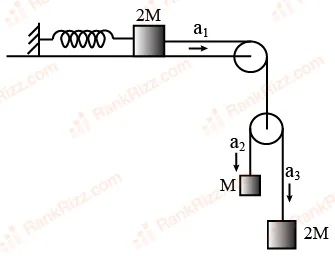
A block of mass 2M is attached to a massless spring with spring-constant k. This block is connected to two other blocks of masses M and 2M using two massless pulleys and strings. The accelerations of the blocks are a1,a2a_1, a_2 and a3a_3 as shown in the figure. The system is released from rest with the spring in its unstretched state. The maximum extension of the spring is x0x_0. Which of the following option(s) is/are correct?
[g is the acceleration due to gravity. Neglect friction]

Figure for JEE Advanced 2019 Physics question on Spring force and spring combinations in dynamics
  1. A

    x0=4Mgkx_0 = \frac{4 Mg}{k}

  2. B

    When spring achieves an extension of x02\frac{x_0}{2} for the first time, the speed of the block connected to the spring is 3gM5k3g \sqrt{\frac{M}{5k}}

  3. C

    At an extension of x04\frac{x_0}{4} of the spring, the magnitude of acceleration of the block connected to the spring is 3g10\frac{3g}{10}

  4. D

    a2−a1=a1−a3a_2 - a_1 = a_1 - a_3

JEE ADVANCED 2014 · PAPER 2Newton's laws, free-body diagrams and equilibrium of a particle

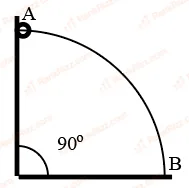
A wire, which passes through the hole in a small bead, is bent in the form of quarter of a circle. The wire is fixed vertically on ground as shown in the figure. The bead is released from near the top of the wire and it slides along the wire without friction. As the bead moves from A to B, the force it applies on the wire is

Figure for JEE Advanced 2014 Physics question on Newton's laws, free-body diagrams and equilibrium of a particle
  1. A

    always radially outwards.

  2. B

    always radially inwards

  3. C

    radially outwards initially and radially inwards later.

  4. D

    radially inwards initially and radially outwards later.

JEE ADVANCED 2014 · PAPER 2Friction in multi-block systems

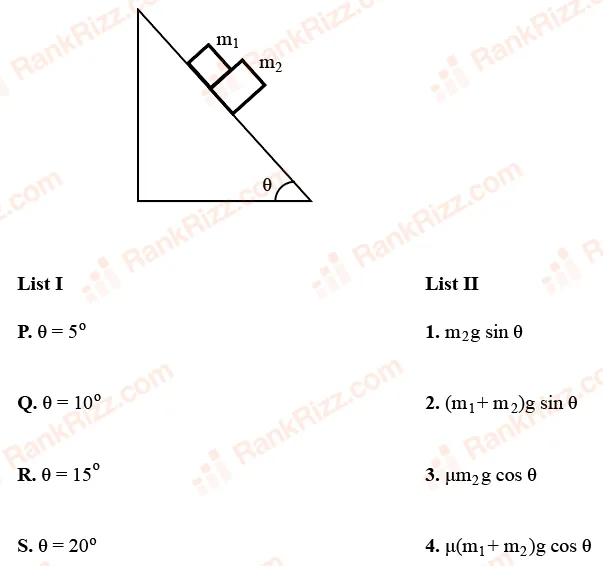
A block of mass m1=1kgm_1 = 1 kg another mass m2=2kgm_2 = 2 kg, are placed together (see figure) on an inclined plane with angle of inclination θ\theta. Various values of θ\theta are given in List I. The coefficient of friction between the block m1m_1 and the plane is always zero. The coefficient of static and dynamic friction between the block m2m_2 and the plane are equal to μ=0.3.\mu = 0.3. In List II expressions for the friction on block m2m_2 are given. Match the correct expression of the friction in List II with the angles given in List I, and choose the correct option. The acceleration due to gravity is denoted by g.
[Useful information :tan⁡(5.5∘)≈0.1;tan⁡(11.5∘)≈0.2;tan⁡(16.5∘)≈0.3]\tan (5.5^\circ) \approx 0.1; \tan(11.5^\circ) \approx 0.2; \tan(16.5^\circ) \approx 0.3]

Figure for JEE Advanced 2014 Physics question on Friction in multi-block systems

Choices:

  1. A

    P-1, Q-1, R-1, S-3

  2. B

    P-2, Q-2, R-2, S-3

  3. C

    P-2, Q-2, R-2, S-4

  4. D

    P-2, Q-2, R-3, S-3

JEE ADVANCED 2012 · PAPER 1Motion on inclined planes and wedges

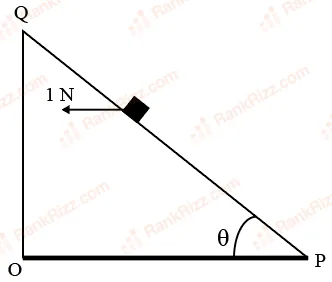
A small block of mass of 0.1 kg lies on fixed inclined plane PQ which makes an angle θ\theta with the horizontal. A horizontal force of 1 N acts on the block through its center of mass as shown in the figure. The block remains stationary if (take g = 10 m/s2m/s^2)

Figure for JEE Advanced 2012 Physics question on Motion on inclined planes and wedges
  1. A

    θ=45∘\theta = 45^\circ

  2. B

    θ>45∘\theta > 45^\circ and frictionalforce acts on the block towards P.

  3. C

    θ>45∘\theta > 45^\circ and frictional force acts on the block towards Q.

  4. D

    θ<45∘\theta < 45^\circ and frictional force acts on the block towards Q.

JEE ADVANCED 2011 · PAPER 1Newton's laws, free-body diagrams and equilibrium of a particle

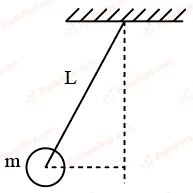
A ball of mass (m) 0.5 kg is attached to the end of a string having length (L) 0.5 m. The ball is rotated on a horizontal circular path about vertical axis. The maximum tension that the string can bear is 324 N. The maximum possible value of angular velocity of ball (in radian/s) is-

Figure for JEE Advanced 2011 Physics question on Newton's laws, free-body diagrams and equilibrium of a particle
  1. A

    9

  2. B

    18

  3. C

    27

  4. D

    36

JEE ADVANCED 2011 · PAPER 1Static and kinetic friction

A block is moving on an inclined plane making an angle 45∘45^\circ with the horizontal and the coefficient of friction is μ\mu. The force required to just push it up the inclined plane is 3 times the force required to just prevent it from sliding down. If we define N = 10 μ\mu, then N is.

JEE ADVANCED 2010 · PAPER 1Static and kinetic friction

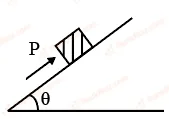
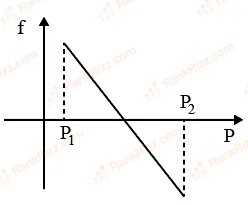
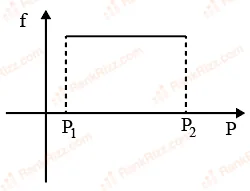
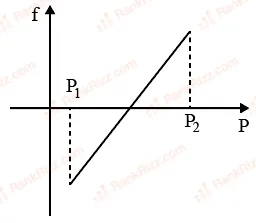
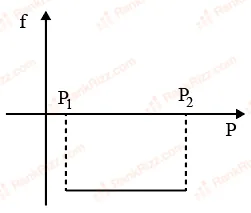
A block of mass m is on an inclined plane of angle θ\theta. The coefficient of friction between the block and the plane is μ\mu and tan⁡θ>μ\tan \theta > \mu. The block is held stationary by applying a force P parallel to the plane. The direction of force pointing up the plane is taken to be positive. As P is varied from P1=mg(sin⁡θ−μcos⁡θ)P_1 = mg(\sin \theta - \mu \cos \theta) to P2=mg(sin⁡θ+μcos⁡θ)P_2 = mg(\sin \theta + \mu \cos \theta), the frictional force f versus P graph will look like

Figure for JEE Advanced 2010 Physics question on Static and kinetic friction
  1. A
    Figure for JEE Advanced 2010 Physics question on Static and kinetic friction
  2. B
    Figure for JEE Advanced 2010 Physics question on Static and kinetic friction
  3. C
    Figure for JEE Advanced 2010 Physics question on Static and kinetic friction
  4. D
    Figure for JEE Advanced 2010 Physics question on Static and kinetic friction
JEE ADVANCED 2009 · PAPER 2Newton's laws, free-body diagrams and equilibrium of a particle

A piece of wire is bent in the shape of a parabola y=kx2y = kx^2 (y-axis vertical) with a bead of mass m onit. The bead canslide on the wire withoutfriction. It stays at the lowest point of the parabola when the wire is at rest. The wire is now accelerated parallel to the x-axis with a constant acceleration a. The distance of the new equilibrium position of the bead, where the bead can stay at rest with respect to the wire, from the y-axis is

  1. A

    agk\frac{a}{gk}

  2. B

    a2gk\frac{a}{2gk}

  3. C

    2agk\frac{2a}{gk}

  4. D

    a4gk\frac{a}{4gk}

JEE ADVANCED 2009 · PAPER 1Motion on inclined planes and wedges

A block of base 10 cm ×\times 10 cm and height 15 cm is kept on an inclined plane. The coefficient of friction between them is 3\sqrt{3}. The inclination θ\theta of this inclined plane from the horizontal plane is gradually increased from 0∘0^\circ. Then

  1. A

    at θ=30∘\theta = 30^\circ, the block will start sliding down the plane

  2. B

    the block will remain at rest on the plane up to certain θ\theta and then it will topple

  3. C

    at θ=60∘\theta = 60^\circ, the block will start sliding down the plane and continue to do so at higher angles

  4. D

    at θ=60∘\theta = 60^\circ, the block will start sliding down the plane and on further increasing θ\theta, it will topple at certain θ\theta

JEE ADVANCED 2008 · PAPER 2Static and kinetic friction

STATEMENT-1
It is easier to pull a heavy object than to pushit on a level ground.
and
STATEMENT-2
The magnitude of frictional force depends on the nature of the two surfaces in contact.

  1. A

    STATEMENT-1 is True, STATEMENT-2 is True; STATEMENT-2 is a correct explanation for STATEMENT-1

  2. B

    STATEMENT-1 is True, STATEMENT-2 is True; STATEMENT-2 is NOT a correct explanation for STATEMENT-1

  3. C

    STATEMENT-1 is True, STATEMENT-2 is False

  4. D

    STATEMENT-1 is False, STATEMENT-2 is True

JEE ADVANCED 2008 · PAPER 1Motion on inclined planes and wedges

The speed of the block at point B immediately after it strikes the second incline is

  1. A

    60\sqrt{60} m/s

  2. B

    45\sqrt{45} m/s

  3. C

    30\sqrt{30} m/s

  4. D

    15\sqrt{15} m/s

JEE ADVANCED 2008 · PAPER 1Motion on inclined planes and wedges

The speed of the block at point C, immediately before it leaves the second incline is

  1. A

    120\sqrt{120} m/s

  2. B

    105\sqrt{105} m/s

  3. C

    90\sqrt{90} m/s

  4. D

    75\sqrt{75} m/s

JEE ADVANCED 2007 · PAPER 1Connected bodies, pulleys and constraint relations

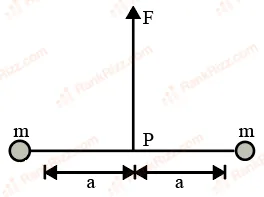
Two particles of mass m each are tied at the ends of a light string of length 2a. The whole system is kept on a frictionless horizontal surface with the string held tight so that each mass is at a distance ‘a’ from the center P (as shown in the figure). Now, the mid-point of the string is pulled vertically upwards with a small but constant force F. As a result, the particles move towards each other on the surface. The magnitude of acceleration, when the separation between them becomes 2x, is

Figure for JEE Advanced 2007 Physics question on Connected bodies, pulleys and constraint relations
  1. A

    F2maa2−x2\frac{F}{2m}\frac{a}{\sqrt{a^2 - x^2}}

  2. B

    F2mxa2−x2\frac{F}{2m}\frac{x}{\sqrt{a^2 - x^2}}

  3. C

    F2mxa\frac{F}{2m}\frac{x}{a}

  4. D

    F2ma2−x2x\frac{F}{2m}\frac{\sqrt{a^2 - x^2}}{x}

JEE ADVANCED 2007 · PAPER 2Newton's laws, free-body diagrams and equilibrium of a particle

A particle moves in the X-Y plane underthe influence of a force such that its linear momentum is p→(t)=A[i^cos⁡(kt)−j^sin⁡(kt)]\overrightarrow{p}(t) = A\left[\hat{i} \cos (kt) - \hat{j} \sin (kt)\right], where A and k are constants. The angle between the force and the momentum is

  1. A

    0∘0^\circ

  2. B

    30∘30^\circ

  3. C

    45∘45^\circ

  4. D

    90∘90^\circ

JEE ADVANCED 2007 · PAPER 2Newton's laws, free-body diagrams and equilibrium of a particle

STATEMENT-1
A cloth covers a table. Some dishes are kept on it. The cloth can be pulled out without dislodging the dishes from thetable.
because
STATEMENT-2
For every action there is an equal and opposite reaction.

  1. A

    Statement-1 is True, Statement-2 is True; Statement-2 is a correct explanation for Statement-1

  2. B

    Statement-1 is True, Statement-2 is True; Statement-2 is NOT a correct explanation for Statement-1

  3. C

    Statement-1 is True, Statement-2 is False

  4. D

    Statement-1 is False, Statement-2 is True