JEE MAIN 2023 · 13 APR S2SHM: equation, phase, velocity and acceleration
A particle executes SHM of amplitude . The distance from the mean position when its kinetic energy becomes equal to its potential energy is:
- A
- B
- C
- D
SHM: equation, phase, velocity and acceleration has been asked 78 times in JEE Main, in 18 different years between 2005 and 2026, and in all of the last five exam years (2022–2026), 41 questions in all. That is 43% of Oscillations, its most-asked topic. Last asked in JEE Main 06 Apr 2026, Shift 1. 54 are multiple choice and 24 numerical-value; 35 easy and 32 medium by our difficulty labels. All of them are below, newest first, free to read.
Questions
78
Years asked
18
Since
2005
Of the chapter
43%
21–40 OF 78 · NEWEST FIRST
A particle executes SHM of amplitude . The distance from the mean position when its kinetic energy becomes equal to its potential energy is:
A particle is executing simple harmonic motion (SHM). The ratio of potential energy and kinetic energy of the particle when its displacement is half of its amplitude will be
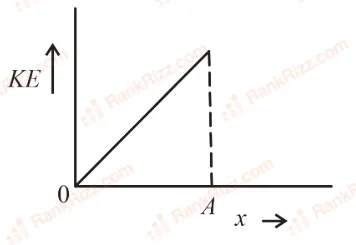
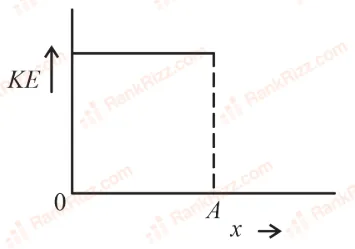
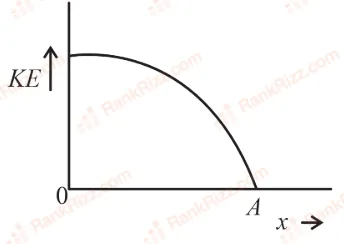
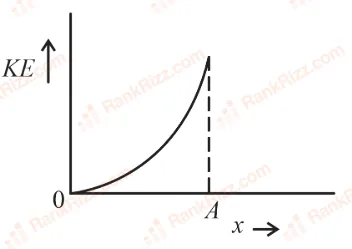
The variation of kinetic energy (KE) of a particle executing simple harmonic motion with the displacement (x) starting from mean position to extreme position (A) is given by
A particle executes S.H.M. of amplitude along -axis. At , the position of the particle is and it moves along positive -axis. The displacement of particle in time is , then the value will be
For a periodic motion represented by the equation the amplitude of the motion is
1
0.5
2
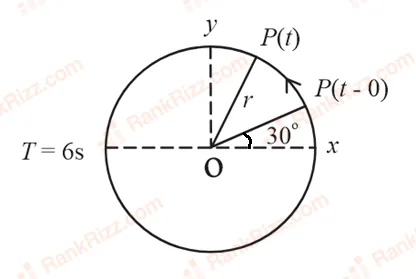
For particle revolving round the centre with radius of circular path and angular velocity , as shown in below figure, the projection of on the -axis at time is
A simple pendulum with length 100 cm and bob of mass 250 g is executing S.H.M of amplitude 10 cm. The maximum tension in the string is found to be N. The value of is ______.
The amplitude of a particle executing SHM is 3 cm. The displacement at which its kinetic energy will be 25% more than the potential energy is: _____ cm.
The maximum potential energy of a block executing simple harmonic motion is 25 J. A is amplitude of oscillation. At , the kinetic energy of the block is
37.5 J
9.75 J
18.75 J
12.5 J
The general displacement of a simple harmonic oscillator is . Let be its time period. The slope of its potential energy - time curve will be maximum when . The value of is ______.
The velocity of a particle executing SHM varies with displacement as . The time period of oscillations is s. The value of is ______. [Take ]
A particle of mass g executes a simple harmonic motion under a periodic force N. The particle attains a maximum speed of m s during its oscillation. The amplitude of the motion is ______ cm.
A particle executes simple harmonic motion between and . If time taken by particle to go from to is 2 s; then time taken by particle in going from to is:
3 s
2 s
1.5 s
4 s
A mass , attached to free end of a spring executes SHM with a period of 1 s. If the mass is increased by 3 kg, the period of oscillation increases by one second. The value of mass is _____ kg.
When a particle executes simple Harmonic motion, the nature of graph of velocity as function of displacement will be
Circular
Elliptical
Sinusoidal
Straight line
A body is performing simple harmonic with an amplitude of 10 cm. The velocity of the body was tripled by air Jet when it is at 5 cm from its mean position. The new amplitude of vibration is cm. The value of is ______.
The motion of a simple pendulum executing S.H.M. is represented by the following equation , where time is measured in second. The length of pendulum is
97.23 cm
25.3 cm
99.4 cm
406.1 cm
Motion of a particle in plane is described by a set of following equations m and m. The path of the particle will be
circular
helical
parabolic
elliptical
The displacement of simple harmonic oscillator after seconds starting from its mean position is equal to half of its amplitude. The time period of harmonic motion is
s
s
s
s
The equation of a particle executing simple harmonic motion is given by m. At s, the speed of particle will be (Given: )
cm s
cm s
cm s
cm s