JEE MAIN 2020 · 08 JAN S2Quantitative estimation of elements
Kjeldahl's method cannot be used to estimate nitrogen for which of the following compounds?
- A
CHNH
- B
CHCH-CN
- C
CHNO
- D
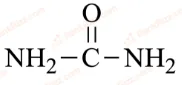
Quantitative estimation of elements has been asked 75 times in JEE Main, in 15 different years between 2004 and 2026, and in all of the last five exam years (2022–2026), 46 questions in all. That is 50% of Purification and Characterisation of Organic Compounds, its most-asked topic. Last asked in JEE Main 05 Apr 2026, Shift 1. 48 are multiple choice and 27 numerical-value; 42 easy, 29 medium and 1 hard by our difficulty labels. All of them are below, newest first, free to read.
Questions
75
Years asked
15
Since
2004
Of the chapter
50%
61–75 OF 75 · NEWEST FIRST
Kjeldahl's method cannot be used to estimate nitrogen for which of the following compounds?
CHNH
CHCH-CN
CHNO
An organic compound 'A' is oxidized with NaO followed by boiling with HNO. The resultant solution is then treated with ammonium molybdate to yield a yellow precipitate. Based on above observation, the element present in the given compound is:
Fluorine
Phosphorus
Nitrogen
Sulphur
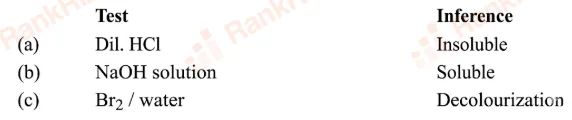
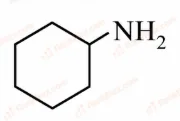
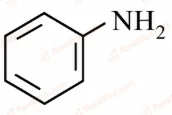
The organic compound that gives following qualitative analysis is:
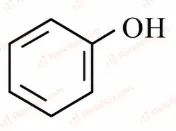
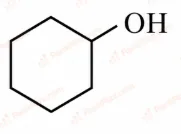
The correct match between item I and item II is:
Item I (Compound) Item II (Reagent)
a. Lysine p. 1-naphthol
b. Furfural q. Ninhydrin
c. Benzyl alcohol r. KMnO
d. Styrene s. Ceric ammonium nitrate
a q, b r, c s, d p
a q, b p, c s, d r
a r, b p, c q, d s
a q, b p, c r, d s
The correct match between column-I and column-II is:
Column-I (drug) Column-II (test)
(A) Chloroxylenol (P) Carbylamine test
(B) Norethindrone (Q) Sodium hydrogen carbonate test
(C) Sulphapyridine (R) Ferric chloride test
(D) Penicillin (S) Baeyer's test
A R, B P, C S, D Q
A Q, B S, C P, D R
A Q, B P, C S, D R
A R, B S, C P, D Q
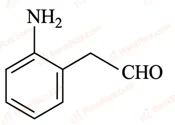
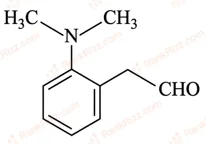
The test performed on compound x and their inferences are:
Test Inference
(a) 2,4-DNP test Coloured precipitate yellow
(b) Iodoform test Yellow precipitate
(c) Azo-dye test No dye formation
Compound 'x' is:
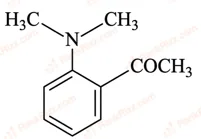
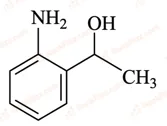
Sodium extract is heated with concentrated before testing for halogens because:
and AgCN are soluble in acidic medium.
Silver halides are totally insoluble in nitric acid.
and , if present, are decomposed by conc. and hence do not interfere in the test.
Ag reacts faster with halides in acidic medium
Match the organic compounds in column - I with the Lassaigne's test result in column - II appropriately:
Column - I Column - II
A. Aniline i. Red colour with FeCl
B. Benzene sulfonic acid ii. Violet color with sodium nitroprusside
C. Thiourea iii. Blue color with acidic solution of FeSO
A - ii; B - iii; C - i
A - iii; B - ii; C - i
A - ii; B - i; C - iii
A - iii; B - i; C - ii
1.4 g of an organic compound was digested according to Kjeldahl's method and the ammonia evolved was absorbed in 60 mL of M/10 solution. The excess sulphuric acid required 20 mL of M/10 NaOH solution for neutralization. The percentage of nitrogen in the compound is:
24
3
5
10
For the estimation of nitrogen, 1.4 g of an organic compound was digested by the Kjeldahl method and the evolved ammonia was absorbed in 60 ml of sulphuric acid. The unreacted acid required 20 ml of sodium hydroxide for complete neutralization. The percentage of nitrogen in the compound is:
6%
10%
3%
5%
For which of the following compounds Kjeldahl method can be used to determine the percentage of Nitrogen?
Nitrobenzene
Pyridine
Alanine
Diazomethane
Which of the following compounds is not expected to show Lassaignes' test for nitrogen?
Propanenitrile
Hydroxylamine hydrochloride
Nitromethane
Ethanamine
mg of an organic compound containing nitrogen was digested according to Kjeldahl's method and the evolved ammonia was absorbed in mL of M HCl solution. The excess of the acid required mL of M NaOH solution for complete neutralization. The percentage of nitrogen in the compound is
59.0
47.4
23.7
29.5
In Kjeldahl's method for the estimation of nitrogen, of an organic compound was digested with concentrated and the mixture was then distilled with an excess of . The ammonia gas evolved was completely absorbed in of .
The residual unreacted acid required of for complete neutralization.
Calculate the percentage by mass of nitrogen in the organic compound.
(Round off to the nearest integer)
31
20
25
36
The ammonia evolved from the treatment of g of an organic compound for the estimation of nitrogen was passed in mL of M sulphuric acid. The excess of acid required mL of M sodium hydroxide solution for complete neutralization. The organic compound is
acetamide
thiourea
urea
benzamide
RELATED PURIFICATION AND CHARACTERISATION OF ORGANIC COMPOUNDS TOPICS