RankRizz

Group 14: trends and carbon allotropes — JEE Main Previous Year Questions

Group 14: trends and carbon allotropes has been asked 36 times in JEE Main, in 14 different years between 2004 and 2026, and in all of the last five exam years (2022–2026), 12 questions in all. That is 39% of p-Block Elements: Groups 13 and 14, one of its three most-asked topics. Last asked in JEE Main 24 Jan 2026, Shift 2. 35 are multiple choice and 1 numerical-value; 26 easy and 8 medium by our difficulty labels. All of them are below, newest first, free to read.

Questions

36

Years asked

14

Since

2004

Of the chapter

39%

When JEE Main asked it

Questions on Group 14: trends and carbon allotropes in every year it was asked, newest first.

JEE Main questions on Group 14: trends and carbon allotropes by year, 2004–2026
YearRelative frequencyQuestions
20262
20253
20243
20232
20222
20213
20201
201910
20182
20162
20142
20132
20071
20041
Total36

Every Group 14: trends and carbon allotropes question

1–20 OF 36 · NEWEST FIRST

JEE MAIN 2026 · 24 JAN S2Group 14: trends and carbon allotropes

Choose the INCORRECT statement

  1. A

    Carbon cannot exceed its covalency more than four.

  2. B

    Carbon exhibits negative oxidation states along with +4 and +2.

  3. C

    Among the isotopes of carbon, 13C^{13}C is a radioactive isotope.

  4. D

    CO2CO_{2} is the most acidic oxide among the dioxides of group of 14 elements.
JEE MAIN 2026 · 23 JAN S2Group 14: trends and carbon allotropes

It is noticed that Pb2+Pb^{2+} is more stable than Pb4+Pb^{4+} but Sn2+Sn^{2+} is less stable than Sn4+Sn^{4+}
Observe the following reactions.

PbO2+Pb→2PbO;△rGo(1)PbO_2+Pb\rightarrow 2PbO;\triangle_rG^{o}(1)
SnO2+Sn→2SnO;△rGo(2)SnO_2+Sn\rightarrow 2SnO;\triangle_rG^{o}(2)

Identify the correct set from the following

  1. A

    △rGo(1)>0;△rGo(2)<0\triangle_r G^{o}(1) \gt 0; \triangle_r G^{o}(2) \lt 0

  2. B

    △rGo(1)<0;△rGo(2)>0\triangle_r G^{o}(1) \lt 0; \triangle_r G^{o}(2) \gt 0

  3. C

    △rGo(1)>0;△rGo(2)>0\triangle_r G^{o}(1) \gt 0; \triangle_r G^{o}(2) \gt 0

  4. D

    △rGo(1)<0;△rGo(2)<0\triangle_r G^{o}(1) \lt 0; \triangle_r G^{o}(2) \lt 0

JEE MAIN 2025 · 07 APR S1Group 14: trends and carbon allotropes

The group 14 elements A and B have the first ionisation enthalpy values of 708 and 715 kJ mol−1^{-1} respectively. The above values are lowest among their group members. The nature of their ions A2+A^{2+} B4+B^{4+} respectively is

  1. A

    both reducing

  2. B

    both oxidising

  3. C

    reducing and oxidising

  4. D

    oxidising and reducing

JEE MAIN 2025 · 04 APR S2Group 14: trends and carbon allotropes

Given below are two statements :
Statement (I) : The first ionisation enthalpy of group 14 elements is higher than the corresponding elements of group 13.
Statement (II) : Melting points and boiling points of group 13 elements are in general much higher than those the corresponding elements of group 14.
In the light of the above statements, choose the most appropriate answer from the options given below :

  1. A

    Statement I is correct but Statement II is incorrect

  2. B

    Statement I is incorrect but Statement II is correct

  3. C

    Both Statement I and Statement II are incorrect

  4. D

    Both Statement I and Statement II are correct

JEE MAIN 2025 · 23 JAN S2Group 14: trends and carbon allotropes

Given below are the atomic numbers of some group 14 elements. The atomic number of the element with lowest melting point is :

  1. A

    6

  2. B

    82

  3. C

    14

  4. D

    50

JEE MAIN 2024 · 06 APR S2Group 14: trends and carbon allotropes

Evaluate the following statements related to group 14 elements for their correctness. (A) Covalent radius decreases down the group from C to Pb in a regular manner. (B) Electronegativity decreases from C to Pb down the group gradually. (C) Maximum covalance of C is 4 whereas other elements can expand their covalance due to presence of d orbitals. (D) Heavier elements do not form pπ−pπp\pi - p\pi bonds. (E) Carbon can exhibit negative oxidation states. Choose the correct answer from the options given below :

  1. A

    (A), (B) and (C) Only

  2. B

    (C), (D) and (E) Only

  3. C

    (C) and (D) Only

  4. D

    (A) and (B) Only

JEE MAIN 2024 · 01 FEB S2Group 14: trends and carbon allotropes

Given below are two statements:
Statement (I): SiO2SiO_2 and GeO2GeO_2 are acidic while SnO and PbO are amphoteric in nature.
Statement (II): Allotropic forms of carbon are due to property of catenation and pπ−dπp\pi - d\pi bond formation.
In the light of the above statements, choose the most appropriate answer from the options given below:

  1. A

    Both Statement I and Statement II are false

  2. B

    Both Statement I and Statement II are true

  3. C

    Statement I is true but Statement II is false

  4. D

    Statement I is true but Statement II is true

JEE MAIN 2024 · 31 JAN S1Group 14: trends and carbon allotropes

Consider the oxides of group 14 elements SiO2,GeO2,SnO2,PbO2,COSiO_2, GeO_2, SnO_2, PbO_2, CO and GeOGeO. The amphoteric oxides are

  1. A

    GeO,GeO2GeO, GeO_2

  2. B

    SiO2,GeO2SiO_2, GeO_2

  3. C

    SnO2,PbO2SnO_2, PbO_2

  4. D

    SnO2,COSnO_2, CO

JEE MAIN 2023 · 01 FEB S2Group 14: trends and carbon allotropes

The correct order of bond enthalpy (kJ mol−1^{-1}) is:

  1. A

    Si −- Si >> C −- C >> Sn −- Sn >> Ge −- Ge

  2. B

    Si −- Si >> C −- C >> Ge −- Ge >> Sn −- Sn

  3. C

    C −- C >> Si −- Si >> Sn −- Sn >> Ge −- Ge

  4. D

    C −- C >> Si −- Si >> Ge −- Ge >> Sn −- Sn

JEE MAIN 2023 · 25 JAN S2Group 14: trends and carbon allotropes

Given below are two statements,one is labelled as Assertion A and the other is labelled as Reason R
Assertion A: Carbon forms two important oxides CO and CO2_2. CO is neutral whereas CO2_2 is acidic in nature.
Reason R: CO2_2 can combine with water in a limited way to form carbonic acid, while CO is sparingly soluble in water.
In the light of the above statements, choose the most appropriate answer from the options given below :-

  1. A

    Both A and R are correct but R is NOT the correct explanation of A.

  2. B

    Both A and R are correct and R is the correct explanation of A.

  3. C

    A is not correct but R is correct.

  4. D

    A is correct but R is not correct.

JEE MAIN 2022 · 29 JUL S2Group 14: trends and carbon allotropes

Given below are two statements.
Statement I: Stannane is an example of a molecular hydride.
Statement II: Stannane is a planar molecule.
In the light of the above statement, choose the most appropriate answer from the options given below

  1. A

    Both Statement I and Statement II are true

  2. B

    Both Statement I and Statement II are false

  3. C

    Statement I is true but Statement II is false

  4. D

    Statement I is false but Statement II is true

JEE MAIN 2022 · 27 JUN S1Group 14: trends and carbon allotropes

Match List - I with List - II.

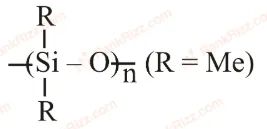
List-I (Si-Compounds)List-II (Si-Polymeric/Other Products)
A (CH3)4Si(CH_3)_4SiI Chain Silicone
B (CH3)Si(OH)3(CH_3)Si(OH)_3II Dimeric Silicone
C (CH3)2Si(OH)2(CH_3)_2Si(OH)_2III Silane
D (CH3)3Si(OH)(CH_3)_3Si(OH)IV 2D-Silicone

Choose the correct answer from the options given below

  1. A

    A-(III), B-(II), C-(I), D-(IV)

  2. B

    A-(IV), B-(I), C-(II), D-(III)

  3. C

    A-(II), B-(I), C-(IV), D-(III)

  4. D

    A-(III), B-(IV), C-(I), D-(II)

JEE MAIN 2021 · 25 JUL S1Group 14: trends and carbon allotropes

Which one of the following compounds of Group-14 elements is not known?

  1. A

    GeCl62−_6^{2-}

  2. B

    SnOH62−_6^{2-}

  3. C

    SiCl62−_6^{2-}

  4. D

    SiF62−_6^{2-}

JEE MAIN 2021 · 16 MAR S2Group 14: trends and carbon allotropes

The INCORRECT statement regarding the structure of C60C_{60} is:

  1. A

    The six-membered rings are fused to both six and five-membered rings.

  2. B

    Each carbon atom forms three sigma bonds.

  3. C

    The five-membered rings are fused only to six-membered rings.

  4. D

    It contains 12 six-membered rings and 24 five-membered rings.

JEE MAIN 2021 · 25 FEB S1Group 14: trends and carbon allotropes

Among the following, the number of halide(s) which is/are inert to hydrolysis is ______
(A) BF3BF_3
(B) SiCl4SiCl_4
(C) PCl5PCl_5
(D) SF6SF_6

JEE MAIN 2020 · 09 JAN S1Group 14: trends and carbon allotropes

'X' melts at low temperature and is a bad conductor of electricity in both liquid and solid state. X is:

  1. A

    zinc sulphide

  2. B

    Mercury

  3. C

    Silicon carbide

  4. D

    Carbon tetrachloride

JEE MAIN 2019 · 12 APR S1Group 14: trends and carbon allotropes

The basic structural unit of feldspar, zeolites, mica, and asbestos is:

  1. A

    SiO44−_4^{4-}

  2. B
    Figure for JEE Main 2019 Chemistry question on Group 14: trends and carbon allotropes
  3. C

    SiO32−_3^{2-}

  4. D

    SiO2_2

JEE MAIN 2019 · 12 APR S2Group 14: trends and carbon allotropes

The C - C bond length is maximum in:

  1. A

    C70_{70}

  2. B

    C60_{60}

  3. C

    graphite

  4. D

    diamond

JEE MAIN 2019 · 10 APR S1Group 14: trends and carbon allotropes

The correct order of catenation is:

  1. A

    Ge > Sn > Si > C

  2. B

    C > Sn > Si ≈ Ge

  3. C

    C > Si > Ge ≈ Sn

  4. D

    Si > Sn > C > Ge

JEE MAIN 2019 · 09 APR S1Group 14: trends and carbon allotropes

C60_{60}, an allotrope of carbon contains:

  1. A

    12 hexagons and 20 pentagons.

  2. B

    16 hexagons and 16 pentagons.

  3. C

    18 hexagons and 14 pentagons.

  4. D

    20 hexagons and 12 pentagons.

Group 14: trends and carbon allotropes: common questions

How many Group 14 questions have come in JEE Main?
Group 14 has been asked 36 times in JEE Main, in 14 different years between 2004 and 2026. It came up in all of the last five exam years (2022–2026), 12 questions in all.
Is Group 14 important for JEE Main?
It is one of the three most-asked topics in p-Block Elements: Groups 13 and 14: 36 of the chapter's 92 JEE Main questions (39%). It came up in all of the last five exam years (2022–2026), 12 questions in all.
When was Group 14 last asked in JEE Main?
Most recently in JEE Main 24 Jan 2026, Shift 2. Questions on this page are newest first, so the latest ones are at the top.
What kind of Group 14 questions does JEE Main ask?
35 are multiple choice and 1 numerical-value; 26 easy and 8 medium by our difficulty labels. Each question shows its answer key and worked solution where we have them.