JEE MAIN 2019 · 10 JAN S1Electrophilic addition to alkenes
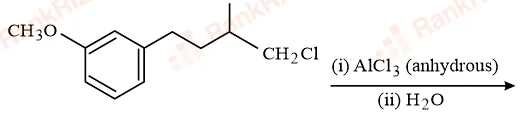
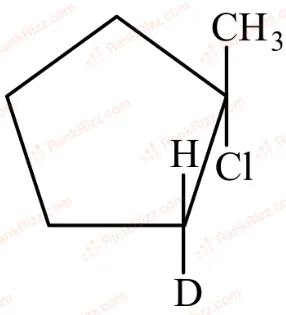
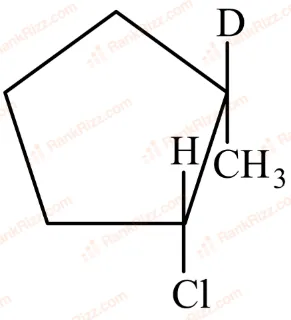
The major product of the following reaction is:
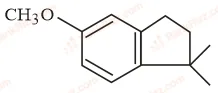
- A
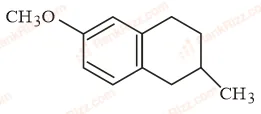
- B
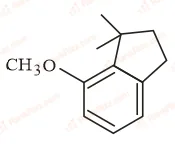
- C
- D
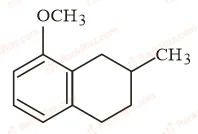
Electrophilic addition to alkenes has been asked 68 times in JEE Main, in 14 different years between 2005 and 2026, and in all of the last five exam years (2022–2026), 39 questions in all. That is 34% of Hydrocarbons, its most-asked topic. Last asked in JEE Main 28 Jan 2026, Shift 1. 58 are multiple choice and 10 numerical-value; 3 easy, 60 medium and 2 hard by our difficulty labels. All of them are below, newest first, free to read.
Questions
68
Years asked
14
Since
2005
Of the chapter
34%
61–68 OF 68 · NEWEST FIRST
The major product of the following reaction is:
The reaction of propene with HOCl () proceeds through the intermediate:
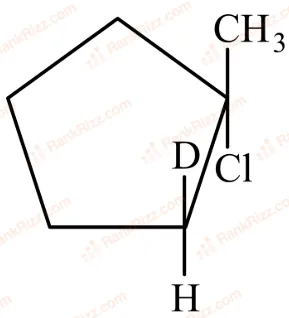
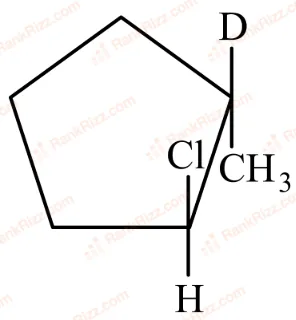
What is the major product expected from the following reaction?
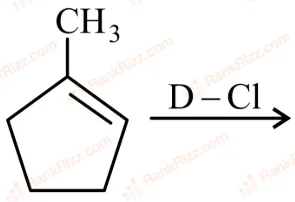
Where D is an isotope of hydrogen.
In the presence of peroxide, HCl and HI do not give anti-Markownikoff's addition of alkenes because:
One of the steps is endothermic in HCl and HI
Both HCl and HI are strong acids
HCl is oxidizing and the HI is reducing
All the steps are exothermic is HCl and HI
The addition of HI in the presence of peroxide catalyst does not follow anti-Markovnikov's rule because :
HI is a strong reducing agent.
H-I bond is too strong to be broken homolytically.
I atom combines with H atom to give back HI.
Iodine atom is not reactive enough to add across a double bond.
HBr reacts with under anhydrous conditions at room temperature to give
and
and
Reaction of one molecule of HBr with one molecule of 1,3-butadiene at C gives predominantly
3-bromobutene under kinetically controlled conditions
1-bromo-2-butene under thermodynamically controlled conditions
3-bromobutene under thermodynamically controlled conditions
1-bromo-2-butene under kinetically controlled conditions
Acid catalyzed hydration of alkenes except ethene leads to the formation of
primary alcohol
secondary or tertiary alcohol
mixture of primary and secondary alcohols
mixture of secondary and tertiary alcohols