RankRizz

Bond enthalpy, atomisation, phase-change and solution enthalpies — JEE Main Previous Year Questions

Bond enthalpy, atomisation, phase-change and solution enthalpies has been asked 12 times in JEE Main, in 9 different years between 2005 and 2026, and in 2 of the last five exam years (2022–2026), 3 questions in all. That is 5% of Chemical Thermodynamics. Last asked in JEE Main 22 Jan 2026, Shift 2. 8 are multiple choice and 4 numerical-value; 1 easy and 6 medium by our difficulty labels. All of them are below, newest first, free to read.

Questions

12

Years asked

9

Since

2005

Of the chapter

5%

When JEE Main asked it

Questions on Bond enthalpy, atomisation, phase-change and solution enthalpies in every year it was asked, newest first.

JEE Main questions on Bond enthalpy, atomisation, phase-change and solution enthalpies by year, 2005–2026
YearRelative frequencyQuestions
20261
20252
20212
20151
20131
20101
20081
20062
20051
Total12

Every Bond enthalpy, atomisation, phase-change and solution enthalpies question

1–12 OF 12 · NEWEST FIRST

JEE MAIN 2026 · 22 JAN S2Bond enthalpy, atomisation, phase-change and solution enthalpies

If the enthalpy of sublimation of Li is 155 kJ mol−1mol^{-1}, enthalpy of dissociation of F2F_{2} is 150 kJ mol−1mol^{-1}, ionization enthalpy of Li is 520 kJ mol−1mol^{-1}, electron gain enthalpy of F is - 313 kJ mol−1mol^{-1}, standard enthalpy of formation of LiF is - 594 kJ mol−1mol^{-1}. The magnitude of lattice enthalpy of LiF is _________ kJ mol−1mol^{-1}. (Nearest Integer)

JEE MAIN 2025 · 08 APR S2Bond enthalpy, atomisation, phase-change and solution enthalpies

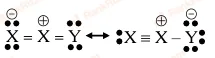
Resonance in X2YX_2Y can be represented as 

Figure for JEE Main 2025 Chemistry question on Bond enthalpy, atomisation, phase-change and solution enthalpies

The enthalpy of formation of X_2Y\left( X\equiv X(g)+\frac{1}{2}Y=Y(g)\rightarrow X_2 Y(g)\right) is 80 kJ mol−1^{-1}. The magnitude of resonance energy of X2YX_2Y is _____ kJ mol−1^{-1}  (nearest integer value). Given: Bond energies of X≡XX \equiv X, X=XX = X, Y=YY = Y and X=YX = Y are 940, 410, 500 and 602 kJ mol−1^{-1} respectively.
valence X : 3, Y : 2

JEE MAIN 2025 · 07 APR S2Bond enthalpy, atomisation, phase-change and solution enthalpies

The hydration energies of K+K^+ and Cl−Cl^- are −x-x and −y-y kJ/mol respectively. If lattice energy of KCl is −z-z kJ/mol, then the heat of solution of KCl is :

  1. A

    +x−y−z+x - y - z

  2. B

    x+y+zx + y + z

  3. C

    z−(x+y)z - (x + y)

  4. D

    −z−(x+y)-z - (x + y)

JEE MAIN 2021 · 26 FEB S2Bond enthalpy, atomisation, phase-change and solution enthalpies

The average S - F bond energy in kJ mol−1^{-1} of SF6SF_6 is ______. (Rounded off to the nearest integer)
[Given: The values of standard enthalpy of formation of SF6(g)SF_6(g), S(g)S(g) and F(g)F(g) are −1100-1100, 275 and 80 kJ mol−1^{-1} respectively.]

JEE MAIN 2021 · 25 FEB S1Bond enthalpy, atomisation, phase-change and solution enthalpies

The ionization enthalpy of Na+^+ formation from Na(g)Na_{(g)} is 495.8 kJ mol−1^{-1}, while the electron gain enthalpy of Br is −325.0-325.0 kJ mol−1^{-1}. Given the lattice enthalpy of NaBr is −728.4-728.4 kJ mol−1^{-1}. The energy for the formation of NaBr ionic solid is (−)‾×10−1(-) \underline{\hspace{1cm}} \times 10^{-1} kJ mol−1^{-1}

JEE MAIN 2015 · 10 APR ONLINEBond enthalpy, atomisation, phase-change and solution enthalpies

The heat of atomization of methane and ethane are 360 kJ mol−1^{-1} and 620 kJ mol−1^{-1}, respectively. The longest wavelength of light capable of breaking the C - C bond is (Avogadro's number = 6.023×10236.023 \times 10^{23}, h = 6.62×10−346.62 \times 10^{-34} J s)

  1. A

    2.48×1042.48 \times 10^4 nm

  2. B

    1.49×1041.49 \times 10^4 nm

  3. C

    2.48×1032.48 \times 10^3 nm

  4. D

    1.49×1031.49 \times 10^3 nm

JEE MAIN 2013 · 25 APR ONLINEBond enthalpy, atomisation, phase-change and solution enthalpies

Given that: (i) ΔfH°\Delta_f H° of N2ON_2O is 82 kJ mol−1^{-1} (ii) Bond energies of N≡NN \equiv N, N=NN = N, O=OO = O and N=ON = O are 946, 418, 498 and 607 kJ mol−1^{-1} respectively. The resonance energy of N2ON_2O is :

  1. A

    -88 kJ

  2. B

    -66 kJ

  3. C

    -62 kJ

  4. D

    -44 kJ

JEE MAIN 2010Bond enthalpy, atomisation, phase-change and solution enthalpies

The standard enthalpy of formation of NH3\text{NH}_3 is −46.0-46.0 kJ mol−1^{-1}. If the enthalpy of formation of H2\text{H}_2 from its atoms is −436-436 kJ mol−1^{-1} and that of N2\text{N}_2 is −712-712 kJ mol−1^{-1}, the average bond enthalpy of N−-H bond in NH3\text{NH}_3 is

  1. A

    −964-964 kJ mol−1^{-1}

  2. B

    +352+352 kJ mol−1^{-1}

  3. C

    +1056+1056 kJ mol−1^{-1}

  4. D

    −1102-1102 kJ mol−1^{-1}

JEE MAIN 2008Bond enthalpy, atomisation, phase-change and solution enthalpies

Oxidising power of chlorine in aqueous solution can be determined by the parameters indicated below: 12Cl2(g)→12ΔdissH⊖Cl(g)→ΔegH⊖Cl−(g)→ΔhydH⊖Cl−(aq).\frac{1}{2}Cl_2(g) \xrightarrow{\frac{1}{2}\Delta_{diss}H^{\ominus}} Cl(g) \xrightarrow{\Delta_{eg}H^{\ominus}} Cl^{-}(g) \xrightarrow{\Delta_{hyd}H^{\ominus}} Cl^{-}(aq).TheenergyinvolvedintheconversionofThe energy involved in the conversion of12Cl2(g)\frac{1}{2}Cl_2(g)totoCl−(g)Cl^{-}(g)(usingthedata,(using the data,ΔdissHCl2⊖=240 kJ mol−1, ΔegHCl⊖=−349 kJ mol−1, ΔhydHCl−⊖=−381 kJ mol−1\Delta_{diss}H^{\ominus}_{Cl_2} = 240\ kJ\ mol^{-1},\ \Delta_{eg}H^{\ominus}_{Cl} = -349\ kJ\ mol^{-1},\ \Delta_{hyd}H^{\ominus}_{Cl^{-}} = -381\ kJ\ mol^{-1}$) will be

  1. A

    +152 kJ mol−1+152\ kJ\ mol^{-1}

  2. B

    −610 kJ mol−1-610\ kJ\ mol^{-1}

  3. C

    −850 kJ mol−1-850\ kJ\ mol^{-1}

  4. D

    +120 kJ mol−1+120\ kJ\ mol^{-1}

JEE MAIN 2006Bond enthalpy, atomisation, phase-change and solution enthalpies

The standard enthalpy of formation (ΔfH∘)(\Delta_fH^\circ) at 298 K298\,K for methane, CH4(g)CH_4(g), is −74.8 kJ mol−1-74.8\,kJ\,mol^{-1}. The additional information required to determine the average energy for C−HC - H bond formation would be

  1. A

    the dissociation energy of H2H_2 and enthalpy of sublimation of carbon

  2. B

    latent heat of vapourization of methane

  3. C

    the first four ionization energies of carbon and electron gain enthalpy of hydrogen

  4. D

    the dissociation energy of hydrogen molecule, H2H_2

JEE MAIN 2006Bond enthalpy, atomisation, phase-change and solution enthalpies

The enthalpy changes for the following processes are listed below: Cl2(g)=2Cl(g), 242.3 kJ mol−1Cl_2(g) = 2Cl(g),\ 242.3\,kJ\,mol^{-1}; I2(g)=2I(g), 151.0 kJ mol−1I_2(g) = 2I(g),\ 151.0\,kJ\,mol^{-1}; ICl(g)=I(g)+Cl(g), 211.3 kJ mol−1ICl(g) = I(g) + Cl(g),\ 211.3\,kJ\,mol^{-1}; I2(s)=I2(g), 62.76 kJ mol−1I_2(s) = I_2(g),\ 62.76\,kJ\,mol^{-1}. Given that the standard states for iodine and chlorine are I2(s)I_2(s) and Cl2(g)Cl_2(g), the standard enthalpy of formation for ICl(g)ICl(g) is

  1. A

    −14.6 kJ mol−1-14.6\,kJ\,mol^{-1}

  2. B

    −16.8 kJ mol−1-16.8\,kJ\,mol^{-1}

  3. C

    +16.8 kJ mol−1+16.8\,kJ\,mol^{-1}

  4. D

    +244.8 kJ mol−1+244.8\,kJ\,mol^{-1}

JEE MAIN 2005Bond enthalpy, atomisation, phase-change and solution enthalpies

If the bond dissociation energies of XYXY, X2X_2 and Y2Y_2 (all diatomic molecules) are in the ratio of 1:1:0.51 : 1 : 0.5 and ΔfH\Delta_f H for the formation of XYXY is −200-200 kJ mole−1^{-1}. The bond dissociation energy of X2X_2 will be

  1. A

    100100 kJ mol−1^{-1}

  2. B

    200200 kJ mol−1^{-1}

  3. C

    300300 kJ mol−1^{-1}

  4. D

    None of these

Bond enthalpy, atomisation, phase-change and solution enthalpies: common questions

How many Bond enthalpy, atomisation, phase-change and solution enthalpies questions have come in JEE Main?
Bond enthalpy, atomisation, phase-change and solution enthalpies has been asked 12 times in JEE Main, in 9 different years between 2005 and 2026. It came up in 2 of the last five exam years (2022–2026), 3 questions in all.
Is Bond enthalpy, atomisation, phase-change and solution enthalpies important for JEE Main?
It is part of Chemical Thermodynamics: 12 of the chapter's 229 JEE Main questions (5%). It came up in 2 of the last five exam years (2022–2026), 3 questions in all.
When was Bond enthalpy, atomisation, phase-change and solution enthalpies last asked in JEE Main?
Most recently in JEE Main 22 Jan 2026, Shift 2. Questions on this page are newest first, so the latest ones are at the top.
What kind of Bond enthalpy, atomisation, phase-change and solution enthalpies questions does JEE Main ask?
8 are multiple choice and 4 numerical-value; 1 easy and 6 medium by our difficulty labels. Each question shows its answer key and worked solution where we have them.