Q31Stoichiometry, limiting reagent and percentage yield
The amount of BaSO formed upon mixing 100 mL of 20.8% BaCl solution with 50 mL of 9.8% HSO solution will be: (Ba = 137, Cl = 35.5, S = 32, H = 1 and O = 16)
- A
23.3 g
- B
11.65 g
- C
30.6 g
- D
33.2 g
The 30 Chemistry questions of JEE Main 12 Apr 2014, Online, numbered across the whole paper. Pick an answer on any question to check it against the key. Free to read, nothing to download.
The amount of BaSO formed upon mixing 100 mL of 20.8% BaCl solution with 50 mL of 9.8% HSO solution will be: (Ba = 137, Cl = 35.5, S = 32, H = 1 and O = 16)
23.3 g
11.65 g
30.6 g
33.2 g
If and are the mass and charge of the revolving electron in the orbit of radius for hydrogen atom, the total energy of the revolving electron will be:
The de-Broglie wavelength of a particle of mass 6.63 g moving with a velocity of 100 ms is:
m
m
m
m
Excited hydrogen atom emits light in the ultraviolet region at Hz. With this frequency, the energy of a single photon is: (h = Js)
J
J
J
J
Similarity in chemical properties of the atoms of elements in a group of the Periodic table is most closely related to:
atomic numbers
atomic masses
number of principal energy levels
number of valence electrons
Which of the following arrangements represents the increasing order (smallest to largest) of ionic radii of the given species O, S, N, P?
O < N < S < P
O < P < N < S
N < O < P < S
N < S < O < P
Which of the following molecules has two sigma () and two pi () bonds?
CH
N F
CHCl
HCN
The (S°) of the following substances are: CH(g) 186.2 JK mol, O(g) 205.2 JK mol, CO(g) 213.6 JK mol, HO(g) 69.9 JK mol. The entropy change () for the reaction CH(g) + 2O(g) CO(g) + 2HO(l) is:
J K mol
JK mol
JK mol
J K mol
The standard enthalpy of formation () for methane, CH is kJ mol. In order to calculate the average energy given out in the formation of a C-H bond from this it is necessary to know which one of the following?
The dissociation energy of the hydrogen molecule, H.
The first four ionisation energies of carbon.
The dissociation energy of H and enthalpy and sublimation of carbon (graphite).
The first four ionisation energies of carbon and electron affinity of hydrogen.
What happens when an inert gas is added to an equilibrium keeping volume unchanged?
More product will form
Less product will form
More reactant will form
Equilibrium will remain unchanged
The conjugate base of hydrazoic acid is:
N
N
N
HN
Hydrogen peroxide acts both as an oxidising and as a reducing agent depending upon the nature of the reacting species. In which of the following cases HO acts as a reducing agent in acid medium?
MnO
CrO
SO
KI
Which one of the following acids does not exhibit optical isomerism?
Lactic acid
Tartaric acid
Maleic acid
-amino acids
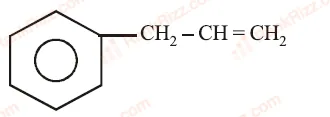
on mercuration-demercuration produces the major product:
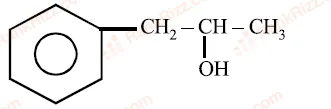
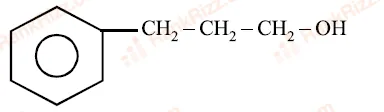
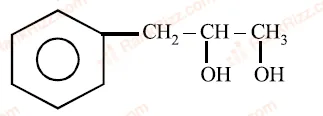
In the presence of peroxide, HCl and HI do not give anti-Markownikoff's addition of alkenes because:
One of the steps is endothermic in HCl and HI
Both HCl and HI are strong acids
HCl is oxidizing and the HI is reducing
All the steps are exothermic is HCl and HI
Global warming is due to increase of:
methane and nitrous oxide in atmosphere
methane and CO in atmosphere
methane and O in atmosphere
methane and CO in atmosphere
In a monoclinic unit cell, the relation of sides and angles are respectively:
a = b c and °
a b c and °
a b c and °
a b c and °
How many electrons would be required to deposit 6.35 g of copper at the cathode during the electrolysis of an aqueous solution of copper sulphate? (Atomic mass of copper = 63.5u, N = Avogadro's constant):
The rate coefficient (k) for a particular reactions is M s at 100°C, and M s at 150°C. What is the energy of activation (E) (in kJ) for this reaction? (R = molar gas constant = 8.314 JK mol)
16
60
99
132
Which of the following xenon-oxo compounds may not be obtained by hydrolysis of xenon fluorides?
XeOF
XeOF
XeO
XeO
Which one of the following exhibits the large number of oxidation states?
Ti(22)
V(23)
Cr(24)
Mn(25)
Copper becomes green when exposed to moist air for a long period. This is due to:
the formation of a layer of cupric oxide on the surface of copper.
the formation of a layer of basic carbonate of copper on the surface of copper.
the formation of a layer of cupric hydroxide on the surface of copper.
the formation of basic copper sulphate layer on the surface of the metal.
Among the following species the one which causes the highest CFSE, as a ligand is:
CN
NH
F
CO
Which one of the following complexes will most likely absorb visible light? (At. nos. Sc = 21, Ti = 22, V = 23, Zn = 30)
[Sc(HO)]
[Ti(NH)]
[V(NH)]
[Zn(NH)]
Conversion of benzene diazonium chloride to chlorobenzene is an example of which of the following reactions?
Claisen
Friedel-craft
Sandmeyer
Wurtz
The major product obtained in the photo catalysed bromination of 2-methylbutane is:
1-bromo-2-methylbutane
1-bromo-3-methylbutane
2-bromo-3-methylbutane
2-bromo-2-methylbutane
In the Victor-Meyer's test, the colour given by 1°, 2° and 3° alcohols are respectively:
Red, colourless, blue
Red, blue, colourless
Colourless, red, blue
Red, blue, violet
Phthalic acid reacts with resorcinol in the presence of concentrated HSO to give:
Phenolphthalein
Alizarin
Coumarin
Fluorescein
Aminoglycosides are usually used as:
antibiotic
analgesic
hypnotic
antifertility
Which of the following will not show mutarotation?
Maltose
Lactose
Glucose
Sucrose