Q31Mole concept, atomic and molar mass
A gaseous compound of nitrogen and hydrogen contains 12.5% (by mass) of hydrogen. The density of the compound relative to hydrogen is 16. The molecular formula of the compound is:
- A
NH
- B
NH
- C
NH
- D
NH
The 30 Chemistry questions of JEE Main 11 Apr 2014, Online, numbered across the whole paper. Pick an answer on any question to check it against the key. Free to read, nothing to download.
A gaseous compound of nitrogen and hydrogen contains 12.5% (by mass) of hydrogen. The density of the compound relative to hydrogen is 16. The molecular formula of the compound is:
NH
NH
NH
NH
If and be threshold wavelength and wavelength of incident light, the velocity of photoelectron ejected from the metal surface is:
Based on the equation: J , the wavelength of the light that must be absorbed to excite hydrogen electron from level n = 1 to level n = 2 will be: (h = Js, C = ms)
m
m
m
m
Which of the following series correctly represents relations between the elements from X to Y? X Y
Li K Ionization enthalpy increases
F Br Electron gain enthalpy (negative sign) increases
C Ge Atomic radii increases
Ar Xe Noble character increases
The correct order of bond dissociation energy among N, O, O is shown in which of the following arrangements?
N > O > O
O > O > N
N > O > O
O > O > N
Which one of the following does not have a pyramidal shape?
(CH) N
(SiH) N
P(CH)
P(SiH)
In allene (CH), the type(s) of hybridization of the carbon atoms is (are):
sp and sp
sp and sp
only sp
sp and sp
The initial volume of a gas cylinder is 750.0 mL. If the pressure of gas inside the cylinder changes from 840.0 mmHg to 360.0 mmHg, the final volume the gas will be:
1.750 L
3.60 L
4.032 L
7.50 L
The molar heat capacity (C) of CDO is 10 cals at 1000 K. The change of entropy associated with cooling of 32 g of CDO vapour from 1000 K to 100 K at constant pressure will be: (D = deuterium, atomic mass = 2u)
23.03 cal deg
cal deg
2.303 cal deg
cal deg
Consider the following equilibrium:
White precipitate of AgCl appears on adding which of the following?
NH
aqueous NaCl
aqueous HNO
aqueous NHCl
Assuming that the degree of hydrolysis is small, the pH of 0.1M solution of sodium acetate (K = ) will be:
5.0
6.0
8.0
9.0
Which of the following statements about NaO is not correct?
It is diamagnetic in nature
It is derivative of HO
NaO oxidises Cr to CrO in acid medium
It is the super oxide of sodium
The reagent needed for converting:

Cat. Hydrogenation
H/Lindlar Cat.
Li/NH
LiAlH
The gas liberated by the electrolysis of Dipotassium succinate solution is:
Ethane
Ethyne
Ethene
Propene
Which of the following statements about the depletion of ozone layer is correct?
The problem of ozone depletion is less serious at poles because NO solidifies and is not available for consuming ClO• radicals.
The problem of ozone depletion is more serious at poles because ice crystals in the clouds over poles act as catalyst for photochemical reactions involving the decomposition of ozone of Cl• and ClO• radicals.
Freons, chlorofluorocarbons, are inert. Chemically, they do not react with ozone in stratosphere.
Oxides of nitrogen also do not react with ozone in stratosphere.
The appearance of colour in solid alkali metal halides is generally due to:
Schottky defect
Frenkel defect
Interstitial position
F-centres
In some solutions, the concentration of HO remains constant even when small amounts of strong acid or strong base are added to them. These solutions are known as:
Ideal solutions
Colloidal solutions
True solutions
Buffer solutions
Given:
Fe(aq) + e Fe(aq); E = +0.77 V
Al(aq) + 3e Al(s); E = V
Br(aq) + 2e 2Br; E = +1.09 V
Considering the electrode potentials, which of the following represents the correct order of reducing power?
Fe < Al < Br
Br < Fe < Al
Al < Br < Fe
Al < Fe < Br
In the reaction of formation of sulphur trioxide by contact process the rate of reaction was measured as mol L s. The rate of reaction in terms of [SO] in mol L s will be:
For the reaction, , the rate equation can be expressed in two ways:
and . k and k' are related as:
k = k'
2k = k'
k = 2k'
k = 4k'
Shapes of certain interhalogen compounds are stated below. Which one of them is not correctly stated?
IF: pentagonal bipyramid
BrF: trigonal bipyramid
BrF: planar T-shaped
ICl: planar dimeric
Which of the following name formula combinations is not correct?
K[Pt(CN)] - Potassium tetracyanoplatinate (II)
[Mn(CN)] - Pentacyanomangonate (II) ion
K[Cr(NH)Cl] - Potassium diammine tetrachlorochromate (III)
[Co(NH)(HO)I]SO - Tetraammine aquaiodo cobalt (III) sulphate
Consider the coordination compound, [Co(NH)]Cl. In the formation of this complex, the species which acts as the Lewis acid is:
[Co(NH)]
Cl
Co
NH
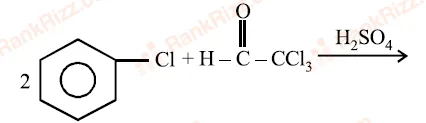
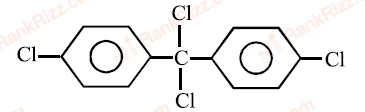
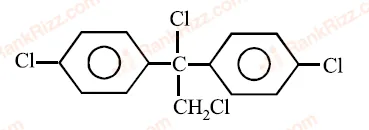
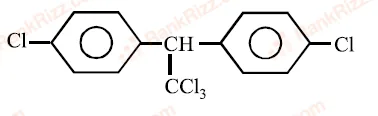
Chlorobenzene reacts with trichloro acetaldehyde in the presence of HSO. The major product formed is:
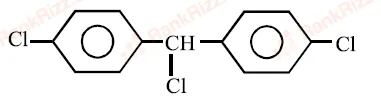
Tischenko reaction is a modification of:
Aldol condensation
Claisen condensation
Cannizzaro reaction
Pinacol-pinacolon reaction
Which one of the following statements is not correct?
Alcohols are weaker acids than water
Acid strength of alcohols decreases in the following order: RCHOH > RCHOH > RCOH
Carbon-oxygen bond length in methanol, CHOH is shorter than that of C-O bond length in phenol.
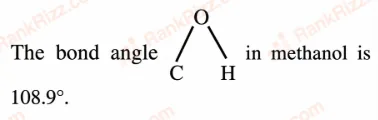
The following reaction is known as:
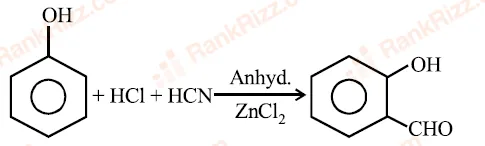
Perkin reaction
Gatterman-Koch Formylation
Kolbe's reaction
Gattermann reaction
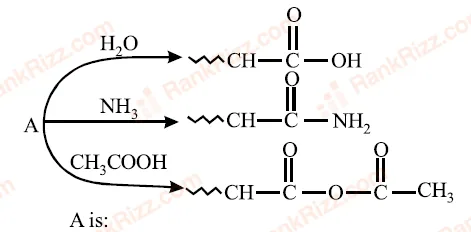
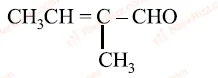
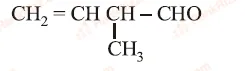
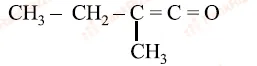
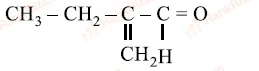
An organic compound A, CHO; reacts with HO, NH and CHCOOH as described below:
Complete reduction of benzene-diazonium chloride with Zn/HCl gives:
Aniline
Phenylhydrazine
Azobenzene
Hydrazobenzene
Which one of the following is used as Antihistamine?
Omeprazole
Chloranphenicol
Diphenhydramine
Norethindrone