RankRizz

JEE Main 07 Apr 2013, Online: Chemistry

The 30 Chemistry questions of JEE Main 07 Apr 2013, Online, numbered across the whole paper. Pick an answer on any question to check it against the key. Free to read, nothing to download.

Chemistry

Q31Concentration terms and their interconversion

The molarity of a solution obtained by mixing 750 mL of 0.5(M) HCl with 250 mL of 2(M) HCl will be

  1. A

    1.75 M

  2. B

    0.975 M

  3. C

    0.875 M

  4. D

    1.00 M

Q32pH of acids, bases and their mixtures

How many litres of water must be added to 1 litre of aqueous solution of HCl with a pH of 1 to create an aqueous solution with pH of 2?

  1. A

    2.0

  2. B

    9.0

  3. C

    0.1

  4. D

    0.9

Q33Stoichiometry, limiting reagent and percentage yield

Experimentally it was found that a metal oxide has formula M0.98OM_{0.98}O. Metal M, is present as M2+M^{2+} and M3+M^{3+} in its oxide. Fraction of the metal which exists as M3+M^{3+} would be:

  1. A

    6.05%

  2. B

    5.08%

  3. C

    7.01%

  4. D

    4.08%

Q34Stoichiometry, limiting reagent and percentage yield

A gaseous hydrocarbon on combustion gives 0.72 g of water and 3.08 g CO2CO_2. What is the empirical formula of the hydrocarbon?

  1. A

    C6H5C_6H_5

  2. B

    C7H8C_7H_8

  3. C

    C2H4C_2H_4

  4. D

    C3H4C_3H_4

Q35Hydrogen spectrum and spectral series

Energy of an electron is given by E=−2.178×10⁻¹⁸(Z2n2)E = -2.178 \times 10^{-18}\left(\frac{Z^2}{n^2}\right) J. Wavelength of light required to excite an electron in a hydrogen atom from level n=1 to n=2 will be :
(h=6.62×10⁻³⁴(h = 6.62 \times 10^{-34} Js and c=3.0×10⁸c = 3.0 \times 10^8 ms−1)^{-1})

  1. A

    6.500×10−76.500 \times 10^{-7} m

  2. B

    8.500×10−78.500 \times 10^{-7} m

  3. C

    1.214×10−71.214 \times 10^{-7} m

  4. D

    2.816×10−72.816 \times 10^{-7} m

Q36Ionisation enthalpy

The first ionisation potential of Na is 5.1 eV. The value of electron gain enthalpy of Na+^+ will be :

  1. A

    -10.2 eV

  2. B

    +2.55 eV

  3. C

    -2.55 eV

  4. D

    -5.1 eV

Q37Ionisation enthalpy

Which of the following represents the correct order of increasing first ionization enthalpy for Ca, Ba, S, Se and Ar ?

  1. A

    Ba < Ca < Se < S < Ar

  2. B

    Ca < Ba < S < Se < Ar

  3. C

    Ca < S < Ba < Se < Ar

  4. D

    S < Se < Ca < Ba < Ar

Q38Molecular orbital theory of diatomic species

Stability of the species Li2Li_2, Li2−Li_2^- and Li2+Li_2^+ increases in the order of

  1. A

    Li2<Li2−<Li2+Li_2 < Li_2^- < Li_2^+

  2. B

    Li2−<Li2<Li2+Li_2^- < Li_2 < Li_2^+

  3. C

    Li2<Li2+<Li2−Li_2 < Li_2^+ < Li_2^-

  4. D

    Li2−<Li2+<Li2Li_2^- < Li_2^+ < Li_2

Q39Molecular orbital theory of diatomic species

Which one of the following molecules is expected to exhibit paramagnetic behaviour?

  1. A

    O2O_2

  2. B

    O2−2O_2^{-2}

  3. C

    C2C_2

  4. D

    N2N_2

Q40Molecular orbital theory of diatomic species

In which of the following pairs of molecules/ions, both the species are not likely to exist?

  1. A

    H22+H_2^{2+}, He2He_2

  2. B

    H2−H_2^-, He22+He_2^{2+}

  3. C

    H2+H_2^+, He22−He_2^{2-}

  4. D

    H2H_2, He22−He_2^{2-}

Q41Kinetic theory of gases and molecular speeds

For gaseous state, if most probable speed is denoted by C∗C^*, average speed by Cˉ\bar{C} and root mean square speed by C, then for many molecules, what is the ratios of these speeds?

  1. A

    C∗:Cˉ:C=1:1.128:1.225C^* : \bar{C} : C = 1 : 1.128 : 1.225

  2. B

    C∗:Cˉ:C=1:1.225:1.128C^* : \bar{C} : C = 1 : 1.225 : 1.128

  3. C

    C∗:Cˉ:C=1.225:1.128:1C^* : \bar{C} : C = 1.225 : 1.128 : 1

  4. D

    C∗:Cˉ:C=1.128:1.225:1C^* : \bar{C} : C = 1.128 : 1.225 : 1

Q42First law: work, heat and internal energy

A piston filled with 0.04 mol of an ideal gas expands reversibly from 50.0 mL to 375 mL at a constant temperature of 37.0°C. The values of q and w for the process will be
(R = 8.314 J/mol K) (ln7.5 = 2.01)

  1. A

    q = -208 J, w = +208 J

  2. B

    q = +208 J, w = +208 J

  3. C

    q = +208 J, w = -208 J

  4. D

    q = -208 J, w = -208 J

Q43Balancing redox equations

Consider the following reaction:
x MnO4−+y C2O42−+zH+→x Mn2++2y CO2+z2H2Ox \ MnO_4^- + y \ C_2O_4^{2-} + zH^+ \rightarrow x \ Mn^{2+} + 2y \ CO_2 + \frac{z}{2} H_2O
The values of x, y and z in the reaction are, respectively:

  1. A

    2, 5 and 16

  2. B

    5, 2 and 8

  3. C

    5, 2 and 16

  4. D

    2, 5 and 8

Q44Nucleophilic substitution (SN1 and SN2)

A solution of (-)1-chloro-1-phenylethane in toluene racemises slowly in the presence of a small amount of SbCl5SbCl_5, due to the formation of :

  1. A

    Carbocation

  2. B

    Free radical

  3. C

    Carbanion

  4. D

    Carbene

Q45Reactions of phenols

Arrange the following compounds in order of decreasing acidity :
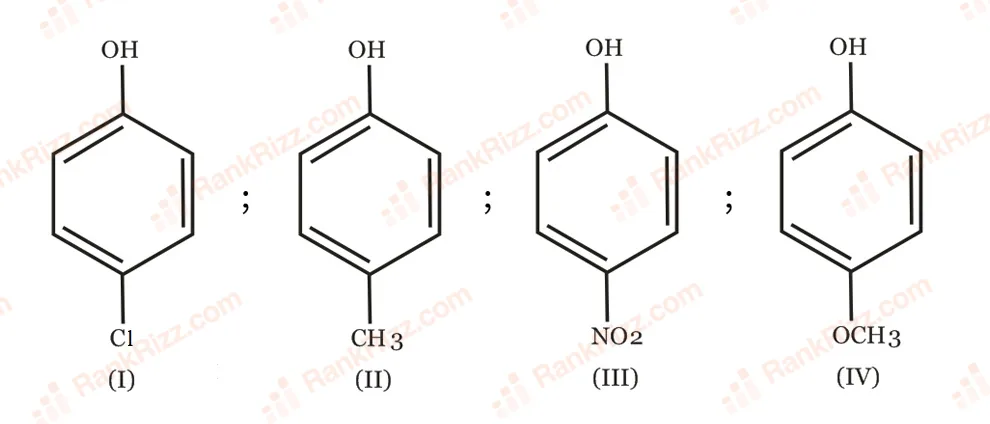
Figure for JEE Main 2013 Chemistry question on Reactions of phenols
  1. A

    III > I > II > IV

  2. B

    IV > III > I > II

  3. C

    II > IV > I > III

  4. D

    I > II > III > IV

Q46Reactive intermediates and rearrangements

The order of stability of the following carbocations:
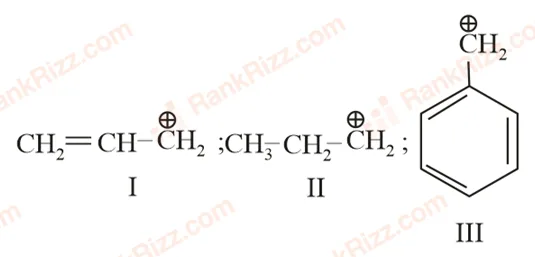
Figure for JEE Main 2013 Chemistry question on Reactive intermediates and rearrangements
  1. A

    I > II > III

  2. B

    III > I > II

  3. C

    III > II > I

  4. D

    II > III > I

Q47Air pollution: tropospheric pollutants, smog, acid rain and greenhouse effect

The gas leaked from a storage tank of the Union Carbide plant in Bhopal gas tragedy was :

  1. A

    Ammonia

  2. B

    Phosgene

  3. C

    Methyl isocyanate

  4. D

    Methylamine

Q48Classification of solids

Which of the following exists as covalent crystals in the solid state?

  1. A

    Sulphur

  2. B

    Phosphorus

  3. C

    Iodine

  4. D

    Silicon

Q49General properties of transition elements

Four successive members of the first row of transition elements are listed below with atomic numbers. Which one of them is expected to have the highest EM3+/M2+∘E^\circ_{M^{3+}/M^{2+}} value?

  1. A

    Fe (Z = 26)

  2. B

    Co (Z = 27)

  3. C

    Cr (Z = 24)

  4. D

    Mn (Z = 25)

Q50Arrhenius equation and activation energy

The rate of a reaction doubles when its temperature changes from 300K to 310K. Activation energy of such a reaction will be:
(R=8.314(R = 8.314 JK−1^{-1} mol−1^{-1} and log 2 = 0.301))

  1. A

    58.5 kJ mol−1^{-1}

  2. B

    60.5 kJ mol−1^{-1}

  3. C

    53.6 kJ mol−1^{-1}

  4. D

    48.6 kJ mol−1^{-1}

Q51Properties of colloids and coagulation

The coagulating power of electrolytes having ions Na+^+, Al3+^{3+} and Ba2+^{2+} for arsenic sulphide sol increases in the order,

  1. A

    Ba2+^{2+} < Na+^+ < Al3+^{3+}

  2. B

    Al3+^{3+} < Na+^+ < Ba2+^{2+}

  3. C

    Al3+^{3+} < Ba2+^{2+} < Na+^+

  4. D

    Na+^+ < Ba2+^{2+} < Al3+^{3+}

Q52Group 16: trends, dioxygen, ozone and oxides

Which of the following is wrong statement?

  1. A

    Ozone is violet-black in solid state

  2. B

    Ozone is diamagnetic gas

  3. C

    ONCl and ONO−^- are isoelectronic

  4. D

    O3O_3 molecule is bent

Q53General properties of transition elements

Which of the following arrangements does not represent the correct order of the property stated against it?

  1. A

    Co3+<Fe3+<Cr3+<Sc3+Co^{3+} < Fe^{3+} < Cr^{3+} < Sc^{3+} : Stability in aqueous solution

  2. B

    Sc < Ti < Cr < Mn : Number of oxidation states

  3. C

    V2+<Cr2+<Mn2+<Fe2+V^{2+} < Cr^{2+} < Mn^{2+} < Fe^{2+} : Paramagnetic behaviour

  4. D

    Ni2+<Co2+<Fe2+<Mn2+Ni^{2+} < Co^{2+} < Fe^{2+} < Mn^{2+} : Ionic size

Q54Electrode potentials, electrochemical series and cell EMF

Given:
ECr3+/Cr∘=−0.74E^\circ_{Cr^{3+}/Cr} = -0.74 V; EMnO4−/Mn2+∘=1.51E^\circ_{MnO_4^-/Mn^{2+}} = 1.51 V
ECr2O72−/Cr3+∘=1.33E^\circ_{Cr_2O_7^{2-}/Cr^{3+}} = 1.33 V; ECl2/Cl−∘=1.36E^\circ_{Cl_2/Cl^-} = 1.36 V
Based on the data given above, strongest oxidising agent will be:

  1. A

    Mn2+^{2+}

  2. B

    MnO4−_4^-

  3. C

    Cl−^-

  4. D

    Cr3+^{3+}

Q55Structural isomerism in complexes

Which of the following complex species is not expected to exhibit optical isomerism?

  1. A

    [Co(NH3)3Cl3][Co(NH_3)_3Cl_3]

  2. B

    [Co(en)(NH3)2Cl2]+[Co(en)(NH_3)_2Cl_2]^+

  3. C

    [Co(en)3]3+[Co(en)_3]^{3+}

  4. D

    [Co(en)2Cl2]+[Co(en)_2Cl_2]^+

Q56Properties and reactions of alcohols

An unknown alcohol is treated with the "Lucas reagent" to determine whether the alcohol is primary, secondary or tertiary. Which alcohol reacts fastest and by what mechanism:

  1. A

    Secondary alcohol by SN2S_N2

  2. B

    Tertiary alcohol by SN2S_N2

  3. C

    Secondary alcohol by SN1S_N1

  4. D

    Tertiary alcohol by SN1S_N1

Q57Nucleophilic substitution (SN1 and SN2)

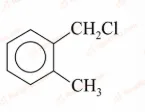
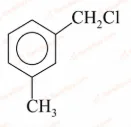
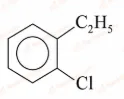
Compound (A), C8H9ClC_8H_9Cl, gives a white precipitate when warmed with alcoholic AgNO3_3. Oxidation of (A) gives an acid (B), C8H6O4C_8H_6O_4. (B) easily forms anhydride on heating. Identify the compound (A).
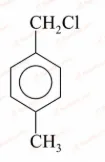
  1. A
    Figure for JEE Main 2013 Chemistry question on Nucleophilic substitution (SN1 and SN2)
  2. B
    Figure for JEE Main 2013 Chemistry question on Nucleophilic substitution (SN1 and SN2)
  3. C
    Figure for JEE Main 2013 Chemistry question on Nucleophilic substitution (SN1 and SN2)
  4. D
    Figure for JEE Main 2013 Chemistry question on Nucleophilic substitution (SN1 and SN2)
Q58Reactions and tests of amines

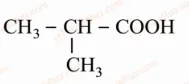
An organic compound A upon reacting with NH3NH_3 gives B. On heating, B gives C. C in presence of KOH reacts with Br2Br_2 to give CH3CH2NH2CH_3CH_2NH_2. A is :

  1. A
    Figure for JEE Main 2013 Chemistry question on Reactions and tests of amines
  2. B

    CH3CH2COOHCH_3CH_2COOH

  3. C

    CH3COOHCH_3COOH

  4. D

    CH3CH2CH2COOHCH_3CH_2CH_2COOH

Q59Reactions and tests of amines

A compound with molecular mass 180 is acylated with CH3COClCH_3COCl to get a compound with molecular mass 390. The number of amino groups presents per molecule of the former compound is

  1. A

    4

  2. B

    6

  3. C

    2

  4. D

    5

Q60Carbohydrates: classification and monosaccharides

Synthesis of each molecule of glucose in photosynthesis involves

  1. A

    8 molecules of ATP

  2. B

    6 molecules of ATP

  3. C

    18 molecules of ATP

  4. D

    10 molecules of ATP

NEXT IN THIS PAPER →Maths, Q61 onwards