RankRizz

JEE Advanced 2015 Paper 1: Chemistry

The 20 Chemistry questions of JEE Advanced 2015 Paper 1, numbered across the whole paper. Pick an answer on any question to check it against the key. Free to read, nothing to download.

Chemistry

Q23Phosphorus and its compounds

The total number of lone pairs of electrons in N2O3N_2O_3 is

Q24Colour and magnetic behaviour of complexes from CFT

For the octahedral complexes of Fe3+Fe^{3+} in SCN−SCN^- (thiocyanato-S) and in CN−CN^- ligand environments, the difference between the spin-only magnetic moments in Bohr magnetons (when approximated to the nearest integer) is [Atomic number of Fe = 26]

Q25VSEPR theory and shapes of molecules and ions

Among the triatomic molecules/ions, BeCl5,N3−,N2O,NO2+,O3,SCl2,ICl2−,I3−BeCl_5, N_3^-, N_2O, NO_2^+, O_3, SCl_2,ICl_2^-, I_3^- and XeF2XeF_2, the total number of linear molecule(s)/ion(s) where the hybridization of the central atom does not have contribution from the d-orbital(s) is [Atomic number: S = 16, Cl= 17, 1=53 and Xe = 54]

Q26Quantum mechanical model, wave function and probability

Not considering the electronic spin, the degeneracy of the second excited state (n = 3) of H atom is 9, while the degeneracy of the second excited state of H−H^- is

Q27Electrode potentials, electrochemical series and cell EMF

All the energy released from the reaction X→Y,△rG0=−193kJmol−1X \rightarrow Y, \triangle_r G^0 = - 193 kJ mol^{-1} is used for oxidizing M+M^+ as M+→M3++2e−,E0=−0.25VM^+ \rightarrow M^{3+} + 2e^-, E^0 = -0.25 V Under standard conditions, the number of moles of M+M^+ oxidized when one mole of X is converted to Y is [F = 96500 C mol−1mol^{-1}]

Q28Depression in freezing point

If the freezing point of a 0.01 molal aqueous solution of a cobalt(III) chloride-ammonia complex (which behaves as a strong electrolyte) is −0.0558C∘-0.0558 ^\circ_C the numberof chloride(s) in the coordination sphere of the complex is [Kf[K_f of water = 1.86 K kg mol−1mol^{-1}]

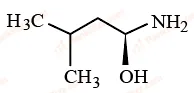
Q29Nucleophilic substitution (SN1 and SN2)

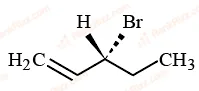
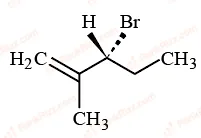
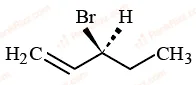
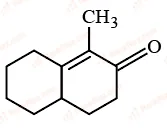
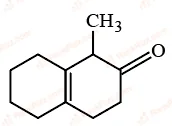
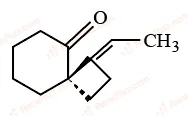
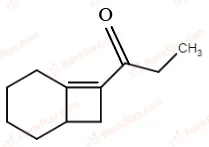
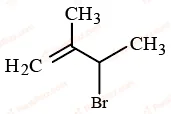
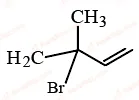
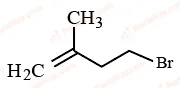
Compound(s) that on hydrogenation produce(s) optically inactive compound(s) is(are)
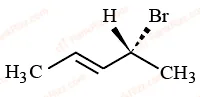
  1. A
    Figure for JEE Advanced 2015 Chemistry question on Nucleophilic substitution (SN1 and SN2)
  2. B
    Figure for JEE Advanced 2015 Chemistry question on Nucleophilic substitution (SN1 and SN2)
  3. C
    Figure for JEE Advanced 2015 Chemistry question on Nucleophilic substitution (SN1 and SN2)
  4. D
    Figure for JEE Advanced 2015 Chemistry question on Nucleophilic substitution (SN1 and SN2)
Q30Aldol condensation, Cannizzaro and related reactions

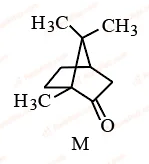
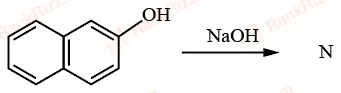
The major product of the following reaction is
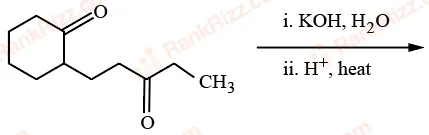
Figure for JEE Advanced 2015 Chemistry question on Aldol condensation, Cannizzaro and related reactions
  1. A
    Figure for JEE Advanced 2015 Chemistry question on Aldol condensation, Cannizzaro and related reactions
  2. B
    Figure for JEE Advanced 2015 Chemistry question on Aldol condensation, Cannizzaro and related reactions
  3. C
    Figure for JEE Advanced 2015 Chemistry question on Aldol condensation, Cannizzaro and related reactions
  4. D
    Figure for JEE Advanced 2015 Chemistry question on Aldol condensation, Cannizzaro and related reactions
Q31Electrophilic addition to alkenes

In the following reaction, the major product is
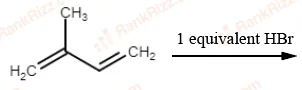
Figure for JEE Advanced 2015 Chemistry question on Electrophilic addition to alkenes
  1. A
    Figure for JEE Advanced 2015 Chemistry question on Electrophilic addition to alkenes
  2. B
    Figure for JEE Advanced 2015 Chemistry question on Electrophilic addition to alkenes
  3. C
    Figure for JEE Advanced 2015 Chemistry question on Electrophilic addition to alkenes
  4. D
    Figure for JEE Advanced 2015 Chemistry question on Electrophilic addition to alkenes
Q32Carbohydrates: classification and monosaccharides

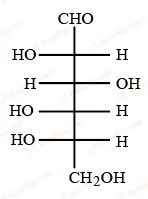
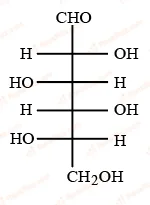
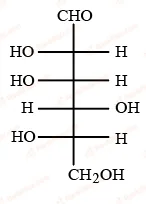
The structure of D-(+)-glucose is
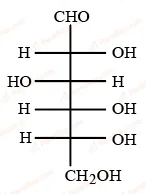
Figure for JEE Advanced 2015 Chemistry question on Carbohydrates: classification and monosaccharides


The structure of L-(—)-glucose is
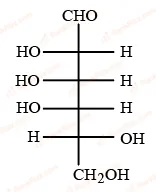
  1. A
    Figure for JEE Advanced 2015 Chemistry question on Carbohydrates: classification and monosaccharides
  2. B
    Figure for JEE Advanced 2015 Chemistry question on Carbohydrates: classification and monosaccharides
  3. C
    Figure for JEE Advanced 2015 Chemistry question on Carbohydrates: classification and monosaccharides
  4. D
    Figure for JEE Advanced 2015 Chemistry question on Carbohydrates: classification and monosaccharides
Q34Magnetic moment, colour and catalytic properties of transition metals

The correct statement(s) about Cr2+Cr^{2+} and Mn3+Mn^{3+} is(are)
[Atomic numbers of Cr = 24 and Mn = 25]

  1. A

    Cr2+Cr^{2+} is a reducing agent

  2. B

    Mn3+Mn^{3+} is an oxidizing agent

  3. C

    Both Cr2+Cr^{2+} and Mn3+Mn^{3+} exhibit d4d^4 electronic configuration

  4. D

    When Cr2+Cr^{2+} is used as a reducing agent, the chromium ion attains d5d^5 electronic configuration

Q35Refining of metals

Copper is purified by electrolytic refining of blister copper. The correct statement(s) about this process is (are)

  1. A

    Impure Cu strip is used as cathode

  2. B

    Acidified aqueous CuSO4CuSO_4 is used as electrolyte

  3. C

    Pure Cu deposits at cathode

  4. D

    Impurities settle as anode-mud

Q36Balancing redox equations

Fe3+Fe^{3+} is reduced to Fe2+Fe^{2+} by using

  1. A

    H2O2H_2O_2 in presence of NaOH

  2. B

    Na2O2Na_2O_2 in water

  3. C

    H2O2H_2O_2 in presence of H2SO4H_2SO_4

  4. D

    Na2O2Na_2O_2 in presence of H2SO4H_2SO_4

Q37Le Chatelier's principle and factors affecting equilibrium

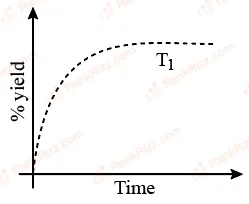
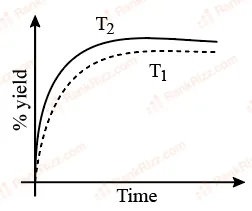
The % yield of ammonia as a function of time in the reaction
N2(g)+3H2(g)⇌2NH3(g),△H<0N_2(g) + 3H_2(g) \rightleftharpoons 2NH_3(g), \triangle H < 0 at (P,T1)(P, T_1) is given below.

Figure for JEE Advanced 2015 Chemistry question on Le Chatelier's principle and factors affecting equilibrium


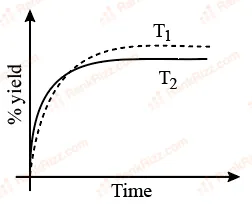
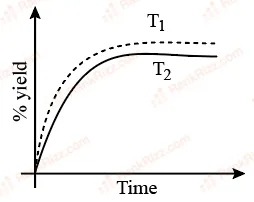
If this reaction is conducted at (P,T2)(P, T_2), with T2>T1T_2 > T_1, the %yield of ammonia as a function of time is represented by
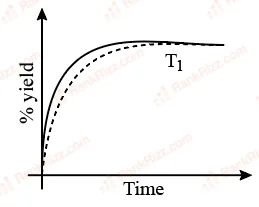
  1. A
    Figure for JEE Advanced 2015 Chemistry question on Le Chatelier's principle and factors affecting equilibrium
  2. B
    Figure for JEE Advanced 2015 Chemistry question on Le Chatelier's principle and factors affecting equilibrium
  3. C
    Figure for JEE Advanced 2015 Chemistry question on Le Chatelier's principle and factors affecting equilibrium
  4. D
    Figure for JEE Advanced 2015 Chemistry question on Le Chatelier's principle and factors affecting equilibrium
Q38Voids, radius ratio and structures of ionic solids

If the unit cell of a mineral has cubic close packed (ccp) array of oxygen atoms with m fraction of octahedral holes occupied by aluminium ions and n fraction of tetrahedral holes occupied by magnesium ions, m and n, respectively, are

  1. A

    12,18\frac{1}{2}, \frac{1}{8}

  2. B

    1,141, \frac{1}{4}

  3. C

    12,12\frac{1}{2}, \frac{1}{2}

  4. D

    14,18\frac{1}{4}, \frac{1}{8}

Q39Occurrence of metals: minerals and ores

Match the anionic species given in Column I that are present in the ore(s) given in Column II.
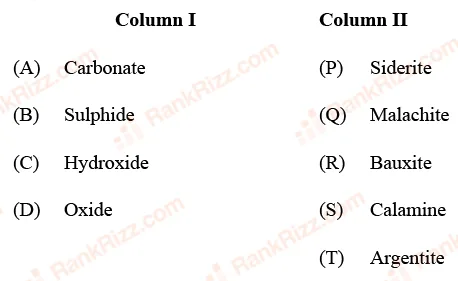
Figure for JEE Advanced 2015 Chemistry question on Occurrence of metals: minerals and ores
Q40Resonance and hyperconjugation

Match the thermodynamic processes given under Column I with the expressions given under Column II.
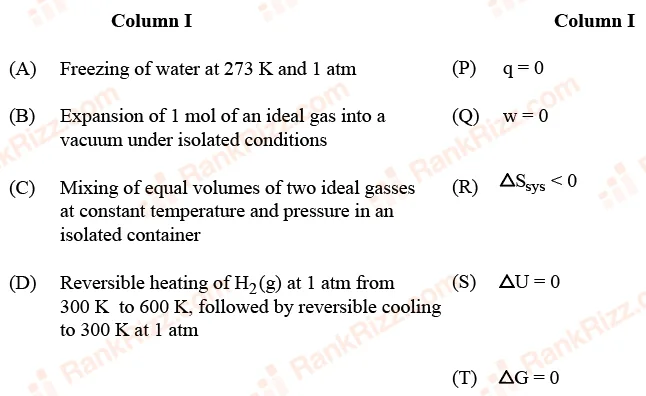
Figure for JEE Advanced 2015 Chemistry question on Resonance and hyperconjugation
NEXT IN THIS PAPER →Maths, Q41 onwards