RankRizz

JEE Advanced 2011 Paper 2: Chemistry

The 20 Chemistry questions of JEE Advanced 2011 Paper 2, numbered across the whole paper. Pick an answer on any question to check it against the key. Free to read, nothing to download.

Chemistry

Q21Occurrence of metals: minerals and ores

Oxidation states of the metal in the minerals haematite and magnetite, respectively, are

  1. A

    II, III in haematite and III in magnetite

  2. B

    II, III in haematite and II in magnetite

  3. C

    II in haematite and II, III in magnetite
  4. D

    III in haematite and II, III in magnetite
Q22Valence bond theory of complexes

Among the following complexes (K−P),K3[Fe(CN)6](K),[Co(NH3)6]Cl3(L),Na3[Co(oxalate)3](M),[Ni(H2O)6]Cl2(N),K2[Pt(CN)4](O)(K-P), K_3[Fe(CN)_6](K), [Co(NH_3)_6]Cl_3 (L), Na_3[Co(oxalate)_3] (M), [Ni(H_2O)_6]Cl_2 (N), K_2[Pt(CN)_4] (O) and [Zn(H2O)6](NO3)2(P)[Zn(H_2O)_6](NO_3)_2 (P) the diamegnetic complexes are

  1. A

    K, L, M, N

  2. B

    K, M, O, P

  3. C

    L, M, O, P

  4. D

    L, M, N, O

Q23Group analysis and confirmatory tests of cations

Passing H2SH_2S gasinto a mixture of Mn2+,Ni2+,Cu2+Mn^{2+}, Ni^{2+}, Cu^{2+} and Hg2+Hg^{2+} ions in an acidified aqueous solution precipitates

  1. A

    CuS and HgS

  2. B

    MnS and CuS

  3. C

    MnS and NiS

  4. D

    NiS and HgS

Q24Electrode potentials, electrochemical series and cell EMF

Consider the following cell reaction:
2Fe(s)+O2(g)+4H(aq)+→2Fe(aq)2++2H2O(l)E∘=1.67V2Fe_{(s)} + O_{2(g)} + 4H^+_{(aq)} \rightarrow 2Fe^{2+}_{(aq)} + 2H_2O(l) E^\circ = 1.67 V At [Fe2+]=10−3M,P(O2)=0.1[Fe^{2+}] = 10^{-3} M, P(O_2) = 0.1 atm and pH = 3, the cell potential at 25∘C25^\circ C is

  1. A

    1.47 V

  2. B

    1.77 V

  3. C

    1.87 V

  4. D

    1.57 V

Q25Abnormal molar mass and van't Hoff factor

The freezing point (in ∘C^\circ C) of a solution containing 0.1 g of K3[Fe(CN)6](Mol.Wt.329)K_3[Fe(CN)_6](Mol. Wt. 329) in 100 g of water (Kf=1.86Kkgmol−1)(K_f = 1.86 K kg mol^{-1}) is

  1. A

    −2.3×10⁻²-2.3 \times 10^{-2}

  2. B

    −5.7×10⁻²-5.7 \times 10^{-2}

  3. C

    −5.7×10⁻³-5.7 \times 10^{-3}

  4. D

    −1.2×10⁻²-1.2 \times 10^{-2}

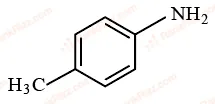
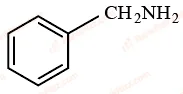
Q26Diazonium salts

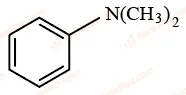
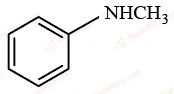
Amongst the compounds given, the one that would form a brilliant colored dye on treatment with NaNO2NaNO_2 in dil. HCl followed by addition to an alkaline solution of β\beta-naphthol is

  1. A
    Figure for JEE Advanced 2011 Chemistry question on Diazonium salts
  2. B
    Figure for JEE Advanced 2011 Chemistry question on Diazonium salts
  3. C
    Figure for JEE Advanced 2011 Chemistry question on Diazonium salts
  4. D
    Figure for JEE Advanced 2011 Chemistry question on Diazonium salts
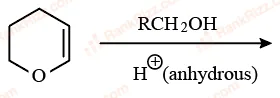
Q27Electrophilic addition to alkenes

The major product of the following reaction is

Figure for JEE Advanced 2011 Chemistry question on Electrophilic addition to alkenes
  1. A

    a hemiacetal

  2. B

    an acetal

  3. C

    an ether

  4. D

    an ester

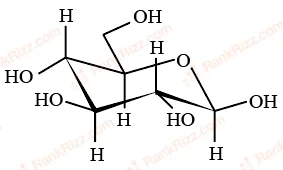
Q28Carbohydrates: classification and monosaccharides

The following carbohydrate is

Figure for JEE Advanced 2011 Chemistry question on Carbohydrates: classification and monosaccharides
  1. A

    a ketohexose

  2. B

    an aldohexose

  3. C

    an α\alpha-furanose

  4. D

    an α\alpha-pyranose

Q29Balancing redox equations

Reduction of the metal centre in aqueous permanganateion involves

  1. A

    3 electrons in neutral medium

  2. B

    5 electrons in neutral medium

  3. C

    3 electrons in alkaline medium

  4. D

    5 electrons in acidic medium

Q30Le Chatelier's principle and factors affecting equilibrium

The equilibrium
2Cu∣⇌CuO+Cu∥2Cu^\mid \rightleftharpoons Cu^O + Cu^\parallel
in aqueous medium at 25∘C25 ^\circ C shifts towards the left in the presence of

  1. A

    NO3−NO_{3}^{-}

  2. B

    Cl−Cl^-

  3. C

    SCN−SCN^-

  4. D

    CN−CN^-

Q31Integrated rate laws and half-life (zero and first order)

For the first order reaction
2N2O5(g)→4NO2(g)+O2(g)2N_2O_5(g) \rightarrow 4NO_2(g) + O_2(g)

  1. A

    the concentration of the reactant decreases exponentially with time.

  2. B

    the half-life of the reaction decreases with increasing temperature.

  3. C

    the half-life of the reaction depends on the initial concentration of the reactant.

  4. D

    the reaction proceeds to 99.6 % completion in eight half-life duration.

Q32Classification of polymers and types of polymerisation

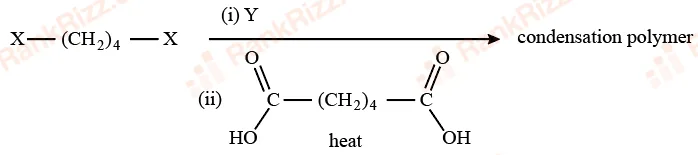
The correct functional group X and the reagent/reaction conditions Y in the following scheme are

Figure for JEE Advanced 2011 Chemistry question on Classification of polymers and types of polymerisation
  1. A

    X=COOCH3,Y=H2/Ni/heatX = COOCH_3, Y = H_2/Ni/heat

  2. B

    X=CONH2,Y=H2/Ni/heatX = CONH_2, Y = H_2/Ni/heat

  3. C

    X=CONH2,Y=Br2/NaOHX = CONH_2, Y = Br_2/NaOH

  4. D

    X=CN,Y=H2/Ni/heatX = CN, Y = H_2/Ni/heat

Q33Phosphorus and its compounds

Among the following, the number of compoundsthan can react with PCl5PCl_5 to give POCl3POCl_3 is O2,CO2,SO2,H2O,H2SO4,P4O10O_2, CO_2, SO_2, H_2O, H_2SO_4, P_4O_{10}

Q34Concentration terms and their interconversion

The volume (in mL) of 0.1 M AgNO3AgNO_3 required for complete precipitation of chloride ions present in 30 mL of 0.01 M solution of [Cr(H2O)5Cl]Cl2[Cr(H_2O)_5Cl]Cl_2, as silver chloride is close to

Q35Solubility product and common ion effect

In 1 L saturated solution of AgCl[Ksp(AgCl)=1.6×10⁻¹⁰]AgCl[K_{sp}(AgCl) = 1.6 \times 10^{-10}], 0.1 mol of CuCl[Ksp(CuCl)=1.0×10⁻⁶]CuCl[K_{sp}(CuCl) = 1.0 \times 10^{-6}] is added. The resultant concentration of Ag+Ag^+ in the solution is 1.6×10−x1.6 \times 10^{-x}. The value of "x" is

Q36Voids, radius ratio and structures of ionic solids

The number of hexagonal faces that are present in a truncated octahedron is

Q37Alkanes: preparation and properties

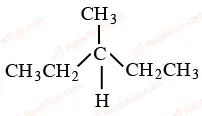
The maximum number of isomers (including stereoisomers) that are possible on monochlorination of the following compound, is

Figure for JEE Advanced 2011 Chemistry question on Alkanes: preparation and properties
Q38Reactive intermediates and rearrangements

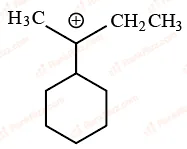
The total number of contributing structures showing hyperconjugation (involving C-H bonds)for the following carbocation is

Figure for JEE Advanced 2011 Chemistry question on Reactive intermediates and rearrangements
Q39Enthalpies of reaction and Hess's law

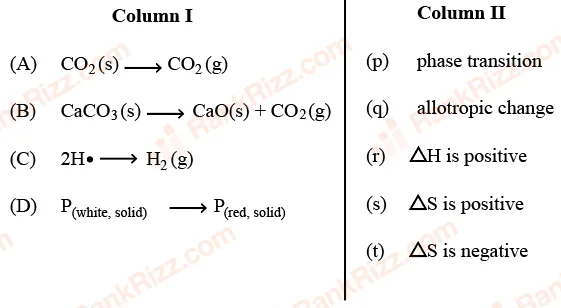
Match the transformations in column I with appropriate options in column II

Figure for JEE Advanced 2011 Chemistry question on Enthalpies of reaction and Hess's law
Q40Properties and reactions of alcohols

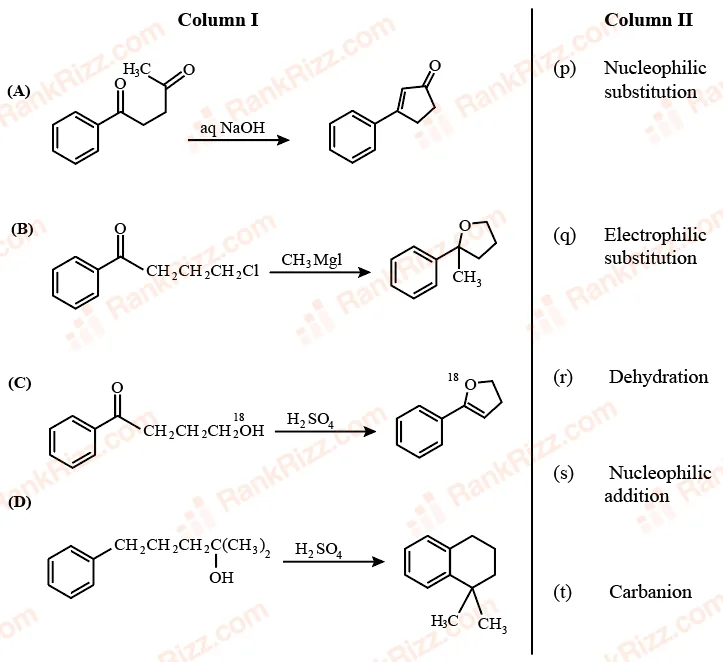
Match the reactions in column I with appropriate types of steps/reactive intermediate involved in these reactions as given in column II

Figure for JEE Advanced 2011 Chemistry question on Properties and reactions of alcohols
NEXT IN THIS PAPER →Maths, Q41 onwards