RankRizz

JEE Advanced 2008 Paper 1 Question Paper

All 69 questions of JEE Advanced 2008 Paper 1, in the order they were asked, one subject to a page. Pick an answer on any question to check it against the key. Free to read, nothing to download.

Questions

69

Physics · Chemistry · Maths

Answer key

67

questions with a checked key

Price

Free

no sign-up

Physics

Q1Errors in measurement and significant figures

Students I, II and III perform an experiment for measuring the acceleration due to gravity (g) using a simple pendulum. They use different lengths of the pendulum and/or record time for different number of oscillations. The observations are shown in the table.
Least count for length = 0.1 cm
Least count for time = 0.1 s
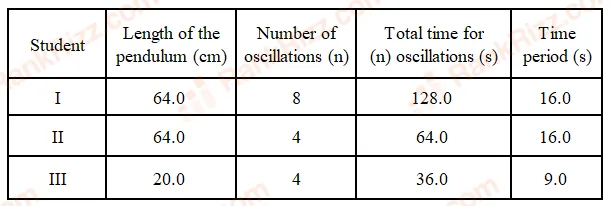
Figure for JEE Advanced 2008 Physics question on Errors in measurement and significant figures

If EI,EIIE_I, E_{II} and EIIIE_{III} are the percentage errors in g, i.e., (△gg×100)\left(\frac{\triangle g}{g} \times 100\right) for students I, II and III, respectively,

  1. A

    EI=0E_I = 0

  2. B

    EIE_I is minimum

  3. C

    EI=EIIE_I = E_{II}

  4. D

    EIIE_{II} is maximum

Q2Electric power and heating effect of current

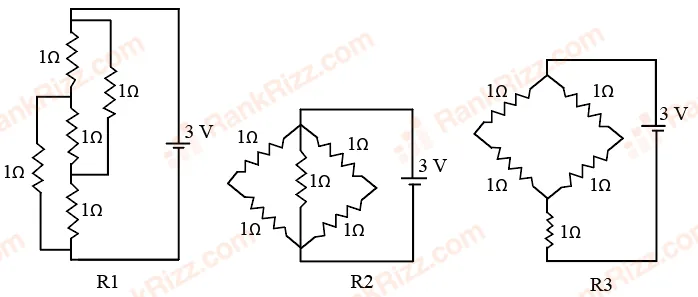
Figure shows three resistor configurations R1, R2 and R3 connected to 3 V battery. If the power dissipated by the configuration R1, R2 and R3 is P1, P2 and P3, respectively, then

Figure for JEE Advanced 2008 Physics question on Electric power and heating effect of current
  1. A

    P1 > P2 > P3

  2. B

    P1 > P3 > P2

  3. C

    P2 > P1 > P3

  4. D

    P3 > P2 > P1

Q3Photons: energy, momentum and radiation pressure

Which one of the following statements is WRONG in the context of X-rays generated from a X-ray tube?

  1. A

    Wave length of characteristic X-rays decreases when the atomic number of the target increases

  2. B

    Cut-off wavelength of the continuous X-rays depends on the atomic number of the target

  3. C

    Intensity of the characteristic X-rays depends on the electrical power given to the X-ray tube

  4. D

    Cut-off wavelength of the continuous X-rays depends on the energy of the electrons in the X-ray tube

Q4Prism: deviation and dispersion

Two beams of red and violet colours are made to pass separately through a prism (angle of the prism is 60∘60^\circ). In the position of minimum deviation, the angle of refraction will be

  1. A

    30∘30^\circ for both the colours

  2. B

    greater for the violet colour

  3. C

    greater for the red colour

  4. D

    equal but not 30∘30^\circ for both the colours

Q5Ideal gas equation and gas laws

An ideal gas is expanding such that PT2=PT^2 = constant. The coefficient of volume expansion of the gas is

  1. A

    1T\frac{1}{T}

  2. B

    2T\frac{2}{T}

  3. C

    3T\frac{3}{T}

  4. D

    4T\frac{4}{T}

Q6Kepler's laws and planetary motion

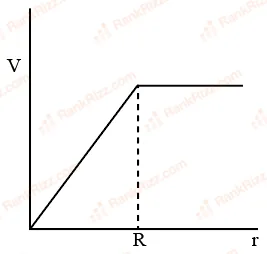
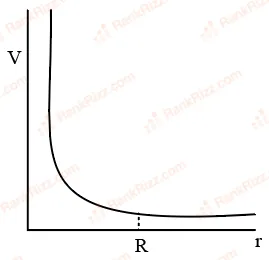
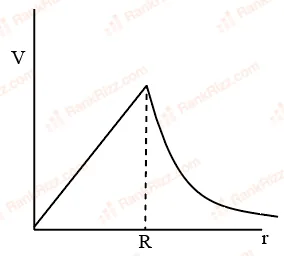
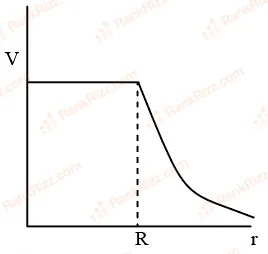
A spherically symmetric gravitational system of particles has a mass density ρ={ρ0forr≤R0forr>R\rho = \begin{cases}\rho_0 & for & r \leq R\\0 & for & r > R\end{cases} where ρ0\rho_0 is a constant. A test mass can undergo circular motion underthe influence of the gravitational field of particles. Its speed V as a function of distance r(0<r<∞)r(0 < r < \infty) from the center of the system is represented by

  1. A
    Figure for JEE Advanced 2008 Physics question on Kepler's laws and planetary motion
  2. B
    Figure for JEE Advanced 2008 Physics question on Kepler's laws and planetary motion
  3. C
    Figure for JEE Advanced 2008 Physics question on Kepler's laws and planetary motion
  4. D
    Figure for JEE Advanced 2008 Physics question on Kepler's laws and planetary motion
Q7Impulse and impulse-momentum theorem

Two balls, having linear momenta p→1=pi^\overrightarrow{p}_1 = p\hat{i} and p→1=−pi^\overrightarrow{p}_1 = -p\hat{i}, undergo a collision in free space. There is no external force acting on the balls. Let p→1′\overrightarrow{p}_1' and p→2′\overrightarrow{p}_2' be their final momenta. The following option(s) is(are) NOT ALLOWED for any non-zero value of p,a1,a2,b1,b2,c1p, a_1, a_2, b_1, b_2, c_1 and c2c_2.

  1. A

    p→1′=a1i^+b1j^+c1k^\overrightarrow{p}_1' = a_1\hat{i} + b_1\hat{j} + c_1\hat{k}
    p→2′=a2i^+b2j^\overrightarrow{p}_2' = a_2\hat{i} + b_2\hat{j}

  2. B

    p→1′=c1k^\overrightarrow{p}_1' = c_1\hat{k}
    p→2′=c2k^\overrightarrow{p}_2' = c_2\hat{k}

  3. C

    p→1′=a1i^+b1j^+c1k^\overrightarrow{p}_1' = a_1\hat{i} + b_1\hat{j} + c_1\hat{k}
    p→2′=a2i^+b2j^−c1k^\overrightarrow{p}_2' = a_2\hat{i} + b_2\hat{j} - c_1\hat{k}

  4. D

    p→1′=a1i^+b1j^\overrightarrow{p}_1' = a_1\hat{i} + b_1\hat{j}
    p→2′=a2i^+b1j^\overrightarrow{p}_2' = a_2\hat{i} + b_1\hat{j}

Q8Nuclear fission, fusion and Q-value

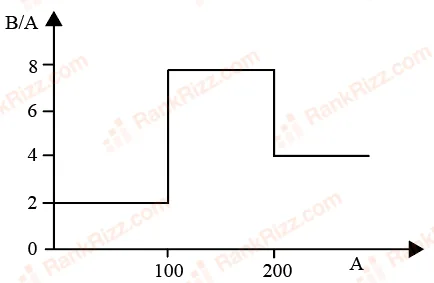
Assume that the nuclear binding energy per nucleon (B/A) versus mass number (A) is as shown in the figure. Use this plot to choose the correct choice(s) given below.

Figure for JEE Advanced 2008 Physics question on Nuclear fission, fusion and Q-value
  1. A

    Fusion of two nuclei with mass numbers lying in the range of 1 < A < 50 will release energy

  2. B

    Fusion of two nuclei with mass numbers lying in the range of 51 < A < 100 will release energy

  3. C

    Fission of a nucleus lying in the mass range of 100 < A < 200 will release energy when broken into two equal fragments

  4. D

    Fission of a nucleus lying in the mass range of 200 < A < 260 will release energy when broken into two equal fragments

Q9Motion of charged particles in a magnetic field

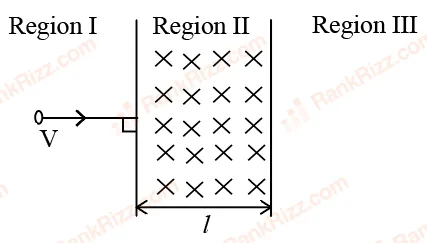
A particle of mass m and charge q, moving with velocity V enters Region II normal to the boundary as shown in the figure. Region II has a uniform magnetic field B perpendicular to the plane of the paper. The length of the Region II is l. Choose the correct choice(s).

Figure for JEE Advanced 2008 Physics question on Motion of charged particles in a magnetic field
  1. A

    The particle enters Region III only if its velocity V>qlBmV > \frac{q l B}{m}

  2. B

    The particle enters Region III only if its velocity V<qlBmV < \frac{q l B}{m}

  3. C

    Path length of the particle in Region IJ is maximum when velocity V=qlBmV = \frac{q l B}{m}

  4. D

    Time spent in Region II is same for any velocity V as long as the particle returns to Region I

Q10Young's double slit experiment: fringe width and intensity

In a Young’s double slit experiment, the separation between the two slits is d and the wavelength of the light is λ\lambda. The intensity of light falling on slit 1 is four times the
intensity of light falling on slit 2. Choose the correct choice(s).

  1. A

    If d=λd = \lambda, the screen will contain only one maximum

  2. B

    If λ<d<2λ\lambda < d < 2 \lambda, at least one more maximum (besides the central maximum) will be observed on the screen

  3. C

    If the intensity of light falling on slit 1 is reduced so that it becomes equal to that of slit 2, the intensities of the observed dark and bright fringes will increase

  4. D

    If the intensity of light falling on slit 2 is increased so that it becomes equal to that of slit 1, the intensities of the observed dark and bright fringes will increase

Q11Meter bridge

STATEMENT-1
In a Meter Bridge experiment, null point for an unknown resistance is measured. Now, the unknown resistance is put inside an enclosure maintained at a higher temperature. The null point can be obtained at the same point as before by decreasing the value of the standard resistance.
and
STATEMENT-2
Resistance of a metal increases with increase in temperature.

  1. A

    STATEMENT-1 is True, STATEMENT-2 is True; STATEMENT-2 is a correct explanation for STATEMENT-1

  2. B

    STATEMENT-1 is True, STATEMENT-2 is True; STATEMENT-2 is NOT a correct explanation for STATEMENT-1

  3. C

    STATEMENT-1 is True, STATEMENT-2 is False

  4. D

    STATEMENT-1 is False, STATEMENT-2 is True

Q12Acceleration due to gravity and its variation

STATEMENT-1
Anastronaut in an orbiting space station above the Earth experiences weightlessness.
and
STATEMENT-2
An object moving around the Earth underthe influence of Earth’s gravitational force is in a state of ‘free-fall’.

  1. A

    STATEMENT-1 is True, STATEMENT-2 is True; STATEMENT-2 is a correct explanation for STATEMENT-1

  2. B

    STATEMENT-1 is True, STATEMENT-2 is True; STATEMENT-2 is NOT a correct explanation for STATEMENT-1

  3. C

    STATEMENT-1 is True, STATEMENT-2 is False

  4. D

    STATEMENT-1 is False, STATEMENT-2 is True

Q13Rolling with friction, slipping and impulsive forces

STATEMENT-1
Twocylinders, one hollow (metal) and the other solid (wood) with the same mass and identical dimensions are simultaneously allowed to roll without slipping down an inclined plane from the sameheight. The hollow cylinder will reach the bottom of the inclined plane first.
and
STATEMENT-2
By the principle of conservation of energy, the total kinetic energies of both the cylinders are identical when they reach the bottom of the incline.

  1. A

    STATEMENT-1 is True, STATEMENT-2 is True; STATEMENT-2 is a correct explanation for STATEMENT-1

  2. B

    STATEMENT-1 is True, STATEMENT-2 is True; STATEMENT-2 is NOT a correct explanation for STATEMENT-1

  3. C

    STATEMENT-1 is True, STATEMENT-2 is False

  4. D

    STATEMENT-1 is False, STATEMENT-2 is True

Q14Equation of continuity and Bernoulli's theorem

STATEMENT-1
The stream of water flowing at high speed from a garden hose pipe tends to spread like a fountain when held vertically up, but tends to narrow down when held vertically down.
and
STATEMENT-2
In any steady flow of an incompressible fluid, the volume flow rate of the fluid remains constant.

  1. A

    STATEMENT-1 is True, STATEMENT-2 is True; STATEMENT-2 is a correct explanation for STATEMENT-1

  2. B

    STATEMENT-1 is True, STATEMENT-2 is True; STATEMENT-2 is NOT a correct explanation for STATEMENT-1

  3. C

    STATEMENT-1 is True, STATEMENT-2 is False

  4. D

    STATEMENT-1 is False, STATEMENT-2 is True

Q15Surface tension and surface energy

As the bubble moves upwards, besides the buoyancy force the following forces are acting on it

  1. A

    Only the force of gravity

  2. B

    The force due to gravity and the force due to the pressure of the liquid

  3. C

    The force due to gravity, the force due to the pressure of the liquid and the force due to viscosity of the liquid

  4. D

    The force due to gravity and the force due to viscosity of the liquid

Q16Multi-step processes and gas-piston-spring systems

When the gas bubble is at a height y from the bottom, its temperature is

  1. A

    T0(P0+ρlgHP0+ρlgy)25T_0\left(\frac{P_0 + \rho_lgH}{P_0 + \rho_lgy}\right)^{\frac{2}{5}}

  2. B

    T0(P0+ρlg(H−y)P0+ρlgH)25T_0\left(\frac{P_0 + \rho_lg(H-y)}{P_0 + \rho_lgH}\right)^{\frac{2}{5}}

  3. C

    T0(P0+ρlgHP0+ρlgy)35T_0\left(\frac{P_0 + \rho_lgH}{P_0 + \rho_lgy}\right)^{\frac{3}{5}}

  4. D

    T0(P0+ρlg(H−y)P0+ρlgH)35T_0\left(\frac{P_0 + \rho_lg(H-y)}{P_0 + \rho_lgH}\right)^{\frac{3}{5}}

Q17Equation of continuity and Bernoulli's theorem

The buoyancy force acting on the gas bubble is (Assume R is the universal gas constant)

  1. A

    ρlnRgT0(P0+ρlgH)25(P0+ρlgy)75\rho_lnRgT_0\frac{(P_0 + \rho_lgH)^{\frac{2}{5}}}{(P_0 + \rho_lgy)^{\frac{7}{5}}}

  2. B

    ρlnRgT0(P0+ρlgH)25[P0+ρlg(H−y)]35\frac{\rho_lnRgT_0}{(P_0 + \rho_lgH)^{\frac{2}{5}}[P_0 + \rho_lg(H - y)]^{\frac{3}{5}}}

  3. C

    ρlnRgT0(P0+ρlgH)35(P0+ρlgy)85\rho_lnRgT_0\frac{(P_0 + \rho_lgH)^{\frac{3}{5}}}{(P_0 + \rho_lgy)^{\frac{8}{5}}}

  4. D

    ρlnRgT0(P0+ρlgH)35[P0+ρlg(H−y)]25\frac{\rho_lnRgT_0}{(P_0 + \rho_lgH)^{\frac{3}{5}}[P_0 + \rho_lg(H - y)]^{\frac{2}{5}}}

Q18Hydrogen spectrum and spectral series

The quantum number n ofthe state finally populated in He+He^+ ions is

  1. A

    2

  2. B

    3

  3. C

    4

  4. D

    5

Q19Hydrogen spectrum and spectral series

The wave length of light emitted in the visible region by He+He^+ ions after collisions with H atoms is

  1. A

    6.5×10−76.5 \times 10^{-7} m

  2. B

    5.6×10−75.6 \times 10^{-7} m

  3. C

    4.8×10−74.8 \times 10^{-7} m

  4. D

    4.0×10−74.0 \times 10^{-7} m

Q20Hydrogen spectrum and spectral series

The ratio of the kinetic energy of the n = 2 electron for the H atom to that of He+He^{+} ion is

  1. A

    14\frac{1}{4}

  2. B

    12\frac{1}{2}

  3. C

    11

  4. D

    22

Q21Motion on inclined planes and wedges

The speed of the block at point B immediately after it strikes the second incline is

  1. A

    60\sqrt{60} m/s

  2. B

    45\sqrt{45} m/s

  3. C

    30\sqrt{30} m/s

  4. D

    15\sqrt{15} m/s

Q22Motion on inclined planes and wedges

The speed of the block at point C, immediately before it leaves the second incline is

  1. A

    120\sqrt{120} m/s

  2. B

    105\sqrt{105} m/s

  3. C

    90\sqrt{90} m/s

  4. D

    75\sqrt{75} m/s

Q23Motion of centre of mass, momentum conservation and explosions

If collision between the block and theincline is completely elastic, then the vertical (upward) component of the velocity of the block at point B, immediately after it strikes the second incline is

  1. A

    30\sqrt{30} m/s

  2. B

    15\sqrt{15} m/s

  3. C

    0

  4. D

    −15-\sqrt{15} m/s

NEXT IN THIS PAPER →Chemistry, Q24 onwards