JEE MAIN 2024 · 01 FEB S2+4 / −1EASY
JEE Main 2024 Physics question — Fixed-axis rotation: kinematics, rotational energy and pulleys
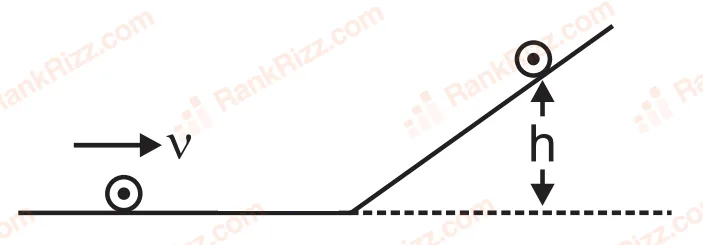
A disc of radius and mass is rolling horizontally without slipping with a speed . It then moves up an inclined smooth surface as shown in the figure. The maximum height that the disc can go up the incline is
SOLUTION
Initial Total Energy:
On the horizontal track, the disc has both translational and rotational kinetic energy:
Final Total Energy:
At the maximum height , the translational velocity is zero, but the rotational kinetic energy remains unchanged due to the lack of friction:
Conservation of Mechanical Energy (since there is no friction):
Equating the initial and final energy states ():
Topic: Fixed-axis rotation: kinematics, rotational energy and pulleys