Distance, displacement, speed, velocity and acceleration (average vs instantaneous) — JEE Main Previous Year Questions
Distance, displacement, speed, velocity and acceleration (average vs instantaneous) has been asked 19 times in JEE Main, in 7 different years between 2004 and 2025, and in 4 of the last five exam years (2022–2026), 15 questions in all. That is 14% of Motion in a Straight Line. Last asked in JEE Main 02 Apr 2025, Shift 1. 14 are multiple choice and 5 numerical-value; 15 easy and 3 medium by our difficulty labels. All of them are below, newest first, free to read.
Questions on Distance, displacement, speed, velocity and acceleration (average vs instantaneous) in every year it was asked, newest first.
JEE Main questions on Distance, displacement, speed, velocity and acceleration (average vs instantaneous) by year, 2004–2025
Year
Relative frequency
Questions
2025
2
2024
2
2023
9
2022
2
2021
2
2019
1
2004
1
Total
19
Every Distance, displacement, speed, velocity and acceleration (average vs instantaneous) question
1–19 OF 19 · NEWEST FIRST
JEE MAIN 2025 · 02 APR S1Distance, displacement, speed, velocity and acceleration (average vs instantaneous)
A person travelling on a straight line moves with a uniform velocity v1 for a distance x and with a uniform velocity v2 for the next 23x distance. The average velocity in this motion is 750 m/s. If v1 is 5 m/s then v2 = ______ m/s.
JEE MAIN 2025 · 02 APR S2Distance, displacement, speed, velocity and acceleration (average vs instantaneous)
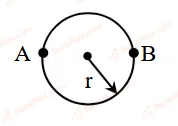
A sportsman runs around a circular track of radius r such that he traverses the path ABAB. The distance travelled and displacement, respectively, are :
JEE MAIN 2024 · 09 APR S1Distance, displacement, speed, velocity and acceleration (average vs instantaneous)
A particle moving in a straight line covers half the distance with speed 6 m/s. The other half is covered in two equal time intervals with speeds 9 m/s and 15 m/s respectively. The average speed of the particle during the motion is :
JEE MAIN 2024 · 06 APR S1Distance, displacement, speed, velocity and acceleration (average vs instantaneous)
A train starting from rest first accelerates uniformly up to a speed of 80 km/h for time t, then it moves with a constant speed for time 3t. The average speed of the train for this duration of journey will be (in km/h) :
JEE MAIN 2023 · 10 APR S2Distance, displacement, speed, velocity and acceleration (average vs instantaneous)
A person travels x distance with velocity v1 and then x distance with velocity v2 in the same direction. The average velocity of the person is v, then the relation between v, v1 and v2 will be
JEE MAIN 2023 · 01 FEB S1Distance, displacement, speed, velocity and acceleration (average vs instantaneous)
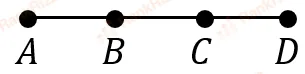
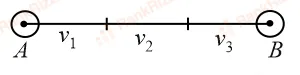
An object moves with speed v1, v2 and v3 along a line segment AB, BC and CD respectively as shown in the figure, where AB=BC and AD=3AB, then the average speed of the object will be:
JEE MAIN 2023 · 30 JAN S1Distance, displacement, speed, velocity and acceleration (average vs instantaneous)
A horse rider covers half the distance with 5 m s−1 speed. The remaining part of the distance was travelled with speed 10 m s−1 for half the time and with speed 15 m s−1 for other half of the time. The mean speed of the rider averaged over the whole time of motion is 7x m s−1. The value of x is ______.
JEE MAIN 2023 · 29 JAN S1Distance, displacement, speed, velocity and acceleration (average vs instantaneous)
A tennis ball is dropped on to the floor from a height of 9.8 m. It rebounds to a height 5.0 m. Ball comes in contact with the floor for 0.2 s. The average acceleration during contact is ______ m s−2. [Given g=10 m s−2]
JEE MAIN 2022 · 28 JUN S2Distance, displacement, speed, velocity and acceleration (average vs instantaneous)
A car covers AB distance with first one-third at velocity v1 m s−1, second one-third at v2 m s−1 and last one-third at v3 m s−1. If v3=3v1, v2=2v1 and v1=11 m s−1, then the average velocity of the car is ______ m s−1.
JEE MAIN 2021 · 25 JUL S2Distance, displacement, speed, velocity and acceleration (average vs instantaneous)
The instantaneous velocity of a particle moving in a straight line is given as v=αt+βt2, where α and β are constants. The distance travelled by the particle between 1 s and 2 s is:
JEE MAIN 2019 · 09 APR S2Distance, displacement, speed, velocity and acceleration (average vs instantaneous)
The position vector of a particle changes with time according to the relation r(t)=15t2i^+(4−20t2)j^. What is the magnitude of the acceleration at t=1?
JEE MAIN 2004Distance, displacement, speed, velocity and acceleration (average vs instantaneous)
A particle moves towards east from a point A to a point B at the rate of 4 km/h and then towards north from B to C at the rate of 5 km/h. If AB=12 km and BC=5 km, then its average speed for its journey from A to C and resultant average velocity direct from A to C are respectively
Distance, displacement, speed, velocity and acceleration (average vs instantaneous): common questions
How many Distance, displacement, speed, velocity and acceleration (average vs instantaneous) questions have come in JEE Main?
Distance, displacement, speed, velocity and acceleration (average vs instantaneous) has been asked 19 times in JEE Main, in 7 different years between 2004 and 2025. It came up in 4 of the last five exam years (2022–2026), 15 questions in all.
Is Distance, displacement, speed, velocity and acceleration (average vs instantaneous) important for JEE Main?
It is part of Motion in a Straight Line: 19 of the chapter's 134 JEE Main questions (14%). It came up in 4 of the last five exam years (2022–2026), 15 questions in all.
When was Distance, displacement, speed, velocity and acceleration (average vs instantaneous) last asked in JEE Main?
Most recently in JEE Main 02 Apr 2025, Shift 1. Questions on this page are newest first, so the latest ones are at the top.
What kind of Distance, displacement, speed, velocity and acceleration (average vs instantaneous) questions does JEE Main ask?
14 are multiple choice and 5 numerical-value; 15 easy and 3 medium by our difficulty labels. Each question shows its answer key and worked solution where we have them.