RankRizz

JEE Main 2006 Question Paper with Solutions — All Shifts

All 150 questions of JEE Main 2006, with the answer key. Free to read, nothing to download.

Shifts

—

no shift record

Questions

150

filed by chapter

Answer key

Included

shown with the questions

Price

Free

no sign-up

Every 2006 shift

NO SHIFT RECORD

2006’s 150 questions are in the bank, filed by chapter, but the paper and shift each one came from were not kept with them. They are listed on their chapter pages instead of in exam order.

BROWSE BY CHAPTER INSTEAD →

Questions from JEE Main 2006

JEE MAIN 2006Reactions of phenols

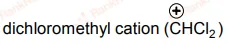
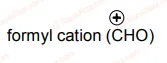
The electrophile involved in the above reaction isFigure for JEE Main 2006 Chemistry question on Reactions of phenols
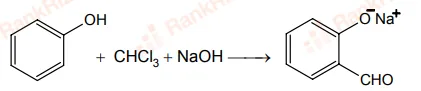
  1. A
    Figure for JEE Main 2006 Chemistry question on Reactions of phenols
  2. B

    dichlorocarbene (:CCl2)(:CCl_2)

  3. C
    Figure for JEE Main 2006 Chemistry question on Reactions of phenols
  4. D
    Figure for JEE Main 2006 Chemistry question on Reactions of phenols
JEE MAIN 2006p-n junction diode and its characteristics

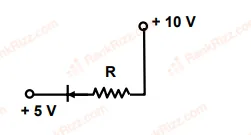
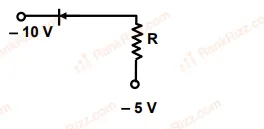
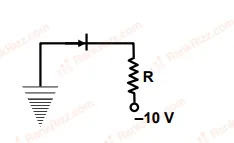
In the following, which one of the diodes is reverse biased?
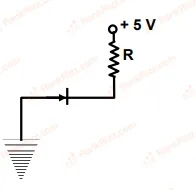
  1. A
    Figure for JEE Main 2006 Physics question on p-n junction diode and its characteristics
  2. B
    Figure for JEE Main 2006 Physics question on p-n junction diode and its characteristics
  3. C
    Figure for JEE Main 2006 Physics question on p-n junction diode and its characteristics
  4. D
    Figure for JEE Main 2006 Physics question on p-n junction diode and its characteristics
JEE MAIN 2006Kohlrausch's law and its applications

The molar conductivities ΛNaOAc∘\Lambda^\circ_{NaOAc} and ΛHCl∘\Lambda^\circ_{HCl} at infinite dilution in water at 25∘C25^\circ C are 91.091.0 and 426.2 S cm2/mol426.2\,S\,cm^2/mol respectively. To calculate ΛHOAc∘\Lambda^\circ_{HOAc}, the additional value required is

  1. A

    ΛH2O∘\Lambda^\circ_{H_2O}

  2. B

    ΛKCl∘\Lambda^\circ_{KCl}

  3. C

    ΛNaOH∘\Lambda^\circ_{NaOH}

  4. D

    ΛNaCl∘\Lambda^\circ_{NaCl}

JEE MAIN 2006Cube roots and nth roots of unity

If z2+z+1=0z^2 + z + 1 = 0, where zz is a complex number, then the value of (z+1z)2+(z2+1z2)2+(z3+1z3)2+⋯+(z6+1z6)2\left(z + \frac{1}{z}\right)^2 + \left(z^2 + \frac{1}{z^2}\right)^2 + \left(z^3 + \frac{1}{z^3}\right)^2 + \cdots + \left(z^6 + \frac{1}{z^6}\right)^2$ is

  1. A

    18

  2. B

    54

  3. C

    6

  4. D

    12

Open all 150 questions from 2006 →