Applications of Derivatives JEE Advanced PYQs with answer key
MATHS · 45 PAST QUESTIONS · 8 TOPICS · 2007–2026
HOW TO USE THIS SHEET
Every JEE Advanced Applications of Derivatives question we hold, grouped by topic, most-asked topic first and newest first inside each. The answer key is at the end (41 of 45 questions have a checked key); the worked solution is on each question’s page, printed beside it.
Optimization word and geometry problems 21
Consider all rectangles lying in the region
and having one side on the -axis. The area of the rectangle which has the maximum perimeter among all such rectangles, is
- (A)
- (B)
- (C)
- (D)
rr2.rankrizz.com/jee-advanced/maths/applications-of-derivatives/q/2020-paper-1-q42
- (A)
Let
Let be all the points of local maximum off
and be all the points of local minimum off.
Then which of the following options is/are correct?- (A)
- (B)
for every n
- (C)
for every n
- (D)
for every n
rr2.rankrizz.com/jee-advanced/maths/applications-of-derivatives/q/2019-paper-2-q41
- (A)
Let be given by Define
Then which of the following options is/are correct?- (A)
F has local minimum at x = 1
- (B)
F has local maximum at x = 2
- (C)
F has two local maxima and one local minimum in
- (D)
for all
rr2.rankrizz.com/jee-advanced/maths/applications-of-derivatives/q/2019-paper-2-q43
- (A)
If f(x) =
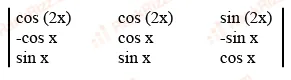
, then
- (A)
f'(x) = 0 at exactly three points in
- (B)
f'(x) = 0 at more than three points in
- (C)
f(x) attains its maximum at x=0
- (D)
f(x) attains its minimum at x=0
rr2.rankrizz.com/jee-advanced/maths/applications-of-derivatives/q/2017-paper-2-q48
- (A)
The least value of for which , for all x > 0, is
- (A)
- (B)
- (C)
- (D)
rr2.rankrizz.com/jee-advanced/maths/applications-of-derivatives/q/2016-paper-1-q41
- (A)
Let and be be twice differentiable functions such that and are continuous functions on R. Suppose and . If , then
- (A)
f has a local minimum at x = 2
- (B)
f has a local maximum at x = 2
- (C)
- (D)
for at least one .
rr2.rankrizz.com/jee-advanced/maths/applications-of-derivatives/q/2016-paper-2-q45
- (A)
A cylindrical container is to be made from certain solid material with the following constraints: It has a fixed inner volume of , has a 2 mm thick solid wall and is open at the top. The bottom of the container is a solid circular disc of thickness 2 mm and is of radius equal to the outer radius of the container. If the volume of the material used to make the container is minimum when the inner radius of the container is 10 mm, then the value of is
Answer: ____________
rr2.rankrizz.com/jee-advanced/maths/applications-of-derivatives/q/2015-paper-1-q47
Let and let be given by
Then- (A)
f(x) has three real roots if a > 4
- (B)
f(x) has only one real root if a > 4
- (C)
f(x) has three real roots if a < -4
- (D)
f(x) has three real roots if - 4 < a < 4
rr2.rankrizz.com/jee-advanced/maths/applications-of-derivatives/q/2014-paper-1-q44
- (A)
The function has a local minimum or a local maximum at x =
- (A)
- (B)
- (C)
2
- (D)
rr2.rankrizz.com/jee-advanced/maths/applications-of-derivatives/q/2013-paper-2-q44
- (A)
Which of the following is true for 0 < x < 1?
- (A)
- (B)
- (C)
- (D)
rr2.rankrizz.com/jee-advanced/maths/applications-of-derivatives/q/2013-paper-2-q53
- (A)
A rectangular sheet of fixed perimeter with sides having their lengths in the ratio 8: 15 is converted into an open rectangular box by folding after removing squares of equal area from all four corners. If the total area of removed squares is 100, the resulting box has maximum volume. Then the lengths of the sides of the rectangular sheet are
- (A)
24
- (B)
32
- (C)
45
- (D)
60
rr2.rankrizz.com/jee-advanced/maths/applications-of-derivatives/q/2013-paper-1-q54
- (A)
If the function assumes its minimum in the interval [0, 1] at which of the following is true ?
- (A)
- (B)
- (C)
- (D)
rr2.rankrizz.com/jee-advanced/maths/applications-of-derivatives/q/2013-paper-2-q54
- (A)
Consider the statements :
P : There exists some such that
Q : There exists some such that Then- (A)
both P and Q are true
- (B)
P is true and Q is false
- (C)
P is false and Q is true
- (D)
both P and Q are false
rr2.rankrizz.com/jee-advanced/maths/applications-of-derivatives/q/2012-paper-2-q50
- (A)
Let be defined as . The total numberof points at which fattains either a local maximum or a local minimum is
Answer: ____________
rr2.rankrizz.com/jee-advanced/maths/applications-of-derivatives/q/2012-paper-1-q56
If for all , then
- (A)
f has a local maximum at x = 2
- (B)
f is decreasing on (2, 3)
- (C)
there exists some such that
- (D)
f has a local minimum at x = 3
rr2.rankrizz.com/jee-advanced/maths/applications-of-derivatives/q/2012-paper-2-q56
- (A)
Let p(x) be a real polynomial of least degree which has a local maximum at x = 1 and local minimum at x = 3. If p(1) = 6 and p(3) = 2, then p'(0) is
Answer: ____________
rr2.rankrizz.com/jee-advanced/maths/applications-of-derivatives/q/2012-paper-1-q58
Let f be a function defined on R (the set of all real numbers) such that
, for all .
If g is a function defined on R with values in the interval such that , for all ,
then the number of points in R at which g has a local maximum isAnswer: ____________
rr2.rankrizz.com/jee-advanced/maths/applications-of-derivatives/q/2010-paper-2-q28
Let f, g and h be real-valued functions defined on the interval [0,1] by and . If a, b and c denote, respectively, the absolute maximum of f, g and h on [0, 1], Then
- (A)
and
- (B)
and
- (C)
and
- (D)
rr2.rankrizz.com/jee-advanced/maths/applications-of-derivatives/q/2010-paper-1-q36
- (A)
The maximum value of the function on the set is
Answer: ____________
rr2.rankrizz.com/jee-advanced/maths/applications-of-derivatives/q/2009-paper-2-q31
Let p(x) be a polynomial of degree 4 having extremumat x = 1, 2 and
.
Then the value of p(2) isAnswer: ____________
rr2.rankrizz.com/jee-advanced/maths/applications-of-derivatives/q/2009-paper-2-q34
The total number of local maxima and local minima of the function
is- (A)
0
- (B)
1
- (C)
2
- (D)
3
rr2.rankrizz.com/jee-advanced/maths/applications-of-derivatives/q/2008-paper-1-q6
- (A)
Monotonicity and intervals of increase/decrease 12
Let the function be defined by
.
Then the number of solutions of in is ______.
Answer: ____________
rr2.rankrizz.com/jee-advanced/maths/applications-of-derivatives/q/2024-paper-2-q10
Let be defined by
Then which of the following statements is (are) TRUE?- (A)
f is decreasing in the interval (−2, −1)
- (B)
f is increasing in the interval (1, 2)
- (C)
f is onto
- (D)
Range of f is
rr2.rankrizz.com/jee-advanced/maths/applications-of-derivatives/q/2021-paper-1-q12
- (A)
If is a differentiable function such that for all , and , then
- (A)
is increasing in
- (B)
is decreasing in
- (C)
in
- (D)
in
rr2.rankrizz.com/jee-advanced/maths/applications-of-derivatives/q/2017-paper-2-q46
- (A)
Which of the following options is the only CORRECT combination?
- (A)
(I) (i) (P)
- (B)
(II) (ii) (Q)
- (C)
(III) (iii) (R)
- (D)
(IV) (iv) (S)
rr2.rankrizz.com/jee-advanced/maths/applications-of-derivatives/q/2017-paper-1-q52
- (A)
Which of the following options is the only CORRECT combination?
- (A)
(I) (ii) (R)
- (B)
(II) (iii) (S)
- (C)
(III) (iv) (P)
- (D)
(IV) (i) (S)
rr2.rankrizz.com/jee-advanced/maths/applications-of-derivatives/q/2017-paper-1-q53
- (A)
Which of the following options is the only INCORRECT combination?
- (A)
(I) (iii) (P)
- (B)
(II) (iv) (Q)
- (C)
(III) (i) (R)
- (D)
(II) (iii) (P)
rr2.rankrizz.com/jee-advanced/maths/applications-of-derivatives/q/2017-paper-1-q54
- (A)
Which of the following is true ?
- (A)
g is increasing on
- (B)
g is decreasing on
- (C)
g is increasing on (1, 2) and decreasing on
- (D)
g is decreasing on (1, 2) and increasing on
rr2.rankrizz.com/jee-advanced/maths/applications-of-derivatives/q/2012-paper-2-q49
- (A)
The real numbers lies in the interval
- (A)
- (B)
- (C)
- (D)
rr2.rankrizz.com/jee-advanced/maths/applications-of-derivatives/q/2010-paper-2-q31
- (A)
The function is
- (A)
increasing in and decreasing in
- (B)
decreasing in and increasing in
- (C)
increasing in (-t, t)
- (D)
decreasing in (-t, t)
rr2.rankrizz.com/jee-advanced/maths/applications-of-derivatives/q/2010-paper-2-q33
- (A)
For the function
,- (A)
for at least one x x in the interval
- (B)
- (C)
for all x in the interval
- (D)
f'(x) is strictly decreasing in the interval
rr2.rankrizz.com/jee-advanced/maths/applications-of-derivatives/q/2009-paper-2-q26
- (A)
Let the function be given by . Then, g is
- (A)
even and is strictly increasing in
- (B)
odd and is strictly decreasing in
- (C)
odd and is strictly increasing in
- (D)
neither even nor odd, but is strictly increasing in
rr2.rankrizz.com/jee-advanced/maths/applications-of-derivatives/q/2008-paper-2-q2
- (A)
Which of the following is true?
- (A)
f(x) is decreasing on (—1, 1) and has a local minimum at x = 1
- (B)
f(x) is increasing on (-1, 1) and has a local maximum at x = 1
- (C)
f(x) is increasing on (—1, 1) but has neither a local maximum nor a local minimum at x = 1
- (D)
f(x) is decreasing on (-1, 1) but has neither a local maximum nor a local minimum at x = 1
rr2.rankrizz.com/jee-advanced/maths/applications-of-derivatives/q/2008-paper-2-q15
- (A)
Rolle's theorem and Lagrange's mean value theorem 4
For a polynomial with real coefficients, let mg denote the number of distinct real roots of
. Suppose 𝑆 is the set of polynomials with real coefficients defined by.
For a polynomial f, let and denote its first and second order derivatives, respectively. Then the minimum possible value of , where , is _____
Answer: ____________
rr2.rankrizz.com/jee-advanced/maths/applications-of-derivatives/q/2020-paper-1-q53
For every twice differentiable function with which of the following statement(s) is (are) TRUE?
- (A)
There exist r,s \in R where r<s such that 𝑓 is one-one on the open interval (r, s)
- (B)
There exists such that
- (C)
- (D)
There exists (-4,4) such that and
rr2.rankrizz.com/jee-advanced/maths/applications-of-derivatives/q/2018-paper-1-q40
- (A)
If is a twice differentiable function such that for all , and , then
- (A)
- (B)
- (C)
- (D)
rr2.rankrizz.com/jee-advanced/maths/applications-of-derivatives/q/2017-paper-2-q40
- (A)
Let be continuous functions which are twice differentiable on the interval (-1, 2). Let the valuesof f and g at the points —1, 0 and 2 be as given in the following table:
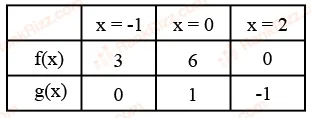
In each of the intervals (-1,0) and (0, 2) the function never vanishes. Then the correct statement(s) is(are)- (A)
has exactly three solutions in
- (B)
has exactly one solution in (-1, 0)
- (C)
has exactly one solution in (0, 2)
- (D)
has exactly two solutions in (-1, 0) and exactly two solutions in (0, 2)
rr2.rankrizz.com/jee-advanced/maths/applications-of-derivatives/q/2015-paper-2-q54
- (A)
Monotonicity for inequalities and number of roots 3
The line y = x meets for at
- (A)
no point
- (B)
one point
- (C)
two points
- (D)
more than two points
rr2.rankrizz.com/jee-advanced/maths/applications-of-derivatives/q/2007-paper-2-q61
- (A)
The positive value of k for which has only one root is
- (A)
- (B)
1
- (C)
e
- (D)
rr2.rankrizz.com/jee-advanced/maths/applications-of-derivatives/q/2007-paper-2-q62
- (A)
For , the set of all values of k for which has two distinct roots is
- (A)
- (B)
- (C)
- (D)
rr2.rankrizz.com/jee-advanced/maths/applications-of-derivatives/q/2007-paper-2-q63
- (A)
Absolute maxima and minima 2
Let denote the set of all real numbers. Let be defined by
Then which of the following statements is (are) TRUE?
- (A)
The point is a point of local maxima of
- (B)
The point is a point of local minima of
- (C)
Number of points of local maxima of in the interval is 3
- (D)
Number of points of local minima of in the interval is 1
rr2.rankrizz.com/jee-advanced/maths/applications-of-derivatives/q/2025-paper-2-q8
- (A)
Let .
Let be the function defined by .
Then, which of the following statements is False?
- (A)
The minimum value of is
- (B)
The maximum value of is
- (C)
The function attains its maximum at more than one point
- (D)
The function attains its minimum at more than one point
rr2.rankrizz.com/jee-advanced/maths/applications-of-derivatives/q/2022-paper-2-q10
- (A)
Rate of change of quantities 1
Let f(x) be differentiable on the interval suh that f(1) = 1, and for each x > 0. Then f(x) is
- (A)
- (B)
- (C)
- (D)
rr2.rankrizz.com/jee-advanced/maths/applications-of-derivatives/q/2007-paper-1-q46
- (A)
Tangents and normals to curves 1
The slope of the tangent to the curve at the point (1, 3) is
Answer: ____________
rr2.rankrizz.com/jee-advanced/maths/applications-of-derivatives/q/2014-paper-1-q56
Local maxima and minima and concavity 1
Consider the function given by
Then which one of the following statements is TRUE?
- (A)
The derivative of the function is decreasing in the interval
- (B)
The function has a local maximum at some point
- (C)
The function has a local minimum at some point
- (D)
The function has NEITHER a point of local maximum NOR a point of local minimum in the interval
rr2.rankrizz.com/jee-advanced/maths/applications-of-derivatives/q/2026-paper-1-q33
- (A)
Answer key
- 01 C
- 02 A, B, D
- 03 A, B, D
- 04 B, C
- 05 C
- 06 A, D
- 07 4
- 08 B, D
- 09 A, B
- 10 D
- 11 A, C
- 12 C
- 13 C
- 14 5
- 15 A, B, C, D
- 16 9
- 17 1
- 18 D
- 19 —
- 20 —
- 21 C
- 22 1
- 23 —
- 24 A, C
- 25 B
- 26 B
- 27 C
- 28 B
- 29 C
- 30 B
- 31 B
- 32 C
- 33 A
- 34 —
- 35 A, B, D
- 36 D
- 37 B, C
- 38 B
- 39 A
- 40 A
- 41 B, C, D
- 42 A, B, C
- 43 A
- 44 8
- 45 D
“—” marks a question whose key we have not checked yet; its page shows the latest on it.
Past questions are reproduced with their sitting. Not affiliated with NTA or the IITs. Every question, online and free: rr2.rankrizz.com/jee-advanced/maths/applications-of-derivatives