Carboxylic Acids and Derivatives JEE Advanced PYQs with answer key
CHEMISTRY · 27 PAST QUESTIONS · 3 TOPICS · 2007–2026
HOW TO USE THIS SHEET
Every JEE Advanced Carboxylic Acids and Derivatives question we hold, grouped by topic, most-asked topic first and newest first inside each. The answer key is at the end (26 of 27 questions have a checked key); the worked solution is on each question’s page, printed beside it.
Reactions of carboxylic acids 23
The correct reaction/reaction sequence that would produce a dicarboxylic acid as the major product is
- (A)
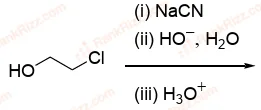
- (B)
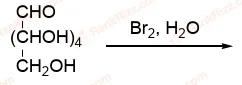
- (C)
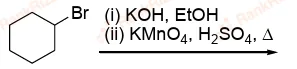
- (D)
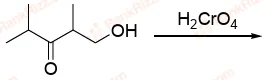
rr2.rankrizz.com/jee-advanced/chemistry/carboxylic-acids-and-derivatives/q/2025-paper-2-q36
- (A)
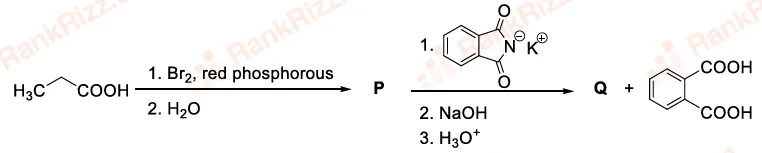
Considering the reaction sequence given below, the correct statement(s) is(are)
- (A)
P can be reduced to a primary alcohol using NaBH.
- (B)
Treating P with conc. NHOH solution followed by acidification gives Q.
- (C)
Treating Q with a solution of NaNO in aq. HCl liberates N.
- (D)
P is more acidic than CHCHCOOH.
rr2.rankrizz.com/jee-advanced/chemistry/carboxylic-acids-and-derivatives/q/2022-paper-1-q49
- (A)
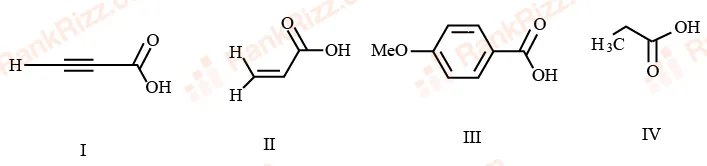
The correct order of acid strength of the following carboxylic acids is
- (A)
III > II > I > IV
- (B)
I > II > III > IV
- (C)
I > III > II > IV
- (D)
II > I > IV > III
rr2.rankrizz.com/jee-advanced/chemistry/carboxylic-acids-and-derivatives/q/2019-paper-1-q22
- (A)
Which of the following options has correct combination considering List-I and List-II?
- (A)
(I), (Q), (T), (U)
- (B)
(II), (P), (S), (T)
- (C)
(II), (P), (S), (U)
- (D)
(I), (S), (Q), (R)
rr2.rankrizz.com/jee-advanced/chemistry/carboxylic-acids-and-derivatives/q/2019-paper-2-q35
- (A)
Which of the following options has correct combination considering List-I and List-II?
- (A)
(III), (S), (R)
- (B)
(IV), (Q), (U)
- (C)
(III), (T), (U)
- (D)
(IV), (Q), (R)
rr2.rankrizz.com/jee-advanced/chemistry/carboxylic-acids-and-derivatives/q/2019-paper-2-q36
- (A)
For the synthesis of benzoic acid, the only CORRECT combination is
- (A)
(II) (i) (S)
- (B)
(IV) (ii) (P)
- (C)
(I) (iv) (Q)
- (D)
(III) (iv) (R)
rr2.rankrizz.com/jee-advanced/chemistry/carboxylic-acids-and-derivatives/q/2017-paper-1-q34
- (A)
The only CORRECT combination that gives two different carboxylic acids is
- (A)
(II) (iv) (R)
- (B)
(IV) (iii) (Q)
- (C)
(III) (iii) (P)
- (D)
(I) (i) (S)
rr2.rankrizz.com/jee-advanced/chemistry/carboxylic-acids-and-derivatives/q/2017-paper-1-q35
- (A)
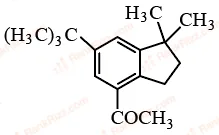
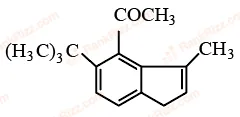
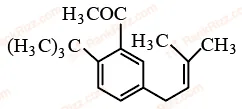
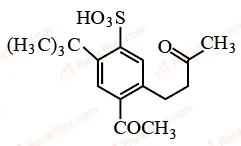
The product S is
- (A)
- (B)
- (C)
- (D)
rr2.rankrizz.com/jee-advanced/chemistry/carboxylic-acids-and-derivatives/q/2017-paper-2-q35
- (A)
The only CORRECT combination in which the reaction proceeds through radical mechanism is
- (A)
(III) (ii) (P)
- (B)
(IV) (i) (Q)
- (C)
(II) (iii) (R)
- (D)
(I) (ii) (R)
rr2.rankrizz.com/jee-advanced/chemistry/carboxylic-acids-and-derivatives/q/2017-paper-1-q36
- (A)
The reactions, Q to R and R to S, are
- (A)
Dehydration and Friedel-Crafts acylation
- (B)
Aromatic sulfonation and Friedel-Crafts acylation
- (C)
Friedel-Crafts alkylation, dehydration and Friedel-Crafts acylation
- (D)
Friedel-Crafts alkylation and Friedel-Crafts acylation
rr2.rankrizz.com/jee-advanced/chemistry/carboxylic-acids-and-derivatives/q/2017-paper-2-q36
- (A)
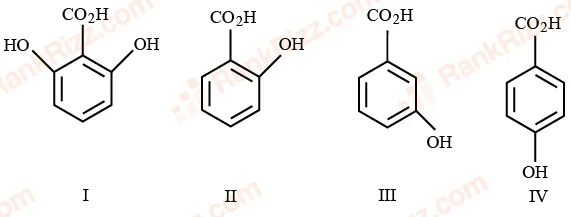
The correct order of acidity for the following compounds is
- (A)
- (B)
- (C)
- (D)
rr2.rankrizz.com/jee-advanced/chemistry/carboxylic-acids-and-derivatives/q/2016-paper-2-q23
- (A)
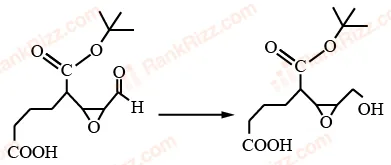
Reagent(s) which can be used to bring about the following transformation is(are)
- (A)
in
- (B)
in
- (C)
in
- (D)
Raney in
rr2.rankrizz.com/jee-advanced/chemistry/carboxylic-acids-and-derivatives/q/2016-paper-2-q31
- (A)
Compounds formed from P and @Q are, respectively
- (A)
Optically active S and optically active pair (T,U)
- (B)
Optically inactive S and optically inactive pair (T, U)
- (C)
Optically active pair (T, U) and optically active S
- (D)
Optically inactive pair (T, U) and optically inactive S
rr2.rankrizz.com/jee-advanced/chemistry/carboxylic-acids-and-derivatives/q/2013-paper-2-q35
- (A)
The total number of carboxylic acid groups in the product P is
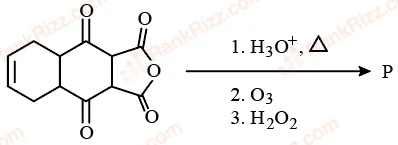
Answer: ____________
rr2.rankrizz.com/jee-advanced/chemistry/carboxylic-acids-and-derivatives/q/2013-paper-1-q36
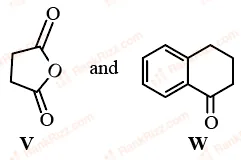
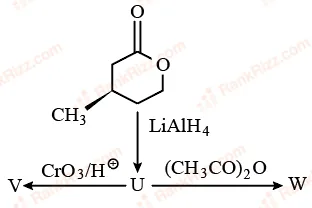
In the following reaction sequences V and W are, respectively
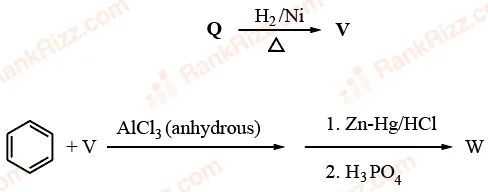
- (A)
- (B)
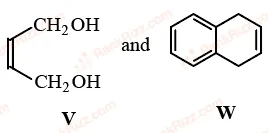
- (C)
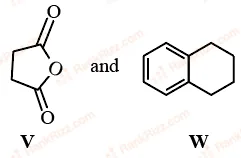
- (D)
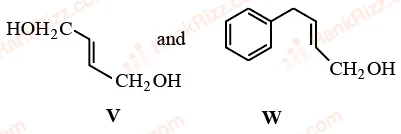
rr2.rankrizz.com/jee-advanced/chemistry/carboxylic-acids-and-derivatives/q/2013-paper-2-q36
- (A)
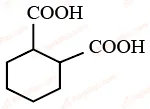
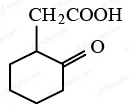
The compound that undergoes decarboxlylationmost readily under mild condition is
- (A)
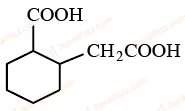
- (B)
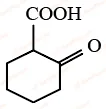
- (C)
- (D)
rr2.rankrizz.com/jee-advanced/chemistry/carboxylic-acids-and-derivatives/q/2012-paper-2-q24
- (A)
The carboxyl functional group (-COOH) is present in
- (A)
picric acid
- (B)
barbituric acid
- (C)
ascorbic acid
- (D)
aspirin
rr2.rankrizz.com/jee-advanced/chemistry/carboxylic-acids-and-derivatives/q/2012-paper-1-q27
- (A)
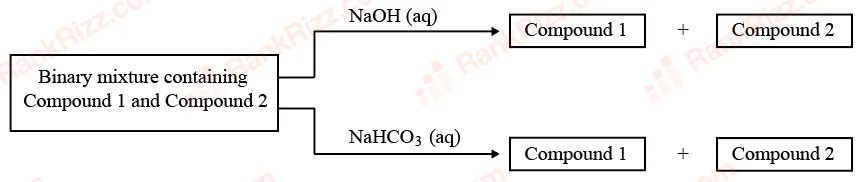
Identify the binary mixture(s) that can be separatedinto individual compounds, by differential extraction, as shown in the given scheme.
- (A)
and
- (B)
and
- (C)
and
- (D)
and
rr2.rankrizz.com/jee-advanced/chemistry/carboxylic-acids-and-derivatives/q/2012-paper-1-q31
- (A)
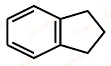
The compound K is
- (A)
- (B)
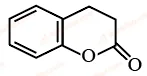
- (C)
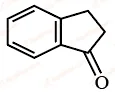
- (D)
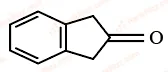
rr2.rankrizz.com/jee-advanced/chemistry/carboxylic-acids-and-derivatives/q/2012-paper-2-q33
- (A)
The compound I is
- (A)
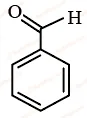
- (B)
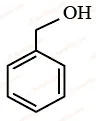
- (C)
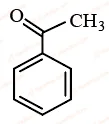
- (D)
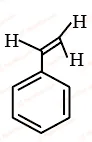
rr2.rankrizz.com/jee-advanced/chemistry/carboxylic-acids-and-derivatives/q/2012-paper-2-q34
- (A)
With reference to the scheme given, which of the given statements(s) about T, U, V and W is (are) correct?
- (A)
T is soluble in hot aqueous NaOH
- (B)
U is optically active
- (C)
Molecular formula of W is
- (D)
V gives effervescence on treatment with aqueous
rr2.rankrizz.com/jee-advanced/chemistry/carboxylic-acids-and-derivatives/q/2012-paper-2-q39
- (A)
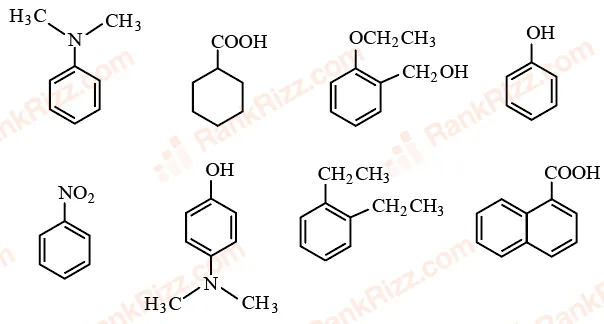
Amongst the following, the total number of compounds soluble in aqueous is
Answer: ____________
rr2.rankrizz.com/jee-advanced/chemistry/carboxylic-acids-and-derivatives/q/2010-paper-1-q22
STATEMENT-1: p-Hydroxybenzoic acid has a lower boiling point than o-hydroxybenzoic acid.
because
STATEMENT-2 : o-Hydroxybenzoic acid has intramolecular hydrogen bonding.- (A)
Statement-1 is True, Statement-2 is True; Statement-2 is a correct explanation for Statement-1
- (B)
Statement-1 is True, Statement-2 is True; Statement-2 is NOT a correct explanation for Statement-1
- (C)
Statement-1 is True, Statement-2 is False
- (D)
Statement-1 is False, Statement-2 is True
rr2.rankrizz.com/jee-advanced/chemistry/carboxylic-acids-and-derivatives/q/2007-paper-1-q34
- (A)
Acidity of carboxylic acids 3
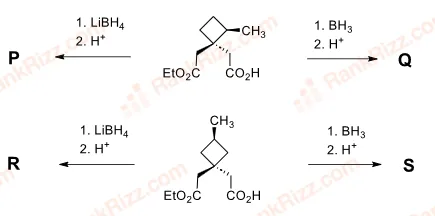
Considering reduces an ester group to the corresponding alcohol and does not reduce a carboxylic acid group, the correct statement about the major products , , and is
- (A)
& are identical, and & are diastereomers.
- (B)
& are diastereomers, and & are identical.
- (C)
& are diastereomers, and & are diastereomers.
- (D)
& are identical, and & are identical.
rr2.rankrizz.com/jee-advanced/chemistry/carboxylic-acids-and-derivatives/q/2026-paper-1-q20
- (A)
The molecular weight of U is ______.
Answer: ____________
rr2.rankrizz.com/jee-advanced/chemistry/carboxylic-acids-and-derivatives/q/2024-paper-2-q49
In the following reactions, P, Q, R, and S are the major products.
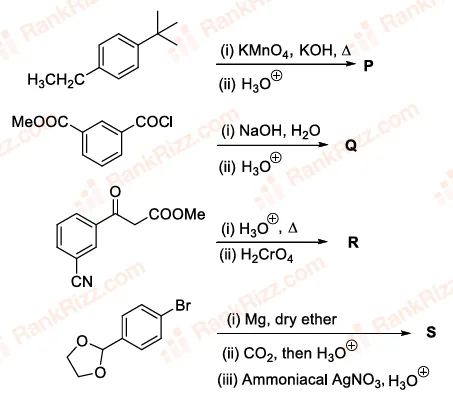
The correct statement(s) about P, Q, R, and S is (are)
- (A)
P and Q are monomers of polymers dacron and glyptal, respectively.
- (B)
P, Q, and R are dicarboxylic acids.
- (C)
Compounds Q and R are the same.
- (D)
R does not undergo aldol condensation and S does not undergo Cannizzaro reaction.
rr2.rankrizz.com/jee-advanced/chemistry/carboxylic-acids-and-derivatives/q/2023-paper-2-q41
- (A)
Acid derivatives: esters, amides, anhydrides and acid chlorides 1
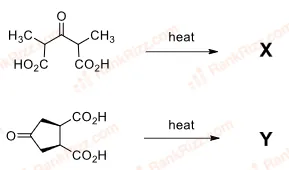
The sum of total number of carbonyl groups present in the major products and in the following reactions is ___.
Answer: ____________
rr2.rankrizz.com/jee-advanced/chemistry/carboxylic-acids-and-derivatives/q/2026-paper-1-q27
Answer key
- 01 C
- 02 B, C, D
- 03 B
- 04 C
- 05 D
- 06 A
- 07 C
- 08 A
- 09 D
- 10 D
- 11 A
- 12 C, D
- 13 B
- 14 2
- 15 A
- 16 B
- 17 D
- 18 B, D
- 19 C
- 20 A
- 21 A, C, D
- 22 4
- 23 D
- 24 C
- 25 —
- 26 C, D
- 27 4.00
“—” marks a question whose key we have not checked yet; its page shows the latest on it.
Past questions are reproduced with their sitting. Not affiliated with NTA or the IITs. Every question, online and free: rr2.rankrizz.com/jee-advanced/chemistry/carboxylic-acids-and-derivatives