In the print dialog choose “Save as PDF”. Turn off the browser’s own headers and footers; the chapter has its own.

RankRizzFREE PDF

Quadratic Equations and Inequalities JEE Main PYQs with answer key

MATHS · 186 PAST QUESTIONS · 9 TOPICS · 2004–2026

HOW TO USE THIS SHEET

Every JEE Main Quadratic Equations and Inequalities question we hold, grouped by topic, most-asked topic first and newest first inside each. The answer key is at the end (185 of 186 questions have a checked key); the worked solution is on each question’s page, printed beside it.

Relation between roots and coefficients 74

  1. 01 · JEE MAIN 2026 · 02 APR S1

    Let α,α+2,α∈Z\alpha, \alpha + 2, \alpha \in \mathbb{Z}, be the roots of the quadratic equation x(x+2)+(x+1)(x+3)+(x+2)(x+4)+…+(x+n−1)(x+n+1)=4nx(x+2) + (x+1)(x+3) + (x+2)(x+4) + \ldots + (x+n-1)(x+n+1) = 4n for some n∈Nn \in \mathbb{N}. Then n+αn + \alpha is equal to :

    1. (A)

      00

    2. (B)

      11

    3. (C)

      22

    4. (D)

      33

    rr2.rankrizz.com/jee-main/maths/quadratic-equations/q/2-apr-2026-s1-q1

  2. 02 · JEE MAIN 2026 · 02 APR S2

    Let α,β\alpha, \beta be roots of the equation x2−3x+r=0x^2 - 3x + r = 0, and α2,2β\frac{\alpha}{2}, 2\beta be roots of the equation x2+3x+r=0x^2 + 3x + r = 0.
    If roots of the equation x2+6x=mx^2 + 6x = m are 2α+β+2r2\alpha + \beta + 2r and α−2β−r2\alpha - 2\beta - \frac{r}{2}, then mm equals to :

    1. (A)

      −135-135

    2. (B)

      −567-567

    3. (C)

      135135

    4. (D)

      567567

    rr2.rankrizz.com/jee-main/maths/quadratic-equations/q/2-apr-2026-s2-q1

  3. 03 · JEE MAIN 2026 · 28 JAN S1

    If α,β\alpha, \beta, where α<β\alpha < \beta, are the roots of the quadratic equation  λx2−(λ+3)x+3=0\lambda x^{2}-(\lambda + 3)x+3=0 and  1α−1β=13\dfrac{1}{\alpha}-\dfrac{1}{\beta}=\dfrac{1}{3}, then the sum of all possible values of λ\lambda is

    1. (A)

      2

    2. (B)

      6

    3. (C)

      8

    4. (D)

      4

    rr2.rankrizz.com/jee-main/maths/quadratic-equations/q/28-jan-2026-s1-q13

  4. 04 · JEE MAIN 2026

    For a∈Ra\in\mathbb{R}, the solution set of x2−3(a+1)x+a2+a−1≤0x^2-3(a+1)x+a^2+a-1\le0 is an interval of length 44. What is the sum of the squares of the different values of aa?

    1. (A)

      165/25165/25

    2. (B)

      181/25181/25

    3. (C)

      226/25226/25

    4. (D)

      311/25311/25

    rr2.rankrizz.com/jee-main/maths/quadratic-equations/q/2026-maths-516391

  5. 05 · JEE MAIN 2025 · 03 APR S1

    Let α\alpha and β\beta be the roots of x2+3x−16=0x^2 + \sqrt{3}x - 16 = 0, and γ\gamma and δ\delta be the roots of x2+3x−1=0x^2 + 3x - 1 = 0. If Pn=αn+βnP_n = \alpha^n + \beta^n and Qn=γn+δnQ_n = \gamma^n + \delta^n, then P25+3P242P23+Q25−Q23Q24\frac{P_{25} + \sqrt{3}P_{24}}{2P_{23}} + \frac{Q_{25} - Q_{23}}{Q_{24}} is equal to

    1. (A)

      33

    2. (B)

      44

    3. (C)

      55

    4. (D)

      77

    rr2.rankrizz.com/jee-main/maths/quadratic-equations/q/2025-apr-03-s1-q3

  6. 06 · JEE MAIN 2025 · 02 APR S1

    Let Pn=αn+βnP_n = \alpha^n + \beta^n, n∈Nn \in \mathbb{N}. If P10=123P_{10} = 123, P9=76P_9 = 76, P8=47P_8 = 47 and P1=1P_1 = 1, then the quadratic equation having roots 1α\frac{1}{\alpha} and 1β\frac{1}{\beta} is:

    1. (A)

      x2−x+1=0x^2 - x + 1 = 0

    2. (B)

      x2+x−1=0x^2 + x - 1 = 0

    3. (C)

      x2−x−1=0x^2 - x - 1 = 0

    4. (D)

      x2+x+1=0x^2 + x + 1 = 0

    rr2.rankrizz.com/jee-main/maths/quadratic-equations/q/2025-apr-02-s1-q15

  7. 07 · JEE MAIN 2025 · 22 JAN S2

    Let αθ\alpha_{\theta} and βθ\beta_{\theta} be the distinct roots of 2x2+(cos⁡θ)x−1=0,θ∈(0,2π)2x^{2}+(\cos \theta)x-1=0,\theta \in (0,2\pi). If m and M are the minimum and the maximum values of αθ4+βθ4\alpha_{\theta}^{4}+\beta_{\theta}^{4}, then 16(M+m) equals :

    1. (A)

      24

    2. (B)

      25

    3. (C)

      17

    4. (D)

      27

    rr2.rankrizz.com/jee-main/maths/quadratic-equations/q/22-jan-2025-s2-q17

  8. 08 · JEE MAIN 2024 · 09 APR S1

    Let α,β\alpha, \beta be the roots of the equation x2+22x−1=0x^2 + 2\sqrt{2}x - 1 = 0. The quadratic equation, whose roots are α4+β4\alpha^4 + \beta^4 and 110(α6+β6)\frac{1}{10}(\alpha^6 + \beta^6), is :

    1. (A)

      x2−190x+9466=0x^2 - 190x + 9466 = 0

    2. (B)

      x2−180x+9506=0x^2 - 180x + 9506 = 0

    3. (C)

      x2−195x+9506=0x^2 - 195x + 9506 = 0

    4. (D)

      x2−195x+9466=0x^2 - 195x + 9466 = 0

    rr2.rankrizz.com/jee-main/maths/quadratic-equations/q/9-apr-2024-s1-q61

  9. 09 · JEE MAIN 2024 · 09 APR S2

    Let α,β;α>β\alpha, \beta; \alpha > \beta, be the roots of the equation x2−2x−3=0x^2 - \sqrt{2}x - \sqrt{3} = 0. Let Pn=αn−βn,n∈NP_n = \alpha^n - \beta^n, n \in \mathbb{N}. Then (113−102)P10+(112+10)P11−11P12(11\sqrt{3} - 10\sqrt{2})P_{10} + (11\sqrt{2} + 10)P_{11} - 11P_{12} is equal to

    1. (A)

      103P910\sqrt{3}P_9

    2. (B)

      113P911\sqrt{3}P_9

    3. (C)

      102P910\sqrt{2}P_9

    4. (D)

      112P911\sqrt{2}P_9

    rr2.rankrizz.com/jee-main/maths/quadratic-equations/q/9-apr-2024-s2-q61

  10. 10 · JEE MAIN 2024 · 08 APR S1

    The sum of all the solutions of the equation (8)2x−16⋅(8)x+48=0(8)^{2x} - 16 \cdot (8)^x + 48 = 0 is :

    1. (A)

      1+log⁡8(6)1 + \log_8(6)

    2. (B)

      1+log⁡6(8)1 + \log_6(8)

    3. (C)

      log⁡8(6)\log_8(6)

    4. (D)

      log⁡8(4)\log_8(4)

    rr2.rankrizz.com/jee-main/maths/quadratic-equations/q/8-apr-2024-s1-q61

  11. 11 · JEE MAIN 2024 · 06 APR S1

    Let α,β\alpha, \beta be the distinct roots of the equation x2−(t2−5t+6)x+1=0,t∈Rx^2 - (t^2 - 5t + 6)x + 1 = 0, t \in \mathbb{R} and an=αn+βna_n = \alpha^n + \beta^n. Then the minimum value of a2023+a2025a2024\frac{a_{2023} + a_{2025}}{a_{2024}} is

    1. (A)

      1/41/4

    2. (B)

      −1/4-1/4

    3. (C)

      −1/2-1/2

    4. (D)

      1/21/2

    rr2.rankrizz.com/jee-main/maths/quadratic-equations/q/6-apr-2024-s1-q61

  12. 12 · JEE MAIN 2024 · 06 APR S2

    Let α,β\alpha, \beta be roots of x2+2x−8=0x^2 + \sqrt{2}x - 8 = 0. If Un=αn+βnU_n = \alpha^n + \beta^n, then U10+2U92U8\frac{U_{10} + \sqrt{2}U_9}{2U_8} is equal to ___________

    Answer: ____________

    rr2.rankrizz.com/jee-main/maths/quadratic-equations/q/6-apr-2024-s2-q81

  13. 13 · JEE MAIN 2024 · 04 APR S1

    If 2 and 6 are the roots of the equation ax2+bx+1=0ax^2 + bx + 1 = 0, then the quadratic equation whose roots are 12a+b\frac{1}{2a+b} and 16a+b\frac{1}{6a+b} is:

    1. (A)

      2x2+11x+12=02x^2 + 11x + 12 = 0

    2. (B)

      x2+8x+12=0x^2 + 8x + 12 = 0

    3. (C)

      4x2+14x+12=04x^2 + 14x + 12 = 0

    4. (D)

      x2+10x+16=0x^2 + 10x + 16 = 0

    rr2.rankrizz.com/jee-main/maths/quadratic-equations/q/04-apr-2024-s1-q61

  14. 14 · JEE MAIN 2024 · 01 FEB S2

    Let α\alpha and β\beta be the roots of the equation px2+qx−r=0px^2 + qx - r = 0, where p≠0p \neq 0. If pp, qq and rr be the consecutive terms of a non-constant G.P and 1α+1β=34\frac{1}{\alpha} + \frac{1}{\beta} = \frac{3}{4}, then the value of (α−β)2(\alpha - \beta)^2 is:

    1. (A)

      809\frac{80}{9}

    2. (B)

      9

    3. (C)

      203\frac{20}{3}

    4. (D)

      8

    rr2.rankrizz.com/jee-main/maths/quadratic-equations/q/01-feb-2024-s2-q61

  15. 15 · JEE MAIN 2024 · 30 JAN S1

    Let α,β∈R\alpha, \beta \in \mathbb{R} be roots of equation x2−70x+λ=0x^2 - 70x + \lambda = 0, where λ2,λ3∉Z\frac{\lambda}{2}, \frac{\lambda}{3} \notin \mathbb{Z}. If λ\lambda assumes the minimum possible value, then (α−1+β−1)(λ+35)∣α−β∣\frac{(\sqrt{\alpha - 1} + \sqrt{\beta - 1})(\lambda + 35)}{|\alpha - \beta|} is equal to :

    Answer: ____________

    rr2.rankrizz.com/jee-main/maths/quadratic-equations/q/30-jan-2024-s1-q81

  16. 16 · JEE MAIN 2024 · 27 JAN S2

    If α,β\alpha, \beta are the roots of the equation, x2−x−1=0x^2 - x - 1 = 0 and Sn=2023αn+2024βnS_n = 2023\alpha^n + 2024\beta^n, then

    1. (A)

      2S12=S11+S102S_{12} = S_{11} + S_{10}

    2. (B)

      S12=S11+S10S_{12} = S_{11} + S_{10}

    3. (C)

      2S11=S12+S102S_{11} = S_{12} + S_{10}

    4. (D)

      S11=S10+S12S_{11} = S_{10} + S_{12}

    rr2.rankrizz.com/jee-main/maths/quadratic-equations/q/27-jan-2024-s2-q61

  17. 17 · JEE MAIN 2023 · 13 APR S2

    Let α\alpha, β\beta be the roots of the equation x2−2x+2=0x^2 - \sqrt{2}x + 2 = 0. Then α14+β14\alpha^{14} + \beta^{14} is equal to

    1. (A)

      −64-64

    2. (B)

      −642-64\sqrt{2}

    3. (C)

      −128-128

    4. (D)

      −1282-128\sqrt{2}

    rr2.rankrizz.com/jee-main/maths/quadratic-equations/q/13-apr-2023-s2-q61

  18. 18 · JEE MAIN 2023 · 12 APR S1

    Let α\alpha, β\beta be the roots of the quadratic equation x2+6x+3=0x^2 + \sqrt{6}x + 3 = 0. Then α23+β23+α14+β14α15+β15+α10+β10\frac{\alpha^{23} + \beta^{23} + \alpha^{14} + \beta^{14}}{\alpha^{15} + \beta^{15} + \alpha^{10} + \beta^{10}} is equal to

    1. (A)

      8181

    2. (B)

      99

    3. (C)

      7272

    4. (D)

      729729

    rr2.rankrizz.com/jee-main/maths/quadratic-equations/q/12-apr-2023-s1-q61

  19. 19 · JEE MAIN 2023 · 11 APR S1

    If aa and bb are the roots of the equation x2−7x−1=0x^2 - 7x - 1 = 0, then the value of a21+b21+a17+b17a19+b19\frac{a^{21} + b^{21} + a^{17} + b^{17}}{a^{19} + b^{19}} is equal to _______

    Answer: ____________

    rr2.rankrizz.com/jee-main/maths/quadratic-equations/q/11-apr-2023-s1-q81

  20. 20 · JEE MAIN 2023 · 11 APR S2

    The number of points, where the curve f(x)=e8x−e6x−3e4x−e2x+1f(x) = e^{8x} - e^{6x} - 3e^{4x} - e^{2x} + 1, x∈Rx \in \mathbb{R} cuts xx-axis, is equal to

    Answer: ____________

    rr2.rankrizz.com/jee-main/maths/quadratic-equations/q/11-apr-2023-s2-q61

  21. 21 · JEE MAIN 2023 · 08 APR S1

    Let α,β,γ\alpha, \beta, \gamma be the three roots of the equation x3+bx+c=0x^3 + bx + c = 0 if βγ=1=−α\beta\gamma = 1 = -\alpha then b3+2c3−3α3−6β3−8γ3b^3 + 2c^3 - 3\alpha^3 - 6\beta^3 - 8\gamma^3 is equal to

    1. (A)

      1558\dfrac{155}{8}

    2. (B)

      21

    3. (C)

      1698\dfrac{169}{8}

    4. (D)

      19

    rr2.rankrizz.com/jee-main/maths/quadratic-equations/q/8-apr-2023-s1-q61

  22. 22 · JEE MAIN 2023 · 01 FEB S1

    Let S={x:x∈RS = \{x : x \in \mathbb{R} and (3+2)x2−4+(3−2)x2−4 = 10\left(\sqrt{3}+\sqrt{2}\right)^{x^2-4}+\left(\sqrt{3}-\sqrt{2}\right)^{x^2-4}\ =\ 10. Then n(S)n(S) is equal to

    1. (A)

      2

    2. (B)

      4

    3. (C)

      6

    4. (D)

      0

    rr2.rankrizz.com/jee-main/maths/quadratic-equations/q/01-feb-2023-s1-q61

  23. 23 · JEE MAIN 2023 · 29 JAN S1

    Let λ≠0\lambda \neq 0 be a real number. Let α,β\alpha, \beta be the roots of the equation 14x2−31x+3λ=014x^2 - 31x + 3\lambda = 0 and α,γ\alpha, \gamma be the roots of the equation 35x2−53x+4λ=035x^2 - 53x + 4\lambda = 0. Then 3αβ\frac{3\alpha}{\beta} and 4αγ\frac{4\alpha}{\gamma} are the roots of the equation:

    1. (A)

      7x2+245x−250=07x^2 + 245x - 250 = 0

    2. (B)

      7x2−245x+250=07x^2 - 245x + 250 = 0

    3. (C)

      49x2−245x+250=049x^2 - 245x + 250 = 0

    4. (D)

      49x2+245x+250=049x^2 + 245x + 250 = 0

    rr2.rankrizz.com/jee-main/maths/quadratic-equations/q/29-jan-2023-s1-q61

  24. 24 · JEE MAIN 2023 · 29 JAN S2

    Let α1,α2,…,α7\alpha_1, \alpha_2, \ldots, \alpha_7 be the roots of the equation x7+3x5−13x3−15x=0x^7 + 3x^5 - 13x^3 - 15x = 0 and ∣α1∣≥∣α2∣≥…≥∣α7∣|\alpha_1| \geq |\alpha_2| \geq \ldots \geq |\alpha_7|. Then, α1α2−α3α4+α5α6\alpha_1\alpha_2 - \alpha_3\alpha_4 + \alpha_5\alpha_6 is equal to ______.

    Answer: ____________

    rr2.rankrizz.com/jee-main/maths/quadratic-equations/q/29-jan-2023-s2-q80

  25. 25 · JEE MAIN 2023 · 25 JAN S2

    Let a∈Ra \in R and let α,β\alpha, \beta be the roots of the equation x2+601/4x+a=0x^2 + 60^{1/4}x + a = 0. If α4+β4=−30\alpha^4 + \beta^4 = -30, then the product of all possible values of aa is _____.

    Answer: ____________

    rr2.rankrizz.com/jee-main/maths/quadratic-equations/q/25-jan-2023-s2-q79

  26. 26 · JEE MAIN 2022 · 29 JUL S2

    Let α,β\alpha, \beta (α>β\alpha > \beta) be the roots of the quadratic equation x2−x−4=0x^2 - x - 4 = 0. If Pn=αn−βnP_n = \alpha^n - \beta^n, n∈Nn \in \mathbb{N}, then P15P16−P14P16−P152+P14P15P13P14\frac{P_{15}P_{16} - P_{14}P_{16} - P_{15}^2 + P_{14}P_{15}}{P_{13}P_{14}} is equal to _____

    Answer: ____________

    rr2.rankrizz.com/jee-main/maths/quadratic-equations/q/29-jul-2022-s2-q81

  27. 27 · JEE MAIN 2022 · 28 JUL S2

    Let α,β\alpha, \beta be the roots of the equation x2−2x+6=0x^2 - \sqrt{2}x + \sqrt{6} = 0 and 1α2+1,1β2+1\frac{1}{\alpha^2+1}, \frac{1}{\beta^2+1} be the roots of the equation x2+ax+b=0x^2 + ax + b = 0. Then the roots of the equation x2−(a+b−2)x+(a+b+2)=0x^2 - (a+b-2)x + (a+b+2) = 0 are:

    1. (A)

      non-real complex numbers

    2. (B)

      real and both negative

    3. (C)

      real and both positive

    4. (D)

      real and exactly one of them is positive

    rr2.rankrizz.com/jee-main/maths/quadratic-equations/q/28-jul-2022-s2-q62

  28. 28 · JEE MAIN 2022 · 27 JUL S2

    If α,β\alpha, \beta are the roots of the equation x2−(5+3log⁡35−5log⁡53)x+3(3(log⁡35)1/3−5(log⁡53)2/3−1)=0x^2 - (5 + 3^{\sqrt{\log_3 5}} - 5^{\sqrt{\log_5 3}})x + 3(3^{(\log_3 5)^{1/3}} - 5^{(\log_5 3)^{2/3}} - 1) = 0 then the equation, whose roots are α+1β\alpha + \dfrac{1}{\beta} and β+1α\beta + \dfrac{1}{\alpha}, is

    1. (A)

      3x2−20x−12=03x^2 - 20x - 12 = 0

    2. (B)

      3x2−10x−4=03x^2 - 10x - 4 = 0

    3. (C)

      3x2−10x+2=03x^2 - 10x + 2 = 0

    4. (D)

      3x2−20x+16=03x^2 - 20x + 16 = 0

    rr2.rankrizz.com/jee-main/maths/quadratic-equations/q/27-jul-2022-s2-q61

  29. 29 · JEE MAIN 2022 · 26 JUL S2

    The minimum value of the sum of the squares of the roots of x2+(3−a)x=2(a−1)x^2 + (3-a)x = 2(a-1) is

    1. (A)

      66

    2. (B)

      44

    3. (C)

      55

    4. (D)

      88

    rr2.rankrizz.com/jee-main/maths/quadratic-equations/q/26-jul-2022-s2-q61

  30. 30 · JEE MAIN 2022 · 28 JUN S2

    Let f(x)f(x) be a quadratic polynomial such that f(−2)+f(3)=0f(-2) + f(3) = 0. If one of the roots of f(x)=0f(x) = 0 is −1-1, then the sum of the roots of f(x)=0f(x) = 0 is equal to

    1. (A)

      113\frac{11}{3}

    2. (B)

      73\frac{7}{3}

    3. (C)

      133\frac{13}{3}

    4. (D)

      143\frac{14}{3}

    rr2.rankrizz.com/jee-main/maths/quadratic-equations/q/28-jun-2022-s2-q61

  31. 31 · JEE MAIN 2022 · 27 JUN S2

    Let α,β\alpha, \beta be the roots of the equation x2−4λx+5=0x^2 - 4\lambda x + 5 = 0 and α,γ\alpha, \gamma be the roots of the equation x2−(32+23)x+7+3λ3=0x^2 - (3\sqrt{2} + 2\sqrt{3})x + 7 + 3\lambda\sqrt{3} = 0. If β+γ=32\beta + \gamma = 3\sqrt{2}, then (α+2β+γ)2(\alpha + 2\beta + \gamma)^2 is equal to ______

    Answer: ____________

    rr2.rankrizz.com/jee-main/maths/quadratic-equations/q/27-jun-2022-s2-q81

  32. 32 · JEE MAIN 2022 · 26 JUN S1

    The sum of the cubes of all the roots of the equation x4−3x3−2x2+3x+1=0x^4 - 3x^3 - 2x^2 + 3x + 1 = 0 is ______

    Answer: ____________

    rr2.rankrizz.com/jee-main/maths/quadratic-equations/q/26-jun-2022-s1-q81

  33. 33 · JEE MAIN 2022 · 26 JUN S2

    If pp and qq are real number such that p+q=3,p4+q4=369p + q = 3, p^4 + q^4 = 369, then the value of (1p+1q)−2\left(\frac{1}{p} + \frac{1}{q}\right)^{-2} is equal to ______

    Answer: ____________

    rr2.rankrizz.com/jee-main/maths/quadratic-equations/q/26-jun-2022-s2-q81

  34. 34 · JEE MAIN 2022 · 24 JUN S1

    If the sum of the squares of the reciprocals of the roots α\alpha and β\beta of the equation 3x2+λx−1=03x^2 + \lambda x - 1 = 0 is 1515, then 6(α3+β3)26(\alpha^3 + \beta^3)^2 is equal to

    1. (A)

      46

    2. (B)

      36

    3. (C)

      24

    4. (D)

      18

    rr2.rankrizz.com/jee-main/maths/quadratic-equations/q/24-jun-2022-s1-q61

  35. 35 · JEE MAIN 2021 · 27 JUL S1

    Let α,β\alpha, \beta be two roots of the equation x2+(20)1/4x+(5)1/2=0x^2 + (20)^{1/4}x + (5)^{1/2} = 0. Then α8+β8\alpha^8 + \beta^8 is equal to:

    1. (A)

      10

    2. (B)

      100

    3. (C)

      50

    4. (D)

      160

    rr2.rankrizz.com/jee-main/maths/quadratic-equations/q/27-jul-2021-s1-q61

  36. 36 · JEE MAIN 2021 · 27 JUL S2

    Let α=max⁡x∈R{82sin⁡3x⋅44cos⁡3x}\alpha = \max_{x \in R}\{8^{2\sin 3x} \cdot 4^{4\cos 3x}\} and β=min⁡x∈R{82sin⁡3x⋅44cos⁡3x}\beta = \min_{x \in R}\{8^{2\sin 3x} \cdot 4^{4\cos 3x}\}. If 8x2+bx+c=08x^2 + bx + c = 0 is a quadratic equation whose roots are α1/5\alpha^{1/5} and β1/5\beta^{1/5}, then the value of c−bc - b is equal to:

    1. (A)

      42

    2. (B)

      47

    3. (C)

      43

    4. (D)

      50

    rr2.rankrizz.com/jee-main/maths/quadratic-equations/q/27-jul-2021-s2-q61

  37. 37 · JEE MAIN 2021 · 25 JUL S1

    If α,β\alpha, \beta are roots of the equation x2+52x+10=0x^2 + 5\sqrt{2}x + 10 = 0, α>β\alpha > \beta and Pn=αn−βnP_n = \alpha^n - \beta^n for each positive integer nn, then the value of P17P20+52P17P19P18P19+52P182\frac{P_{17}P_{20} + 5\sqrt{2}P_{17}P_{19}}{P_{18}P_{19} + 5\sqrt{2}P_{18}^2} is equal to ___.

    Answer: ____________

    rr2.rankrizz.com/jee-main/maths/quadratic-equations/q/25-jul-2021-s1-q81

  38. 38 · JEE MAIN 2021 · 25 JUL S2

    If a+b+c=1a + b + c = 1, ab+bc+ca=2ab + bc + ca = 2 and abc=3abc = 3, then the value of a4+b4+c4a^4 + b^4 + c^4 is equal to:

    Answer: ____________

    rr2.rankrizz.com/jee-main/maths/quadratic-equations/q/25-jul-2021-s2-q81

  39. 39 · JEE MAIN 2021 · 20 JUL S1

    If α\alpha and β\beta are the distinct roots of the equation x2+(3)1/4x+31/2=0x^2 + (3)^{1/4}x + 3^{1/2} = 0, then the value of α96(α12−1)+β96(β12−1)\alpha^{96}(\alpha^{12} - 1) + \beta^{96}(\beta^{12} - 1) is equal to:

    1. (A)

      56×32556 \times 3^{25}

    2. (B)

      56×32456 \times 3^{24}

    3. (C)

      52×32452 \times 3^{24}

    4. (D)

      28×32528 \times 3^{25}

    rr2.rankrizz.com/jee-main/maths/quadratic-equations/q/20-jul-2021-s1-q61

  40. 40 · JEE MAIN 2021 · 26 FEB S2

    Let α\alpha and β\beta be two real numbers such that α+β=1\alpha + \beta = 1 and αβ=−1\alpha\beta = -1. Let pn=(α)n+(β)np_n = (\alpha)^n + (\beta)^n, pn−1=11p_{n-1} = 11 and pn+1=29p_{n+1} = 29 for some integer n≥1n \geq 1. Then, the value of pn2p_n^2 is ______.

    Answer: ____________

    rr2.rankrizz.com/jee-main/maths/quadratic-equations/q/26-feb-2021-s2-q81

  41. 41 · JEE MAIN 2021 · 25 FEB S2

    Let α\alpha and β\beta be the roots of x2−6x−2=0x^2 - 6x - 2 = 0. If an=αn−βna_n = \alpha^n - \beta^n for n≥1n \geq 1, then the value of a10−2a83a9\dfrac{a_{10} - 2a_8}{3a_9} is:

    1. (A)

      1

    2. (B)

      3

    3. (C)

      2

    4. (D)

      4

    rr2.rankrizz.com/jee-main/maths/quadratic-equations/q/25-feb-2021-s2-q61

  42. 42 · JEE MAIN 2021 · 24 FEB S1

    Let pp and qq be two numbers such that p+q=2p + q = 2 and p4+q4=272p^4 + q^4 = 272. Then pp and qq are roots of the equation:

    1. (A)

      x2−2x+2=0x^2 - 2x + 2 = 0

    2. (B)

      x2−2x+8=0x^2 - 2x + 8 = 0

    3. (C)

      x2−2x+136=0x^2 - 2x + 136 = 0

    4. (D)

      x2−2x+16=0x^2 - 2x + 16 = 0

    rr2.rankrizz.com/jee-main/maths/quadratic-equations/q/24-feb-2021-s1-q61

  43. 43 · JEE MAIN 2020 · 06 SEP S1

    If α\alpha and β\beta be two roots of the equation x2−64x+256=0x^2 - 64x + 256 = 0. Then the value of (α3β5)1/8+(β3α5)1/8\left(\frac{\alpha^3}{\beta^5}\right)^{1/8} + \left(\frac{\beta^3}{\alpha^5}\right)^{1/8} is:

    1. (A)

      2

    2. (B)

      3

    3. (C)

      1

    4. (D)

      4

    rr2.rankrizz.com/jee-main/maths/quadratic-equations/q/6-sep-2020-s1-q51

  44. 44 · JEE MAIN 2020 · 06 SEP S2

    If α\alpha and β\beta are the roots of the equation 2x(2x+1)=12x(2x+1) = 1, then β\beta is equal to:

    1. (A)

      2α(α+1)2\alpha(\alpha+1)

    2. (B)

      −2α(α+1)-2\alpha(\alpha+1)

    3. (C)

      2α(α−1)2\alpha(\alpha-1)

    4. (D)

      2α22\alpha^2

    rr2.rankrizz.com/jee-main/maths/quadratic-equations/q/6-sep-2020-s2-q51

  45. 45 · JEE MAIN 2020 · 05 SEP S2

    If α\alpha and β\beta are the roots of the equation, 7x2−3x−2=07x^2 - 3x - 2 = 0, then the value of α1−α2+β1−β2\frac{\alpha}{1-\alpha^2} + \frac{\beta}{1-\beta^2} is equal to:

    1. (A)

      2732\frac{27}{32}

    2. (B)

      124\frac{1}{24}

    3. (C)

      38\frac{3}{8}

    4. (D)

      2716\frac{27}{16}

    rr2.rankrizz.com/jee-main/maths/quadratic-equations/q/5-sep-2020-s2-q51

  46. 46 · JEE MAIN 2020 · 03 SEP S1

    If α\alpha and β\beta are the roots of the equation x2+px+2=0x^2 + px + 2 = 0 and 1α\frac{1}{\alpha} and 1β\frac{1}{\beta} are the roots of the equation 2x2+2qx+1=02x^2 + 2qx + 1 = 0, then (α−1α)(β−1β)(α+1β)(β+1α)\left(\alpha - \frac{1}{\alpha}\right)\left(\beta - \frac{1}{\beta}\right)\left(\alpha + \frac{1}{\beta}\right)\left(\beta + \frac{1}{\alpha}\right) is equal to:

    1. (A)

      94(9+q2)\frac{9}{4}(9 + q^2)

    2. (B)

      94(9−q2)\frac{9}{4}(9 - q^2)

    3. (C)

      94(9+p2)\frac{9}{4}(9 + p^2)

    4. (D)

      94(9−p2)\frac{9}{4}(9 - p^2)

    rr2.rankrizz.com/jee-main/maths/quadratic-equations/q/3-sep-2020-s1-q52

  47. 47 · JEE MAIN 2020 · 02 SEP S1

    Let α\alpha and β\beta be the roots of the equation, 5x2+6x−2=05x^2 + 6x - 2 = 0. If Sn=αn+βnS_n = \alpha^n + \beta^n, n=1,2,3,…n = 1, 2, 3, \ldots, then:

    1. (A)

      6S6+5S5=2S46S_6 + 5S_5 = 2S_4

    2. (B)

      5S6+6S5+2S4=05S_6 + 6S_5 + 2S_4 = 0

    3. (C)

      5S6+6S5=2S45S_6 + 6S_5 = 2S_4

    4. (D)

      6S6+5S5+2S4=06S_6 + 5S_5 + 2S_4 = 0

    rr2.rankrizz.com/jee-main/maths/quadratic-equations/q/2-sep-2020-s1-q51

  48. 48 · JEE MAIN 2020 · 07 JAN S2

    Let α\alpha and β\beta be the roots of the equation x2−x−1=0x^2 - x - 1 = 0. If pk=(α)k+(β)kp_k = (\alpha)^k + (\beta)^k, k≥1k \ge 1, then which one of the following statements is not true?

    1. (A)

      p3=p5−p4p_3 = p_5 - p_4

    2. (B)

      p5=11p_5 = 11

    3. (C)

      (p1+p2+p3+p4+p5)=26(p_1 + p_2 + p_3 + p_4 + p_5) = 26

    4. (D)

      p5=p2⋅p3p_5 = p_2 \cdot p_3

    rr2.rankrizz.com/jee-main/maths/quadratic-equations/q/7-jan-2020-s2-q51

  49. 49 · JEE MAIN 2019 · 10 APR S1

    If α\alpha and β\beta are the roots of the quadratic equation x2+xsin⁡θ−2sin⁡θ=0x^2 + x\sin\theta - 2\sin\theta = 0, θ∈(0,π2)\theta \in \left(0, \frac{\pi}{2}\right), then α12+β12(α−12+β−12)⋅(α−β)24\frac{\alpha^{12} + \beta^{12}}{(\alpha^{-12} + \beta^{-12})\cdot(\alpha - \beta)^{24}} is equal to:

    1. (A)

      26(sin⁡θ+8)12\frac{2^6}{(\sin\theta + 8)^{12}}

    2. (B)

      212(sin⁡θ−4)12\frac{2^{12}}{(\sin\theta - 4)^{12}}

    3. (C)

      212(sin⁡θ+8)12\frac{2^{12}}{(\sin\theta + 8)^{12}}

    4. (D)

      212(sin⁡θ−8)6\frac{2^{12}}{(\sin\theta - 8)^6}

    rr2.rankrizz.com/jee-main/maths/quadratic-equations/q/10-apr-2019-s1-q61

  50. 50 · JEE MAIN 2019 · 09 APR S1

    Let p,q∈Qp, q \in Q. If 2−32 - \sqrt{3} is a root of the quadratic equation x2+px+q=0x^2 + px + q = 0, then:

    1. (A)

      p2−4q+12=0p^2 - 4q + 12 = 0

    2. (B)

      q2+4p+14=0q^2 + 4p + 14 = 0

    3. (C)

      p2−4q−12=0p^2 - 4q - 12 = 0

    4. (D)

      q2−4p−16=0q^2 - 4p - 16 = 0

    rr2.rankrizz.com/jee-main/maths/quadratic-equations/q/9-apr-2019-s1-q61

  51. 51 · JEE MAIN 2019 · 09 APR S2

    If mm is chosen in the quadratic equation (m2+1)x2−3x+(m2+1)2=0(m^2 + 1)x^2 - 3x + (m^2 + 1)^2 = 0 such that the sum of its roots is greatest, then the absolute difference of the cubes of its roots is:

    1. (A)

      434\sqrt{3}

    2. (B)

      10510\sqrt{5}

    3. (C)

      838\sqrt{3}

    4. (D)

      858\sqrt{5}

    rr2.rankrizz.com/jee-main/maths/quadratic-equations/q/9-apr-2019-s2-q61

  52. 52 · JEE MAIN 2019 · 12 JAN S1

    If λ\lambda be the ratio of the roots of the quadratic equation in x, 3m2x2+m(m−4)x+2=03m^2x^2 + m(m-4)x + 2 = 0, then the least value of m for which λ+1λ=1\lambda + \frac{1}{\lambda} = 1, is:

    1. (A)

      2−32 - \sqrt{3}

    2. (B)

      −2+2-2 + \sqrt{2}

    3. (C)

      4−234 - 2\sqrt{3}

    4. (D)

      4−324 - 3\sqrt{2}

    rr2.rankrizz.com/jee-main/maths/quadratic-equations/q/12-jan-2019-s1-q61

  53. 53 · JEE MAIN 2019 · 11 JAN S1

    If one real root of the quadratic equation 81x2+kx+256=081x^2 + kx + 256 = 0 is cube of the other root, then a value of k is:

    1. (A)

      -81

    2. (B)

      100

    3. (C)

      144

    4. (D)

      -300

    rr2.rankrizz.com/jee-main/maths/quadratic-equations/q/11-jan-2019-s1-q61

  54. 54 · JEE MAIN 2019 · 11 JAN S2

    Let α\alpha and β\beta be the roots of the quadratic equation x2sin⁡θ−x(sin⁡θcos⁡θ+1)+cos⁡θ=0x^2 \sin\theta - x(\sin\theta \cos\theta + 1) + \cos\theta = 0 (0<θ<45°)(0 < \theta < 45°), and α<β\alpha < \beta. Then ∑n=0∞(αn+(−1)nβn)\sum_{n=0}^{\infty}\left(\alpha^n + \frac{(-1)^n}{\beta^n}\right) is equal to:

    1. (A)

      11−cos⁡θ−11+sin⁡θ\frac{1}{1-\cos\theta} - \frac{1}{1+\sin\theta}

    2. (B)

      11+cos⁡θ+11−sin⁡θ\frac{1}{1+\cos\theta} + \frac{1}{1-\sin\theta}

    3. (C)

      11−cos⁡θ+11+sin⁡θ\frac{1}{1-\cos\theta} + \frac{1}{1+\sin\theta}

    4. (D)

      11+cos⁡θ−11−sin⁡θ\frac{1}{1+\cos\theta} - \frac{1}{1-\sin\theta}

    rr2.rankrizz.com/jee-main/maths/quadratic-equations/q/11-jan-2019-s2-q61

  55. 55 · JEE MAIN 2019 · 10 JAN S2

    The value of λ\lambda such that sum of the squares of the roots of the quadratic equation, x2+(3−λ)x+2=λx^2 + (3-\lambda)x + 2 = \lambda has the least value is:

    1. (A)

      2

    2. (B)

      49\dfrac{4}{9}

    3. (C)

      158\dfrac{15}{8}

    4. (D)

      1

    rr2.rankrizz.com/jee-main/maths/quadratic-equations/q/10-jan-2019-s2-q61

  56. 56 · JEE MAIN 2018 · 16 APR ONLINE

    Let p, q and r be real numbers (p≠q,r≠0p \neq q, r \neq 0), such that the roots of the equation 1x+p+1x+q=1r\frac{1}{x+p} + \frac{1}{x+q} = \frac{1}{r} are equal in magnitude but opposite in sign, then the sum of squares of these roots is equal to:

    1. (A)

      p2+q2p^2 + q^2

    2. (B)

      p2+q22\frac{p^2 + q^2}{2}

    3. (C)

      2(p2+q2)2(p^2 + q^2)

    4. (D)

      p2+q2+r2p^2 + q^2 + r^2

    rr2.rankrizz.com/jee-main/maths/quadratic-equations/q/16-apr-2018-online-q61

  57. 57 · JEE MAIN 2018 · 15 APR S1

    If λ∈R\lambda \in R is such that the sum of the cubes of the roots of the equation, x2+(2−λ)x+(10−λ)=0x^2 + (2 - \lambda)x + (10 - \lambda) = 0 is minimum, then the magnitude of the difference of the roots of this equation is:

    1. (A)

      20

    2. (B)

      252\sqrt{5}

    3. (C)

      272\sqrt{7}

    4. (D)

      424\sqrt{2}

    rr2.rankrizz.com/jee-main/maths/quadratic-equations/q/15-apr-2018-s1-q61

  58. 58 · JEE MAIN 2018 · 15 APR S2

    If f(x)f(x) is a quadratic expression such that f(1)+f(2)=0f(1) + f(2) = 0, and -1 is a root of f(x)=0f(x) = 0, then the other root of f(x)=0f(x) = 0 is:

    1. (A)

      −58-\frac{5}{8}

    2. (B)

      −85-\frac{8}{5}

    3. (C)

      58\frac{5}{8}

    4. (D)

      85\frac{8}{5}

    rr2.rankrizz.com/jee-main/maths/quadratic-equations/q/15-apr-2018-s2-q81

  59. 59 · JEE MAIN 2017 · 08 APR ONLINE

    Let p(x)p(x) be a quadratic polynomial such that p(0)=1p(0) = 1. If p(x)p(x) leaves remainder 4 when divided by x−1x - 1 and it leaves remainder 6 when divided by x+1x + 1 then:

    1. (A)

      p(−2)=19p(-2) = 19

    2. (B)

      p(2)=19p(2) = 19

    3. (C)

      p(−2)=11p(-2) = 11

    4. (D)

      p(2)=11p(2) = 11

    rr2.rankrizz.com/jee-main/maths/quadratic-equations/q/8-apr-2017-online-q61

  60. 60 · JEE MAIN 2017 · 02 APR OFFLINE

    If, for a positive integer nn, the quadratic equation,
    x(x+1)+(x+1)(x+2)+…+(x+n−1‾)(x+n)=10nx(x+1) + (x+1)(x+2) + \ldots + (x+\overline{n-1})(x+n) = 10n
    has two consecutive integral solutions, then nn is equal to:

    1. (A)

      12

    2. (B)

      9

    3. (C)

      10

    4. (D)

      11

    rr2.rankrizz.com/jee-main/maths/quadratic-equations/q/2-apr-2017-offline-q61

  61. 61 · JEE MAIN 2016 · 10 APR ONLINE

    If xx is a solution of the equation 2x+1−2x−1=1\sqrt{2x+1} - \sqrt{2x-1} = 1, (x≥12)\left(x \geq \frac{1}{2}\right), then 4x2−1\sqrt{4x^2 - 1} is equal to:

    1. (A)

      34\frac{3}{4}

    2. (B)

      12\frac{1}{2}

    3. (C)

      222\sqrt{2}

    4. (D)

      2

    rr2.rankrizz.com/jee-main/maths/quadratic-equations/q/10-apr-2016-online-q61

  62. 62 · JEE MAIN 2014 · 11 APR ONLINE

    If α\alpha and β\beta are roots of the equation, x2−42kx+2e4ln⁡k−1=0x^2 - 4\sqrt{2}kx + 2e^{4\ln k} - 1 = 0 for some kk, and α2+β2=66\alpha^2 + \beta^2 = 66, then α3+β3\alpha^3 + \beta^3 is equal to:

    1. (A)

      2482248\sqrt{2}

    2. (B)

      2802280\sqrt{2}

    3. (C)

      −322-32\sqrt{2}

    4. (D)

      −2802-280\sqrt{2}

    rr2.rankrizz.com/jee-main/maths/quadratic-equations/q/11-apr-2014-online-q61

  63. 63 · JEE MAIN 2014 · 09 APR ONLINE

    If 1α\frac{1}{\sqrt{\alpha}}, 1β\frac{1}{\sqrt{\beta}} are the roots of the equation ax2+bx+1=0ax^2 + bx + 1 = 0, (a≠0,a,b∈R)(a \neq 0, a, b \in R), then the equation x(x+b3)+(a3−3abx)=0x(x + b^3) + (a^3 - 3abx) = 0 has roots:

    1. (A)

      αβ\sqrt{\alpha\beta} and αβ\alpha\beta

    2. (B)

      α−32\alpha^{-\frac{3}{2}} and β−32\beta^{-\frac{3}{2}}

    3. (C)

      αβ12\alpha\beta^{\frac{1}{2}} and α12β\alpha^{\frac{1}{2}}\beta

    4. (D)

      α32\alpha^{\frac{3}{2}} and β32\beta^{\frac{3}{2}}

    rr2.rankrizz.com/jee-main/maths/quadratic-equations/q/9-apr-2014-online-q61

  64. 64 · JEE MAIN 2014 · 06 APR OFFLINE

    Let α\alpha and β\beta be the roots of equation px2+qx+r=0px^2 + qx + r = 0, p≠0p \neq 0. If pp, qq, rr are in A.P. and 1α+1β=4\frac{1}{\alpha} + \frac{1}{\beta} = 4, then the value of ∣α−β∣|\alpha - \beta| is:

    1. (A)

      349\frac{\sqrt{34}}{9}

    2. (B)

      2139\frac{2\sqrt{13}}{9}

    3. (C)

      619\frac{\sqrt{61}}{9}

    4. (D)

      2179\frac{2\sqrt{17}}{9}

    rr2.rankrizz.com/jee-main/maths/quadratic-equations/q/6-apr-2014-offline-q62

  65. 65 · JEE MAIN 2013 · 25 APR ONLINE

    If pp and qq are non-zero real numbers and α3+β3=−p\alpha^3 + \beta^3 = -p, αβ=q\alpha\beta = q, then a quadratic equation whose roots are α2β\frac{\alpha^2}{\beta}, β2α\frac{\beta^2}{\alpha} is :

    1. (A)

      px2−qx+p2=0px^2 - qx + p^2 = 0

    2. (B)

      qx2+px+q2=0qx^2 + px + q^2 = 0

    3. (C)

      px2+qx+p2=0px^2 + qx + p^2 = 0

    4. (D)

      qx2−px+q2=0qx^2 - px + q^2 = 0

    rr2.rankrizz.com/jee-main/maths/quadratic-equations/q/25-apr-2013-online-q61

  66. 66 · JEE MAIN 2013 · 22 APR ONLINE

    If α\alpha and β\beta are roots of the equation x2+px+3p4=0x^2 + px + \frac{3p}{4} = 0, such that ∣α−β∣=10|\alpha - \beta| = \sqrt{10}, then pp belongs to the set :

    1. (A)

      {2,−5}\{2, -5\}

    2. (B)

      {−3,2}\{-3, 2\}

    3. (C)

      {−2,5}\{-2, 5\}

    4. (D)

      {3,−5}\{3, -5\}

    rr2.rankrizz.com/jee-main/maths/quadratic-equations/q/22-apr-2013-online-q61

  67. 67 · JEE MAIN 2012

    Let p,q,r∈Rp, q, r \in R and r>p>0r > p > 0. If the quadratic equation px2+qx+r=0px^2 + qx + r = 0 has two complex roots α\alpha and β\beta, then ∣α∣+∣β∣|\alpha| + |\beta| is

    1. (A)

      equal to 1

    2. (B)

      less than 2 but not equal to 1

    3. (C)

      greater than 2

    4. (D)

      equal to 2

    rr2.rankrizz.com/jee-main/maths/quadratic-equations/q/2012-maths-499349

  68. 68 · JEE MAIN 2012

    If the sum of the square of the roots of the equation x2−(sin⁡α−2)x−(1+sin⁡α)=0x^2 - (\sin\alpha - 2)x - (1 + \sin\alpha) = 0 is least, then α\alpha is equal to

    1. (A)

      π6\dfrac{\pi}{6}

    2. (B)

      π4\dfrac{\pi}{4}

    3. (C)

      π3\dfrac{\pi}{3}

    4. (D)

      π2\dfrac{\pi}{2}

    rr2.rankrizz.com/jee-main/maths/quadratic-equations/q/2012-maths-499440

  69. 69 · JEE MAIN 2007

    If the difference between the roots of the equation x2+ax+1=0x^2 + ax + 1 = 0 is less than 5\sqrt{5}, then the set of possible values of aa is

    1. (A)

      (−3,3)(-3, 3)

    2. (B)

      (−3,∞)(-3, \infty)

    3. (C)

      (3,∞)(3, \infty)

    4. (D)

      (−∞,−3)(-\infty, -3)

    rr2.rankrizz.com/jee-main/maths/quadratic-equations/q/2007-maths-499825

  70. 70 · JEE MAIN 2006

    If the roots of the quadratic equation x2+px+q=0x^2 + px + q = 0 are tan⁡30∘\tan 30^\circ and tan⁡15∘\tan 15^\circ, respectively then the value of 2+q−p2 + q - p is

    1. (A)

      2

    2. (B)

      3

    3. (C)

      0

    4. (D)

      1

    rr2.rankrizz.com/jee-main/maths/quadratic-equations/q/2006-maths-500079

  71. 71 · JEE MAIN 2005

    The value of a for which the sum of the squares of the roots of the equation x2−(a−2)x−a−1=0x^2 - (a - 2)x - a - 1 = 0 assume the least value is

    1. (A)

      11

    2. (B)

      00

    3. (C)

      33

    4. (D)

      22

    rr2.rankrizz.com/jee-main/maths/quadratic-equations/q/2005-maths-500405

  72. 72 · JEE MAIN 2005

    If roots of the equation x2−bx+c=0x^2 - bx + c = 0 be two consecutive integers, then b2−4cb^2 - 4c equals

    1. (A)

      −2-2

    2. (B)

      33

    3. (C)

      22

    4. (D)

      11

    rr2.rankrizz.com/jee-main/maths/quadratic-equations/q/2005-maths-500408

  73. 73 · JEE MAIN 2004

    Let two numbers have arithmetic mean 99 and geometric mean 44. Then these numbers are the roots of the quadratic equation

    1. (A)

      x2+18x+16=0x^2 + 18x + 16 = 0

    2. (B)

      x2−18x−16=0x^2 - 18x - 16 = 0

    3. (C)

      x2+18x−16=0x^2 + 18x - 16 = 0

    4. (D)

      x2−18x+16=0x^2 - 18x + 16 = 0

    rr2.rankrizz.com/jee-main/maths/quadratic-equations/q/2004-maths-500435

  74. 74 · JEE MAIN 2004

    If (1−p)(1 - p) is a root of quadratic equation x2+px+(1−p)=0x^2 + px + (1 - p) = 0, then its roots are

    1. (A)

      0,10, 1

    2. (B)

      −1,2-1, 2

    3. (C)

      0,−10, -1

    4. (D)

      −1,1-1, 1

    rr2.rankrizz.com/jee-main/maths/quadratic-equations/q/2004-maths-500436

Equations with modulus and greatest integer 33

  1. 75 · JEE MAIN 2026 · 04 APR S1

    If the set of all solutions of ∣x2+x−9∣=∣x∣+∣x2−9∣|x^2 + x - 9| = |x| + |x^2 - 9| is [α,β]∪[γ,∞)[\alpha, \beta] \cup [\gamma, \infty), then (α2+β2+γ2)(\alpha^2 + \beta^2 + \gamma^2) is equal to :

    1. (A)

      99

    2. (B)

      1818

    3. (C)

      3636

    4. (D)

      7272

    rr2.rankrizz.com/jee-main/maths/quadratic-equations/q/4-apr-2026-s1-q2

  2. 76 · JEE MAIN 2026 · 24 JAN S1

    The number of the real solutions of the equation:
    x∣x+3∣+∣x−1∣−2=0x|x+3|+|x-1|-2=0 is

    1. (A)

      4

    2. (B)

      5

    3. (C)

      3

    4. (D)

      2

    rr2.rankrizz.com/jee-main/maths/quadratic-equations/q/24-jan-2026-s1-q6

  3. 77 · JEE MAIN 2026 · 23 JAN S1

    If α\alpha and β\beta (α<β\alpha < \beta) are the roots of the equation (−2+3)(∣x−3∣)+(x−6x)+(9−23)=0,x≥0 then βα+αβ(-2+\sqrt{3})(|\sqrt{x}-3|)+(x-6\sqrt{x})+(9-2\sqrt{3})=0,x\geq0\text{ then }\sqrt{\frac{\beta}{\alpha}}+\sqrt{\alpha\beta} is equal to:

    1. (A)

      9

    2. (B)

      10

    3. (C)

      8

    4. (D)

      11

    rr2.rankrizz.com/jee-main/maths/quadratic-equations/q/23-jan-2026-s1-q14

  4. 78 · JEE MAIN 2026 · 22 JAN S1

    The number of distinct real solutions of the equation x∣x+4∣+3∣x+2∣+10=0x\lvert x+4 \rvert + 3\lvert x+2 \rvert + 10 = 0 is

    1. (A)

      1

    2. (B)

      0

    3. (C)

      2

    4. (D)

      3

    rr2.rankrizz.com/jee-main/maths/quadratic-equations/q/22-jan-2026-s1-q14

  5. 79 · JEE MAIN 2026 · 21 JAN S1

    The sum of all the roots of the equation (x−1)2−5∣x−1∣+ 6=0(x-1)^2-5\mid x-1\mid+\ 6=0 is:

    1. (A)

      4

    2. (B)

      1

    3. (C)

      5

    4. (D)

      3

    rr2.rankrizz.com/jee-main/maths/quadratic-equations/q/21-jan-2026-s1-maths-q12

  6. 80 · JEE MAIN 2025 · 08 APR S2

    The sum of the squares of the roots of ∣x−2∣2+∣x−2∣−2=0|x - 2|^2 + |x - 2| - 2 = 0 and the squares of the roots of x2−2∣x−3∣−5=0x^2 - 2|x - 3| - 5 = 0, is

    1. (A)

      26

    2. (B)

      36

    3. (C)

      30

    4. (D)

      24

    rr2.rankrizz.com/jee-main/maths/quadratic-equations/q/2025-apr-8-s2-q6

  7. 81 · JEE MAIN 2025 · 07 APR S2

    The number of real roots of the equation x∣x−2∣+3∣x−3∣+1=0x|x - 2| + 3|x - 3| + 1 = 0 is :

    1. (A)

      4

    2. (B)

      2

    3. (C)

      1

    4. (D)

      3

    rr2.rankrizz.com/jee-main/maths/quadratic-equations/q/2025-apr-7-s2-q17

  8. 82 · JEE MAIN 2025 · 28 JAN S1

    The sum of the squares of all the roots of the equation x2+∣2x−3∣−4=0x^{2}+|2x-3|-4=0, is

    1. (A)

      3(3−2)3(3-\sqrt{2})

    2. (B)

      6(3−2)6(3-\sqrt{2})

    3. (C)

      6(2−2)6(2-\sqrt{2})

    4. (D)

      3(2−2)3(2-\sqrt{2})

    rr2.rankrizz.com/jee-main/maths/quadratic-equations/q/28-jan-2025-s1-q13

  9. 83 · JEE MAIN 2025 · 24 JAN S2

    The number of real solution(s) of the equation x2+3x+2=min⁡{∣x−3∣,∣x+2∣} is:x^2 + 3x + 2 = \min\{|x-3|,|x+2|\}\text{ is:}

    1. (A)

      1

    2. (B)

      0

    3. (C)

      2

    4. (D)

      3

    rr2.rankrizz.com/jee-main/maths/quadratic-equations/q/24-jan-2025-s2-q13

  10. 84 · JEE MAIN 2024 · 08 APR S2

    The number of distinct real roots of the equation ∣x+1∣∣x+3∣−4∣x+2∣+5=0|x + 1||x + 3| - 4|x + 2| + 5 = 0, is _____

    Answer: ____________

    rr2.rankrizz.com/jee-main/maths/quadratic-equations/q/8-apr-2024-s2-q81

  11. 85 · JEE MAIN 2024 · 05 APR S1

    The number of distinct real roots of the equation ∣x∣∣x+2∣−5∣x+1∣−1=0|x||x + 2| - 5|x + 1| - 1 = 0 is ______

    Answer: ____________

    rr2.rankrizz.com/jee-main/maths/quadratic-equations/q/5-apr-2024-s1-q87

  12. 86 · JEE MAIN 2024 · 05 APR S2

    The number of real solutions of the equation x∣x+5∣+2∣x+7∣−2=0x|x + 5| + 2|x + 7| - 2 = 0 is _________

    Answer: ____________

    rr2.rankrizz.com/jee-main/maths/quadratic-equations/q/05-apr-2024-s2-q81

  13. 87 · JEE MAIN 2024 · 30 JAN S2

    The number of real solutions of the equation x(x2+3∣x∣+5∣x−1∣+6∣x−2∣)=0x(x^2 + 3|x| + 5|x-1| + 6|x-2|) = 0 is ______.

    Answer: ____________

    rr2.rankrizz.com/jee-main/maths/quadratic-equations/q/30-jan-2024-s2-q81

  14. 88 · JEE MAIN 2023 · 15 APR S1

    The number of real roots of the equation x∣x∣−5∣x+2∣+6=0x|x| - 5|x + 2| + 6 = 0, is

    1. (A)

      55

    2. (B)

      44

    3. (C)

      66

    4. (D)

      33

    rr2.rankrizz.com/jee-main/maths/quadratic-equations/q/15-apr-2023-s1-q61

  15. 89 · JEE MAIN 2023 · 13 APR S1

    The set of all a∈Ra \in \mathbb{R} for which the equation x∣x−1∣+∣x+2∣+a=0x|x-1| + |x+2| + a = 0 has exactly one real root, is

    1. (A)

      (−7,∞)(-7, \infty)

    2. (B)

      (−∞,∞)(-\infty, \infty)

    3. (C)

      (−6,−3)(-6, -3)

    4. (D)

      (−∞,−3)(-\infty, -3)

    rr2.rankrizz.com/jee-main/maths/quadratic-equations/q/13-apr-2023-s1-q72

  16. 90 · JEE MAIN 2023 · 10 APR S1

    The number of elements in the set {n∈Z:∣n2−10n+19∣<6}\{n \in \mathbb{Z}: |n^2 - 10n + 19| < 6\} is _______.

    Answer: ____________

    rr2.rankrizz.com/jee-main/maths/quadratic-equations/q/10-apr-2023-s1-q88

  17. 91 · JEE MAIN 2023 · 06 APR S1

    The sum of all the roots of the equation ∣x2−8x+15∣−2x+7=0|x^2 - 8x + 15| - 2x + 7 = 0 is

    1. (A)

      9−39 - \sqrt{3}

    2. (B)

      9+39 + \sqrt{3}

    3. (C)

      11−311 - \sqrt{3}

    4. (D)

      11+311 + \sqrt{3}

    rr2.rankrizz.com/jee-main/maths/quadratic-equations/q/6-apr-2023-s1-q61

  18. 92 · JEE MAIN 2023 · 24 JAN S1

    The equation x2−4x+[x]+3=x[x]x^2 - 4x + [x] + 3 = x[x], where [x][x] denotes the greatest integer function, has:

    1. (A)

      exactly two solutions in (−∞,∞)(-\infty, \infty)

    2. (B)

      no solution

    3. (C)

      a unique solution in (−∞,1)(-\infty, 1)

    4. (D)

      a unique solution in (−∞,∞)(-\infty, \infty)

    rr2.rankrizz.com/jee-main/maths/quadratic-equations/q/24-jan-2023-s1-q72-494101

  19. 93 · JEE MAIN 2023 · 24 JAN S1

    Let λ∈R\lambda \in \mathbb{R} and let the equation EE be ∣x∣2−2∣x∣+∣λ−3∣=0|x|^2 - 2|x| + |\lambda - 3| = 0. Then the largest element in the set S={x+λ:xS = \{x + \lambda : x is an integer solution of EE } is ______

    Answer: ____________

    rr2.rankrizz.com/jee-main/maths/quadratic-equations/q/24-jan-2023-s1-q81

  20. 94 · JEE MAIN 2023 · 24 JAN S1

    Let λ∈R\lambda \in \mathbb{R} and let the equation EE be ∣x∣2−2∣x∣+∣λ−3∣=0|x|^2 - 2|x| + |\lambda - 3| = 0. Then the largest element in the set S={x+λ:x is an integer solution of E}S = \{x + \lambda : x \text{ is an integer solution of } E\} is _____

    Answer: ____________

    rr2.rankrizz.com/jee-main/maths/quadratic-equations/q/24-jan-2023-s1-q81-494118

  21. 95 · JEE MAIN 2022 · 28 JUL S2

    Let S={x∈[−6,3]−{−2,2}:∣x+3∣−1∣x∣−2≥0}S = \{x \in [-6, 3] - \{-2, 2\} : \frac{|x+3|-1}{|x|-2} \geq 0\} and T={x∈Z:x2−7∣x∣+9≤0}T = \{x \in \mathbb{Z} : x^2 - 7|x| + 9 \leq 0\}. Then the number of elements in S∩TS \cap T is

    1. (A)

      7

    2. (B)

      5

    3. (C)

      4

    4. (D)

      3

    rr2.rankrizz.com/jee-main/maths/quadratic-equations/q/28-jul-2022-s2-q61

  22. 96 · JEE MAIN 2021 · 25 JUL S2

    The number of real solutions of the equation, x2−∣x∣−12=0x^2 - |x| - 12 = 0 is:

    1. (A)

      2

    2. (B)

      3

    3. (C)

      1

    4. (D)

      4

    rr2.rankrizz.com/jee-main/maths/quadratic-equations/q/25-jul-2021-s2-q61

  23. 97 · JEE MAIN 2021 · 16 MAR S1

    The number of elements in the set {x∈R:(∣x∣−3)∣x+4∣=6}\{x \in R : (|x| - 3)|x + 4| = 6\} is equal to:

    1. (A)

      3

    2. (B)

      2

    3. (C)

      4

    4. (D)

      1

    rr2.rankrizz.com/jee-main/maths/quadratic-equations/q/16-mar-2021-s1-q72

  24. 98 · JEE MAIN 2021 · 24 FEB S2

    The number of the real roots of the equation (x+1)2+∣x−5∣=274(x + 1)^2 + |x - 5| = \frac{27}{4} is ______.

    Answer: ____________

    rr2.rankrizz.com/jee-main/maths/quadratic-equations/q/24-feb-2021-s2-q81

  25. 99 · JEE MAIN 2020 · 05 SEP S1

    The product of the roots of the equation 9x2−18∣x∣+5=09x^2 - 18|x| + 5 = 0 is:

    1. (A)

      59\frac{5}{9}

    2. (B)

      2581\frac{25}{81}

    3. (C)

      527\frac{5}{27}

    4. (D)

      259\frac{25}{9}

    rr2.rankrizz.com/jee-main/maths/quadratic-equations/q/5-sep-2020-s1-q51

  26. 100 · JEE MAIN 2020 · 04 SEP S1

    Let [t] denote the greatest integer ≤\leq t. Then the equation in x, [x]2+2[x+2]−7=0[x]^2 + 2[x+2] - 7 = 0 has:

    1. (A)

      exactly two solutions

    2. (B)

      exactly four integral solutions

    3. (C)

      no integral solution

    4. (D)

      infinitely many solutions

    rr2.rankrizz.com/jee-main/maths/quadratic-equations/q/4-sep-2020-s1-q51

  27. 101 · JEE MAIN 2020 · 08 JAN S2

    Let SS, be the set of all real roots of the equation, 3x(3x−1)+2=∣3x−1∣+∣3x−2∣3^x(3^x - 1) + 2 = |3^x - 1| + |3^x - 2|, then S

    1. (A)

      contains exactly two elements.

    2. (B)

      is a singleton.

    3. (C)

      is an empty set.

    4. (D)

      contains at least four elements.

    rr2.rankrizz.com/jee-main/maths/quadratic-equations/q/8-jan-2020-s2-q51

  28. 102 · JEE MAIN 2019 · 10 APR S2

    The number of real roots of the equation 5+2x−1=2x⋅2x−25 + 2^x -1 = 2^x \cdot 2^x - 2 is:

    1. (A)

      2

    2. (B)

      3

    3. (C)

      1

    4. (D)

      4

    rr2.rankrizz.com/jee-main/maths/quadratic-equations/q/10-apr-2019-s2-q61

  29. 103 · JEE MAIN 2019 · 08 APR S1

    The sum of the solutions of the equation ∣x−2∣+x(x−4)+2=0∣∣\left|\sqrt{x}-2\left|+\sqrt{x}\left(\sqrt{x}-4\right)+2=0\right|\right|, x>0x > 0 is equal to:

    1. (A)

      10

    2. (B)

      9

    3. (C)

      12

    4. (D)

      4

    rr2.rankrizz.com/jee-main/maths/quadratic-equations/q/8-apr-2019-s1-q61

  30. 104 · JEE MAIN 2018 · 08 APR OFFLINE

    Let S={x∈R:x≥0S = \{x \in R : x \geq 0 & 2∣x−3∣+x(x−6)+6=0}2|\sqrt{x} - 3| + \sqrt{x}(\sqrt{x} - 6) + 6 = 0\}. Then S:

    1. (A)

      Contains exactly four elements

    2. (B)

      Is an empty set

    3. (C)

      Contains exactly one element

    4. (D)

      Contains exactly two elements

    rr2.rankrizz.com/jee-main/maths/quadratic-equations/q/8-apr-2018-offline-q61

  31. 105 · JEE MAIN 2015 · 11 APR ONLINE

    1. (A)
    2. (B)
    3. (C)
    4. (D)

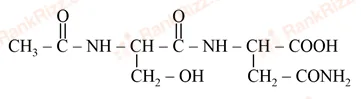
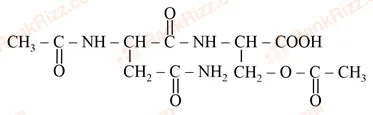
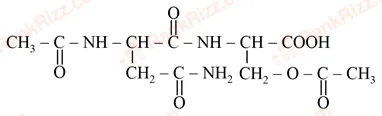
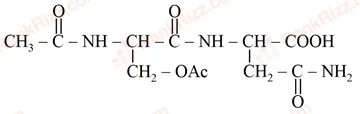
    rr2.rankrizz.com/jee-main/maths/quadratic-equations/q/11-apr-2015-online-q61

  32. 106 · JEE MAIN 2014 · 12 APR ONLINE

    The sum of the roots of the equation, x2+∣2x−3∣−4=0x^2 + |2x - 3| - 4 = 0, is:

    1. (A)

      2

    2. (B)

      −2-2

    3. (C)

      2\sqrt{2}

    4. (D)

      −2-\sqrt{2}

    rr2.rankrizz.com/jee-main/maths/quadratic-equations/q/12-apr-2014-online-q61

  33. 107 · JEE MAIN 2014 · 06 APR OFFLINE

    If a∈Ra \in R and the equation −3(x−[x])2+2(x−[x])+a2=0-3(x - [x])^2 + 2(x - [x]) + a^2 = 0 (where [x][x] denotes the greatest integer ≤x\leq x) has no integral solution, then all possible values of aa lie in the interval:

    1. (A)

      (−2,−1)(-2, -1)

    2. (B)

      (−∞,−2)∪(2,∞)(-\infty, -2) \cup (2, \infty)

    3. (C)

      (−1,0)∪(0,1)(-1, 0) \cup (0, 1)

    4. (D)

      (1,2)(1, 2)

    rr2.rankrizz.com/jee-main/maths/quadratic-equations/q/6-apr-2014-offline-q61

Nature of roots and discriminant 27

  1. 108 · JEE MAIN 2026 · 24 JAN S2

    The smallest positive integral value of a, for which all the roots of x4−ax2+9=0x^{4} - ax^{2} + 9 = 0 are real and distinct, is equal to

    1. (A)

      9

    2. (B)

      7

    3. (C)

      4

    4. (D)

      3

    rr2.rankrizz.com/jee-main/maths/quadratic-equations/q/24-jan-2026-s2-q13

  2. 109 · JEE MAIN 2026 · 22 JAN S2

    let α,β\alpha, \beta be the roots of the quadratic equation 12x2−20x+3λ=0,λ∈Z12x^{2}-20x+3\lambda=0, \lambda\in \mathbb{Z}. If 12≤∣β−α∣≤32\frac{1}{2}\leq |\beta-\alpha|\leq\frac{3}{2}, then the sum of all possible values of λ\lambda is :

    1. (A)

      6

    2. (B)

      3

    3. (C)

      4

    4. (D)

      1

    rr2.rankrizz.com/jee-main/maths/quadratic-equations/q/22-jan-2026-s2-q9

  3. 110 · JEE MAIN 2025 · 04 APR S1

    Consider the equation x2+4x−n=0x^2 + 4x - n = 0, where n∈[20,100]n \in [20, 100] is a natural number. Then the number of all distinct values of n, for which the given equation has integral roots, is equal to

    1. (A)

      7

    2. (B)

      8

    3. (C)

      6

    4. (D)

      5

    rr2.rankrizz.com/jee-main/maths/quadratic-equations/q/2025-apr-4-s1-q18

  4. 111 · JEE MAIN 2025 · 03 APR S2

    Let the equation x(x+2)(12−k)=2x(x + 2)(12 - k) = 2 have equal roots. Then the distance of the point (k,k2)\left(k, \dfrac{k}{2}\right) from the line 3x+4y+5=03x + 4y + 5 = 0 is

    1. (A)

      15

    2. (B)

      535\sqrt{3}

    3. (C)

      15515\sqrt{5}

    4. (D)

      12

    rr2.rankrizz.com/jee-main/maths/quadratic-equations/q/2025-apr-3-s2-q7

  5. 112 · JEE MAIN 2025 · 29 JAN S2

    If the set of all a∈Ra \in \mathbb{R}, for which the equation 2x2+(a−5)x+15=3a2x^2 + (a-5)x + 15 = 3a has no real root, is the interval (α,β)(\alpha,\beta) and X={x∈Z:α<x<β}X=\{x \in \mathbb{Z} : \alpha < x < \beta\}, then ∑x∈Xx2\sum_{x \in X}^{}x^{2} is equal to :

    1. (A)

      2109

    2. (B)

      2129

    3. (C)

      2119

    4. (D)

      2139

    rr2.rankrizz.com/jee-main/maths/quadratic-equations/q/29-jan-2025-s2-q8

  6. 113 · JEE MAIN 2025 · 24 JAN S1

    The product of all the rational roots of the equation (x2−9x+11)2−(x−4)(x−5)=3(x^2 - 9x + 11)^2 - (x - 4)(x - 5) = 3 is equal to:

    1. (A)

      14

    2. (B)

      21

    3. (C)

      28

    4. (D)

      7

    rr2.rankrizz.com/jee-main/maths/quadratic-equations/q/24-jan-2025-s1-q6

  7. 114 · JEE MAIN 2025 · 23 JAN S1

    If the equation a(b−c)x2+b(c−a)x+c(a−b)=0a(b-c)x^{2}+b(c-a)x+c(a-b)=0 has equal roots, where a+c=15 and b=365b=\frac{36}{5}, then a2+c2a^{2}+c^{2} is equal to

    Answer: ____________

    rr2.rankrizz.com/jee-main/maths/quadratic-equations/q/23-jan-2025-s1-q22

  8. 115 · JEE MAIN 2023 · 08 APR S2

    Let mm and nn be the numbers of real roots of the quadratic equations x2−12x+[x]+31=0x^2 - 12x + [x] + 31 = 0 and x2−5∣x+2∣−4=0x^2 - 5|x + 2| - 4 = 0 respectively, where [x][x] denotes the greatest integer ≤x\leq x. Then m2+mn+n2m^2 + mn + n^2 is equal to

    1. (A)

      9

    2. (B)

      12

    3. (C)

      6

    4. (D)

      15

    rr2.rankrizz.com/jee-main/maths/quadratic-equations/q/08-apr-2023-s2-q61

  9. 116 · JEE MAIN 2023 · 31 JAN S1

    The number of real roots of the equation x2−4x+3+x2−9=4x2−14x+6\sqrt{x^2 - 4x + 3} + \sqrt{x^2 - 9} = \sqrt{4x^2 - 14x + 6}, is:

    1. (A)

      0

    2. (B)

      1

    3. (C)

      3

    4. (D)

      2

    rr2.rankrizz.com/jee-main/maths/quadratic-equations/q/31-jan-2023-s1-q61

  10. 117 · JEE MAIN 2023 · 31 JAN S2

    The equation e4x+8e3x+13e2x−8ex+1=0e^{4x} + 8e^{3x} + 13e^{2x} - 8e^x + 1 = 0, x∈Rx \in R has:

    1. (A)

      four solutions two of which are negative

    2. (B)

      two solutions and both are negative

    3. (C)

      no solution

    4. (D)

      two solutions and only one of them is negative

    rr2.rankrizz.com/jee-main/maths/quadratic-equations/q/31-jan-2023-s2-q61

  11. 118 · JEE MAIN 2023 · 24 JAN S2

    The number of real solutions of the equation 3(x2+1x2)−2(x+1x)+5=03\left(x^2 + \frac{1}{x^2}\right) - 2\left(x + \frac{1}{x}\right) + 5 = 0, is

    1. (A)

      4

    2. (B)

      0

    3. (C)

      3

    4. (D)

      2

    rr2.rankrizz.com/jee-main/maths/quadratic-equations/q/24-jan-2023-s2-q61

  12. 119 · JEE MAIN 2022 · 28 JUL S1

    The sum of all real values of xx for which 3x2−9x+17x2+3x+10=5x2−7x+193x2+5x+12\frac{3x^2 - 9x + 17}{x^2 + 3x + 10} = \frac{5x^2 - 7x + 19}{3x^2 + 5x + 12} is equal to

    Answer: ____________

    rr2.rankrizz.com/jee-main/maths/quadratic-equations/q/28-jul-2022-s1-q81

  13. 120 · JEE MAIN 2022 · 26 JUL S1

    The number of distinct real roots of the equation x5(x3−x2−x+1)+x(3x3−4x2−2x+4)−1=0x^5(x^3 - x^2 - x + 1) + x(3x^3 - 4x^2 - 2x + 4) - 1 = 0 is ______.

    Answer: ____________

    rr2.rankrizz.com/jee-main/maths/quadratic-equations/q/26-jul-2022-s1-q86

  14. 121 · JEE MAIN 2022 · 28 JUN S1

    The number of real solutions of the equation e4x+4e3x−58e2x+4ex+1=0e^{4x} + 4e^{3x} - 58e^{2x} + 4e^x + 1 = 0 is ______

    Answer: ____________

    rr2.rankrizz.com/jee-main/maths/quadratic-equations/q/28-jun-2022-s1-q81

  15. 122 · JEE MAIN 2022 · 24 JUN S2

    The sum of all real roots of equation (e2x−4)(6e2x−5ex+1)=0\left(e^{2x} - 4\right)\left(6e^{2x} - 5e^x + 1\right) = 0 is

    1. (A)

      ln⁡4\ln 4

    2. (B)

      −ln⁡3-\ln 3

    3. (C)

      ln⁡3\ln 3

    4. (D)

      ln⁡5\ln 5

    rr2.rankrizz.com/jee-main/maths/quadratic-equations/q/24-jun-2022-s2-q61

  16. 123 · JEE MAIN 2021 · 01 SEP S2

    The number of pairs a,ba, b of real numbers, such that whenever α\alpha is a root of the equation x2+ax+b=0x^2 + ax + b = 0, α2−2\alpha^2 - 2 is also a root of this equation, is:

    1. (A)

      6

    2. (B)

      8

    3. (C)

      4

    4. (D)

      2

    rr2.rankrizz.com/jee-main/maths/quadratic-equations/q/1-sep-2021-s2-q61

  17. 124 · JEE MAIN 2021 · 27 AUG S2

    The set of all values of k>−1k \gt -1, for which the equation (3x2+4x+3)2−(k+1)(3x2+4x+3)(3x2+4x+2)+k(3x2+4x+2)2=0(3x^2+4x+3)^2 - (k+1)(3x^2+4x+3)(3x^2+4x+2) + k(3x^2+4x+2)^2 = 0 has real roots, is:

    1. (A)

      [−12,1)\left[-\frac{1}{2}, 1\right)

    2. (B)

      (1,52]\left(1, \frac{5}{2}\right]

    3. (C)

      (12,32]−{1}\left(\frac{1}{2}, \frac{3}{2}\right] - \{1\}

    4. (D)

      [2,3)[2, 3)

    rr2.rankrizz.com/jee-main/maths/quadratic-equations/q/27-aug-2021-s2-q61

  18. 125 · JEE MAIN 2021 · 26 AUG S1

    The sum of all integral values of kk (k≠0k \neq 0) for which the equation 2x−1−1x−2=2k\frac{2}{x-1} - \frac{1}{x-2} = \frac{2}{k} in xx has no real roots, is _________

    Answer: ____________

    rr2.rankrizz.com/jee-main/maths/quadratic-equations/q/26-aug-2021-s1-q81

  19. 126 · JEE MAIN 2020 · 02 SEP S2

    Let f(x)f(x) be a quadratic polynomial such that f(−1)+f(2)=0f(-1) + f(2) = 0. If one of the roots of f(x)=0f(x) = 0 is 3, then its other root lies in:

    1. (A)

      (−1,0)(-1, 0)

    2. (B)

      (1,3)(1, 3)

    3. (C)

      (−3,−1)(-3, -1)

    4. (D)

      (0,1)(0, 1)

    rr2.rankrizz.com/jee-main/maths/quadratic-equations/q/2-sep-2020-s2-q51

  20. 127 · JEE MAIN 2020 · 08 JAN S1

    The least positive value of 'a' for which the equation, 2x2+(a−10)x+332=2a2x^2 + (a - 10)x + \frac{33}{2} = 2a has real roots is

    Answer: ____________

    rr2.rankrizz.com/jee-main/maths/quadratic-equations/q/8-jan-2020-s1-q71

  21. 128 · JEE MAIN 2019 · 08 APR S2

    The number of integral values of mm for which the equation, (1+m2)x2−2(1+3m)x+1+8m=0(1 + m^{2})x^{2} - 2(1 + 3m)x + 1 + 8m = 0 has no real root, is:

    1. (A)

      2

    2. (B)

      3

    3. (C)

      Infinitely many

    4. (D)

      1

    rr2.rankrizz.com/jee-main/maths/quadratic-equations/q/8-apr-2019-s2-q62

  22. 129 · JEE MAIN 2019 · 09 JAN S2

    The number of all possible positive integral values of α\alpha for which the roots of the quadratic equation 6x2−11x+α=06x^2 - 11x + \alpha = 0 are rational numbers is:

    1. (A)

      5

    2. (B)

      3

    3. (C)

      4

    4. (D)

      2

    rr2.rankrizz.com/jee-main/maths/quadratic-equations/q/9-jan-2019-s2-q61

  23. 130 · JEE MAIN 2017 · 09 APR ONLINE

    The sum of all the real values of xx satisfying the equation 2(x−1)(x2+5x−50)=12^{(x-1)(x^2+5x-50)} = 1 is:

    1. (A)

      16

    2. (B)

      −5-5

    3. (C)

      −4-4

    4. (D)

      14

    rr2.rankrizz.com/jee-main/maths/quadratic-equations/q/9-apr-2017-online-q61

  24. 131 · JEE MAIN 2015 · 11 APR ONLINE

    If the two roots of the equation, (a−1)(x4+x2+1)+(a+1)(x2+x+1)2=0(a-1)(x^4 + x^2 + 1) + (a+1)(x^2 + x + 1)^2 = 0 are real and distinct, then the set of all values of aa is equal to

    1. (A)

      (0,12)\left(0, \frac{1}{2}\right)

    2. (B)

      (−12,0)∪(0,12)\left(-\frac{1}{2}, 0\right) \cup \left(0, \frac{1}{2}\right)

    3. (C)

      (−∞,−2)∪(2,∞)(-\infty, -2) \cup (2, \infty)

    4. (D)

      (−12,0)\left(-\frac{1}{2}, 0\right)

    rr2.rankrizz.com/jee-main/maths/quadratic-equations/q/11-apr-2015-online-q62

  25. 132 · JEE MAIN 2014 · 19 APR ONLINE

    The equation 3x2+x+5=x−3\sqrt{3x^2 + x + 5} = x - 3, where x is real, has:

    1. (A)

      no solution

    2. (B)

      exactly four solutions

    3. (C)

      exactly one solution

    4. (D)

      exactly two solutions

    rr2.rankrizz.com/jee-main/maths/quadratic-equations/q/19-apr-2014-online-q61

  26. 133 · JEE MAIN 2012

    If a,b,c∈Ra, b, c \in R and 1 is a root of equation ax2+bx+c=0ax^2 + bx + c = 0, then the curve y=4ax2+3bx+2cy = 4ax^2 + 3bx + 2c, a≠0a \neq 0 intersect xx-axis at

    1. (A)

      two distinct points whose coordinates are always rational numbers

    2. (B)

      no point

    3. (C)

      exactly two distinct points

    4. (D)

      exactly one point

    rr2.rankrizz.com/jee-main/maths/quadratic-equations/q/2012-maths-499265

  27. 134 · JEE MAIN 2004

    If one root of the equation x2+px+12=0x^2 + px + 12 = 0 is 44, while the equation x2+px+q=0x^2 + px + q = 0 has equal roots, then the value of 'qq' is

    1. (A)

      494\frac{49}{4}

    2. (B)

      44

    3. (C)

      33

    4. (D)

      1212

    rr2.rankrizz.com/jee-main/maths/quadratic-equations/q/2004-maths-500438

Location of roots 13

  1. 135 · JEE MAIN 2026 · 06 APR S2

    Let lim⁡x→2(tan⁡(x−2))(rx2+(p−2)x−2p)(x−2)2=5\displaystyle\lim_{x \to 2} \dfrac{(\tan(x - 2))(rx^2 + (p - 2)x - 2p)}{(x - 2)^2} = 5 for some r,p∈Rr, p \in \mathbb{R}. If the set of all possible values of q, such that the roots of the equation rx2−px+q=0rx^2 - px + q = 0 lie in (0,2)(0, 2), be the interval (α,β](\alpha, \beta], then 4(α+β)4(\alpha + \beta) equals :

    1. (A)

      11

    2. (B)

      13

    3. (C)

      17

    4. (D)

      21

    rr2.rankrizz.com/jee-main/maths/quadratic-equations/q/6-apr-2026-s2-q16

  2. 136 · JEE MAIN 2026 · 04 APR S2

    If the quadratic equation (λ+2)x2−3λx+4λ=0(\lambda + 2)x^2 - 3\lambda x + 4\lambda = 0, λ≠−2\lambda \neq -2, has two positive roots, then the number of possible integral values of λ\lambda is :

    1. (A)

      11

    2. (B)

      22

    3. (C)

      33

    4. (D)

      44

    rr2.rankrizz.com/jee-main/maths/quadratic-equations/q/4-apr-2026-s2-q5

  3. 137 · JEE MAIN 2026 · 21 JAN S2

    Let α\alpha and β\beta be the roots of the equation x2+2ax+(3a+10)=0x^{2}+2ax+\left(3a+10\right)=0 such that α<1<β\alpha < 1 < \beta. Then the set of all possible values of aa is :

    1. (A)

      (−∞,−115)\left(-\infty , \dfrac{-11}{5} \right)

    2. (B)

      (−∞,−115)∪(5,∞)\left(-\infty,\dfrac{-11}{5} \right) \cup \left(5,\infty\right)

    3. (C)

      (−∞,−3)\left(-\infty,-3 \right)

    4. (D)

      (−∞,−2)∪(5,∞)\left(-\infty,-2 \right) \cup \left(5,\infty\right)

    rr2.rankrizz.com/jee-main/maths/quadratic-equations/q/21-jan-2026-s2-q1

  4. 138 · JEE MAIN 2025 · 07 APR S1

    Let the set of all values of p∈Rp \in \mathbb{R}, for which both the roots of the equation x2−(p+2)x+(2p+9)=0x^2 - (p+2)x + (2p+9) = 0 are negative real numbers, be the interval (α,β](\alpha, \beta]. Then β−2α\beta - 2\alpha is equal to

    1. (A)

      0

    2. (B)

      9

    3. (C)

      5

    4. (D)

      20

    rr2.rankrizz.com/jee-main/maths/quadratic-equations/q/2025-apr-7-s1-q14

  5. 139 · JEE MAIN 2025 · 02 APR S2

    If the set of all a∈R−{1}a \in \mathbb{R} - \{1\}, for which the roots of the equation (1−a)x2+2(a−3)x+9=0(1 - a)x^2 + 2(a - 3)x + 9 = 0 are positive is (−∞,−α]∪[β,γ)(-\infty, -\alpha] \cup [\beta, \gamma), then 2α+β+γ2\alpha + \beta + \gamma is equal to __________.

    Answer: ____________

    rr2.rankrizz.com/jee-main/maths/quadratic-equations/q/2025-apr-02-s2-q25

  6. 140 · JEE MAIN 2023 · 01 FEB S2

    The number of integral values of kk, for which one root of the equation 2x2−8x+k=02x^2 - 8x + k = 0 lies in the interval (1,2)(1, 2) and its other root lies in the interval (2,3)(2, 3), is:

    1. (A)

      22

    2. (B)

      00

    3. (C)

      11

    4. (D)

      33

    rr2.rankrizz.com/jee-main/maths/quadratic-equations/q/01-feb-2023-s2-q61

  7. 141 · JEE MAIN 2020 · 03 SEP S2

    The set of all real values of λ\lambda for which the quadratic equation (λ2+1)x2−4λx+2=0(\lambda^2 + 1)x^2 - 4\lambda x + 2 = 0 always have exactly one root in the interval (0, 1) is:

    1. (A)

      (−3,−1)(-3, -1)

    2. (B)

      (0,2)(0, 2)

    3. (C)

      (1,3](1, 3]

    4. (D)

      (2,4](2, 4]

    rr2.rankrizz.com/jee-main/maths/quadratic-equations/q/3-sep-2020-s2-q51

  8. 142 · JEE MAIN 2019 · 10 JAN S1

    Consider the quadratic equation (c−5)x2−2cx+(c−4)=0(c-5)x^2 - 2cx + (c-4) = 0, c≠5c \neq 5. Let SS be the set of all integral values of cc for which one root of the equation lies in the interval (0,2)(0, 2) and its other root lies in the interval (2,3)(2, 3). Then the number of elements in SS is:

    1. (A)

      11

    2. (B)

      12

    3. (C)

      18

    4. (D)

      10

    rr2.rankrizz.com/jee-main/maths/quadratic-equations/q/10-jan-2019-s1-q61

  9. 143 · JEE MAIN 2019 · 09 JAN S2

    If both the roots of the quadratic equation x2−mx+4=0x^2 - mx + 4 = 0 are real and distinct and they lie in the interval [1, 5], then mm lies in the interval:

    1. (A)

      (-5, -4)

    2. (B)

      (3, 4)

    3. (C)

      (5, 6)

    4. (D)

      (4, 5]

    rr2.rankrizz.com/jee-main/maths/quadratic-equations/q/9-jan-2019-s2-q62

  10. 144 · JEE MAIN 2013 · 09 APR ONLINE

    The values of 'a' for which one root of the equation x2−(a+1)x+a2+a−8=0x^2 - (a+1)x + a^2 + a - 8 = 0 exceeds 2 and the other is lesser than 2, are given by :

    1. (A)

      3<a<103 < a < 10

    2. (B)

      a≥10a \geq 10

    3. (C)

      −2<a<3-2 < a < 3

    4. (D)

      a≤−2a \leq -2

    rr2.rankrizz.com/jee-main/maths/quadratic-equations/q/9-apr-2013-online-q61

  11. 145 · JEE MAIN 2012

    The value of kk for which the equation (K−2)x2+8x+K+4=0(K-2)x^2 + 8x + K + 4 = 0 has both roots real, distinct and negative can be:

    1. (A)

      6

    2. (B)

      3

    3. (C)

      4

    4. (D)

      1

    rr2.rankrizz.com/jee-main/maths/quadratic-equations/q/2012-maths-499187

  12. 146 · JEE MAIN 2006

    All the values of mm for which both roots of the equations x2−2mx+m2−1=0x^2 - 2mx + m^2 - 1 = 0 are greater than −2-2 but less than 44, lie in the interval

    1. (A)

      −2<m<0-2 < m < 0

    2. (B)

      m>3m > 3

    3. (C)

      −1<m<3-1 < m < 3

    4. (D)

      1<m<41 < m < 4

    rr2.rankrizz.com/jee-main/maths/quadratic-equations/q/2006-maths-500080

  13. 147 · JEE MAIN 2005

    If both the roots of the quadratic equation x2−2kx+k2+k−5=0x^2 - 2kx + k^2 + k - 5 = 0 are less than 55, then kk lies in the interval

    1. (A)

      (5,6](5, 6]

    2. (B)

      (6,∞)(6, \infty)

    3. (C)

      (−∞,4)(-\infty, 4)

    4. (D)

      [4,5][4, 5]

    rr2.rankrizz.com/jee-main/maths/quadratic-equations/q/2005-maths-500410

Cubic and higher degree polynomial equations 13

  1. 148 · JEE MAIN 2026 · 28 JAN S1

    Let S={x3+ax2+bx+c:a,b,c∈N and a,b,c≤20}S=\left\{x^{3}+ax^{2}+bx+c:a,b,c \in \mathbb{N} \text{ and }a,b,c \leq 20\right\} be a set of polynomials. Then the number of polynomials in S, which are divisible by x2+2x^{2}+2, is

    1. (A)

      10

    2. (B)

      6

    3. (C)

      20

    4. (D)

      120

    rr2.rankrizz.com/jee-main/maths/quadratic-equations/q/28-jan-2026-s1-q20

  2. 149 · JEE MAIN 2026 · 23 JAN S1

    A building construction work can be completed by two masons A and B together in 22.5 days. Mason A alone can complete the construction work in 24 days less than mason B alone. Then mason A alone will complete the construction work in :

    1. (A)

      36 days

    2. (B)

      24 days

    3. (C)

      42 days

    4. (D)

      30 days

    rr2.rankrizz.com/jee-main/maths/quadratic-equations/q/23-jan-2026-s1-q6

  3. 150 · JEE MAIN 2025 · 29 JAN S1

    The number of solutions of the equation (9x−9x+2)(2x−7x+3)=0\left(\dfrac{9}{x}-\dfrac{9}{\sqrt{x}}+2\right)\left(\dfrac{2}{x}-\dfrac{7}{\sqrt{x}}+3\right)=0 is:

    1. (A)

      2

    2. (B)

      3

    3. (C)

      1

    4. (D)

      4

    rr2.rankrizz.com/jee-main/maths/quadratic-equations/q/29-jan-2025-s1-q3

  4. 151 · JEE MAIN 2024 · 06 APR S1

    Let x1,x2,x3,x4x_1, x_2, x_3, x_4 be the solution of the equation 4x4+8x3−17x2−12x+9=04x^4 + 8x^3 - 17x^2 - 12x + 9 = 0 and (4+x12)(4+x22)(4+x32)(4+x42)=12516m(4 + x_1^2)(4 + x_2^2)(4 + x_3^2)(4 + x_4^2) = \frac{125}{16}m. Then the value of mm is

    Answer: ____________

    rr2.rankrizz.com/jee-main/maths/quadratic-equations/q/6-apr-2024-s1-q81

  5. 152 · JEE MAIN 2024 · 29 JAN S2

    Let the set C={(x,y)∣x2−2y=2023,x,y∈N}C = \{(x, y) \mid x^2 - 2^y = 2023, x, y \in \mathbb{N}\}. Then ∑(x,y)∈C(x+y)\sum_{(x,y) \in C}(x + y) is equal to ______.

    Answer: ____________

    rr2.rankrizz.com/jee-main/maths/quadratic-equations/q/29-jan-2024-s2-q81

  6. 153 · JEE MAIN 2022 · 29 JUN S2

    Let α\alpha be a root of the equation 1+x2+x4=01 + x^2 + x^4 = 0. Then the value of α1011+α2022−α3033\alpha^{1011} + \alpha^{2022} - \alpha^{3033} is equal to:

    1. (A)

      1

    2. (B)

      α\alpha

    3. (C)

      1+α1 + \alpha

    4. (D)

      1+2α1 + 2\alpha

    rr2.rankrizz.com/jee-main/maths/quadratic-equations/q/29-jun-2022-s2-q61

  7. 154 · JEE MAIN 2022 · 27 JUN S1

    If the sum of all the roots of the equation e2x−11ex−45e−x+812=0e^{2x} - 11e^x - 45e^{-x} + \frac{81}{2} = 0 is log⁡eP\log_e P, then PP is equal to ______

    Answer: ____________

    rr2.rankrizz.com/jee-main/maths/quadratic-equations/q/27-jun-2022-s1-q88

  8. 155 · JEE MAIN 2021 · 01 SEP S2

    Let f(x)f(x) be a polynomial of degree 3 such that f(k)=−2kf(k) = -\frac{2}{k} for k=2,3,4,5k = 2, 3, 4, 5. Then the value of 52−10f(10)52 - 10 f(10) is equal to _________.

    Answer: ____________

    rr2.rankrizz.com/jee-main/maths/quadratic-equations/q/1-sep-2021-s2-q87

  9. 156 · JEE MAIN 2021 · 31 AUG S2

    The sum of the roots of the equation, x+1−2log⁡2(3+2x)+2log⁡4(10−2−x)=0x+1-2\log_2\left(3+2^x\right)+2\log_4\left(10-2^{-x}\right)=0, is:

    1. (A)

      log⁡214\log_2 14

    2. (B)

      log⁡212\log_2 12

    3. (C)

      log⁡213\log_2 13

    4. (D)

      log⁡211\log_2 11

    rr2.rankrizz.com/jee-main/maths/quadratic-equations/q/31-aug-2021-s2-q61

  10. 157 · JEE MAIN 2021 · 27 JUL S2

    The number of real roots of the equation e4x−e3x−4e2x−ex+1=0e^{4x} - e^{3x} - 4e^{2x} - e^x + 1 = 0 is equal to _________

    Answer: ____________

    rr2.rankrizz.com/jee-main/maths/quadratic-equations/q/27-jul-2021-s2-q81

  11. 158 · JEE MAIN 2021 · 25 JUL S1

    The number of real roots of the equation e6x−e4x−2e3x−12e2x+ex+1=0e^{6x} - e^{4x} - 2e^{3x} - 12e^{2x} + e^x + 1 = 0 is:

    1. (A)

      2

    2. (B)

      4

    3. (C)

      6

    4. (D)

      1

    rr2.rankrizz.com/jee-main/maths/quadratic-equations/q/25-jul-2021-s1-q74

  12. 159 · JEE MAIN 2020 · 09 JAN S1

    The number of real roots of the equation, e4x+e3x−4e2x+ex+1=0e^{4x} + e^{3x} - 4e^{2x} + e^x + 1 = 0 is:

    1. (A)

      1

    2. (B)

      3

    3. (C)

      2

    4. (D)

      4

    rr2.rankrizz.com/jee-main/maths/quadratic-equations/q/9-jan-2020-s1-q51

  13. 160 · JEE MAIN 2015 · 10 APR ONLINE

    If 2+3i2 + 3i is one of the roots of the equation 2x3−9x2+kx−13=02x^3 - 9x^2 + kx - 13 = 0, k∈Rk \in R, then the real root of this equation (where i2=−1i^2 = -1):

    1. (A)

      Exists and is equal to 12\frac{1}{2}

    2. (B)

      Does not exist

    3. (C)

      Exists and is equal to 1

    4. (D)

      Exists and is equal to −12-\frac{1}{2}

    rr2.rankrizz.com/jee-main/maths/quadratic-equations/q/10-apr-2015-online-q62

Common roots of equations 11

  1. 161 · JEE MAIN 2023 · 30 JAN S2

    If the value of real number α>0\alpha \gt 0 for which x2−5αx+1=0x^2 - 5\alpha x + 1 = 0 and x2−αx−5=0x^2 - \alpha x - 5 = 0 have a common real roots is 32β\frac{3}{\sqrt{2\beta}} then β\beta is equal to ______.

    Answer: ____________

    rr2.rankrizz.com/jee-main/maths/quadratic-equations/q/30-jan-2023-s2-q81

  2. 162 · JEE MAIN 2022 · 26 JUL S1

    If for some p,q,r∈Rp, q, r \in \mathbb{R}, all have positive sign, one of the roots of the equation (p2+q2)x2−2q(p+r)x+q2+r2=0(p^2 + q^2)x^2 - 2q(p + r)x + q^2 + r^2 = 0 is also a root of the equation x2+2x−8=0x^2 + 2x - 8 = 0, then q2+r2p2\dfrac{q^2 + r^2}{p^2} is equal to ______.

    Answer: ____________

    rr2.rankrizz.com/jee-main/maths/quadratic-equations/q/26-jul-2022-s1-q81

  3. 163 · JEE MAIN 2022 · 25 JUN S2

    Let a,b∈Ra, b \in R be such that the equation ax2−2bx+15=0ax^2 - 2bx + 15 = 0 has repeated root α\alpha and if α\alpha and β\beta are the roots of the equation x2−2bx+21=0x^2 - 2bx + 21 = 0, then α2+β2\alpha^2 + \beta^2 is equal to:

    1. (A)

      37

    2. (B)

      58

    3. (C)

      68

    4. (D)

      92

    rr2.rankrizz.com/jee-main/maths/quadratic-equations/q/25-jun-2022-s2-q62

  4. 164 · JEE MAIN 2021 · 26 AUG S2

    Let λ≠0\lambda \neq 0 be in RR. If α\alpha and β\beta are the roots of the equation x2−x+2λ=0x^2 - x + 2\lambda = 0, and α\alpha and γ\gamma are the roots of the equation 3x2−10x+27λ=03x^2 - 10x + 27\lambda = 0, then βγλ\frac{\beta\gamma}{\lambda} is equal to _________

    Answer: ____________

    rr2.rankrizz.com/jee-main/maths/quadratic-equations/q/26-aug-2021-s2-q81

  5. 165 · JEE MAIN 2020 · 04 SEP S2

    Let λ≠0\lambda \neq 0 be in RR. If α\alpha and β\beta are the roots of the equation, x2−x+2λ=0x^2 - x + 2\lambda = 0 and α\alpha and γ\gamma are the roots of the equation, 3x2−10x+27λ=03x^2 - 10x + 27\lambda = 0, then βγλ\frac{\beta\gamma}{\lambda} is equal to:

    1. (A)

      27

    2. (B)

      18

    3. (C)

      9

    4. (D)

      36

    rr2.rankrizz.com/jee-main/maths/quadratic-equations/q/4-sep-2020-s2-q51

  6. 166 · JEE MAIN 2020 · 09 JAN S2

    Let a,b∈R,a≠0a, b \in R, a \ne 0 be such that the equation, ax2−2bx+5=0ax^2 - 2bx + 5 = 0 has a repeated root α\alpha, which is also a root of the equation, x2−2bx−10=0x^2 - 2bx - 10 = 0. If β\beta is the other root of this equation, then α2+β2\alpha^2 + \beta^2 is equal to:

    1. (A)

      25

    2. (B)

      26

    3. (C)

      28

    4. (D)

      24

    rr2.rankrizz.com/jee-main/maths/quadratic-equations/q/9-jan-2020-s2-q52

  7. 167 · JEE MAIN 2019 · 12 APR S2

    If α\alpha, β\beta and γ\gamma are three consecutive terms of a non-constant G.P. Such that the equations αx2+2βx+γ=0\alpha x^2 + 2\beta x + \gamma = 0 and x2+x−1=0x^2 + x - 1 = 0 have a common root, then α(β+γ)\alpha(\beta + \gamma) is equal to:

    1. (A)

      βγ\beta\gamma

    2. (B)

      αβ\alpha\beta

    3. (C)

      αγ\alpha\gamma

    4. (D)

      0

    rr2.rankrizz.com/jee-main/maths/quadratic-equations/q/12-apr-2019-s2-q61

  8. 168 · JEE MAIN 2016 · 09 APR ONLINE

    If the equations x2+bx−1=0x^2 + bx - 1 = 0 and x2+x+b=0x^2 + x + b = 0 have a common root different from −1-1, then ∣b∣|b| is equal to:

    1. (A)

      2

    2. (B)

      3

    3. (C)

      3\sqrt{3}

    4. (D)

      2\sqrt{2}

    rr2.rankrizz.com/jee-main/maths/quadratic-equations/q/9-apr-2016-online-q61

  9. 169 · JEE MAIN 2014 · 09 APR ONLINE

    If equations ax2+bx+c=0ax^2 + bx + c = 0, (a,b,c∈R,a≠0)(a, b, c \in R, a \neq 0) and 2x2+3x+4=02x^2 + 3x + 4 = 0 have a common root, then a:b:ca : b : c equals:

    1. (A)

      2 : 3 : 4

    2. (B)

      4 : 3 : 2

    3. (C)

      1 : 2 : 3

    4. (D)

      3 : 2 : 1

    rr2.rankrizz.com/jee-main/maths/quadratic-equations/q/9-apr-2014-online-q62

  10. 170 · JEE MAIN 2013 · 07 APR ONLINE

    If the equations x2+2x+3=0x^2 + 2x + 3 = 0 and ax2+bx+c=0ax^2 + bx + c = 0, a,b,c∈Ra, b, c \in R, have a common root, then a:b:ca : b : c is:

    1. (A)

      1 : 3 : 2

    2. (B)

      3 : 1 : 2

    3. (C)

      1 : 2 : 3

    4. (D)

      3 : 2 : 1

    rr2.rankrizz.com/jee-main/maths/quadratic-equations/q/7-apr-2013-offline-q62

  11. 171 · JEE MAIN 2008

    The quadratic equations x2−6x+a=0x^2 - 6x + a = 0 and x2−cx+6=0x^2 - cx + 6 = 0 have one root in common. The other roots of the first and second equations are integers in the ratio 4 : 3. Then the common root is

    1. (A)

      1

    2. (B)

      4

    3. (C)

      3

    4. (D)

      2

    rr2.rankrizz.com/jee-main/maths/quadratic-equations/q/2008-maths-499934

Sign and range of quadratic expressions 6

  1. 172 · JEE MAIN 2024 · 31 JAN S2

    Let a,b,ca, b, c be the length of three sides of a triangle satisfying the condition (a2+b2)x2−2b(a+c)x+(b2+c2)=0(a^2 + b^2)x^2 - 2b(a + c)x + (b^2 + c^2) = 0. If the set of all possible values of xx is in the interval (α,β)(\alpha, \beta), then 12(α2+β2)12(\alpha^2 + \beta^2) is equal to

    Answer: ____________

    rr2.rankrizz.com/jee-main/maths/quadratic-equations/q/31-jan-2024-s2-q81

  2. 173 · JEE MAIN 2019 · 12 JAN S2

    The number of integral values of m for which the quadratic expression (1+2m)x2−2(1+3m)x+4(1+m)(1 + 2m)x^2 - 2(1 + 3m)x + 4(1 + m), x∈Rx \in R, is always positive, is

    1. (A)

      7

    2. (B)

      3

    3. (C)

      6

    4. (D)

      8

    rr2.rankrizz.com/jee-main/maths/quadratic-equations/q/12-jan-2019-s2-q61

  3. 174 · JEE MAIN 2016 · 03 APR OFFLINE

    The sum of all real values of xx satisfying the equation (x2−5x+5)x2+4x−60=1\left(x^2 - 5x + 5\right)^{x^2 + 4x - 60} = 1 is

    1. (A)

      6

    2. (B)

      5

    3. (C)

      3

    4. (D)

      −4-4

    rr2.rankrizz.com/jee-main/maths/quadratic-equations/q/3-apr-2016-offline-q61

  4. 175 · JEE MAIN 2014 · 19 APR ONLINE

    If non-zero real numbers b and c are such that min⁡f(x)>max⁡g(x)\min f(x) > \max g(x), where f(x)=x2+2bx+2c2f(x) = x^2 + 2bx + 2c^2 and g(x)=−x2−2cx+b2g(x) = -x^2 - 2cx + b^2, (x∈R)(x \in R); then ∣cb∣\left|\frac{c}{b}\right| lies in the interval:

    1. (A)

      (2,∞)(\sqrt{2}, \infty)

    2. (B)

      [12,12)\left[\frac{1}{2}, \frac{1}{\sqrt{2}}\right)

    3. (C)

      (0,12)(0, \frac{1}{2})

    4. (D)

      [12,2]\left[\frac{1}{\sqrt{2}}, \sqrt{2}\right]

    rr2.rankrizz.com/jee-main/maths/quadratic-equations/q/19-apr-2014-online-q82

  5. 176 · JEE MAIN 2009

    If the roots of the equation bx2+cx+a=0bx^2 + cx + a = 0 be imaginary, then for all real values of xx, the expression 3b2x2+6bcx+2c23b^2x^2 + 6bcx + 2c^2 is

    1. (A)

      greater than 4ab4ab

    2. (B)

      less than 4ab4ab

    3. (C)

      greater than −4ab-4ab

    4. (D)

      less than −4ab-4ab

    rr2.rankrizz.com/jee-main/maths/quadratic-equations/q/2009-maths-499634

  6. 177 · JEE MAIN 2006

    If xx is real, the maximum value of 3x2+9x+173x2+9x+7\dfrac{3x^2 + 9x + 17}{3x^2 + 9x + 7} is

    1. (A)

      1/41/4

    2. (B)

      41

    3. (C)

      1

    4. (D)

      17/717/7

    rr2.rankrizz.com/jee-main/maths/quadratic-equations/q/2006-maths-500105

Forming equations and power sums of roots 5

  1. 178 · JEE MAIN 2022 · 25 JUN S1

    For a natural number nn, let αn=19n−12n\alpha_n = 19^n - 12^n. Then, the value of 31α9−α1057α8\frac{31\alpha_9 - \alpha_{10}}{57\alpha_8} is ______.

    Answer: ____________

    rr2.rankrizz.com/jee-main/maths/quadratic-equations/q/25-jun-2022-s1-q81

  2. 179 · JEE MAIN 2021 · 17 MAR S1

    The value of 4+15+14+15+14+…∞4 + \cfrac{1}{5 + \cfrac{1}{4 + \cfrac{1}{5 + \cfrac{1}{4 + \ldots \infty}}}} is:

    1. (A)

      2+25302 + \frac{2}{5}\sqrt{30}

    2. (B)

      2+45302 + \frac{4}{\sqrt{5}}\sqrt{30}

    3. (C)

      4+45304 + \frac{4}{\sqrt{5}}\sqrt{30}

    4. (D)

      5+25305 + \frac{2}{5}\sqrt{30}

    rr2.rankrizz.com/jee-main/maths/quadratic-equations/q/17-mar-2021-s1-q61

  3. 180 · JEE MAIN 2020 · 04 SEP S1

    Let α\alpha and β\beta be the roots of x2−3x+p=0x^2 - 3x + p = 0 and γ\gamma and δ\delta be the roots of x2−6x+q=0x^2 - 6x + q = 0. If α,β,γ,δ\alpha, \beta, \gamma, \delta form a geometric progression. Then ratio (2q+p):(2q−p)(2q + p) : (2q - p) is

    1. (A)

      3 : 1

    2. (B)

      9 : 7

    3. (C)

      5 : 3

    4. (D)

      33 : 31

    rr2.rankrizz.com/jee-main/maths/quadratic-equations/q/4-sep-2020-s1-q52

  4. 181 · JEE MAIN 2015 · 04 APR OFFLINE

    Let α\alpha and β\beta be the roots of equation x2−6x−2=0x^2 - 6x - 2 = 0. If an=αn−βna_n = \alpha^n - \beta^n, ∀n≥1\forall n \geq 1, then the value of a10−2a82a9\frac{a_{10} - 2a_8}{2a_9} is equal to

    1. (A)

      −3-3

    2. (B)

      6

    3. (C)

      −6-6

    4. (D)

      3

    rr2.rankrizz.com/jee-main/maths/quadratic-equations/q/4-apr-2015-offline-q61

  5. 182 · JEE MAIN 2010

    If α\alpha and β\beta are the roots of the equation x2−x+1=0x^2 - x + 1 = 0, then α2009+β2009=\alpha^{2009} + \beta^{2009} =

    1. (A)

      −1-1

    2. (B)

      11

    3. (C)

      22

    4. (D)

      −2-2

    rr2.rankrizz.com/jee-main/maths/quadratic-equations/q/2010-maths-499710

Rational and polynomial inequalities 4

  1. 183 · JEE MAIN 2024 · 31 JAN S1

    Let SS be the set of positive integral values of aa for which ax2+2(a+1)x+9a+4x2−8x+32<0,∀x∈R\frac{ax^2 + 2(a+1)x + 9a + 4}{x^2 - 8x + 32} < 0, \forall x \in \mathbb{R}. Then, the number of elements in SS is:

    1. (A)

      1

    2. (B)

      0

    3. (C)

      ∞\infty

    4. (D)

      3

    rr2.rankrizz.com/jee-main/maths/quadratic-equations/q/31-jan-2024-s1-q61

  2. 184 · JEE MAIN 2022 · 27 JUL S1

    Let f(x)=2x2−x−1f(x) = 2x^2 - x - 1 and S={n∈Z:∣f(n)∣≤800}S = \{n \in \mathbb{Z} : |f(n)| \leq 800\}. Then, the value of ∑n∈Sf(n)\sum_{n \in S} f(n) is equal to

    Answer: ____________

    rr2.rankrizz.com/jee-main/maths/quadratic-equations/q/27-jul-2022-s1-q82

  3. 185 · JEE MAIN 2021 · 25 FEB S1

    The integer kk, for which the inequality x2−2(3k−1)x+8k2−7>0x^2 - 2(3k - 1)x + 8k^2 - 7 > 0 is valid for every xx in RR is:

    1. (A)

      4

    2. (B)

      2

    3. (C)

      3

    4. (D)

      0

    rr2.rankrizz.com/jee-main/maths/quadratic-equations/q/25-feb-2021-s1-q61

  4. 186 · JEE MAIN 2013 · 23 APR ONLINE

    The least integral value α\alpha of xx such that x−5x2+5x−14>0\frac{x-5}{x^2+5x-14} > 0, satisfies :

    1. (A)

      α2+3α−4=0\alpha^2 + 3\alpha - 4 = 0

    2. (B)

      α2−5α+4=0\alpha^2 - 5\alpha + 4 = 0

    3. (C)

      α2−7α+6=0\alpha^2 - 7\alpha + 6 = 0

    4. (D)

      α2+5α−6=0\alpha^2 + 5\alpha - 6 = 0

    rr2.rankrizz.com/jee-main/maths/quadratic-equations/q/23-apr-2013-online-q61

Answer key

  1. 01 C
  2. 02 D
  3. 03 B
  4. 04 C
  5. 05 C
  6. 06 B
  7. 07 B
  8. 08 C
  9. 09 A
  10. 10 A
  11. 11 B
  12. 12 4
  13. 13 B
  14. 14 A
  15. 15 60
  16. 16 B
  17. 17 C
  18. 18 A
  19. 19 51
  20. 20 2
  21. 21 D
  22. 22 B
  23. 23 C
  24. 24 9
  25. 25 45
  26. 26 16
  27. 27 B
  28. 28 B
  29. 29 B
  30. 30 A
  31. 31 98
  32. 32 36
  33. 33 4
  34. 34 C
  35. 35 C
  36. 36 A
  37. 37 1
  38. 38 13
  39. 39 C
  40. 40 324
  41. 41 C
  42. 42 D
  43. 43 A
  44. 44 B
  45. 45 D
  46. 46 D
  47. 47 C
  48. 48 D
  49. 49 C
  50. 50 C
  51. 51 D
  52. 52 D
  53. 53 D
  54. 54 C
  55. 55 A
  56. 56 A
  57. 57 B
  58. 58 D
  59. 59 A
  60. 60 D
  61. 61 A
  62. 62 D
  63. 63 D
  64. 64 B
  65. 65 B
  66. 66 C
  67. 67 C
  68. 68 D
  69. 69 A
  70. 70 B
  71. 71 A
  72. 72 D
  73. 73 D
  74. 74 C
  75. 75 B
  76. 76 C
  77. 77 B
  78. 78 A
  79. 79 A
  80. 80 B
  81. 81 C
  82. 82 C
  83. 83 C
  84. 84 2
  85. 85 3
  86. 86 3
  87. 87 1
  88. 88 D
  89. 89 B
  90. 90 6
  91. 91 B
  92. 92 D
  93. 93 5
  94. 94 5
  95. 95 D
  96. 96 A
  97. 97 B
  98. 98 2
  99. 99 B
  100. 100 D
  101. 101 B
  102. 102 C
  103. 103 A
  104. 104 D
  105. 105 B
  106. 106 C
  107. 107 C
  108. 108 B
  109. 109 B
  110. 110 C
  111. 111 A
  112. 112 D
  113. 113 A
  114. 114 117
  115. 115 A
  116. 116 B
  117. 117 B
  118. 118 B
  119. 119 6
  120. 120 3
  121. 121 2
  122. 122 B
  123. 123 A
  124. 124 B
  125. 125 66
  126. 126 A
  127. 127 8
  128. 128 C
  129. 129 B
  130. 130 C
  131. 131 B
  132. 132 A
  133. 133 D
  134. 134 A
  135. 135 C
  136. 136 B
  137. 137 A
  138. 138 C
  139. 139 7
  140. 140 C
  141. 141 C
  142. 142 A
  143. 143 D
  144. 144 C
  145. 145 B
  146. 146 C
  147. 147 C
  148. 148 A
  149. 149 A
  150. 150 D
  151. 151 221
  152. 152 46
  153. 153 A
  154. 154 45
  155. 155 26
  156. 156 D
  157. 157 2
  158. 158 A
  159. 159 A
  160. 160 A
  161. 161 13
  162. 162 —
  163. 163 B
  164. 164 18
  165. 165 B
  166. 166 A
  167. 167 A
  168. 168 C
  169. 169 A
  170. 170 C
  171. 171 D
  172. 172 36
  173. 173 A
  174. 174 C
  175. 175 A
  176. 176 C
  177. 177 B
  178. 178 4
  179. 179 A
  180. 180 B
  181. 181 D
  182. 182 B
  183. 183 B
  184. 184 10620
  185. 185 C
  186. 186 D

“—” marks a question whose key we have not checked yet; its page shows the latest on it.

Past questions are reproduced with their sitting. Not affiliated with NTA or the IITs. Every question, online and free: rr2.rankrizz.com/jee-main/maths/quadratic-equations