General Organic Chemistry JEE Advanced PYQs with answer key
CHEMISTRY · 66 PAST QUESTIONS · 7 TOPICS · 2007–2025
HOW TO USE THIS SHEET
Every JEE Advanced General Organic Chemistry question we hold, grouped by topic, most-asked topic first and newest first inside each. The answer key is at the end (59 of 66 questions have a checked key); the worked solution is on each question’s page, printed beside it.
Resonance and hyperconjugation 24
T he value of y is ___.
Answer: ____________
rr2.rankrizz.com/jee-advanced/chemistry/general-organic-chemistry/q/2021-paper-1-q44
The value of is ___.
Answer: ____________
rr2.rankrizz.com/jee-advanced/chemistry/general-organic-chemistry/q/2021-paper-2-q45
The value of y is ___.
Answer: ____________
rr2.rankrizz.com/jee-advanced/chemistry/general-organic-chemistry/q/2021-paper-2-q46
The value of x is _________.
Answer: ____________
rr2.rankrizz.com/jee-advanced/chemistry/general-organic-chemistry/q/2021-paper-2-q47
The value of y is _________.
Answer: ____________
rr2.rankrizz.com/jee-advanced/chemistry/general-organic-chemistry/q/2021-paper-2-q48
The value of x is _________.
Answer: ____________
rr2.rankrizz.com/jee-advanced/chemistry/general-organic-chemistry/q/2021-paper-2-q49
The value of y is _________.
Answer: ____________
rr2.rankrizz.com/jee-advanced/chemistry/general-organic-chemistry/q/2021-paper-2-q50
Which of the following options has the correct combination considering List-I and List-II?
- (A)
(I), (P)
- (B)
(I), (T)
- (C)
(II), (Q)
- (D)
(II), (R)
rr2.rankrizz.com/jee-advanced/chemistry/general-organic-chemistry/q/2019-paper-2-q33
- (A)
Which of the following options has the correct combination considering List-I and List-II?
- (A)
(III), (P)
- (B)
(III), (S)
- (C)
(IV), (Q)
- (D)
(IV), (U)
rr2.rankrizz.com/jee-advanced/chemistry/general-organic-chemistry/q/2019-paper-2-q34
- (A)
The compound Y is
- (A)
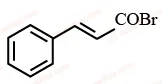
- (B)
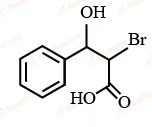
- (C)
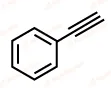
- (D)
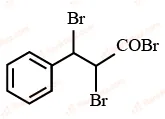
rr2.rankrizz.com/jee-advanced/chemistry/general-organic-chemistry/q/2018-paper-1-q33
- (A)
The compound Z is
- (A)
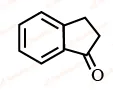
- (B)
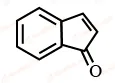
- (C)
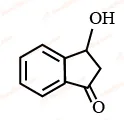
- (D)
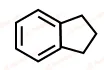
rr2.rankrizz.com/jee-advanced/chemistry/general-organic-chemistry/q/2018-paper-1-q34
- (A)
The equilibrium constant for this reaction at 298 K, in terms of , is
- (A)
- (B)
- (C)
- (D)
rr2.rankrizz.com/jee-advanced/chemistry/general-organic-chemistry/q/2016-paper-2-q33
- (A)
Compound X is
- (A)
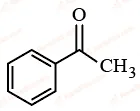
- (B)
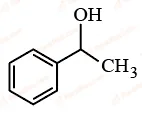
- (C)
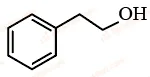
- (D)
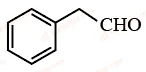
rr2.rankrizz.com/jee-advanced/chemistry/general-organic-chemistry/q/2015-paper-2-q37
- (A)
Enthalpy of dissociation (in kJ ) of acetic acid obtained from the Expt. 2 is
- (A)
1.0
- (B)
10.0
- (C)
24.5
- (D)
51.4
rr2.rankrizz.com/jee-advanced/chemistry/general-organic-chemistry/q/2015-paper-2-q39
- (A)
The pH of the solution after Expt. 2 is
- (A)
2.8
- (B)
4.7
- (C)
5.0
- (D)
7.0
rr2.rankrizz.com/jee-advanced/chemistry/general-organic-chemistry/q/2015-paper-2-q40
- (A)
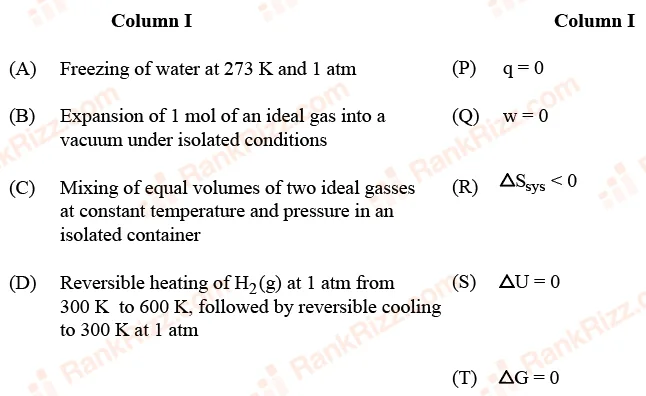
Match the thermodynamic processes given under Column I with the expressions given under Column II.
rr2.rankrizz.com/jee-advanced/chemistry/general-organic-chemistry/q/2015-paper-1-q40
Inthe nuclear transmutation
- (A)
- (B)
- (C)
- (D)
rr2.rankrizz.com/jee-advanced/chemistry/general-organic-chemistry/q/2013-paper-2-q22
- (A)
The hyperconjugative stabilities of tert-butyl cation and 2-butene, respectively, are due to
- (A)
(empty) and electron delocalisations.
- (B)
and electron delocalisations.
- (C)
(filled) and electron delocalisations.
- (D)
p (filled) and electron delocalisations.
rr2.rankrizz.com/jee-advanced/chemistry/general-organic-chemistry/q/2013-paper-1-q33
- (A)

- (A)
- (B)
- (C)
- (D)
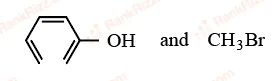
rr2.rankrizz.com/jee-advanced/chemistry/general-organic-chemistry/q/2010-paper-1-q5
- (A)

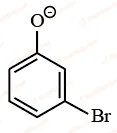
- (A)
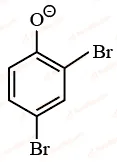
- (B)
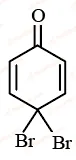
- (C)
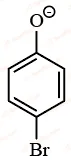
- (D)
rr2.rankrizz.com/jee-advanced/chemistry/general-organic-chemistry/q/2010-paper-1-q10
- (A)
The state is
- (A)
1 s
- (B)
2 s
- (C)
2 p
- (D)
3 s
rr2.rankrizz.com/jee-advanced/chemistry/general-organic-chemistry/q/2010-paper-2-q15
- (A)
For the above cell
- (A)
- (B)
- (C)
- (D)
rr2.rankrizz.com/jee-advanced/chemistry/general-organic-chemistry/q/2010-paper-1-q17
- (A)
Hyperconjugation involves overlap of the following orbitals
- (A)
- (B)
- (C)
- (D)
rr2.rankrizz.com/jee-advanced/chemistry/general-organic-chemistry/q/2008-paper-1-q47
- (A)
Among the following, the least stable resonance structure is
- (A)
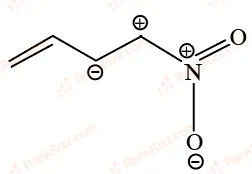
- (B)
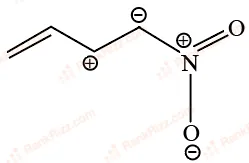
- (C)
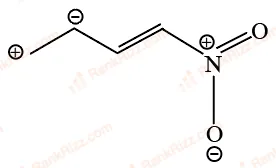
- (D)
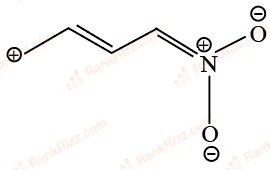
rr2.rankrizz.com/jee-advanced/chemistry/general-organic-chemistry/q/2007-paper-2-q28
- (A)
Structural isomerism 23
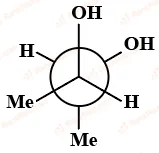
Among the following, the conformation that corresponds to the most stable conformation of meso-butane-2,3-diol is
- (A)
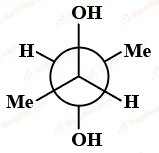
- (B)
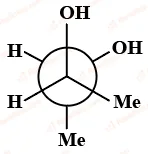
- (C)
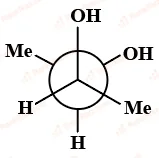
- (D)
rr2.rankrizz.com/jee-advanced/chemistry/general-organic-chemistry/q/2021-paper-1-q40
- (A)
The maximum number of possible isomers (including stereoisomers) which may be formed on mono-bromination of 1-methylcyclohex-1-ene using and UV light
is ___.Answer: ____________
rr2.rankrizz.com/jee-advanced/chemistry/general-organic-chemistry/q/2021-paper-1-q55
Newman projections P, Q, R and S are shown below:
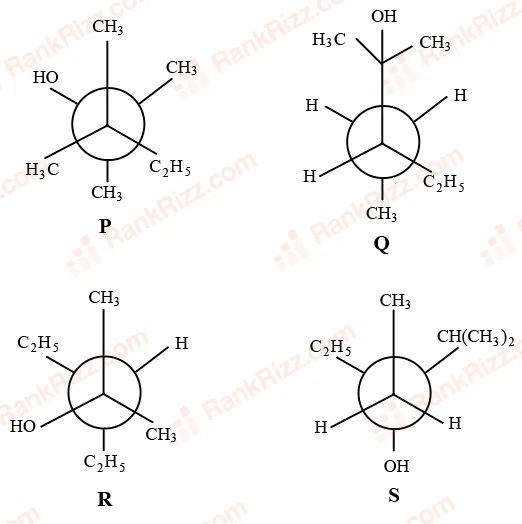
Which one of the following options represents identical molecules?
- (A)
P and Q
- (B)
Q and S
- (C)
Q and R
- (D)
R and S
rr2.rankrizz.com/jee-advanced/chemistry/general-organic-chemistry/q/2020-paper-1-q22
- (A)
The Fischer projection of D-erythrose is shown below.
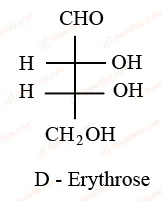
D-Erythrose and its isomers are listed as P, Q, R, and S in Column-I. Choose the correct relationship of P, Q, R, and S with D-erythrose from Column II.
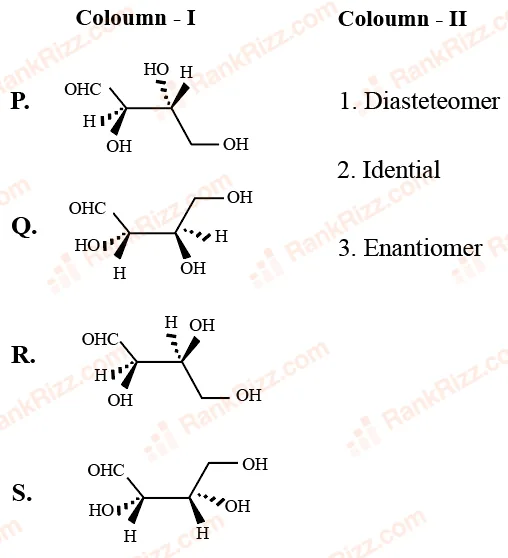
- (A)
P-2, Q-3, Q-2, Q-2
- (B)
P-3, Q-1, Q-1, Q-2
- (C)
P-2, Q-1, Q-1, Q-3
- (D)
P-2, Q-3, Q-3, Q-1
rr2.rankrizz.com/jee-advanced/chemistry/general-organic-chemistry/q/2020-paper-1-q24
- (A)
Total number of isomers, considering both structural and stereoisomers, of cyclic ethers with the molecular formula is
Answer: ____________
rr2.rankrizz.com/jee-advanced/chemistry/general-organic-chemistry/q/2019-paper-2-q32
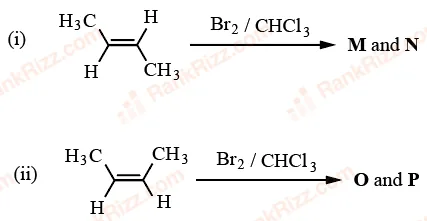
The correct statement(s) for the following addition reactions is(are)
- (A)
O and P are identical molecules
- (B)
(M and O) and (N and P) are two pairs of diastereomers
- (C)
(M and O) and (N and P) are two pairs of enantiomers
- (D)
Bromination proceeds through trans-addition in both the reactions
rr2.rankrizz.com/jee-advanced/chemistry/general-organic-chemistry/q/2017-paper-1-q25
- (A)
In the following monobromination reaction, the number of possible chiral products is
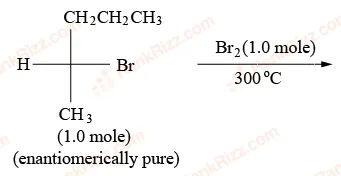
Answer: ____________
rr2.rankrizz.com/jee-advanced/chemistry/general-organic-chemistry/q/2016-paper-1-q36
The total number of stereoisomers that can exist for M is
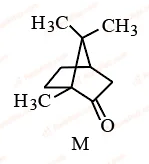
Answer: ____________
rr2.rankrizz.com/jee-advanced/chemistry/general-organic-chemistry/q/2015-paper-1-q21
The correct combination of names for isomeric alcohols with molecular formula is/are
- (A)
tert-butanol and 2-methylpropan-2-ol
- (B)
tert-butanol and 1, 1-dimethylethan-1-ol
- (C)
n-butanol and butan-1-ol
- (D)
isobutyl alcohol and 2-methylpropan-1-ol
rr2.rankrizz.com/jee-advanced/chemistry/general-organic-chemistry/q/2014-paper-1-q21
- (A)
Isomers of hexane, based on their branching, can be divided into three distinct classes as shown in the figure.

The correct order of their boiling point is- (A)
I > II > III
- (B)
III > II > I
- (C)
II > III > I
- (D)
III > I > II
rr2.rankrizz.com/jee-advanced/chemistry/general-organic-chemistry/q/2014-paper-2-q22
- (A)
The total number(s) of stable conformers with non-zero dipole moment for the following compound is (are)
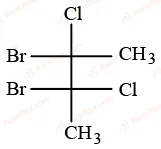
Answer: ____________
rr2.rankrizz.com/jee-advanced/chemistry/general-organic-chemistry/q/2014-paper-1-q34
When the following aldohexose exists in its D-configuration, the total number of stereoisomers in its pyranose form is
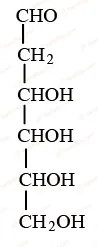
Answer: ____________
rr2.rankrizz.com/jee-advanced/chemistry/general-organic-chemistry/q/2012-paper-1-q38
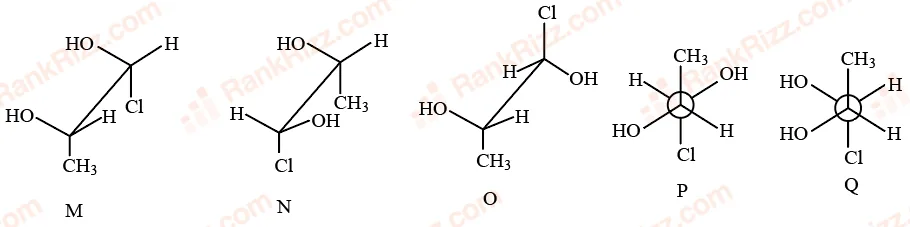
Which of the given statement(s) about N, O, P and Q with respect to M is (are) correct ?
- (A)
M and N are non-mirror image stereoisomers
- (B)
M and O are identical
- (C)
M and P are enantiomers
- (D)
M and Q are identical
rr2.rankrizz.com/jee-advanced/chemistry/general-organic-chemistry/q/2012-paper-2-q40
- (A)
Amongst the given options, the compound(s) in which all the atoms are in one plane in all the possible conformations (if any), is (are)
- (A)
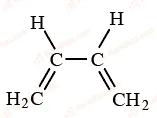
- (B)
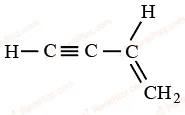
- (C)
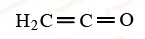
- (D)
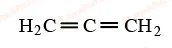
rr2.rankrizz.com/jee-advanced/chemistry/general-organic-chemistry/q/2011-paper-1-q9
- (A)
In the Newman projection for 2-2 dimethylbutane
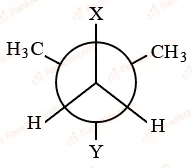
X and Y can respectively be
- (A)
and
- (B)
and
- (C)
and
- (D)
and
rr2.rankrizz.com/jee-advanced/chemistry/general-organic-chemistry/q/2010-paper-1-q11
- (A)
The total numberof cyclic isomers possible for a hydrocarbon with the molecular formula is
Answer: ____________
rr2.rankrizz.com/jee-advanced/chemistry/general-organic-chemistry/q/2010-paper-1-q20
The correct statement(s) about the compound is (are)
- (A)
The total number of stereoisomers possible for X is 6
- (B)
The total number of diastereomers possible for X is 3
- (C)
If the stereochemistry about the double bond in X is trans, the number of enantiomers possible for X is 4
- (D)
If the stereochemistry about the double bond in X is cis, the number of enantiomers possible for X is 2
rr2.rankrizz.com/jee-advanced/chemistry/general-organic-chemistry/q/2009-paper-1-q12
- (A)
The total number of cyclic structural as well as stereo isomers possible for a compound with the molecular formula is
Answer: ____________
rr2.rankrizz.com/jee-advanced/chemistry/general-organic-chemistry/q/2009-paper-2-q19
The correct statement(s) about the compound given below is (are)
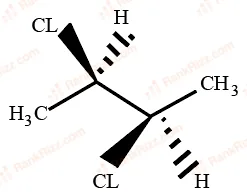
- (A)
The compound is optically active
- (B)
The compound possesses centre of symmetry
- (C)
The compound possesses plane of symmetry
- (D)
The compound possesses axis of symmetry
rr2.rankrizz.com/jee-advanced/chemistry/general-organic-chemistry/q/2008-paper-1-q53
- (A)
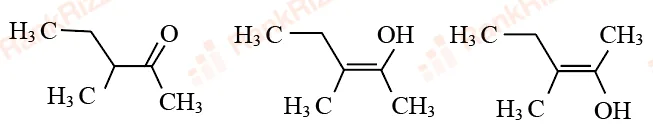
The correct statement(s) concerning the structures E, F and G is (are)
- (A)
E, F and G are resonance structures
- (B)
E, F and E, G are tautomers
- (C)
F and G are geometrical isomers
- (D)
F and G are diastereomers
rr2.rankrizz.com/jee-advanced/chemistry/general-organic-chemistry/q/2008-paper-1-q54
- (A)
The numberof stereoisomers obtained by bromination of trans-2-butene is
- (A)
1
- (B)
2
- (C)
3
- (D)
4
rr2.rankrizz.com/jee-advanced/chemistry/general-organic-chemistry/q/2007-paper-2-q27
- (A)
The numberof structural isomers for is
- (A)
3
- (B)
4
- (C)
5
- (D)
6
rr2.rankrizz.com/jee-advanced/chemistry/general-organic-chemistry/q/2007-paper-1-q28
- (A)
STATEMENT-1: Molecules that are not superimposable on their mirror images are chiral.
because
STATEMENT-2: All chiral molecules have chiral centres.- (A)
Statement-1 is True, Statement-2 is True; Statement-2 is a correct explanation for Statement-1
- (B)
Statement-1 is True, Statement-2 is True; Statement-2 is NOT a correct explanation for Statement-1
- (C)
Statement-1 is True, Statement-2 is False
- (D)
Statement-1 is False, Statement-2 is True
rr2.rankrizz.com/jee-advanced/chemistry/general-organic-chemistry/q/2007-paper-2-q34
- (A)
Reactive intermediates and rearrangements 7
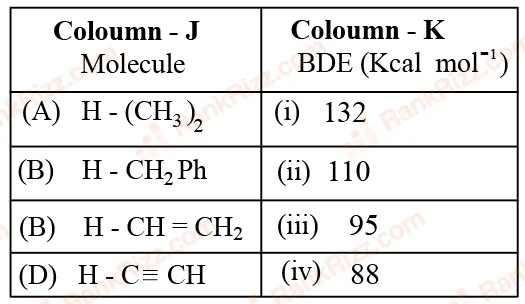
Correct match of the C-H bonds (shown in bold) in Column J with their BDE in Column K is
- (A)
P - iii, Q - iv, R - ii, S - i
- (B)
P - i, Q - ii, R - iii, S - iv
- (C)
P - iii, Q - ii, R - i, S - iv
- (D)
P - ii, Q - i, R - iv, S - iii
rr2.rankrizz.com/jee-advanced/chemistry/general-organic-chemistry/q/2021-paper-2-q51
- (A)
F or the following reaction

the correct statement is
- (A)
Initiation step is exothermic with kcal mol.
- (B)
Propagation step involving formation is exothermic with kcal mol
- (C)
Propagation step involving formation is endothermic with kcal mol.
- (D)
The reaction is exothermic with kcal mol
rr2.rankrizz.com/jee-advanced/chemistry/general-organic-chemistry/q/2021-paper-2-q52
- (A)
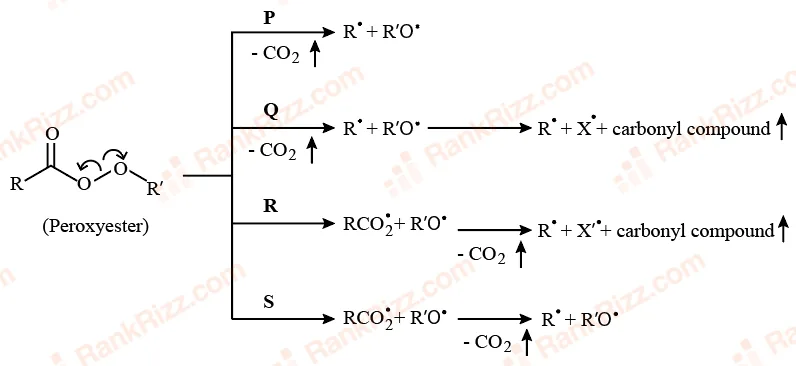
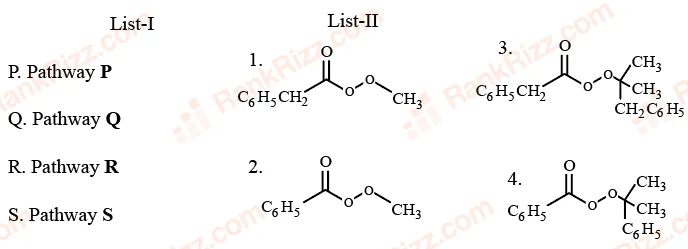
Different possible thermal decomposition pathways for peroxyesters are shown below. Match each pathway from List I with an appropriate structure from List II and select the correct answer using the code given below the lists.
Codes:
- (A)
P - 1, Q - 3, R - 4, S - 2
- (B)
P - 2, Q - 4, R - 3, S - 1
- (C)
P - 4, Q - 1, R - 2, S - 3
- (D)
P - 3, Q - 2, R - 1, S - 4
rr2.rankrizz.com/jee-advanced/chemistry/general-organic-chemistry/q/2014-paper-2-q37
- (A)
The total number of contributing structures showing hyperconjugation (involving C-H bonds)for the following carbocation is
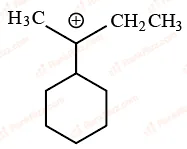
Answer: ____________
rr2.rankrizz.com/jee-advanced/chemistry/general-organic-chemistry/q/2011-paper-2-q18
In the following carbocation, that is most likely to migrate to the positively charged carbon is
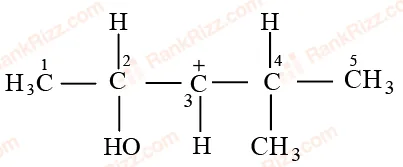
- (A)
at C-4
- (B)
H at C-4
- (C)
at C-2
- (D)
at C-2
rr2.rankrizz.com/jee-advanced/chemistry/general-organic-chemistry/q/2009-paper-2-q3
- (A)
The correct stability order of the following resonance structures is

- (A)
(I) > (II) > (IV) > (III)
- (B)
(I) > (III) > (II) > (IV)
- (C)
(II) > (I) > (III) > (IV)
- (D)
(III) > (I) > (IV) > (II)
rr2.rankrizz.com/jee-advanced/chemistry/general-organic-chemistry/q/2009-paper-2-q4
- (A)
The correct stability order for the following species is

- (A)
(II) > (IV) > (I) > (III)
- (B)
(I) > (II) > (III) > (IV)
- (C)
(II) > (I) > (IV) > (III)
- (D)
(I) > (III) > (II) > (IV)
rr2.rankrizz.com/jee-advanced/chemistry/general-organic-chemistry/q/2008-paper-2-q45
- (A)
Acidity and basicity of organic compounds 5
The reaction sequence given below is carried out with 16 moles of X. The yield of the major product in each step is given below the product in parentheses. The amount (in grams) of S produced is ________.
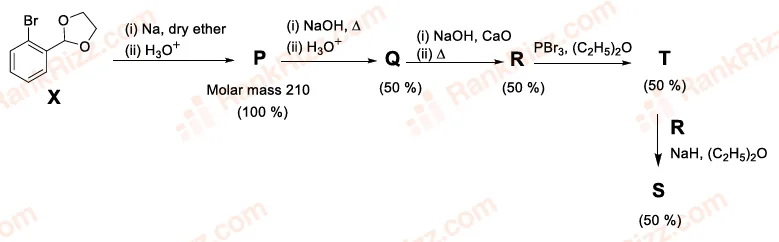
Use: Atomic mass (in amu): H = 1, C = 12, O = 16, Br = 80
Answer: ____________
rr2.rankrizz.com/jee-advanced/chemistry/general-organic-chemistry/q/2025-paper-1-q45
With respect to the compounds I-V, choose the correct statement(s).
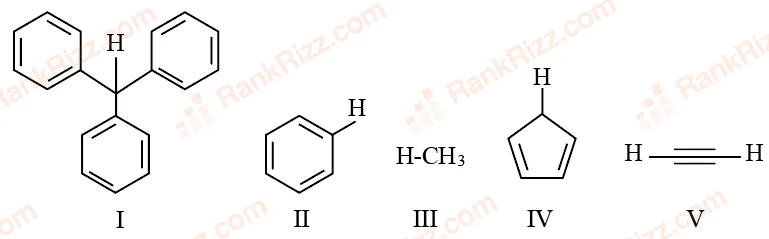
- (A)
The acidity of compound I is due to delocalization in the conjugate base.
- (B)
The conjugate base of compound IV is aromatic.
- (C)
Compound II becomes more acidic, when it has a substituent.
- (D)
The acidity of compounds follows the order I > IV > V > II > III.
rr2.rankrizz.com/jee-advanced/chemistry/general-organic-chemistry/q/2020-paper-1-q26
- (A)
Consider the following four compounds I, II, III, and IV.
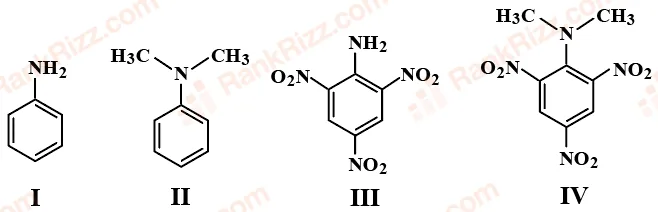
Choose the correct statement(s).
- (A)
The order of basicity is II > I > III > IV.
- (B)
The magnitude of difference between I and II is more than that between III and IV.
- (C)
Resonance effect is more in III than in IV.
- (D)
Steric effect makes compound IV more basic than III.
rr2.rankrizz.com/jee-advanced/chemistry/general-organic-chemistry/q/2020-paper-2-q29
- (A)
Among the following compounds, the most acidic is -
- (A)
p-nitrophenol
- (B)
p-hydroxybenzoic acid
- (C)
o-hydroxybenzoic acid
- (D)
p-toluic acid
rr2.rankrizz.com/jee-advanced/chemistry/general-organic-chemistry/q/2011-paper-1-q5
- (A)
The correct acidity order of the following is -
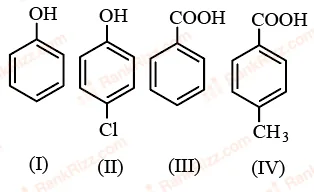
- (A)
- (B)
- (C)
- (D)
rr2.rankrizz.com/jee-advanced/chemistry/general-organic-chemistry/q/2009-paper-1-q6
- (A)
IUPAC nomenclature of organic compounds 3
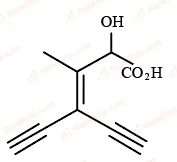
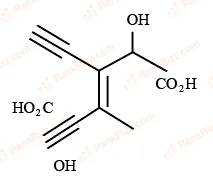
Which one of the following structures has the IUPAC name
3-ethynyl-2-hydroxy-4-methylhex-3-en-5-ynoic acid?- (A)
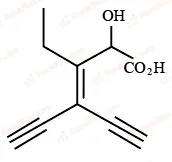
- (B)
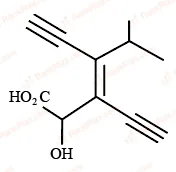
- (C)
- (D)
rr2.rankrizz.com/jee-advanced/chemistry/general-organic-chemistry/q/2020-paper-1-q23
- (A)
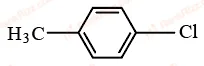
The IUPAC name(s) of the following compound is(are)
- (A)
1-chloro-4-methylbenzene
- (B)
4-chlorotoluene
- (C)
4-methylchlorobenzene
- (D)
1-methyl-4-chlorobenzene
rr2.rankrizz.com/jee-advanced/chemistry/general-organic-chemistry/q/2017-paper-1-q24
- (A)
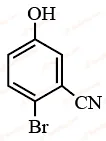
The IUPAC name of the following compound is -
- (A)
4-Bromo-3-cyanophenol
- (B)
2-Bromo-5-hydroxybenzonitrile
- (C)
2-Cyano-4- hydroxybromobenzene
- (D)
6-Bromo-3-hydroxybenzonitrile
rr2.rankrizz.com/jee-advanced/chemistry/general-organic-chemistry/q/2009-paper-1-q2
- (A)
Classification, functional groups and hybridisation in organic compounds 2
Inallene , the type(s) of hybridisation of the carbon atomsis (are)
- (A)
and
- (B)
and
- (C)
only
- (D)
and
rr2.rankrizz.com/jee-advanced/chemistry/general-organic-chemistry/q/2012-paper-1-q21
- (A)
The reagent(s) for the following conversion,

is/are
- (A)
alcoholic KOH
- (B)
alcoholic KOH followed by
- (C)
aqueous KOH followed by
- (D)
rr2.rankrizz.com/jee-advanced/chemistry/general-organic-chemistry/q/2007-paper-1-q27
- (A)
Aromaticity 2
Among the following, the number of aromatic compound(s) is
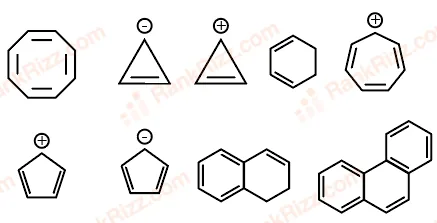
Answer: ____________
rr2.rankrizz.com/jee-advanced/chemistry/general-organic-chemistry/q/2017-paper-1-q30
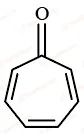
Which of the following molecules, in pure form, is (are) unstable at room temperature ?
- (A)

- (B)

- (C)

- (D)
rr2.rankrizz.com/jee-advanced/chemistry/general-organic-chemistry/q/2012-paper-1-q33
- (A)
Answer key
- 01 3.20
- 02 0.20
- 03 0.80
- 04 3.57
- 05 1.23
- 06 1.87
- 07 18.70
- 08 —
- 09 —
- 10 —
- 11 —
- 12 B
- 13 C
- 14 A
- 15 B
- 16 A-RT, B-PQS, C-PQS, D-PQST
- 17 A, B
- 18 A
- 19 D
- 20 A, C
- 21 B
- 22 B
- 23 B
- 24 A
- 25 B
- 26 —
- 27 C
- 28 C
- 29 —
- 30 B, D
- 31 5
- 32 2
- 33 A, C, D
- 34 B
- 35 3
- 36 8
- 37 A, B, C
- 38 B, C
- 39 B, D
- 40 5
- 41 A
- 42 —
- 43 A
- 44 B
- 45 A
- 46 C
- 47 C
- 48 A
- 49 D
- 50 A
- 51 6
- 52 D
- 53 B
- 54 D
- 55 175
- 56 A, B, C
- 57 C, D
- 58 C
- 59 A
- 60 D
- 61 A, B
- 62 B
- 63 B
- 64 B
- 65 5
- 66 B, C
“—” marks a question whose key we have not checked yet; its page shows the latest on it.
Past questions are reproduced with their sitting. Not affiliated with NTA or the IITs. Every question, online and free: rr2.rankrizz.com/jee-advanced/chemistry/general-organic-chemistry