Biomolecules JEE Advanced PYQs with answer key
CHEMISTRY · 22 PAST QUESTIONS · 3 TOPICS · 2007–2026
HOW TO USE THIS SHEET
Every JEE Advanced Biomolecules question we hold, grouped by topic, most-asked topic first and newest first inside each. The answer key is at the end (20 of 22 questions have a checked key); the worked solution is on each question’s page, printed beside it.
Carbohydrates: classification and monosaccharides 14
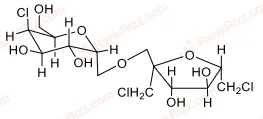
A known artificial sweetener X is composed of 4-chloro-4-deoxy--D-galactose and 1,6-dichloro-1,6-dideoxy--D-fructose joined by a glycosidic linkage. Structure of D-galactose is given below (Fischer projection):
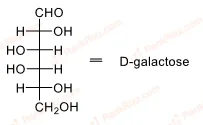
The correct structure of X is
- (A)
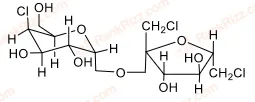
- (B)
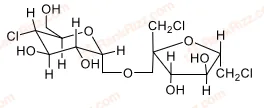
- (C)
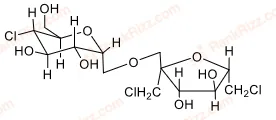
- (D)
rr2.rankrizz.com/jee-advanced/chemistry/biomolecules/q/2026-paper-2-q22
- (A)
The correct statement(s) regarding sugars is(are)
Given: Specific rotations of L-()-glucose and L-(+)-fructose are and , respectively.
- (A)
On treatment with , gluconic acid is oxidized to saccharic acid, whereas glucose is not oxidized to saccharic acid.
- (B)
Fructose gives a positive Fehling's test because it isomerises to glucose and another aldohexose in the presence of Fehling's reagent.
- (C)
Invert sugar is an equimolar mixture of D-glucose and D-fructose formed after hydrolysis of the corresponding disaccharide.
- (D)
Specific rotation of invert sugar is .
rr2.rankrizz.com/jee-advanced/chemistry/biomolecules/q/2026-paper-2-q27
- (A)
A linear octasaccharide (molar mass = 1024 g mol) on complete hydrolysis produces three monosaccharides: ribose, 2-deoxyribose and glucose. The amount of 2-deoxyribose formed is 58.26% (w/w) of the total amount of the monosaccharides produced in the hydrolyzed products. The number of ribose unit(s) present in one molecule of octasaccharide is ______.
Use: Molar mass (in g mol): ribose = 150, 2-deoxyribose = 134, glucose = 180; Atomic mass (in amu): H = 1, O = 16
Answer: ____________
rr2.rankrizz.com/jee-advanced/chemistry/biomolecules/q/2025-paper-2-q48
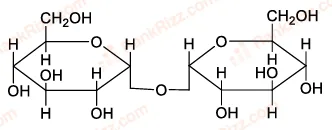
A disaccharide X cannot be oxidised by bromine water. The acid hydrolysis of X leads to a laevorotatory solution. The disaccharide X is
- (A)
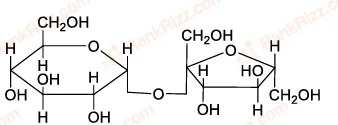
- (B)
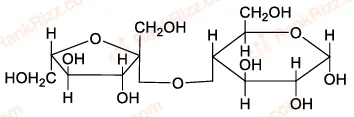
- (C)
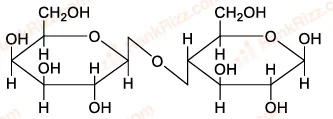
- (D)
rr2.rankrizz.com/jee-advanced/chemistry/biomolecules/q/2023-paper-2-q38
- (A)
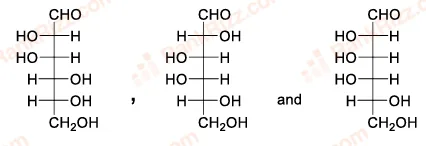
Treatment of D-glucose with aqueous NaOH results in a mixture of monosaccharides, which are
- (A)
- (B)
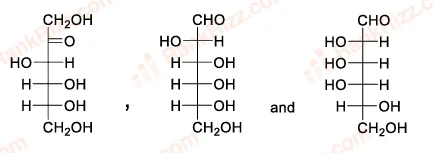
- (C)
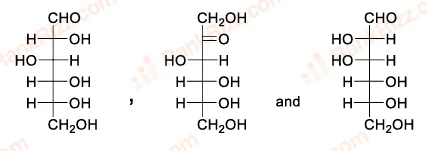
- (D)
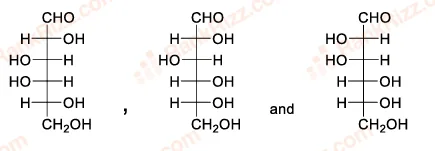
rr2.rankrizz.com/jee-advanced/chemistry/biomolecules/q/2022-paper-2-q54
- (A)
Given:
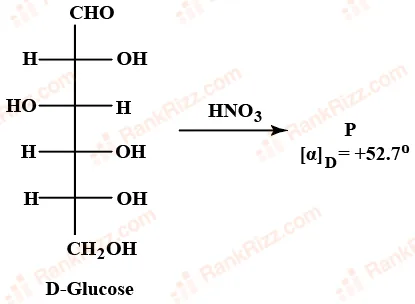
The compound(s), which on reaction with will give the product having degree of rotation, is(are)
- (A)
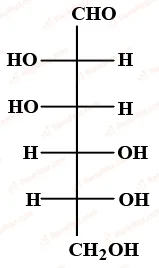
- (B)
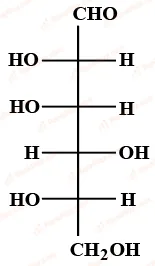
- (C)
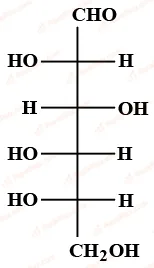
- (D)
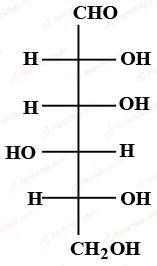
rr2.rankrizz.com/jee-advanced/chemistry/biomolecules/q/2021-paper-1-q49
- (A)
Which of the following statement(s) is (are) true?
- (A)
Monosaccharides cannot be hydrolysed to give polyhydroxy aldehydes and ketones
- (B)
Oxidation of glucose with bromine water gives glutamic acid
- (C)
Hydrolysis of sucrose gives dextrorotatory glucose and laevorotatory fructose
- (D)
The two six-membered cyclic hemiacetal forms of D-(+)-glucose are called anomers
rr2.rankrizz.com/jee-advanced/chemistry/biomolecules/q/2019-paper-1-q29
- (A)
For ‘invert sugar’, the correct statement(s) is(are)
(Given: specific rotations of( +)-sucrose, (+)-maltose, L-(—)-glucose and L-(+)-fructose in aqueous solution are and , respectively)- (A)
‘invert sugar’ is prepared by acid catalyzed hydrolysis of maltose
- (B)
‘invert sugar’ is an equimolar mixture of D-(+)-glucose and D-(-)-fructose
- (C)
specific rotation of‘invert sugar’ is
- (D)
on reaction with water, ‘invert sugar’ forms saccharic acid as one of the products
rr2.rankrizz.com/jee-advanced/chemistry/biomolecules/q/2016-paper-2-q30
- (A)
The structure of D-(+)-glucose is
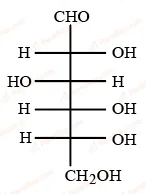
The structure of L-(—)-glucose is- (A)
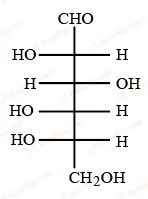
- (B)
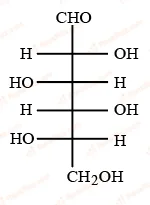
- (C)
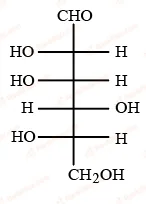
- (D)
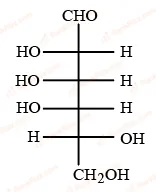
rr2.rankrizz.com/jee-advanced/chemistry/biomolecules/q/2015-paper-1-q32
- (A)
The following carbohydrate is
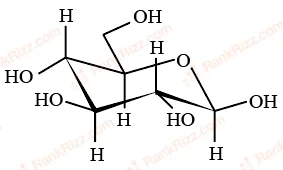
- (A)
a ketohexose
- (B)
an aldohexose
- (C)
an -furanose
- (D)
an -pyranose
rr2.rankrizz.com/jee-advanced/chemistry/biomolecules/q/2011-paper-2-q8
- (A)
The correct statement about the following disaccharide is
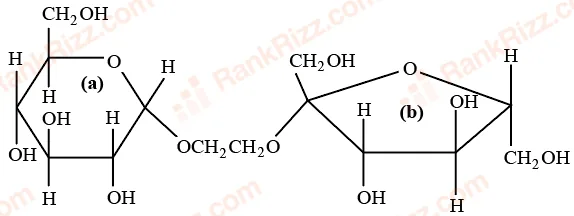
- (A)
Ring (a) is pyranose with a-glycosiclic link
- (B)
Ring (a) is furanose with a-glycosiclic link
- (C)
Ring (b) is furanose with cx -glycosidic link
- (D)
Ring (b) is pyranose with -glycosidic link
rr2.rankrizz.com/jee-advanced/chemistry/biomolecules/q/2010-paper-1-q4
- (A)
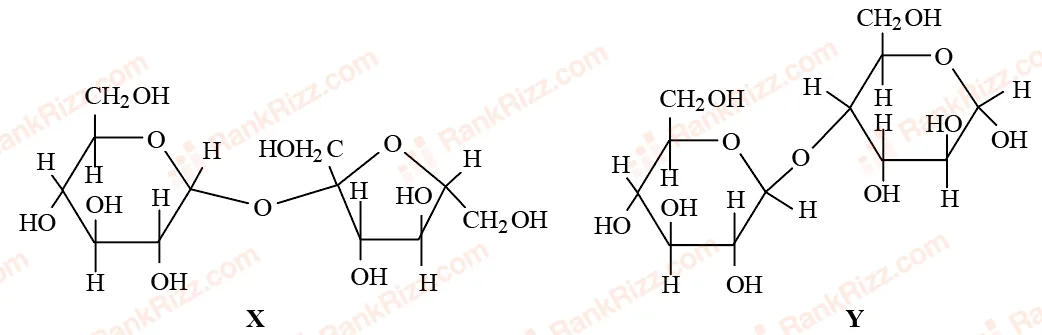
The correct statement(s) about the following sugars X andY is(are)
Figure
- (A)
X is a reducing sugar and Y is a non-reducing sugar
- (B)
X is a non-reducing sugar and Y is a reducing sugar
- (C)
The glucosidic linkages in X and Y are and respectively
- (D)
The glucosidic linkages in X and Y are and respectively
rr2.rankrizz.com/jee-advanced/chemistry/biomolecules/q/2009-paper-2-q9
- (A)
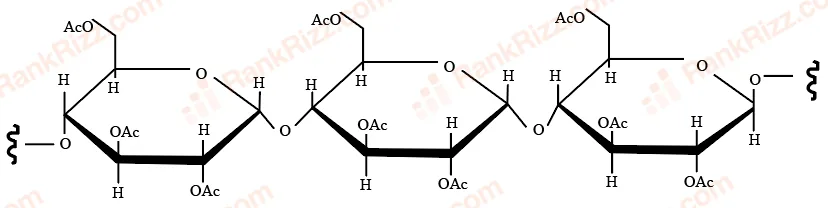
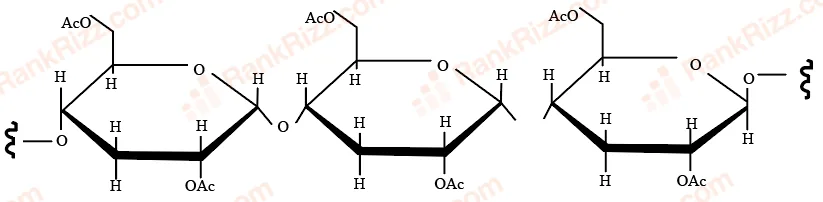
Cellulose upon acetylation with excess acetic anhydride/ (catalytic) gives cellulose triacetate whose structure is
- (A)
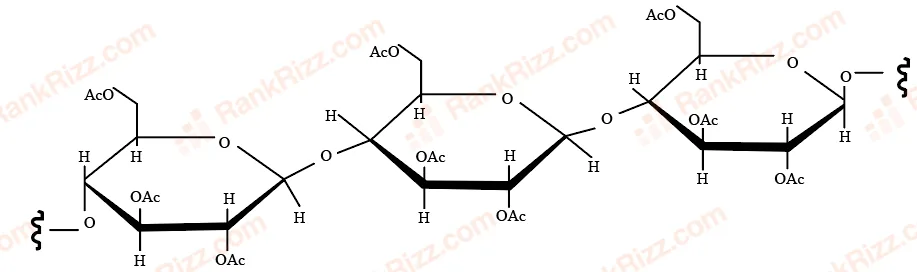
- (B)
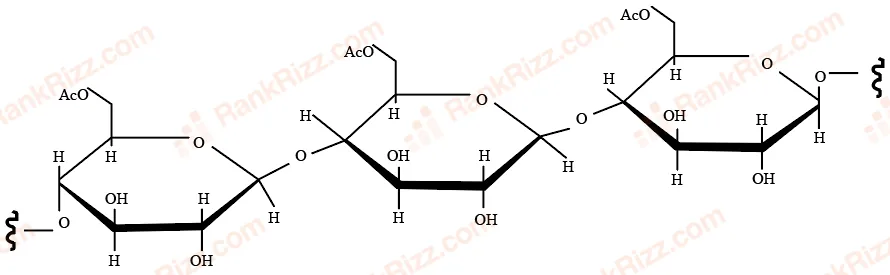
- (C)
- (D)
rr2.rankrizz.com/jee-advanced/chemistry/biomolecules/q/2008-paper-2-q46
- (A)
STATEMENT-1: Glucose gives a reddish-brown precipitate with Fehling’s solution.
because
STATEMENT-2: Reaction of glucose with Fehling’s solution gives CuO and gluconic acid.- (A)
Statement-1 is True, Statement-2 is True; Statement-2 is a correct explanation for Statement-1
- (B)
Statement-1 is True, Statement-2 is True; Statement-2 is NOT a correct explanation for Statement-1
- (C)
Statement-1 is True, Statement-2 is False
- (D)
Statement-1 is False, Statement-2 is True
rr2.rankrizz.com/jee-advanced/chemistry/biomolecules/q/2007-paper-2-q33
- (A)
Proteins and enzymes 7
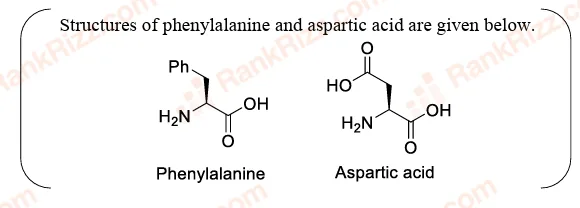
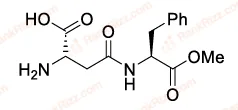
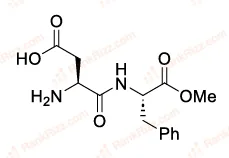
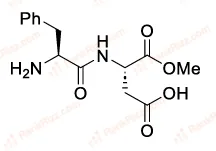
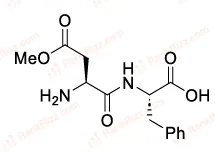
Aspartame, an artificial sweetener, is a dipeptide aspartyl phenylalanine methyl ester. The structure of aspartame is
- (A)
- (B)
- (C)
- (D)
rr2.rankrizz.com/jee-advanced/chemistry/biomolecules/q/2024-paper-1-q37
- (A)
The structure of a peptide is given below.
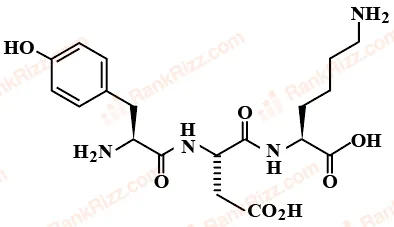
If the absolute values of the net charge of the peptide at pH = 2, pH = 6, and pH = 11 are , and , respectively, then what is ?
Answer: ____________
rr2.rankrizz.com/jee-advanced/chemistry/biomolecules/q/2020-paper-2-q23
The total number of distinct naturally occurring amino acids obtained by complete acidic hydrolysis of the peptide shown below is
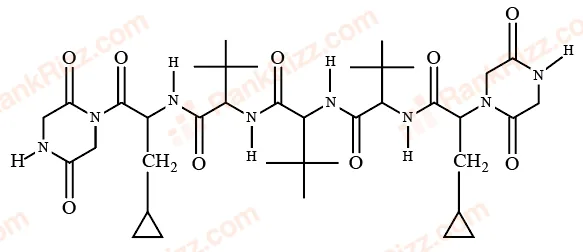
Answer: ____________
rr2.rankrizz.com/jee-advanced/chemistry/biomolecules/q/2014-paper-1-q36
A tetrapeptide has -COOH group on alanine. This produces glycine (Gly), valine (Val), phenyl alanine (Phe) and alanine (Ala), on complete hydrolysis. For this tetrapeptide, the number of possible sequences(primary structures) with group attached to a chiral center is
Answer: ____________
rr2.rankrizz.com/jee-advanced/chemistry/biomolecules/q/2013-paper-1-q37
The substituents and for nine peptides are listed in the table given below. How many of these peptides are positively charged at pH = 7.0 ?
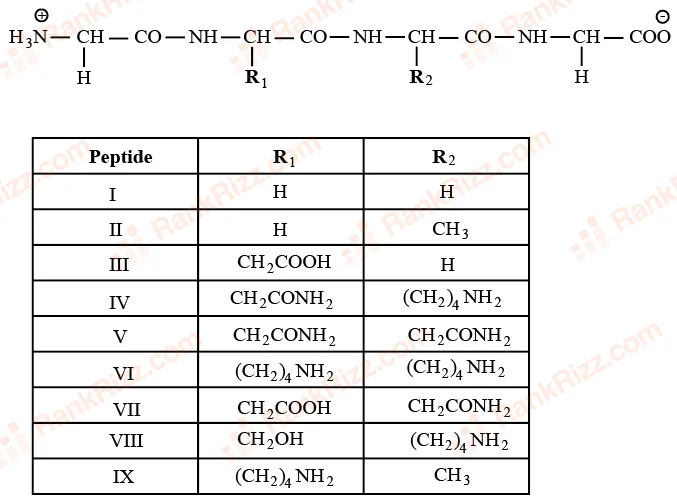
Answer: ____________
rr2.rankrizz.com/jee-advanced/chemistry/biomolecules/q/2012-paper-1-q36
A decapeptide (mol. wt. 796) on complete hydrolysis gives glycine (mol. wt. 75), alanine and phenylalanine. Glycine contributes 47.0% to the total weight of the hydrolysed products. The number of glycine units present in the decapeptide is.
Answer: ____________
rr2.rankrizz.com/jee-advanced/chemistry/biomolecules/q/2011-paper-1-q20
The total number of basic groups in the following form of lysine is
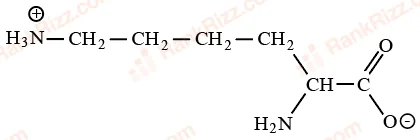
Answer: ____________
rr2.rankrizz.com/jee-advanced/chemistry/biomolecules/q/2010-paper-1-q19
Vitamins and hormones 1
For a double strand DNA, one strand is given below:

The amount of energy required to split the double strand DNA into two single strands is ______ kcal .
[Given: Average energy per H-bond for A-T base pair = 1.0 kcal , G-C base pair = 1.5 kcal , and A-U base pair = 1.25 kcal . Ignore electrostatic repulsion between the phosphate groups.]
Answer: ____________
rr2.rankrizz.com/jee-advanced/chemistry/biomolecules/q/2024-paper-2-q44
Answer key
- 01 A
- 02 B, C
- 03 2
- 04 A
- 05 C
- 06 —
- 07 A, C, D
- 08 B, C
- 09 A
- 10 B
- 11 A
- 12 B
- 13 A
- 14 C
- 15 B
- 16 —
- 17 1
- 18 4
- 19 4
- 20 6
- 21 2
- 22 41
“—” marks a question whose key we have not checked yet; its page shows the latest on it.
Past questions are reproduced with their sitting. Not affiliated with NTA or the IITs. Every question, online and free: rr2.rankrizz.com/jee-advanced/chemistry/biomolecules